Local food relief sites navigate increased demand amid SNAP pause
With the ongoing federal government shutdown, food assistance through SNAP won’t come through for November, affecting 42 million Americans
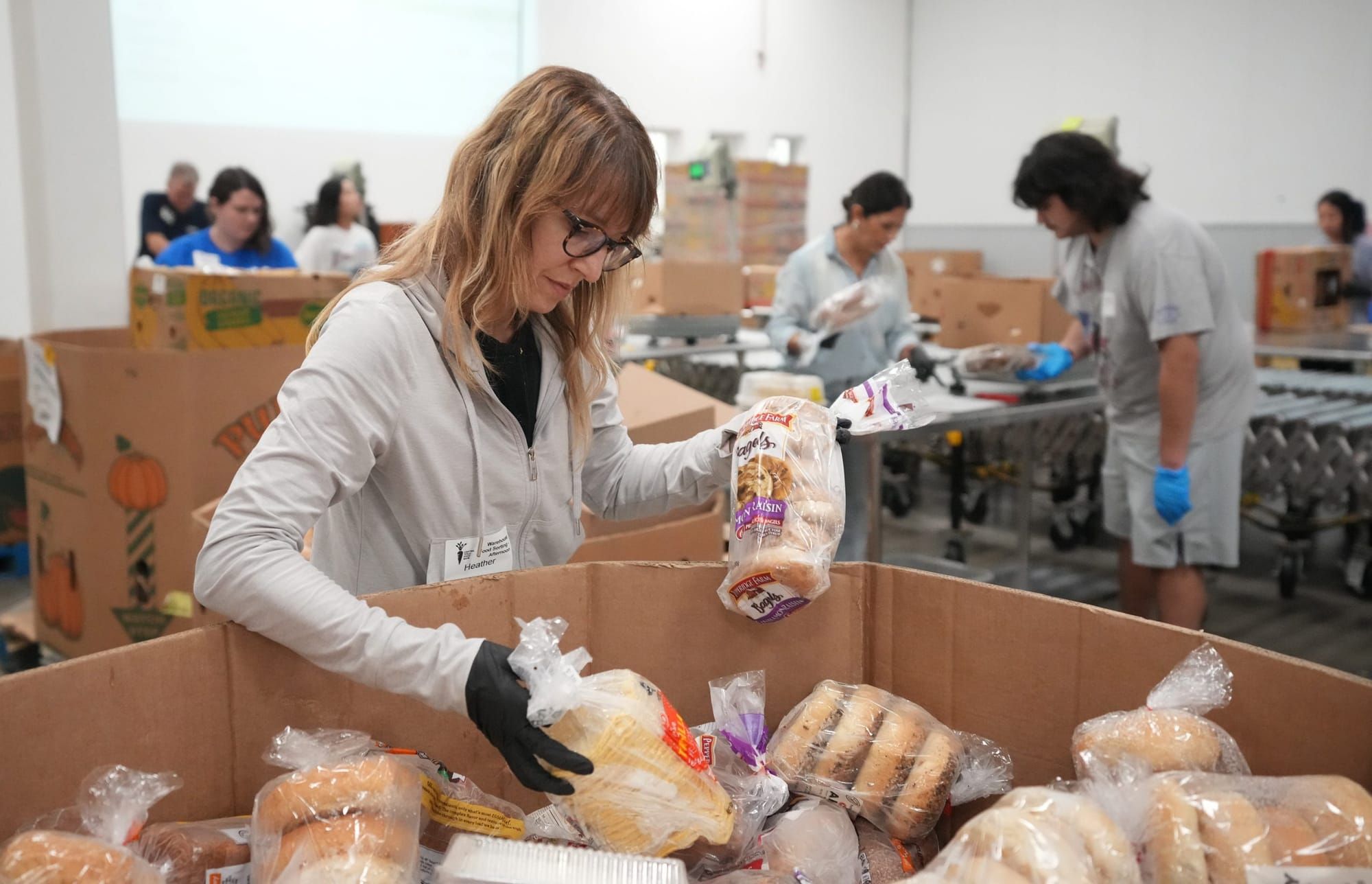
As the federal government shutdown enters its fifth week, concerns have only grown about the impact that it will continue to have on families and individuals relying on food assistance through the Supplemental Nutrition Assistance Program (SNAP). This month, states began notifying residents that, should the shutdown continue, SNAP benefits for November will not be paid. Halting SNAP threatens to deepen the food insecurity of more than 42 million Americans who receive the benefits. As a result, food bank operators and food distributors say the shutdown will further strain their work and make it harder for people to navigate an already troubled landscape for food support.
As previously reported by Prism, major cuts to SNAP went into effect in September as part of the Trump administration’s reconciliation package. The move cut SNAP funding by roughly 20%, resulting in 22 million families losing some or all of their benefits. In October, officials in states including Pennsylvania, West Virginia, Minnesota, Illinois, Massachusetts, and Texas issued warnings notifying residents that all SNAP benefits would grind to a halt if the shutdown continues. Other states have opted to use state funding to fill the gap in food support for SNAP recipients, while local food relief organizations say they’re still here to help, despite facing crushing pressures.
A fragile ecosystem
SNAP plays an outsized role in relieving nationwide hunger, offering nine times the amount of food distributed by local and state food banks. When access to benefits is paused, the impact ripples far beyond just those who directly receive benefits.
In Pennsylvania, where 1.9 million residents receive SNAP benefits, groups such as Hunger-Free Pennsylvania, a network of more than 18 food banks serving 67 counties across the commonwealth, work to connect residents with resources, including Women, Infants and Children (WIC) benefits, SNAP, and afterschool and school meals. However, despite the various programs aimed at ending food insecurity, advocates say they each exist within an ecosystem that requires balance and relies on strong, robust programming across all ends.
“No one aspect was meant to carry this burden alone, and when you have an impact in any level or any piece within the network, it has a ripple-down effect,” said Stuart Haniff, the executive director of Hunger-Free Pennsylvania. “Right now, that ripple-down effect has been devastating. We see skyrocketing prices, and we see a demand on our food banks, which is higher than it was during the pandemic. In fact, over the last two years, we’ve seen an increase of use of food banks by 40% and in Philadelphia, a 120% increase over the last three years.”
George Matysik, the executive director of the SHARE Food Program, echoes those sentiments. As part of the Hunger-Free Pennsylvania network, the SHARE Food Program serves more than 500,000 people in Philadelphia every month. The program works with hundreds of food pantries and about 800 schools. Their various programs, from home deliveries, education farms, and school lunch offerings help provide a sense of the scope and size of the charitable food system and its interconnectedness.
“The impact that many of our farmers, our distributors, and grocery stores are going to feel is going to be really significant,” said Matysik, adding that in some areas, SNAP usage can comprise up to 85% of sales in grocery stores. “Taking away a program like this is going to impact multiple aspects of our economy.”
Impossible choices, potential alternatives
While a November pause on benefits would exacerbate the strain on families, advocates nationwide note that they are already receiving record numbers of new visitors in need of their services. Matysik mentioned that two Philadelphia-area pantries were receiving over 10 times more new recipients per week.
In states like Minnesota, food banks and shelters that require appointments are currently booked out weeks in advance. Lack of benefits also means that people are making what Haniff calls “impossible choices,” such as deciding to forgo filling medical prescriptions in order to purchase groceries for the week.
Mesa Siebert, neighbor services outreach manager at Second Harvest Heartland in Minnesota, said that she has been hearing directly from people about those choices, some of which may make receiving SNAP benefits even more difficult when services resume.
“I spoke with a veteran who let me know he was living in his storage unit, and you know, Minnesota is not known for warm weather,” Siebert said. “All year-round storage units don’t have insulation, so I think of him every day.”
Second Harvest Heartland is Minnesota’s largest food bank, overseeing more than 1,000 food shelves in both Minnesota and Wisconsin. The group’s neighbor services outreach program is the largest SNAP outreach provider in Minnesota and features both in-person programming and a virtual care center that offers help with navigating the SNAP application process, which Siebert said can be daunting and burdensome. In Minnesota, roughly 453,000, or 7%, of the state population receives SNAP benefits.
Where to go for support
While food banks are strained significantly, families needing support can still access them at this time. Those who may lose their SNAP benefits in November can also turn to some state- and locally run programs and resources designed to relieve hunger and fill in the gaps. In Minnesota, Siebert said the Minnesota Family Investment Program (MFIP) can be a resource for Minnesotans in need. MFIP offers both cash benefits as well as food benefits. Amid the government shutdown, food benefits will not be issued, but cash benefits will be available.
Those eligible can also still receive WIC benefits. In early October, the White House announced that WIC benefits will continue to be issued throughout the year using tariff revenue to fund the program.
Siebert also directs seniors over the age of 60 to the Commodities Supplemental Food Program (CSFP), which provides a monthly food box to recipients and, Siebert noted, has a far lower barrier for entry than SNAP.
In Pennsylvania, the CSFP is also an important option, and seniors can receive monthly food boxes via the Hunger-Free Pennsylvania network.
However, since July 1, the state budget has been at an impasse, meaning that crucial programs, including hunger relief services, have been left unfunded. The state’s Food Purchase Programs, as well as the Pennsylvania Agricultural Surplus System are programs that advocates say are strong alternatives that the impasse is barring access to resources at an incredibly crucial time.
“I’ve been doing this work for 20 years, [and] I’ve dealt with several state budget impasses, and I’ve dealt with several federal government shutdowns,” Matysik said. “I’ve never had to deal with both at the same time, and what it means is that for organizations like us, we’re having to stretch ourselves further and further without the certainty of any type of government partnership right now.”
However, advocates still point to informational services such as 211 as well as programs offered by regional food banks as resources to turn to if they need immediate assistance and access to food.
“If you’re hungry, it’s probably signs of a bigger issue and that other things are impacted, whether it’s housing, mental health, or physical health,” Haniff said.
Second Harvest Heartland’s care center also recently launched a map helping residents across Minnesota locate food banks, food pantries, and turkey giveaway sites ahead of Thanksgiving. The food bank works routinely to keep it up to date. Siebert also encouraged those experiencing food insecurity who may not have yet signed up for SNAP benefits to still file their applications even while the shutdown is underway in case retroactive benefits are issued.
For those who want to help their neighbors in need, advocates and staff at food relief sites urged people to give both resources and their time through volunteering.
Recognizing that this is what Siebert called a “manufactured” issue should also spur the public to action.
“We are not in a place that we need to be cutting historic amounts of SNAP,” Siebert said.
Matysik highlighted how, in times of turmoil, it is those with the least resources who are tasked with navigating the most difficult of circumstances.
“It is always the programs that impact the working class that are the first ones to be cut,” Matysik said. “At the end of the day, we’re talking about 42 million Americans that are going to be directly impacted by this government shutdown. This really is on all elected officials right now to own this and to stop punishing the working class when we are living in an incredibly wealthy economy that has the ability to end this tomorrow.”
Editorial Team:
Sahar Fatima, Lead Editor
Carolyn Copeland, Top Editor
Rashmee Kumar, Copy Editor
Author

Tamar Sarai is a writer, journalist, and historian in training. Her work focuses on race, culture, and the criminal legal system. She is currently pursing her PhD in History at Temple University where
Sign up for Prism newsletters.
Stay up to date with curated collection of our top stories.