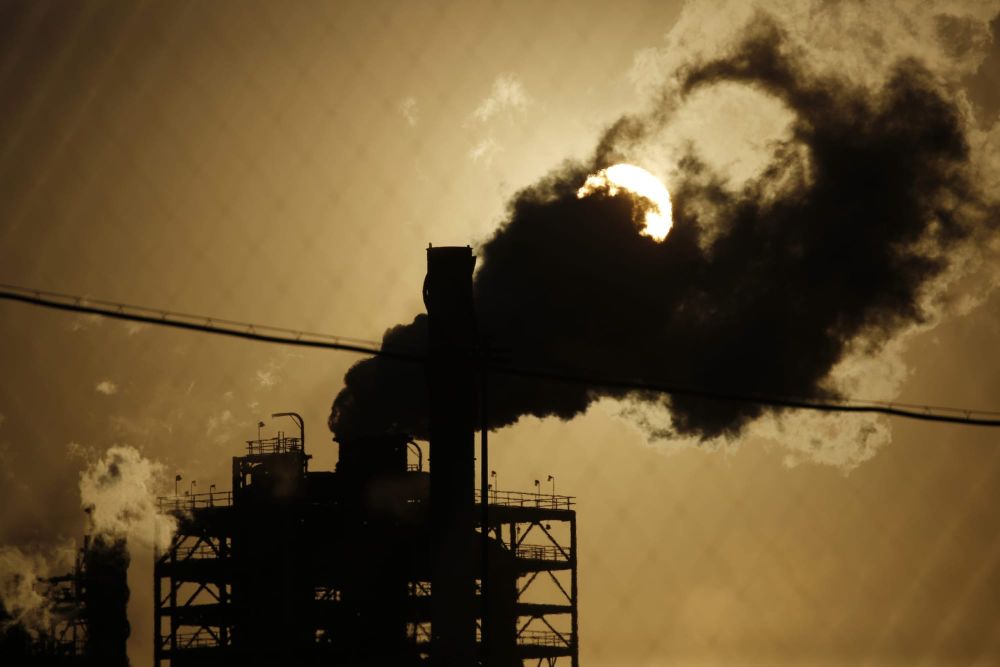
SCOTUS case will determine the fate of bedrock environmental regulation
At the center of Seven County Infrastructure Coalition v. Eagle County is the National Environmental Protection Act, a primary vehicle in litigation aimed at curbing fossil fuel and extraction projects
The Supreme Court will soon decide whether the National Environmental Policy Act (NEPA), a bedrock environmental regulation, must address long-term consequences of climate change.
The Seven County Infrastructure Coalition v. Eagle County case has been less visible amid all of the environmental deregulation enacted in just the first three months of President Donald Trump’s administration. It’s the latest environmental case to come before the court that has the potential to upend environmental protection procedures in a well-worn battle between developers and what they often characterize as “burdensome” environmental regulations, all playing out in the wake of a judicial landscape vastly reconfigured by the first Trump administration. In 2022, the court sided with states arguing on behalf of business interests to deregulate power plant emissions. The following year, the justices cleared the way for construction projects to move forward, despite threats to sensitive and life-sustaining ecosystems, such as wetlands.
But Seven County Infrastructure Coalition v. Eagle County is significant and slightly different than cases that came before. First is the immediate impact: The case concerns a fossil fuel project that could lead to 53 million metric tons of carbon pollution each year. By some estimates, the project would increase total U.S. greenhouse gas emissions by up to 0.8% and global emissions by up to 0.1%. Second is the bearing on federal rulemaking that could lay the groundwork to fast-track fossil fuel projects in the future while also making it exceedingly difficult for activists and environmental organizations to challenge projects on the grounds of NEPA.
Oral argument for Seven County Infrastructure Coalition v. Eagle County was presented in December 2024. The court usually publishes opinions in late spring and early summer, with many of the more controversial decisions made public at the tail end of June. With a decision looming, Prism breaks down what’s at stake.
The crux of the case
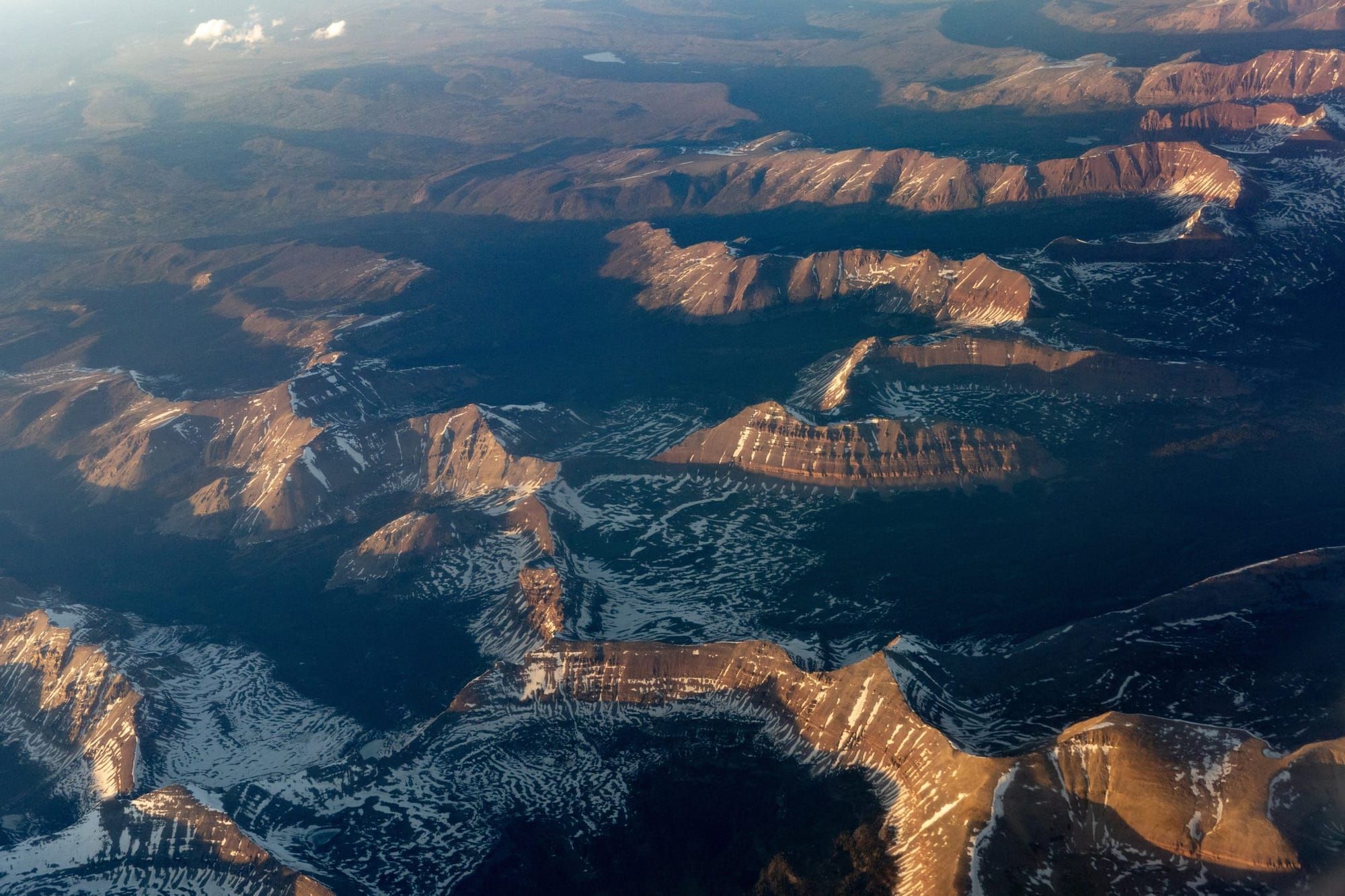
In 2021, the Surface Transportation Board, the federal agency in charge of economic regulation for “surface transportation,” primarily freight rail, approved permits to build an 88-mile rail in northeastern Utah’s Uinta Basin to transport greater quantities of waxy crude oil. The planned rail is designed to connect to larger, already existing rail lines that move the fossil fuel to Gulf Coast oil refineries. As part of that permitting process, an environmental impact statement was prepared in which the agency reviewed potential impacts of the rail line, such as the pollution of Gulf Coast communities from refining activities. Along with environmental organizations, Eagle County, Colorado, sued to halt the project, arguing that federal regulators tasked with evaluating environmental externalities didn’t go far enough under the federal NEPA. Eagle County is where the Uinta rail would merge with the national rail network. Specifically, the plaintiffs alleged that federal regulators failed to consider impacts to wildlife, the Colorado River, and the potential for oil spills and wildfires. NEPA is a procedural law that “promotes” cooperation between different federal agencies in the interest of protecting the U.S.’ natural resources, the state of Colorado argued in a friend of the court brief. NEPA isn’t about sidelining business, the brief stated, but ensuring the health of public goods.
Seven County Infrastructure Coalition, a regional economic planning agency, argued that the consequences of such a project, should they be “remote in time and space,” do not need to be considered. That is, if consequences of a project happen too far in the future in regions far from the initial source of a pollutant, then a federal agency shouldn’t be required to evaluate its impacts, lawyers argued. The Surface Transportation Board asserted that upstream and downstream impacts of crude oil extraction are “unknown and unknowable” and that “there is no way to predict or assess impacts to specific nearby communities from refining that oil.”
Lawyers for Eagle County argued that this is the very purpose of NEPA: to allow agencies to evaluate downstream, cumulative, and foreseeable impacts of projects. Seven County Infrastructure Coalition alleges that this level of analysis is burdensome and overly complicated. But as impacts of climate change compound and grow ever more dire, the writing is on the wall: Environmental impacts do not happen in an ecological vacuum. In other words, the oil extracted in Utah does have an environmental justice impact on already overburdened Black and brown communities in the Gulf. And once that refined oil is burned, carbon dioxide pollution will further trap heat in the atmosphere and accelerate cycles and consequences of climate change.
Wendy Park, a senior attorney with the Center for Biological Diversity, told Prism that if NEPA’s focus is narrowed, any federal agency performing a NEPA analysis will only have to consider what’s perceived to be in the “direct footprint of project,” sidelining future consequences that have a predictable result. This is akin to pretending that laying the rail line was the only environmental consequence of the project rather than the manifold issues that arise with burning fossil fuels.
What is NEPA?
“The National Environmental Policy Act is one of our bedrock environmental laws,” Park told Prism. Passed by Congress in 1969 and later placed under the purview of the Council on Environmental Quality, NEPA was intended to offer federal agencies guidance about how to evaluate environmental impacts.
NEPA is a significant tool for those pushing back against fossil fuel and extraction projects. As with the Seven County case, NEPA suits have successfully helped push back against prison construction, pipeline construction, and other massive construction projects that threaten or harm sensitive ecosystems, such as wetlands. The act ensures that communities have a voice in the planning and development process through public comment periods, while also ensuring that regulators consider a “no action alternative,” a scenario in which the project isn’t completed at all. This can help set a baseline for what the environmental impacts of a project really are.
The Trump administration has already curtailed the efficacy of NEPA by ordering the federal agency that issues regulations around the policy—the Council on Environmental Quality—to rescind existing regulations. What that means, said Jarryd Page, a staff attorney at the Environmental Law Institute, is “the framework that [has] been developed over 50 years is sort of out the window.” Without a central federal agency to issue overarching guidelines, individual agencies determine how to handle the NEPA process.
“Those regulations are the vehicle for litigants bringing cases in federal court,” Page explained. “Without that regulatory framework, what are litigants going to be pointing to in terms of raising NEPA challenges? And I think there’s just a lot of big question marks out there about what this is going to mean.”
The Seven County case forces SCOTUS to answer the question of how far NEPA’s reach can be, and the case accentuates the stakes of these more recent changes to NEPA. With no consistent guidance, there will likely be a “patchwork” of the law’s application, which may prove challenging for communities trying to launch environmental defense efforts, Page said.
“I think it makes it that much more challenging for people [and] communities to know what sets of regulations apply,” Page said. “There’s already a lack of capacity on behalf of individuals and communities to understand complicated legal processes.”
But the gutting of NEPA’s use as an advocacy tool appears to be one of the goals of the Seven County Infrastructure Coalition, which argues that narrowing the scope of NEPA to immediate or proximate impacts ensures the act won’t morph into a “vehicle for environmental policy disputes.”
While lawyers for the coalition feel that federal environmental regulations have become overly burdensome and needlessly complicated, Park asserts that both the public process that NEPA allows for and the statutory authority NEPA retains to evaluate long-term consequences make it indispensable.
The court’s decision in the case is expected any day now, and it will impact every aspect of environmental law.
Editorial Team:
Tina Vasquez, Lead Editor
Carolyn Copeland, Top Editor
Stephanie Harris, Copy Editor
Author

ray levy uyeda is a staff reporter at Prism, focusing on environmental and climate justice.
Sign up for Prism newsletters.
Stay up to date with curated collection of our top stories.