Another way out: Self-organize now or self-organize later
Bad news and problems come back around unless we force something to stop
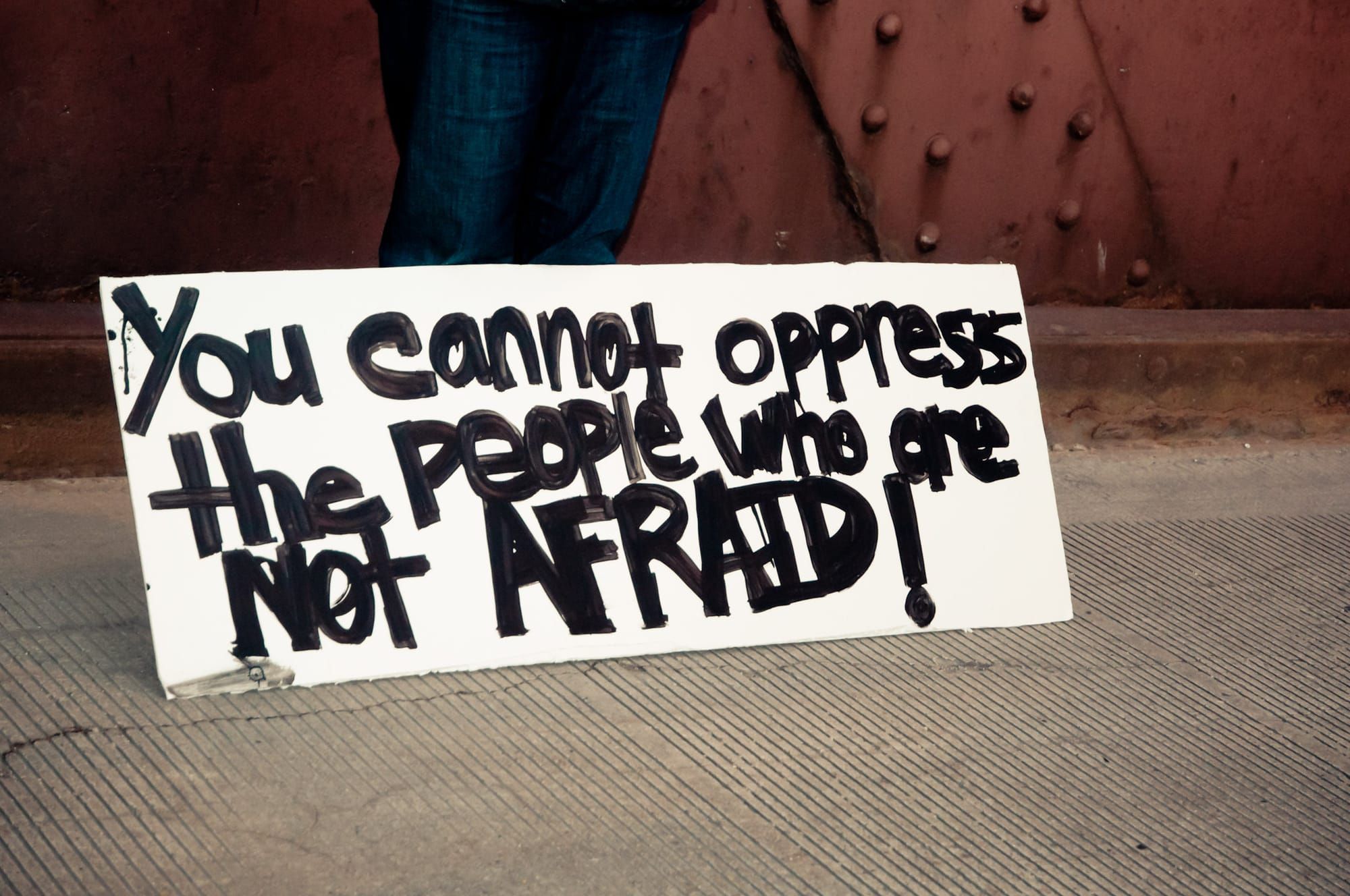
“If somebody else emancipates you, you’re not emancipated! It has to be self-emancipation.”– Eusi Kwayana
A common thread that underscores nearly every crisis is the people who are impacted seeking relief. Whether the disaster is “natural” or manmade, the public hopes that accountability will come from someone or an institution to provide answers. Societies of all sorts boast about their machinery for addressing problems. Everything is supposed to have an agency or a force meted out to address it when the time comes. So, as the U.S.—supposedly the world’s beacon for representative democracy—becomes an explicit example of the failure to do this, we should reorganize our thinking and ourselves. Several recent disasters highlight why this is necessary. Devastating storms rampaging through the southeast have triggered concerns about abandonment, representation, and the future in a time of imminent tragedy. We are challenged to take up the mantles of self-activity, self-governance, and self-organization to overcome. However, what these things mean should not fall into any stale repetitiveness.
Reflecting on oneself might conjure undeserved misgivings about individualism or self-centeredness at times. However, if we join a movement, an organization, or a collective undertaking, we must deal with ourselves. The change we hope to see takes place within us, too, and not just outside of us. It’s a lack of reflection in this regard that leads far too many people to look to manifestations of representation to answer questions about what’s to come or “what is to be done.” After all, even many of the revolutionary leaders and thinkers of the past could not have predicted the mess we’re in now. Since we’re at this moment, we’d be wise to look at what the things unfolding around us say. As is often the case, there might be no better place to look in the U.S. than in the South.
People were shocked at Hurricane Helene’s destruction across 500 miles of the southeast. It only took two days for the storm to annihilate landscapes with flooding and unrelenting winds from Florida throughout southern Appalachia. Hundreds of people are dead and unaccounted for. This led to comparisons to Hurricane Katrina, and a lackluster response from authorities only added to that. One of the primary concerns about what’s analogous should be the recycled lesson that comes back to us every time. If we’re not prepared to do what’s necessary for ourselves, we shouldn’t be surprised when institutions neglect us.
When I began to express this in my work in 2017, I pointed out how the climate crisis would force our hands. In “Climate Crisis and the State of Disarray,” I drew on the conclusions I’d reached with Zoe Samudzi when writing “The Anarchism of Blackness.” One of the central points of the latter essay is that since Black people and other marginalized and racialized populations had a historical record of governmental neglect, it forced us to engage in anarchistic self-organization, whether we called it that or not. In “Climate Crisis and the State of Disarray,” I suggested that since that neglect was the case, it would be wise to proactively build an intercommunal framework that connects a network of survival programs to climate catastrophe. Such a self-organized network could also be a source of political power. I wrote that in the wake of the “back-to-back destruction wrought by hurricanes Irma, Jose and Maria.” Now we sit in the wake of the back-to-back destruction wrought by hurricanes Helene and Milton, and other storms dance in warming tropical waters, anticipating their turn to strike.
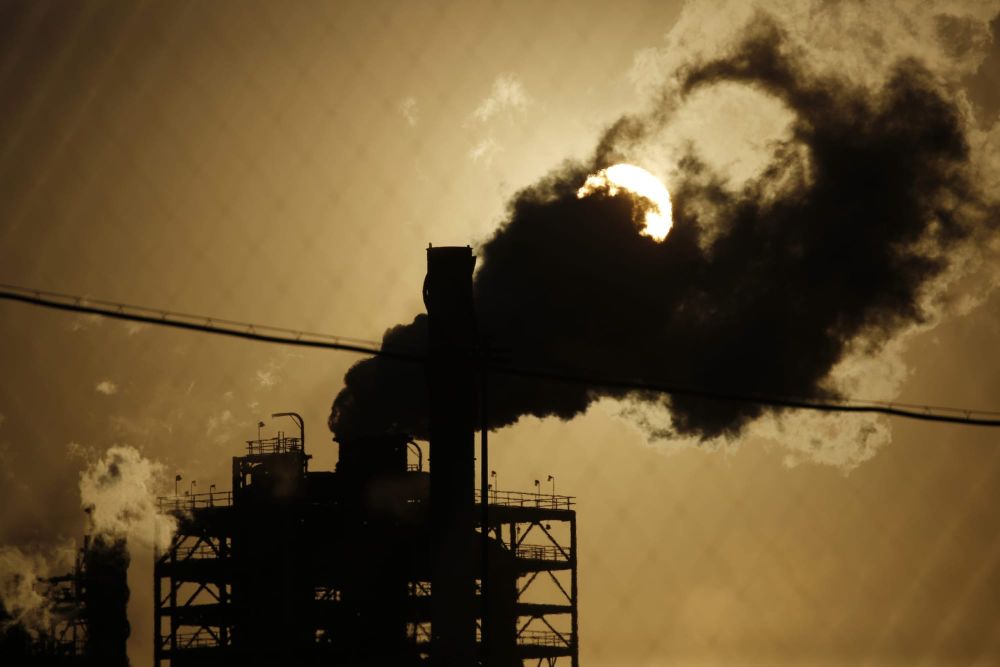
In the midst of all this, a chemical explosion terrorized the metro Atlanta area because of the BioLab pool and spa chemical company 25 miles east of the city in Rockdale County. Flooding from the hurricanes, a recent infrastructure travesty leaving residents without water, and the repressive rise of Cop City have been bad enough. Yet, BioLab, too, was a repeat of a similar incident in 2004. Kenny Johnson, the first Black person elected as Rockdale County Soil and Water Conservation District supervisor, testified as much and collapsed and died right after he did. Those living under the plume have strained to get clear information while independent researchers test and make comparisons with the recent spill in East Palestine, Ohio. “Two million pounds of chlorine burned in East Palestine,” said an EPA whistleblower comparing the 2023 spill with what’s unfolding in Georgia. “Twelve to 20 million pounds of chlorine appears to have possibly been burned here.”
One person’s “here” is another person’s “there.” Its cyclical nature demands an aggressive rupture. Bad news and problems come back around unless we force something to stop. The authorities, institutions, and increasingly right-wing political class show us that they are less and less concerned and aren’t afraid of the consequences of their actions, why would they be? Part of the necessity of our self-organization is not just about surviving as they destroy the planet further. It’s also about becoming a promising threat. There won’t be anything left for us otherwise. There’s something fatalistic about only utilizing programmatic responses to maintain for the moment without any intent to overturn the oppressive problems they respond to. That’s why it’s essential to address any lack of collective concern, which is plaguing the increasingly fascistic nature of U.S. society.
The Pan-African Social Ecologist and former member of the League of Revolutionary Black Workers Mobido Kadalie writes, “It seems that almost invariably, whenever ecological crises spring up, a social vacuum is revealed and state power is unable to respond to these increasingly frequent and more intense catastrophes satisfactorily. Upon these occasions, if we look, we will find instances of direct democracy in action, however temporary or weak. We must learn to recognize, support, and strengthen them.” He stressed self-organization in the spirit of C.L.R. James’s configuration of direct democracy. Kadalie emphasizes that the establishment of self-organized “directly democratic institutions has been demonstrated throughout history and is the natural human response when we are faced with authoritarianism and hierarchy.” That “natural response,” like the anarchist Peter Kropotkin’s famed explanation of mutual aid, should not imply inherent virtue. There are decisions to be made that require effort. That’s because, according to Kadalie, “Direct democracy and social ecology are part of an ongoing struggle to reclaim, redefine, and take responsibility for our local politics from the bottom up.”
It’s an uphill battle trying to push against all these forms of representation. Representative democracy, politicians, celebrities, and nation-states cloud the vision of the people who are their own rescuers. People cheer from the sidelines amid conflict all around us, hoping that some force for good will dominate on behalf of their interests. As disempowering as election season is in the U.S., it’s clear that the symptoms of such conditioning have washed over many of us. War becomes a spectator sport for would-be revolutionaries who wouldn’t dare take up arms themselves. Sabotage becomes a mere talking point for influencers who profess to know what “the masses” should and shouldn’t be doing. Furthermore, revolution can become an unattainable dream for forlorn, exhausted radicals who have not accepted the only option.
Either we self-organize ourselves now or wait until conditions worsen where we’re forced to self-organize ourselves later. This isn’t a call to ideological posturing that leftist pundits push onto their followings. What will or won’t work will be shown through trial and error. It will be decided through blood and fearful sweat. It will be decided by the unquestioned acceptance of a moment when we push a button that there’s no coming back from.
Author
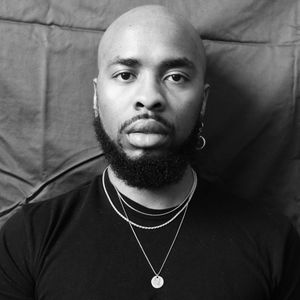
William C. Anderson is a writer and activist from Birmingham, Alabama. His work has appeared in The Guardian, MTV, Truthout, British Journal of Photography, and Pitchfork, among others. He is the auth
Sign up for Prism newsletters.
Stay up to date with curated collection of our top stories.