Seattle federal monitor’s communications with police officials raise questions over impartial oversight
Messages obtained by Prism between federal monitor Antonio Oftelie and two Seattle Police Department executives reveal backchannel coordination about policing tactics and budgeting
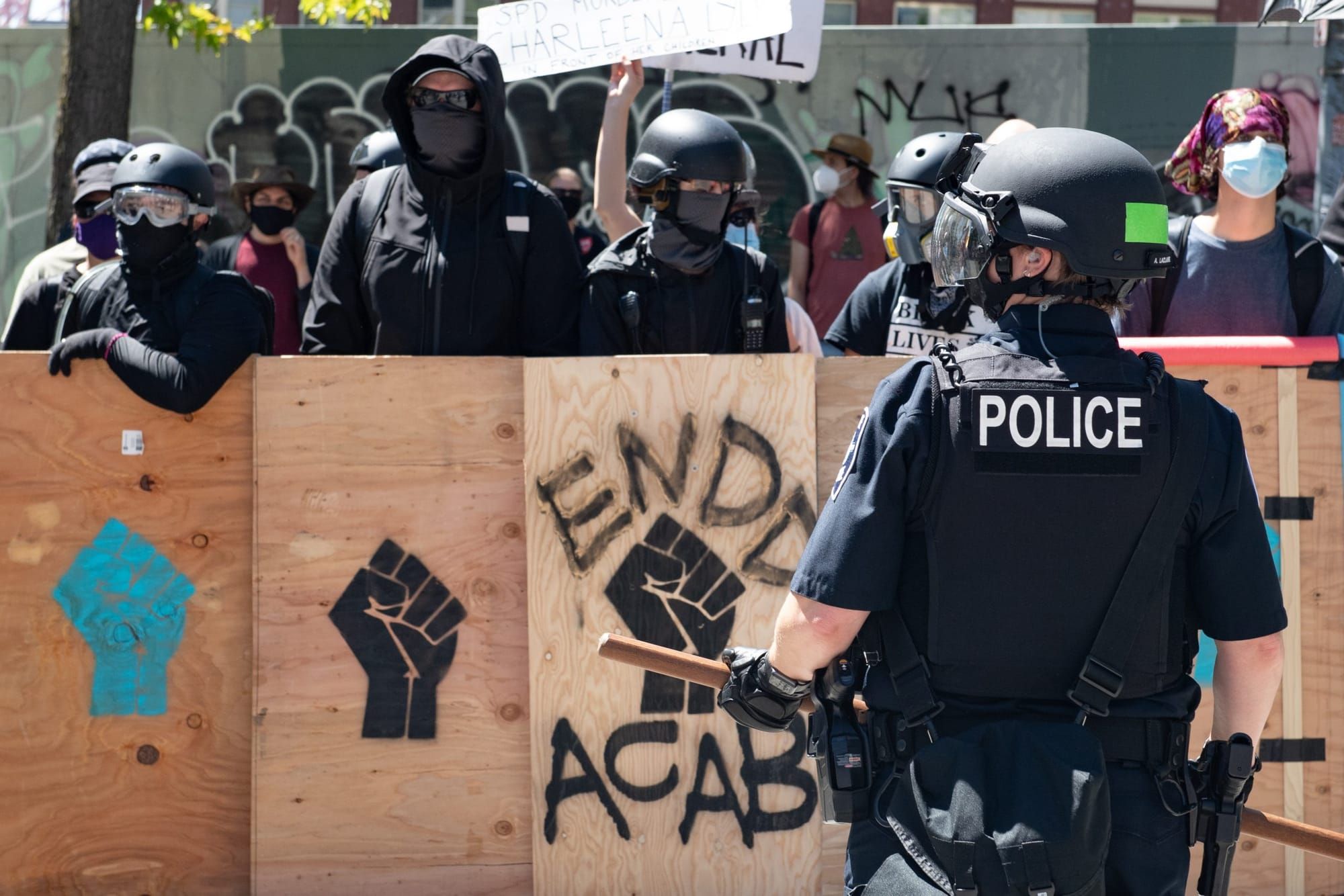
While the Seattle Police Department (SPD) struggled with accountability in 2020, the federal monitor tasked with overseeing police reform was privately seeking input from the very department he was meant to regulate, according to documents obtained by Prism.
Text messages and emails between top SPD leaders and Antonio Oftelie, who oversees the federal consent decree that mandates specific police reforms in Seattle, included critical comments about a community activist, among other revealing discussions.
The trove of messages ranging from July 2020 to November 2021, obtained by Prism through a public records request, provides an intimate window into backchannel coordination between Oftelie, SPD’s then-Executive Director of Strategic Initiatives Chris Fisher, and the department’s top lawyer, Rebecca Boatright.
Some of the text messages were previously revealed by Seattle news site The Stranger, which found messages questioning an SPD officer’s claims of racism and sexism within the department and arguing about the outcomes of Seattle’s police accountability system.
Additional messages uncovered by Prism shine a troubling light on the close relationship between Oftelie and the department he was appointed to keep in check. The text messages reveal discussions about who should replace Oftelie’s departing deputy monitor, input from the police executives on Oftelie’s reports, and downplaying of community members’ serious concerns about a chemical agent police used against protesters during the anti-police brutality protests.
The federal monitor having a close relationship with SPD brass certainly does not give the impression of impartiality.
Dom Campese, Washington Coalition for Police Accountability Communications Director
“It remains to be seen whether the consent decree has had or will have [a] substantive effect on SPD,” Dom Campese, communications director for the Washington Coalition for Police Accountability (WCPA), told Prism in an email. “The federal monitor having a close relationship with SPD brass certainly does not give the impression of impartiality.”
Castill Hightower, whose brother Herbert Hightower Jr. was killed by the SPD in 2004, told Prism that she felt the text messages were a “clear disregard by leadership … [for] concerns voiced by the community who are impacted by police violence.”
The U.S. Department of Justice (DOJ), which is the plaintiff in Seattle’s federal consent decree, declined to comment, writing that Judge James Robart ultimately oversees the decree.
In response to Prism’s request for comment on communications between Oftelie and SPD leaders, the SPD told Prism in a Jan. 23 email, “We will look into this and get back to you.” However, the department never provided a further response. Oftelie, who Prism emailed three times since late January, did not respond to a request to comment. Neither did Fisher and Boatright, whom Prism contacted twice at their personal and work emails.
Seeking “recommendations” for new deputy monitor
Oftelie was appointed in September 2020 as the SPD’s federal monitor to ensure the department abides by a 2012 agreement between the DOJ and the City of Seattle. The consent decree outlines specific requirements for Seattle, such as implementing reforms to force police to comply with the U.S. Constitution. The agreement came about after a 2011 civil rights investigation, in which the DOJ found that the SPD engaged in a “pattern or practice of using unnecessary or excessive force, in violation of the Fourth Amendment to the United States Constitution.”
Prism previously reported on Oftelie seeking detailed input from police chiefs around the country for a police reform plan he was developing in partnership with Target Corp., funded through a program under the DOJ. Community advocates told Prism that they took issue with the plan’s focus on boosting trust and legitimacy of American policing, rather than addressing institutional harm against communities of color.
The new communications obtained by Prism show more instances of Oftelie seeking input from police officials, this time from the very department he is meant to observe as an outsider.
Monisha Harrell was serving under Oftelie as the deputy monitor of the SPD when her uncle Bruce Harrell was elected mayor of Seattle in November 2021. She quickly departed to join his administration as deputy mayor.
In need of a new deputy monitor, Oftelie texted a group chat with Fisher and Boatright on Nov. 5, 2021, asking the pair for recommendations. Oftelie emphasized the desire for someone with strong writing skills and knowledge of policing and policy, preferably based in Seattle. He also noted a preference for a female candidate to address the gender imbalance on the monitoring team once Harrell left.
Boatright, the executive director of legal affairs for the SPD, texted back, “First – great news having Monisha across the street,” in the mayor’s office. “I’m so excited for the bold possibilities this administration offers! Let me muse over a potential replacement.” Boatright and Fisher then recommended two people who did not go on to get the position.
Vanessa Wheeler was eventually appointed as associate monitor. At the time, Wheeler was a partner at the law firm Miller Nash LLP, which the SPD had hired to sue multiple Seattle-area news organizations, seeking to obtain photographs and video footage their journalists captured during Seattle’s 2020 anti-police brutality protests. The SPD aimed to forcibly obtain the journalists’ work in order to investigate the arson of police cars and stolen police firearms from the cars. However, the SPD eventually withdrew its subpoena, dropping the lawsuit.
Collaboration in private exchanges
Oftelie’s position as monitor has real power, and his actions have serious implications for accountability. If the monitor were to tacitly allow the SPD to disregard democratically passed city laws, the SPD wouldn’t follow the law. If the monitor were to say the SPD needs more resources to comply with the consent decree, the SPD and its officers would get more resources.
The closeness and coordination between Oftelie and the SPD executives have frequently raised concerns among Seattle community members about his impartiality as the monitor of Seattle’s consent decree. The newly obtained text messages have only heightened those concerns.
The emails and texts also reveal how Oftelie and Fisher, who left the SPD in December 2023, communicated about getting a pro-police message out to the public.
Prior to Oftelie’s appointment as monitor, he had developed a reputation as a go-to expert on policing and published a paper on the SPD’s transformation under the consent decree. During this time, Fisher emailed Oftelie to ask if he would write publicly in favor of SPD priorities after proposed budget cuts in the summer of 2020 as anti-police brutality protesters called to defund the department.
“I was wondering – and I’m happy to skeleton it out – would you be interested in an op-ed or media appearance of some sort to speak to the need for a thoughtful approach, not a knee-jerk reaction,” Fisher wrote on July 10, 2020. Oftelie then invited Fisher to text him to arrange a time to chat.

Oftelie later made the news in Seattle after a Cascade PBS op-ed attributed to him was taken down in 2023 after a report by Real Change found that Fisher secretly played a role in its production. After that op-ed—which emails show Fisher initially drafted—was published, Oftelie emailed Fisher the link. “They shifted a few things … but overall it looks okay,” he wrote. “Not sure if it will help much at this point but hopefully will at least add to productive conversation. Let me know what you think.”
An hour later, Oftelie also texted Fisher the op-ed link. Fisher texted back, “Awesome Thank you!”
Once Oftelie was installed as federal monitor, he and Fisher continued to use their text thread as a backdoor conduit, funneling the input of SPD leadership straight into the hands of its ostensibly independent monitor.
Ahead of Oftelie’s second monitoring team meeting, Oftelie shared with Boatright “an internal use document for the monitoring team.” The document laid out Oftelie’s agenda, including a point about “Influence – moving the narrative and plans surrounding the next generation of SPD and the abolition/defund movement.”
“Do you see anything missing?” Oftelie asked Boatright in the email dated Sept. 17, 2020.
Part of the “long term” agenda over the next year was to develop a monitoring team report.
After an April 2021 meeting with the DOJ and the SPD concerning Oftelie’s proposed federal monitoring plan, Fisher texted Oftelie to ask if he could “reorient the approach” to the report. Fisher appeared to take issue with the report potentially replicating online tables showcasing policing data.
“Right now I’m concerned we will be using a lot of resources to provide information that doesn’t advance any cause or reach any actionable answers/strategies,” Fisher messaged Oftelie.
Oftelie responded, “Are there exact data points/analysis that you think we should dial down?”
Fisher texted back, “I’m not so focused on the data points as the outcome. What do we need to know to address concerns … yes, 2020 was diff. But I’m not sure what that means. … I worry it will be interpreted way more broadly than the math should allow.”
Oftelie responded that his monitoring team report submitted in federal court could accomplish Fisher’s desires.
“I envision the report as status and learning document – much less just listing data and much more on narrative that revolves around proving constitutional policing, learning, and growth of capabilities,” he wrote.
At this time, a broad section of the public was emphatic that the SPD’s policing was still anything but constitutional.
Oftelie’s first monitor report filed in federal court stated that “there is a robust ecosystem of organizations—not only the Monitoring Team and the Seattle Police Department but also the Office of Police Accountability, the Office of Inspector General, the Community Police Commission, and supporting community-based collaborations—that are co-creating and building the future of constitutional, lawful, and accountable policing” in Seattle.
In May 2021, Fisher texted Oftelie if he had received a response from the Seattle City Council regarding a letter Oftelie had written asking to “advise” the council on its upcoming SPD budget deliberations, arguing against reducing funding for the SPD.
Oftelie texted Fisher back that he hadn’t heard anything yet.
In public, Oftelie was performing the duties of a federal court monitor, asking the SPD pointed questions about how budget reductions would affect the police department’s abilities to carry out its duties. Fisher and Boatright used their official public responses to broadcast outwardly that cutting the SPD’s budget at all could lead to noncompliance with the city’s consent decree.
But in private, Oftelie was coordinating communication with SPD officials.
Prism did not receive a response from Oftelie about whether he engaged in similar personal relationships with DOJ attorneys or Seattle community members. Oftelie’s own communications are not subject to Freedom of Information Act (FOIA) requests. In the absence of Oftelie’s response, Prism filed a FOIA request to the DOJ, seeking communications between the DOJ’s Seattle consent decree attorneys and Oftelie within the first few months of Oftelie’s tenure as monitor. A response from the DOJ is pending.
Debate over tear gas
As cities across the U.S. and around the world erupted in anti-police protests in the summer of 2020 in response to George Floyd’s murder by Minneapolis police, Seattle police deployed tear gas onto crowds, causing numerous potentially life-threatening injuries. Some with asthma were left unable to breathe. The dense carpeting of tear gas night after night placed the SPD in the national media spotlight.
After the chemical particles settled, Seattleites were left wondering if the chemical agent’s effects could lead to long-term injuries. A study by the University of Minnesota School of Public Health found that chemical agents used by law enforcement may be linked to adverse reproductive health outcomes.
In the group chat between Oftelie and the two SPD executives, Boatright lamented the public debate surrounding the chemical agent.
“Let’s also get away from tear gas as being so bad it’s banned in warfare. That is such a false narrative and is easily defeated if anyone bothered to read the treaty itself,” Boatright texted on May 14, 2021. It is not clear what treaty she was referring to, though the 1925 Geneva Protocol and the Chemical Weapon Convention both address the issue. “We can acknowledge the impact without conflating it with chemical warfare.”
Oftelie texted back, “Agreed.”
Contrary to Boatright’s claims, CS agent is banned for use in warfare. In numerous cases across the world, the chemical weapon has killed people.
Earlier in the same discussion, Oftelie appeared to explain to Boatright why Seattle residents wanted accountability from individual police officers over the infamous “pink umbrella” incident on June 1, 2020. An officer had suddenly grabbed a protester’s umbrella, resulting in a serious escalation amid a largely calm crowd. A Seattle police commander had ordered officers to unleash tear gas and blast balls into the crowd.
“I often wonder too what ‘holding accountable’ means,” Boatright texted the group chat. “Does it have to be a head on a pike? Public stoning? Or can being held accountable mean to be held responsible to learn and advance?”
“‘Learn and advance’ only works for a Monitor. 🤓,” Oftelie responded. “Community wants people held accountable.”
Oftelie went on to explain that he as a monitor likes to see “systemic learning,” but the community “doesn’t understand that.”
Oftelie further wrote that though he didn’t disagree with then-Interim Seattle Police Chief Adrian Diaz, who had decided not to discipline the commander who ordered the escalation tactics, “the optics of it are bad.”
“No dispersal warning, knee-jerk reaction, the crowd wasn’t crazy, etc.,” Oftelie texted. “It’s all on video. So people wonder if [not] the cop, then who up the totem pole.”
Oftelie went on to share a link to an article in The Stranger, titled “Chief Diaz Refuses to Discipline Cop Who Started a Riot Over a Pink Umbrella, and His Reasoning Is Fucking Ahistorical.”
Fisher responded, “True. No one reads the stranger. But yes.”
Reaction to community input
The group chat between the three officials sometimes included unflattering discussions about concerned community members.
As a Nov. 3, 2021, Zoom meeting of Seattle’s Community Police Commission (CPC) got underway, Boatright texted the group chat that prominent Seattle police accountability activist Howard Gale was “the only public comment on the CPC 😂.”
At the meeting, Gale called for CPC commissioners to resign, saying that the CPC itself was not honestly representing or advocating for the Seattle community.
Fisher texted the group chat that Gale “needs professional help.”
In the meeting, Rev. Harriett Walden, a CPC commissioner with financial ties to the city of Seattle, including a $300,000 contract to run healing circles, asked to change the public meeting format so that she could respond to Gale’s comments directly.
Boatright texted, “Harriet [sic] is taking him on! She is lecturing Howard on due process.” Someone else in the chat reacted to Boatright’s message with a heart emoji. The screenshots provided to Prism do not show who reacted, but the texts are from Fisher’s phone; the heart reaction is gray rather than blue, indicating that it was not from Fisher.
Prism reached out to Gale and provided all of the text messages, including the one in which Boatright referred to Gale using a laughing emoji.
“It raises the question, why do they think that’s funny?” Gale said in an interview. “Is there something about me being the only public commenter that makes me wrong or laughable? Do they find it humorous that the public is shut out and not engaged?”
Gale said he felt the text messages were embarrassing for the SPD.
Castill Hightower, whose brother was killed by Seattle police, told Prism, “To be laughed at and told ‘he needs professional help’ for giving a statement in regards to the decision-making process that can lead to life-altering harm by the police … it’s incredibly inappropriate.”
Hightower has advocated for police accountability and resources for communities impacted by police violence since 2020. Her advocacy comes from her own lived experience of losing her brother Herbert to police violence while he was experiencing a mental health crisis in 2004.
For Hightower, the texts between Oftelie and the Seattle police officials are a clear confirmation of the urgent need to fund a community-led Affected Persons Program to “offer direct resources to victims of police violence and their families.” This should include healing spaces and “an actual commitment to listen and include the voices of those most impacted by police violence,” Hightower said.
In a separate incident after a May 11, 2021, city council meeting concerning SPD’s budget, Fisher texted the group chat that “public comment was really fairly limited.”
Boatright responded, “It’s amazing to me how many of the public commenters are apparently legal experts on the consent decree 🙄.”
Boatright was defensive of Seattle police in other text exchanges as well.
“[Judge] Robart wants culture change?” she texted the group on Nov. 19, 2021. “You can’t change culture when you’re under constant attack. We continue to take the narrative hit for being under federal oversight. We’ve done everything asked of us and more. We continue to drive forward methodically on reform […] all while absorbing the brunt of [city] councils actions.”
At the time, the Seattle City Council was considering making adjustments to the SPD’s budget.
Layer of opacity
Numerous text messages exchanged in the group chats obtained by Prism appear to be missing and were not disclosed by the SPD in response to a public records request. The content of those omitted messages adds another layer of opacity to how the most powerful law enforcement executives in Seattle view the public, elected officials, journalists, a police accountability system, and federal oversight that has lasted over 12 years.
“There is a common thread in all these text messages that accountability means that SPD somehow does better, not that SPD is actually held accountable,” Gale told Prism.
“There is a lot of rhetoric around how the SPD is listening to the community,” he said, but, “the overall thing with these people is that facts don’t matter, it’s feelings. They are trying to get back to the public trusting the SPD, and the facts and reality do not matter.”
Editorial Team:
Sahar Fatima, Lead Editor
Carolyn Copeland, Top Editor
Rashmee Kumar, Copy Editor
Author

Glen Stellmacher is a licensed architect. He is a graduate and former lecturer at the University of Washington. His work can be found around Seattle and in print within Advancing Wood Architecture: A
Sign up for Prism newsletters.
Stay up to date with curated collection of our top stories.