‘I was silenced’: San Quentin News editor-in-chief fired for prison reform efforts
Having suffered in the prison system for 30 years, I just wanted to help people heal and get home to their families. Instead, prison administrators took away my platform and labeled me a threat.
When I took over as editor-in-chief of San Quentin News (SQN) in early 2023, I was at the height of my rehabilitative journey. I was disciplinary-free, I had a college degree and vocational training, and was part of many self-help groups. At the time, I was also newly employed as an assistant producer to the podcast Ear Hustle and KALW’s podcast Uncuffed.
I was one of the leading incarcerated voices in the prison.
On March 17, 2023, Gov. Gavin Newsom came to San Quentin and announced his plans for a historic transformation of San Quentin State Prison (SQP). As editor-in-chief of the newspaper, I was able to attend. Surrounded by lawmakers, custody officials, and victims’ rights advocates, Newsom stood behind a podium with a blue poster that read, “San Quentin Rehabilitation Center,” which referred to a new building for the prison that would cost a staggering $360.6 million to construct.
I felt like I had been teleported to some postapocalyptic future. We were just coming out of a catastrophic outbreak of COVID-19 that killed dozens of people, including a correctional officer. A court had ruled that the “deliberate indifference” we faced from prison officials during the outbreak was “cruel and unusual punishment,” and the prison was facing over $400,000 in fines for workplace safety violations..
Yet there I was, listening to an announcement about a new building and a prison rebranding.
“We’re here to do more and be better,” Newsom said at the press conference. His speech caught my attention, especially when he mentioned that roughly 10% of correctional staff think about attempting suicide. I had written about this particular topic before—prison life takes a toll on us all.
For the first time, it seemed the system was acknowledging the damage it was doing to its own people. Newsom sounded like he sincerely wanted to transform San Quentin’s hyper-punitive environment into one based on humanity and homecoming.
“This is about getting serious about addressing the issue of crime and violence in our state by doing things differently and acknowledging, as was said by many speakers, with humility, that we have failed for too long,” Newsom said in his address.
I stood in line with the press. I informed the governor that our main concerns at SQP were overcrowding and poor living conditions. I told him we were concerned the “Scandinavian model” he referenced wouldn’t address these issues.
“I don’t refer to this as the Scandinavian model. This is the California model. The California way,” he said.
A reporter from KQED behind me asked the governor whether the advisory group he planned to create as part of this rebranding would include people currently incarcerated in SQP. Newsom replied yes, stating they wanted to incorporate our views in their reform efforts.
Hearing this, I thought: I have 30 years of lived carceral experience. I should galvanize a group of incarcerated stakeholders to vocalize our issues. So, that night, along with my cellmate Arthur Jackson, I co-founded The People In Blue (TPIB), a group dedicated to reducing harm, creating safer communities, and minimizing California’s need and overreliance on prisons.
TPIB included a diverse group of incarcerated people from SQP that aimed to provide feedback and alternatives to Newsom’s rehabilitation plan. As editor-in-chief of SQN, I also became a spokesperson for incarcerated people because the newspaper was inundated with questions from outside media after Newsom’s announcement. I told reporters who asked what we thought of the California Model that a new building was not enough to change the culture in prison.
In June 2023, I expanded on these thoughts in an article published in Marin Independent Journal, stating that instead of sinking more money into a wasteful $14.2 billion annual budget, the California Department of Corrections and Rehabilitation should be investing in community-based resources to increase the likelihood of incarcerated individuals returning home. Around this time, TPIB also started writing its own report and recommendations for reform in order to provide an incarcerated perspective to the governor that were based around collaborative conversations between TPIB members and correctional staff. In September 2023, TPIB released this report, which identified concrete reforms such as implementing mandatory financial literacy programs, providing healthier foods through the institution’s culinary system, and bringing back wellness initiatives like weightlifting programs, food co-ops, and gardens. Meanwhile, Newsom’s 21-member advisory council continued to meet in secret, eventually delaying the release of their report.
Some prison administrators started asking questions about who elected TPIB as representatives of the population and who wrote our preliminary report, saying they didn’t know about its existence and that we didn’t have permission to release it. This wasn’t the first time my writing had been challenged by administrators. I had written multiple articles for SQN that had been edited to include softer language. This time felt different. Some prison administrators were referring to TPIB as a security threat because our preliminary report cited history dating back to George Jackson, a Black activist killed in SQP in 1971.
But TPIB is not a security threat. It is a diverse coalition of incarcerated people using lived experiences to speak truth about prison reform. The truth is that some administrators just don’t want incarcerated people to be able to express their opinions.
The situation only worsened when some members of Newsom’s advisory council acknowledged that they were impressed by our work. By early December 2023, these high-ranking council members made it clear to TPIB that our preliminary report would be fully adopted into their Reimagining San Quentin report. We also convinced them to reduce the cost of the new rehabilitation building construction by $120 million so that money could be allocated for other things, including fixing our living conditions. This caused some powerful tempers to boil over among prison administrators and some council members who were connected to SQP.
On Dec. 8, 2023, I was sitting at my desk in the newsroom when custody staff came and asked me to step outside. Two custody staff members told me to gather all my things and leave the media center, which I was then banned from. I was told I could no longer write for SQN. I was banned from participating in the Ear Hustle and Uncuffed podcasts. I was even banned from attending meetings with the San Quentin chapter of the Society of Professional Journalists that met in the media center. I was silenced.
Three weeks later, I received a rules-violation report alleging “overfamiliarity” with a prison volunteer. I knew it was a false report, but I was found guilty anyway. I filed an appeal, and the California Department of Corrections and Rehabilitation overturned my conviction and ordered the violation to be reheard or dismissed in the interest of justice. I received a new hearing in June 2024 and was found not guilty six months later. Despite this, upon my exoneration, I was told by an angry custody officer that I would not be going back to my job.
As Newsom admitted in his March press conference, incarcerated people and staff alike have suffered trauma from the toxic prison system. We suffered through a fatal COVID-19 outbreak. We suffered through being warehoused in dangerously overcrowded facilities without enough rehabilitation programs. As someone who has been a part of this suffering, I wanted to help create real reforms. I wanted to create a healthier system for public safety, healing, and getting people home to their families. I used my voice and my pen to help facilitate change, and some prison administrators didn’t like it. They didn’t want to hear what I had to say, so they took away my platform and labeled me a danger to the prison. What are these calls for reform but smoke and mirrors if we’re silenced when we try to make them a reality?
Editorial Team:
Rikki Li, Lead Editor
Carolyn Copeland, Top Editor
Stephanie Harris, Copy Editor
The Right to Write (R2W) project is an editorial initiative where Prism works with incarcerated writers to share their reporting and perspectives across our verticals and coverage areas. Learn more about R2W and how to pitch here.
Author
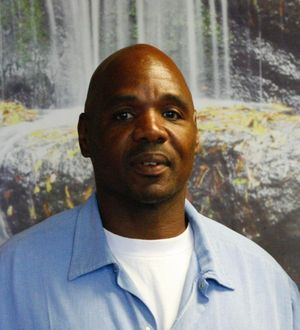
Steve Brooks is an award-winning journalist who has written for Prism, Time Magazine, Sports Illustrated, and many other publications. He is the former editor-in-chief of San Quentin News and a co-fou
Sign up for Prism newsletters.
Stay up to date with curated collection of our top stories.