Tribunal aims to highlight Rights of Nature at Climate Week in NYC
Indigenous-led tribunal on Mountain Valley Pipeline a chance to educate about protecting the rights of the non-human world, activists say
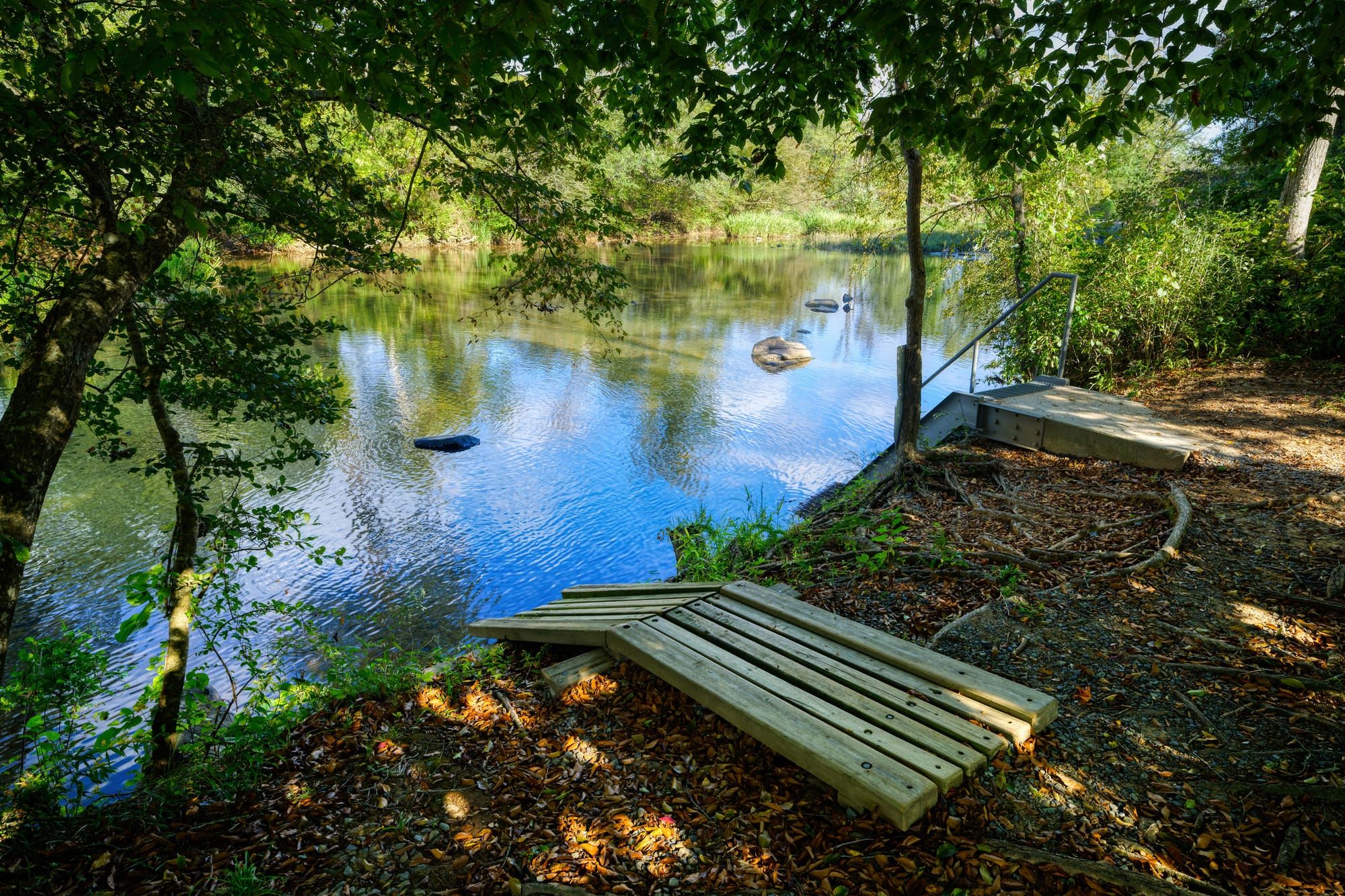
About 100 people packed into a small boardroom in North Carolina Brown’s Summit on June 1, just 4 miles from the Haw River State Park. Five hundred others joined online to witness the presentation of evidence in the Yesah Tribunal, an Indigenous-led hearing on the question of environmental violation by the Mountain Valley Pipeline, a 303-mile methane gas pipeline constructed to transport gas from eastern Pennsylvania through Virginia and West Virginia.
The pipeline is not yet fully operational, with a planned addition known as the Southgate Extension still undergoing the permitting process for its North Carolina route. The central question of the Yesah Tribunal wasn’t about a water quality permit or easement concern, but whether the pipeline had violated the Rights of Nature and the rights of the Haw River in North Carolina.
Hosted by Seven Directions of Service, Movement Rights, and the Global Alliance for the Rights of Nature, the tribunal’s judges concluded that the pipeline was indeed an ongoing violation of the Rights of Nature. The ruling found that the rights that the nonhuman world enjoys simply by existing protect North Carolina’s Haw River against the pipeline. But the citizen-led effort is not legally binding. Organizers hope that increased attention at the national and international levels will push the issue into the western judicial system and finally bring some form of justice in the pipeline battle that locals have spent the better part of a decade fighting.
The Yesah Tribunal heads to Climate Week in New York later this month, where a panel of judges hosted by the Global Alliance for the Rights of Nature will once again hear evidence of the impacts of the Mountain Valley Pipeline on local ecosystems. According to Crystal Cavalier-Keck, who helped bring the Yesah Tribunal to North Carolina as the co-founder of advocacy group Seven Directions of Service, the goal of the Sept. 22 tribunal is to preview what will ultimately be heard in November of next year in Brazil at the 30th Conference of Parties, a global environmental and climate convening, more commonly known as COP 30.
“[This] is the last chance [of] stopping the MVP Southgate because we still have that portion of the pipeline that we’re trying to [fight],” said Cavalier-Keck, a citizen of the Occaneechi Band of the Saponi Nation.
But the escalation of the Yesah Tribunal to Climate Week, where it will see a much larger audience than it did in June, is not just about reaching a verdict, Cavalier-Keck said, adding that the Rights of Nature is an “educational campaign.”
For many, the Rights of Nature might be a new concept, but it’s not challenging to understand, said Shannon Biggs, a co-founder of Movement Rights, one of the organizations that hosted the Yesah Tribunal. Biggs will also be one of the judges at the tribunal during Climate Week, along with Casey Camp-Horinek, who served as the president of the June tribunal.
Biggs said that the formal Rights of Nature movement is an articulation of Indigenous worldviews that have existed within Tribal communities since time immemorial.
A Rights of Nature law doesn’t give rights to nature but recognizes and codifies what already exists within nature. Think of it this way, Biggs said: Even before the abolition of slavery in the U.S., enslaved Black people had rights—they were just denied those rights according to the law that existed.
“So this isn’t about the law creating rights,” Biggs said. “This is about correcting unjust law.”
Even Pope Francis, who heads the organization that once, through the Doctrine of Discovery, endowed the right to claim and steal Indigenous lands in what would become the U.S., has said that this abuse of the earth must stop.
And it’s catching on quickly. Biggs calls Rights of Nature the fastest-growing environmental movement of the past two decades. That might be because of a growing desire to try a new approach as the consequences of climate change worsen, and as it comes to light that environmental protection laws or government investments in clean energy simply aren’t working quick enough or at all. Of 1,500 environmental policies enacted by 41 governments between 1998 and 2022, only 63 have effectively reduced emissions, according to a review published in the journal Science in August. In the coming years, global climate emissions are still expected to rise, despite alarming evidence that public investments in fossil fuels are already endangering people’s lives.
Research on Rights of Nature laws, also published in Science, states that “the global environmental crisis is accelerating and that environmental laws have not been able to reverse the trend.”
And while the tribunal itself has no legal ramifications, it’s part of a larger cultural shift that over time can lead to a change in western law that currently says, “nature is property [and] we can do with it what we want [and] make a profit from it,” Biggs said. In the U.S., the dynamic is one where corporations have a right to extract—water, oil, gas, lumber, silver—and nature doesn’t have an ability to say “no.” It’s a harmful dynamic, Biggs said. Rights of Nature teaches that “we are part of the natural world, that we are not separate from it. We don’t own nature,” she said.
There is a track record of Rights of Nature tribunals creating a pathway for future environmental litigation, said Natalia Greene, the global director of the Global Alliance for the Rights of Nature. Greene said that a Rights of Nature tribunal in Almería, Spain, helped push local officials to lower the amount of water that farms were allowed to extract from the aquifer. And in Brazil, a federal prosecutor incorporated a tribunal verdict into a legal fight against the Belo Monte Dam, which was ultimately allowed to be constructed despite widespread opposition from Indigenous peoples.
There are more than 39 countries that recognize the Rights of Nature in some way. The U.S. is not one of them, though Rights of Nature laws have been introduced in local and state legislatures, including in North Carolina.
State Rep. Pricey Harrison introduced legislation in 2023 to ensure the rights of the Haw River be protected. The Haw is one of the bodies of water affected by the Mountain Valley Pipeline Southgate Extension and was a main point of discussion during the June tribunal.
Harrison, who has spent the bulk of her two decades in office pushing for environmental laws, said that changes in North Carolina won’t happen quickly. “There have been really great ideas that took decades to pass,” Harrison said. “This is the beginning, and we’ll keep working it.”
Author

ray levy uyeda is a staff reporter at Prism, focusing on environmental and climate justice.
Sign up for Prism newsletters.
Stay up to date with curated collection of our top stories.