Never eat the candy on your pillow: Rewriting your life one character at a time
Over time, I’ve realized that every setback can become an opportunity to rewrite our problems into solutions
Dear Reader,
Welcome back. You can basically consider this column a part two or follow up to my previous column about technology and the imprisoned.
As you may recall, I mentioned in the last column that a middle-of-the-night update by our prison’s tech provider, Securus, led to the complete loss of everything I’d written over the last year. It was devastating to all of us who lost music, games, schoolwork, and family photos.
Stephen, my friend and fellow college student, urged me to focus on rewriting a short story called “Shift Change,” about a correctional officer named Sergeant Townsend. Over time, I realized that every setback can become an opportunity to rewrite our problems into solutions. This new frame of mind made me want to rewrite “Shift Change” even more.
One of the many things my incarceration has given me is the ability to observe not just my surroundings, but also prison staff and my fellow imprisoned people. We’re all human, and we’re all behind these prison fences. Some of us live here, and some only work here.
Over the years, I’ve paid enough attention to realize that every one of us has a story. Now, I can’t speak for the officers who work here—their stories are their own. But I can base characters off what I see daily because no one knows prison quite like an incarcerated person.
With all of that said, allow me to introduce you to a fiction piece I wrote that is drawn from my observations. This is my return to Sergeant Townsend’s world, and the short story I’ve rewritten called “Shift Change.”
Sergeant Townsend knew what happened as soon as he heard a fellow corrections officer’s panic alert and the request for help on 2-North-2.
“Whatever you took from Perkins,” Townsend said, “For God’s sake, give it back.”
Townsend clipped the radio back to his shirt, and took off in a hurry for 2-North-2. Why wouldn’t the shift commander listen when he asked—no, practically begged—not to schedule rookies on that walk? Everyone knew 2-North-2 was the solitary confinement walk. There were inmates on 2-North-2 who’d not seen sunlight in years, and still, the higher-ups insisted on letting newbies work it fresh out of the academy. No wonder things were so out of control lately.
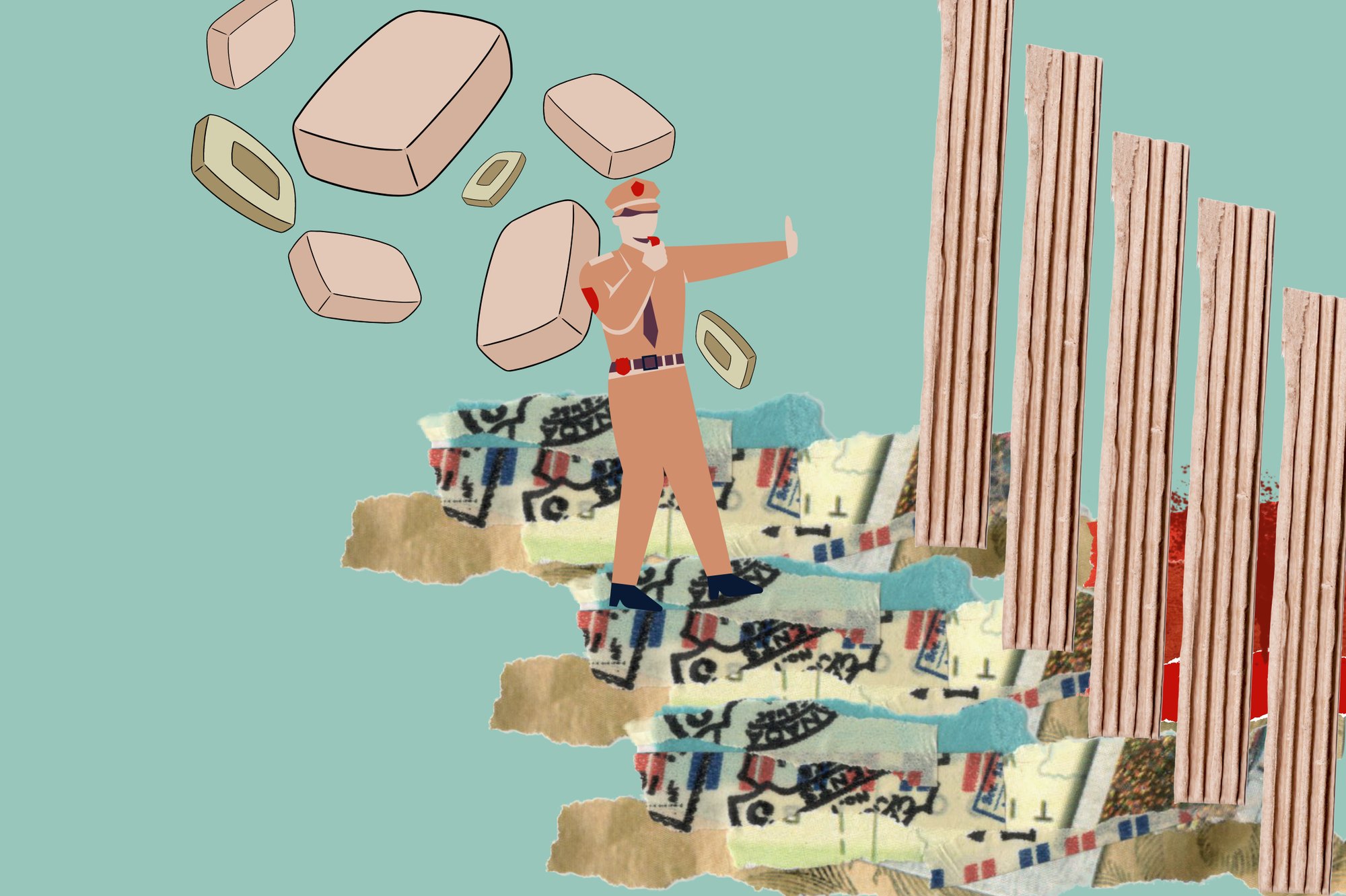
The rookie, Haynes, stood outside Perkins’ cell door, holding a handful of carved bars of soap. Sergeant Townsend didn’t even have to ask what happened.
“Townsend, the inmate destroyed state property, sir. So I took these from him and…”
“It’s Sergeant Townsend to you, rookie.”
Townsend snatched one of the carved bars of soap, a crude head and face, and held it up for the rookie to see.
“It’s just a bar of soap. That’s all it is,” Townsend told the rookie.
Inside the cell, Perkins smashed his face against the concrete block wall. Thud! Thud! Thud!
“It became contraband the moment that asshole in there decided to go on a hunger strike and make my job hard, sir. I’m sick of his…” Haynes began.
Townsend noticed that one of the carved bars of soap had been broken. The face that Perkins had taken the most time to carve. A woman’s face.
“And you figured taking a few bars of soap would make the inmate more agreeable? Is that what you thought? Do you even know what these are to him?” Townsend said.
Haynes shrugged.
Sergeant Townsend called for CERT, the prison’s certified emergency response team. There’d be no going into Perkins’ cell now without backup. This meant stun guns, pepper spray, and shock shields. He’d only been on shift for 20 minutes and his day was already off to one hell of a fantastic start.
Thud! Thud! Thud! The frequency of the strikes increased.
“I told the piece of shit he’d better start eating, too,” said Haynes.
Townsend realized the rookie resembled a mole. A big, fat, lazy, good-for-nothing rodent.
“Perkins came in with five years. Five years nonviolent, Haynes. Did you know that?”
“Yeah? Well, the fucking animal bit Dominguez last week.”
“Perkins didn’t lose his shit until his sister died, and then the Warden’s approval for a funeral visit got lost in the shuffle. Perkins made the bonehead decision to assault an officer and make a run for the fence. That’s why he’s in solitary—and we don’t call the residents in here ‘animals.’”
Haynes shook the broken soap face at Perkins through the cell bars.
“It’s just soap! Carve another stupid face. What the fuck’s the matter with you?”
Townsend wanted to snatch Haynes up by his badge and grind the man’s face into the bars for riling Perkins up. Wanted? No, he yearned to do it. But that wasn’t the way things worked in prison. Not when one had a mortgage, two car payments, high gas prices, and three mouths to feed. Instead, Sergeant Townsend focused on the rookie’s badge and tried his best to drown out the wet thunk of Perkins’ face smashing into the wall. Townsend would be professional and do his job.
Thud. Thud. Thud.
Haynes frowned at the look of concern on Sergeant Townsend’s face.
“That idiot’s only hurting himself. I don’t feel sorry for him,” he said.
To hell with protocol and rules. CERT would never make it in time. They probably weren’t even geared up yet. Perkins’s entire head would be hamburger meat by the time things were under control. Townsend reached for his keys.
“Townnsend, tell me you’re not thinking of going in there,” Haynes said. “Let that animal die in its cage. It’s no one’s fault but his own.”
Townsend hated to admit that the rookie had a point. Perkins was acting like an animal, and it was the inmate’s own decisions that led him to the cell. Perhaps they should wait for CERT.
Townsend faltered momentarily.
The pattern changed. The sound became a rhythm.
Thud-thud, thud. Thud-thud, thud.
Neither officer could bear to look at what Perkins was doing to himself. Townsend recognized a song he’d heard many times before. The song of defeat. With one final refrain, the melody reached its conclusion. Both Townsend and Haynes looked into the cell in shock at the senseless carnage.
CERT would no longer be needed.
Haynes dropped the soap and retched.
“Now’s a fine time for you to learn how to file paperwork, rookie,” Townsend said.
Sergeant Townsend radioed for his superior and any available nurses on staff. Little good it would do. Shift change had only just begun, and no one would be in much of a hurry.
Returning to his office, Townsend slid down, back against the closed door, guts roiling. He pulled out his phone to look at a picture of his wife and kids, his reason for enduring even the worst of days. He put his head in his hands and breathed deeply.
As Sergeant Townsend’s tale ends, another begins. Upon rewriting this story, I’ve realized that so much in my life has been made better by revisions—and this includes how I view the world around me. So let me ask you, dear reader: What have you learned? What have you observed? What do you need to revisit and revise?
The Right to Write (R2W) project is an editorial initiative where Prism works with incarcerated writers to share their reporting and perspectives across our verticals and coverage areas. Learn more about R2W and how to pitch here.
Author
Derek R. Trumbo, Sr., a multiple-time PEN Prison Writing Award winner, is an essayist, playwright, and author whose writing has been featured in "The Sentences That Create Us: Crafting A Writer's Life
Sign up for Prism newsletters.
Stay up to date with curated collection of our top stories.