Rewatering Black Mesa
A Native-led grassroots team is determined to bring back the springs to Diné and Hopi land that make up Black Mesa
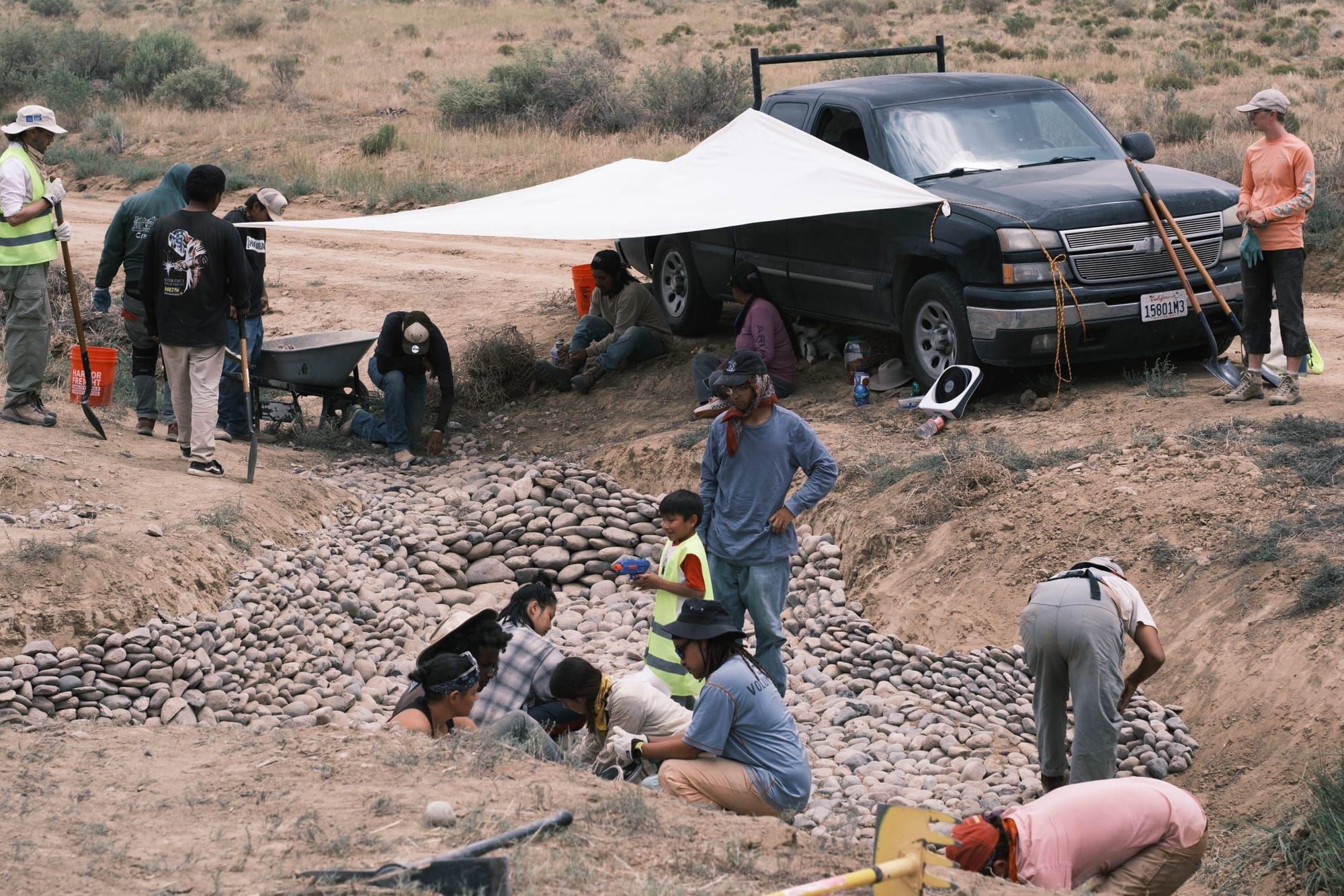
Stacking rocks. That’s how Diné and Mexican rainwater harvester Carmen Gonzales plans to rewater the high desert of Dziłíjiin, or Black Mesa, the roughly 256,000 acres of juniper-and-pinyon-dotted hills of northwest Arizona that span Diné and Hopi lands.
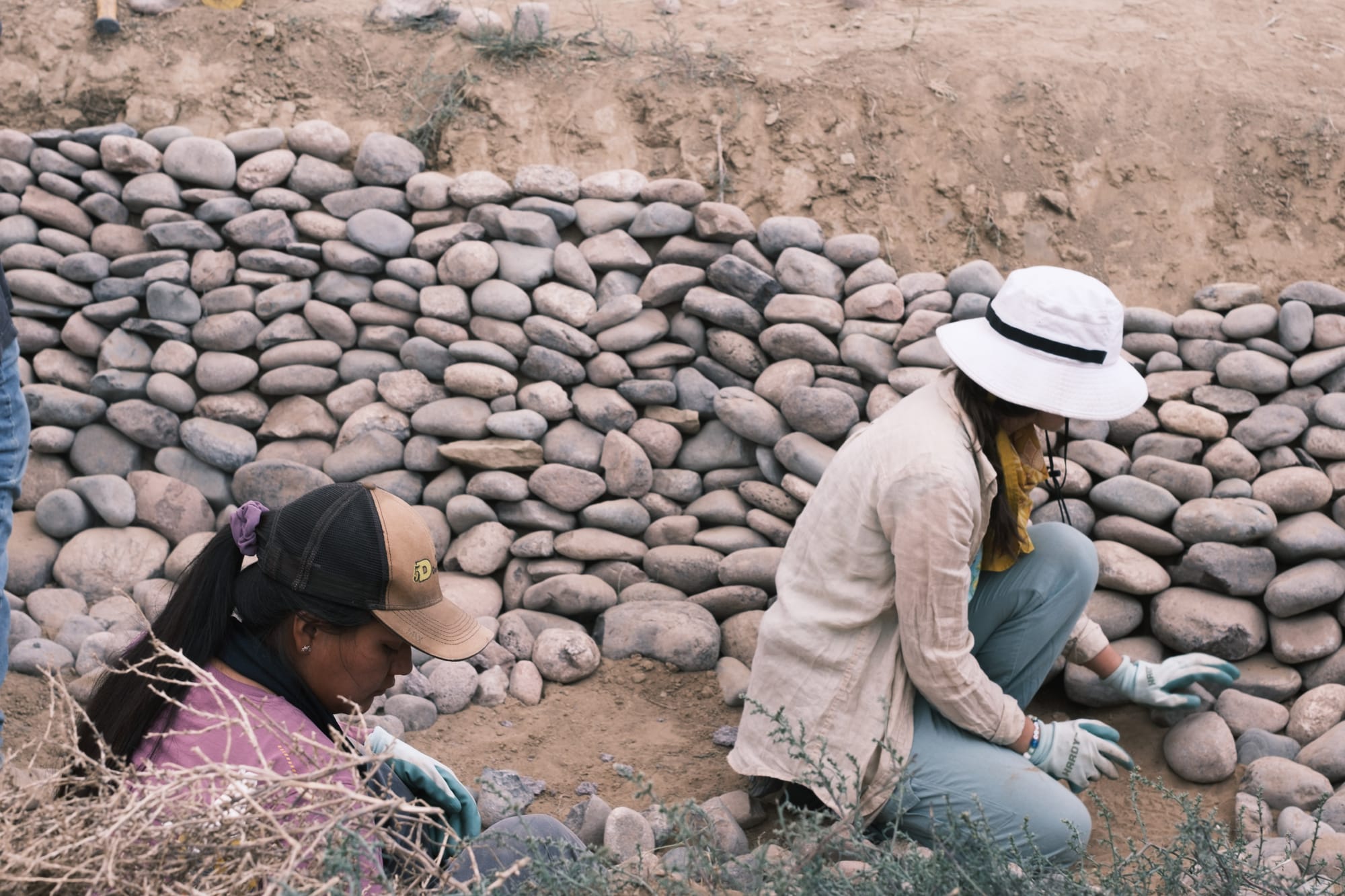
Through her organization, Indigenous Water Wisdom, Gonzales implements low-tech erosion control structures that draw on ancestral techniques and permaculture designs. These structures often look like stacks of rocks laid across desert washes in swirls, bowls, and waves, all designed to slow the flash floods that wash out main roads and carve arroyos into canyons.
Gonzales returned to her Diné homeland to lead an erosion-control workshop in July, kicking off a water restoration project that will last decades. Bringing water to a desert may seem impossible, but historically, seeps and springs bubbled up to water sheep herds, households, and farms. She intends to recharge the shallow springs across the land.
“There’s enough water—and when I say that, a lot of times people look at me crazy,” Gonzales said. “There’s always been enough everywhere. Our Mother has so much love and abundance to give, if we just ask. Now what we do with it, how we manage ourselves in relationship to the place we’re in, that makes the difference between whether we have drinking water or not. If we bring water back to this land, children can come home.”
A conflicted history
When the Navajo and Hopi people were confined to their newly formed reservations in the late 1800’s, they still moved freely across the shared border in 1.8 million acres known as the Joint Use Area (JUA). There were minor tensions, but the Hopi traded the harvests of their dry desert farming for sheep meat and wool weavings of the Navajo.
In 1951, the Bureau of Indian Affairs (BIA) appointed American Mormon lawyer John Boyden as the land claims attorney for the newly formed Hopi Tribal Council. Despite objections from Hopi traditional leaders, in 1966 Boyden brokered a deal granting rights to Sentry Royalty Company (the predecessor to Peabody Energy Company) to strip-mine the largest coal deposit in the U.S., located within the JUA. However, in a blatant ethical violation, Boyden simultaneously worked for Peabody when the company began negotiations with Navajo and Hopi Tribal Councils.
Meanwhile, the Navajo Tribal Council signed a 10-year lease agreement with Peabody in 1964, and a second 10-year agreement in 1966 that gave Peabody rights to mine 40,000 acres on Black Mesa.
Peabody Energy began operating the Black Mesa Coal Mine in 1970, using N-Aquifer groundwater to transport coal from the mines through a slurry line to Mohave Generating Station in Laughlin, Nevada, 273 miles away. The Kayenta Coal Mine began production in 1973, hauling coal to the Navajo Generating Station in Page, Arizona. The stations powered cities in Arizona, California, and Nevada.
A July 2023 study found that until the mines’ respective closures in 2005 and 2019, Peabody used 1.3 billion gallons of N-Aquifer groundwater each year since 1971. According to the report, the U.S. Department of the Interior failed to hold Peabody responsible for its overuse of water.
“This landscape has been sucked dry of all its water and ripped to shreds to turn on lights in another city,” Gonzales said. “The people who are living here didn’t have electricity, or running water, or safe, clean drinking water.”
The land dispute worsened when Congress passed the Navajo-Hopi Land Settlement Act, amended as Public Law 93-531, which partitioned the JUA in 1974. The bill redrew the borders between Navajo Nation and the Hopi Reservation, forcing the relocation of several hundred Hopi and over 10,000 Diné. However, several hundred families resisted relocation from what was now known as Hopi Partitioned Land (HPL). Gonzales’ family were among the resisters.
Gonzales was born the same year the Resettlement Act passed 50 years ago; she grew up at the Hard Rock mission, where her grandfather was a preacher. She observed him arrange tree trunks to shelter the springs where she played as a child. The springs have since dried up. Instead, local families are forced to haul tainted aquifer water from community stations miles away from their homes.
“The reason my mom eventually moved me to the city was because the water here was making me sick,” Gonzales said. “So in the past 50 years, the people who relocated haven’t been allowed to return, and the people here have been living without drinking water. Everything is difficult here. People are getting older, and it’s not easy to haul water 10 or 20 miles.”
Soon after, Gonzales’ remaining family was forced to move as a result of the 1966 Bennett Freeze, a development ban on 1.5 million acres of Navajo land that, until 2009, prohibited the construction or repair of basic infrastructure, such as barns and houses.
However, all HPL development must be approved by the Hopi government, prohibiting Diné resisters from implementing infrastructure for running water and electricity. Gonzales remembers a gaping hole in the wall of her grandfather’s home, one he could not legally fix.
“I get depressed every several months with the trauma that happened as a child here … When I come home, I remember ways I’ve been hurt, ways I’ve seen my family get hurt,” Gonzales said. “And everybody here has been going through that, and it expresses itself in different ways in the community: lateral violence, alcoholism, substance abuse, domestic violence, self-harm and suicide ideation in a lot of people.”
A hopeful homecoming
Until last year, Gonzales thought all Black Mesa Diné families had been relocated and no one lived in HPL. But in October 2023, she connected with a current resident at an Indigenous Environmental Network conference and everything changed. There, Gonzales met Diné Daughter of Resilience Mary Katherine Smith, someone who lived a similar life to her own—and one that was directly affected by the Black Mesa mine pollution.
“I grew up here, but I had lung issues. I got sick very easily. So I got farmed out to my sister’s at a very young age until I left for [boarding] school,” Smith said.
Smith lived in other states until 2000, when she returned to her mother’s land in Big Mountain equipped with permacultural knowledge. She and her sister Marie implemented various erosion control structures across their land. As the site of the first water workshop, the sisters’ land is ground zero of water restoration, a legacy that honors their late mother Katherine Smith, an icon of HPL Navajo resistance.
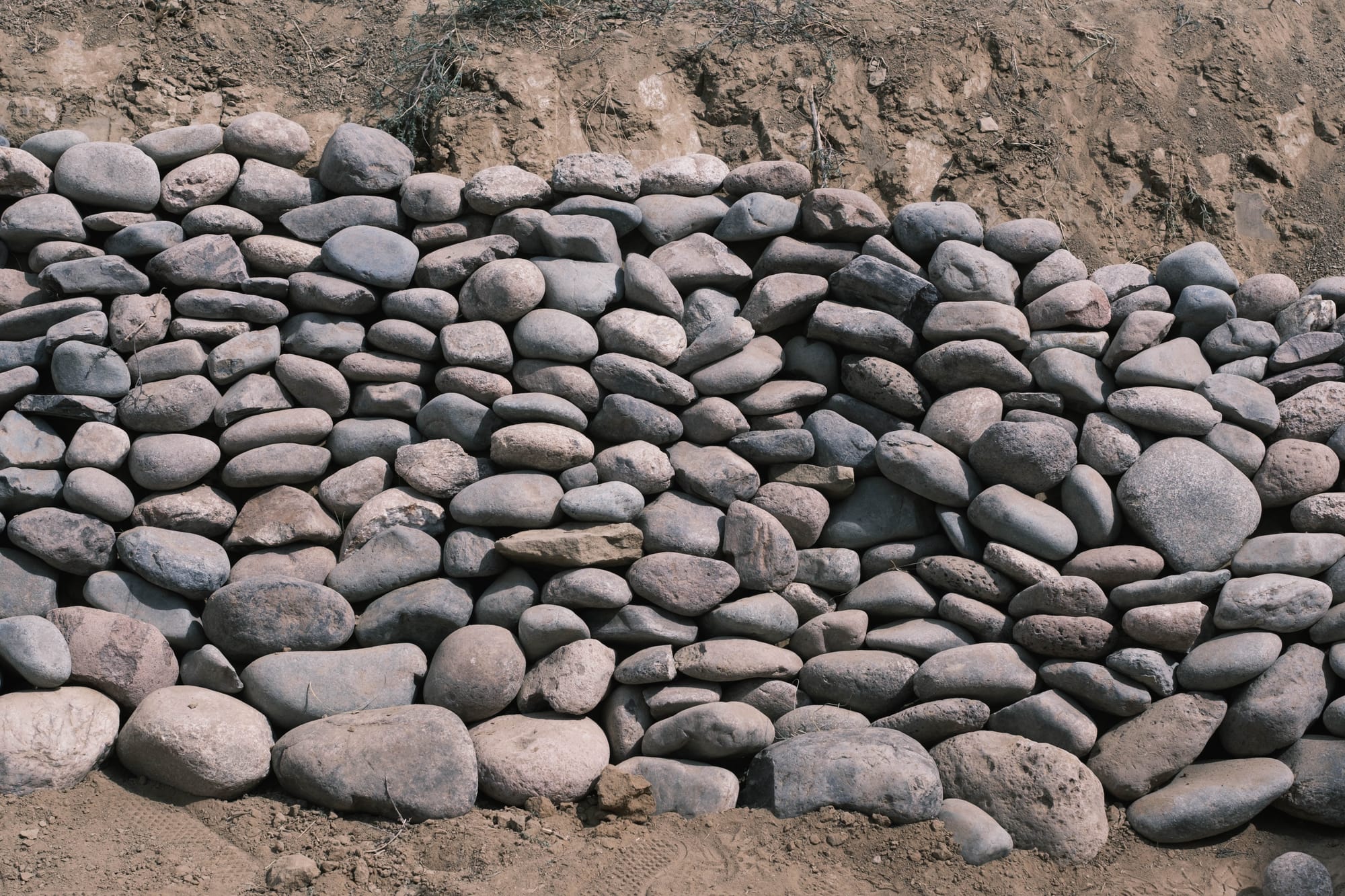
“When I was younger … after rains, we would get our shovels and start trying to … catch some of the water so it could seep in [the soil.] There was no formal training; it was just a cultural thing,” Smith explained. “You walk around the hills, and you’ll see these ancient wood trees that have been put into gullies to slow the water down. I was born looking at that, seeing it as a young kid.”
Now Gonzales dreams of all the children of displaced families who, like her, don’t know there is still a home for them to return to. For her, restoring a safe drinking water source could be the first step to welcoming people back to the land.
“This is my birthright and my responsibility, and that feels good,” Gonzales said. “It feels good to have my place on this earth that I have made a commitment to, to protect, to love. I want to come home. I want to see children being very entrepreneurial and creative and claiming joy. If we just bring back 10 springs, it will change the lives of everyone here. I think we could do a lot more than 10.”
Healing relationships through the water
Despite Gonzales’ optimistic determination, the decades ahead will not be simple. PL-93-531 is still active, and the lease deadline for the rest of the roughly 100 remaining resisters is up in 2071. Families already face surprise raids from BIA agents and Hopi rangers, who storm their compounds and impound their livestock. Residents and allies actively organize to demand the repeal of PL-93-531, the existence of which has also soured relationships between the Navajo and Hopi people of the HPL.
However, Gonzales believes that caring for the watershed may also help heal intertribal relationships. Her mentor, bio naturalist and teacher of Indigenous spirituality John Mahkewa, is Hopi and Tewa. They met at a peacemaking conference where they heard the final teachings of the late Mohawk Chief Jake Swamp, whose words lay at the heart of their work.
“It’s very distinct when they talk about each other,” Mahkewa said. “It’s the Hopi or the Navajo. It’s not the land. Matter of fact, the land is to divide them. The prerogative is that I have grandchildren from every culture. It’s more than empathy. It’s a real connection that you feel with people. It really lends itself to the work, the peacemaking work that you do.”
The Black Mesa watershed feeds both Hopi and Diné homes, and before the mining deals, members of both tribes protested together. Gonzales hopes she can bring the people back together through successful restoration efforts. She also wants to help broker a joint-stewardship legal agreement that would dissolve the border and allow people from both tribes to live on Black Mesa together again.
“We don’t have any dispute with the Hopi people. We’re the same family. We share food with each other, and we sustain each other. We need each other. This is true of all beings and all relationships, but it’s really clear when you have two groups living on ancestral homelands that have been coexisting and co-evolving with this place since time immemorial,” Gonzales said.
A different approach to water management
Many Native people were disappointed by the Supreme Court’s June 2023 ruling in Arizona v. Navajo Nation, asserting that the federal government is not required to assess or meet the water needs of the Navajo Nation via the Colorado River. The ruling also means that more wells may tap what’s left of the N-aquifer, exacerbating the drought that has gripped the land since 1994.
“I don’t know what the future is for us in the city, in the desert, Southwest or on this planet right now, and that weighs heavily on me,” Gonzales said. “I am really concerned about Mexico City right now … the city of Las Vegas, and the Great Salt Lake, and the swamps in Louisiana, and the aquifers on the East Coast. Everywhere, water is being depleted, and it is always Indigenous people and Black people on this continent that suffer the most.”
Most water management is derived from the Los Angeles model, in which an aqueduct imported water from the fertile Owens Valley to the city 233 miles away. Gonzales believes water management models need to change to embrace local sources. Ironically, the restoration workshop brought Native and non-Native volunteers who trickled in from across the U.S.
“We’re living in the time of prophecy right now,” Gonzales said. “The prophecies say that people from all nations will gather here on this land, and we’ll be able to have the opportunity to reclaim our humanity. Another vision that an elder shared with me was that a drop of water is going to rise up from this land, and it is going to spread through the whole world, through every generation.”
During the workshop, residents, relatives, long-time supporters, and newcomers shared stories of their connections with Black Mesa and collectively grieved the reality of 50 years of resistance efforts. Gonzales also took participants to the worksite alongside a main road that is at risk of washing out. The crew built several erosion structures with the help of technical guides from the conservation organization Quivira Coalition.
A monsoon blessing
On the final day of the workshop, hours after the final rock was laid by the youngest 8-year-old attendee, the monsoon rains arrived, ripping down the landscape and transforming dry washes into foaming rivers. After the rain subsided, everyone ventured to see how the structures stood against the rains.
Almost everything held. The One Rock Dams and the Rock Mulch Rundown stood firm. About half of the double Zuni Bowl washed away, but the muddy water swirled more slowly wherever rocks had fallen. It’s a solid start, and everyone was pleased. Gonzales knows a few tweaks she’d like to implement next time, and she welcomes anyone to her homeland who wants to reclaim their birthright of caring for water.
“I taught the basics, and then people woke up over the next day, and it’s like you could tell somewhere in the family lineage, somebody in their family has done this before, and then people were making impromptu judgments in the field, putting swirls or shapes and turning it into art,” Gonzales said. “It was like watching people’s DNA wake up. We’re mostly made of water, but we have this idea that it’s something separate from us. But it’s in our DNA to care for the earth.”
Editor’s note: The author has volunteered her time as an active participant of water restoration efforts, including grant writing and on-the-ground tasks.
Author
Lorena Bally is a freelance writer and communications activist who focuses on Indigenous rights, campesino perspectives, and community-based solutions for environmental justice. As a Swiss-Mexican-Ame
Sign up for Prism newsletters.
Stay up to date with curated collection of our top stories.