Repro funders must end the ‘wall of resistance’ on Palestine
As foundations defund organizations that speak out against Israel’s genocide in Gaza, already underfunded Black- and brown-led reproductive justice groups take the biggest hit for living their stated values
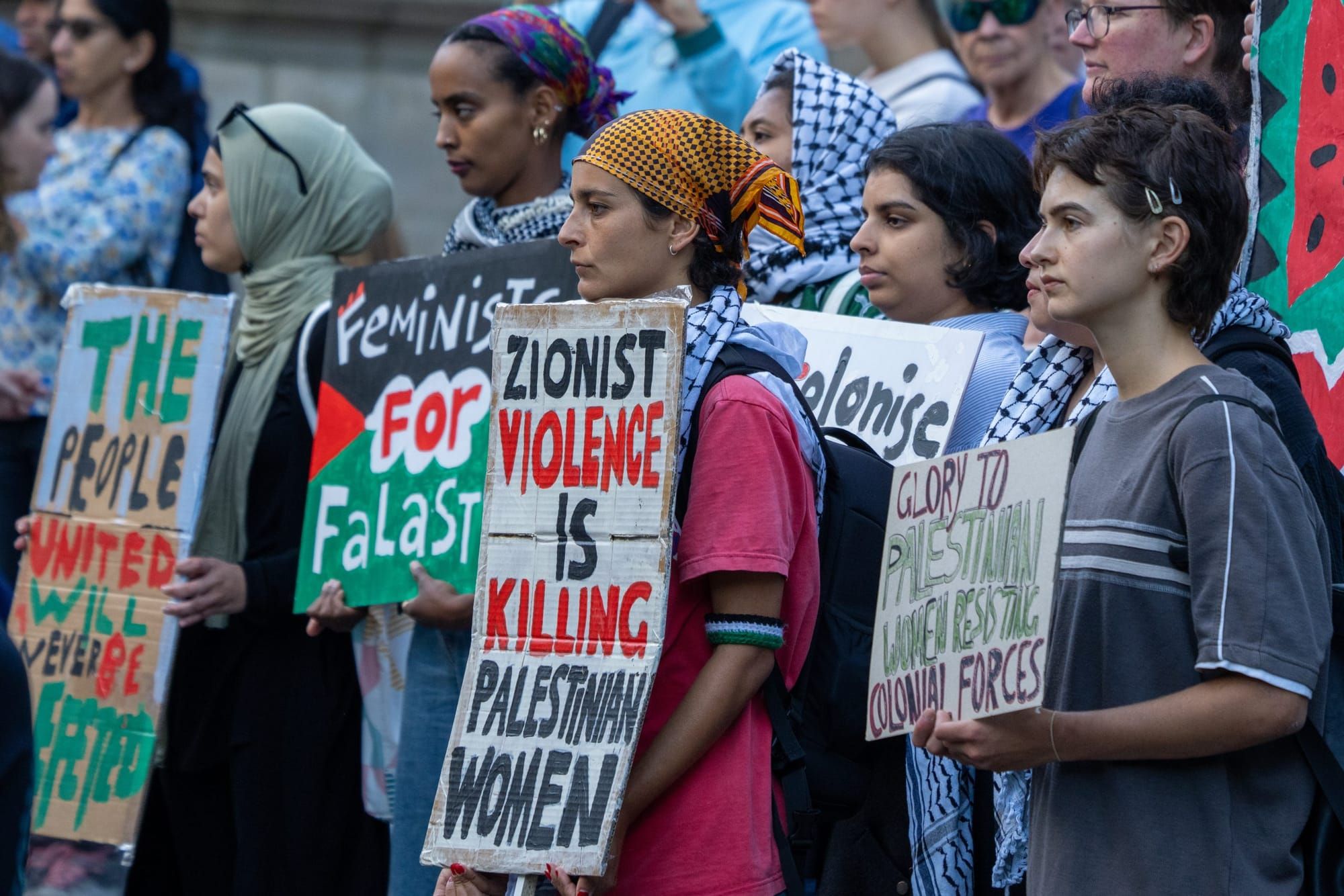
I have organized for abortion liberation through sharing my abortion story for nearly 15 years. Thus, I am no stranger to those who want to silence my voice. I have spoken up about anti-Blackness and racism in the reproductive rights movement and challenged popular pro-choice politicians to do better. Despite different tactics, I’ve always known that my colleagues and I were headed in the same direction: toward liberation and reproductive justice for all oppressed people.
Or so I thought.
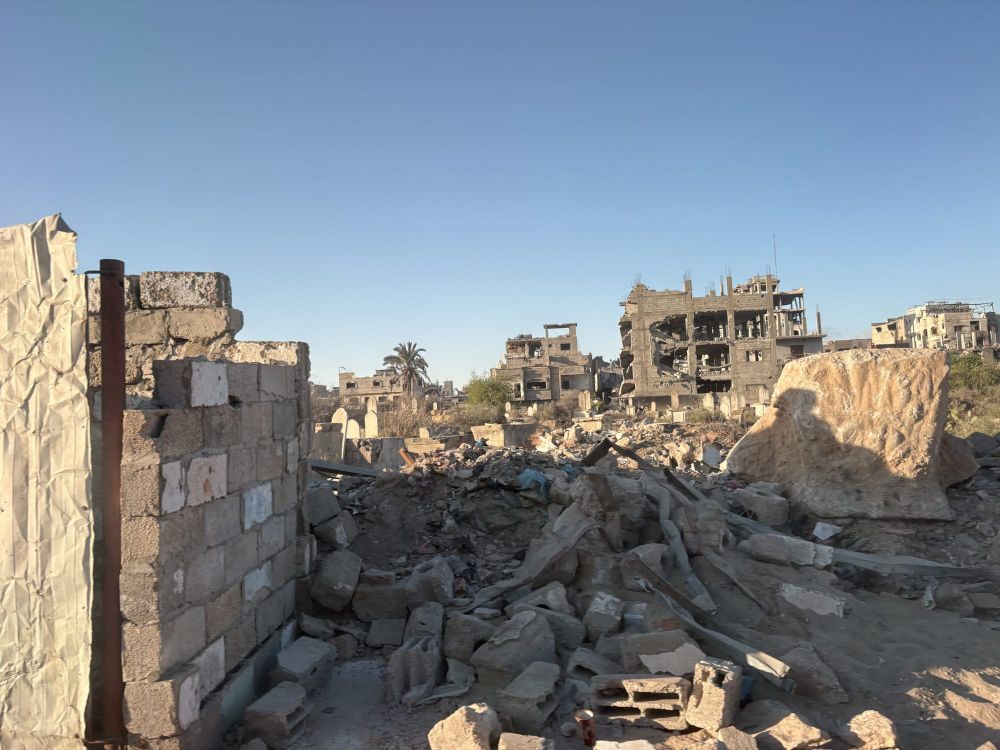
As the genocide of Palestinians has played out at the hands of the Israeli and U.S. governments, I have watched factions of a naturally outspoken movement become silent against the backdrop of nonstop videos of mutilated and starving children, parents searching rubble for babies, families hoping for the return of their loved ones, and children parenting each other because they have no more living relatives. Along with the pain of watching this unfold has been despair in realizing that those who push us to be silent are not our anti-abortion opposition, but our own supporters, funders, and peers. Our movement is fractured along lines that are clearly defined by the reproductive justice framework that we strive to achieve.
The vision of reproductive justice is simple: for all of us to have sexual and bodily autonomy, the right to decide whether or not to have a child, and the ability to parent our children in safe and sustainable communities, free from state-sanctioned violence.
We must understand that policing in this country and around the world is sworn to protect not the law, but rather capitalism, land, resources, and the comfort of white people and those in power. The policing of Black and brown bodies and our reproduction is rooted in a quest for control, capitalism, and colonialism. Those connections are the basis of a reproductive justice analysis. So why, then, when we make the connection to the occupation of Palestine is there such backlash?
It’s reproductive justice, except for Palestine?
In all of my years in the reproductive justice movement, I have never seen or experienced such a wall of resistance and isolation as I have when taking a stance on behalf of reproductive justice for Palestinians. Even while honoring the memories of those who were killed or taken hostage on Oct. 7, as soon as organizations released statements condemning Israel’s bombardment of Gaza and the nearly centurylong illegal occupation, while calling for a ceasefire, the reaction was swift. For supporting Palestine, there were harassing and threatening emails, social media messages, and phone calls. There have also been disinvitations from events and panels and threats to workers’ jobs.
The backlash has not subsided. While on tour for my book “Liberating Abortion: Claiming Our History, Sharing Our Stories, and Building the Reproductive Future We Deserve,” a Planned Parenthood affiliate pulled out of a fundraiser planned in coordination with my book talk, giving just 10 days’ notice before the event. It seemed the affiliate received emails threatening to protest the event and claiming that support for my book was akin to supporting Hitler. (The local organization claims that its decision to pull out of the event was due to a scheduling issue.)
Across social justice movements, headlines at the time detailed professors removed from their posts, workers fired, and students and protesters beaten by police. Yet in a movement that prides itself on centering the most marginalized and envisioning a world of bodily autonomy free from state-sanctioned violence, we faced backlash for standing up for the very ideals we swore to uphold. Youth- and student-serving reproductive rights organizations were unusually quiet as students were beaten and expelled for organizing their peers. Why did so many look away?
One answer is the fear of losing funding.
As abortion funds and reproductive justice organizations called for a ceasefire, noting the relative silence around the bombing of family planning clinics in Gaza; detailing the devastation of the illegal Israeli occupation of Gaza and the West Bank on pregnant, parenting, and abortion-seeking Palestinians; and highlighting the relationship between the Israeli military and their programs training police such as Atlanta’s “Cop City”; foundations rescinded or refused to renew grants and donors ceased their support. Reproductive justice organizations and abortion funds, including my own local DC Abortion Fund, were smeared as antisemitic for calling for a ceasefire. My organization, We Testify, has also been targeted. The connections we make between the apartheid, occupation, and genocide are labeled as Hamas propaganda, despite the information being backed up by major human rights and medical organizations.
Prism and publications such as Jewish Currents have outlined the impact of philanthropic organizations defunding nonprofits that have spoken out in support of Palestine. According to reporting from Jewish Currents, one major funder in the reproductive rights field openly identifies as a Zionist foundation and has included language in funding agreements requiring grantees not to “question Israel’s right to exist or the legitimacy of Israel as a secure, independent, democratic Jewish state.” The wave of defunding has been quiet yet forceful.
At We Testify, our grant agreements did not include the explicit silencing language that Jewish Currents noted, but one grant stated that we must not “promote or engage in violence, terrorism, bigotry, racism, antisemitism, or the destruction of any state or make sub-grants to any entity that engages in these activities.”
The “destruction of any state” is, of course, a reference to the state of Israel and arguments concerning its legitimacy while illegally occupying Palestinian lands. But this kind of language in grants is broad and arguably can be used to destabilize any argument against state violence or other atrocities that governments enact. Does this language, for example, also extend to the United States, which perpetrates the very reproductive violence and coercion we seek to upend? In some way, each state has legalized reproductive coercion and violence toward women, trans, disabled, Black, and brown people. Neither the U.S. nor Israel should be above critique.
By entering into these grant agreements, are we losing our right to free speech and our right to criticize state actors that perpetuate reproductive injustices?
Does calling into question the violent and oppressive actions of any state qualify as “destruction”? Since when is protesting, writing articles, posting on social media, and making our voices heard comparable to “destroying a state”? As an activist and writer, I believe this is dangerous territory as the Trump administration directs masked immigration enforcement agents to kidnap immigrant students off the street for authoring op-eds and making their voices heard on campus. The pen is not a bomb. Critique, although searing, does not cut or maim. By entering into these grant agreements, are we losing our right to free speech and our right to criticize state actors that perpetuate reproductive injustices?
The Anti-Defamation League identified some of our most ardent reproductive justice funders on a list of groups the organization claims are “supporting terrorism.” Reproductive justice organizations were placed on similar lists alongside Palestinian, Muslim, and Black liberation organizations. At conferences, over lunches, and in Signal messages, the few of us who took an early public stance checked in with each other, discussing the various ways we experienced backlash. Some received messages from Zionist foundations chastising their organization’s posts on social media or comments in the news. Others received silence until the notice of defunding arrived. The reason for defunding was sometimes explicit, sometimes passive. When my organization received notification that a grant would not be renewed, I was not surprised. For months, the foundation was rumored to be taking action against outspoken organizations. Our foundation contact maintained that our stance on Palestine was not the reason our grant wasn’t renewed. They alleged that their funding priorities were simply changing. However, they did not cite which priorities changed.
I’ve been hesitant to pen this article, not because I am afraid to share my thoughts on what is clearly a genocide and violation of every international law we have. Speaking out against the genocide is aligned with the family values I was raised on and the reproductive justice values I swore to uphold. Instead, I was warned by several well-meaning friends and colleagues not to write about this for fear of the backlash and the inevitable loss of funds that it would bring. It’s a precarious position to be an organizational leader, responsible for funding the work that pays freedom organizers who take on so much as they guide us toward liberation. The idea that anything I say or do might harm their ability to live, thrive, and financially survive keeps me up at night. But when my days are filled with videos of mamas and babies being murdered with my tax dollars, how can I stay silent? Isn’t that the point of the withdrawal of funding—to silence us? I cannot and will not abide by it.
As liberals rightly decry the Trump administration’s defunding of educational and research institutions and federal agencies’ efforts to remove all references to queer people, folks of color, and abortion, the public should know similar efforts are happening in repro spaces. We must not comply.
To be an abortion activist at this moment was already terrifying. Our social media accounts, movements, communications, and devices are surveilled by the state. The federal government is detaining immigrants and citizens in Louisiana and Guantánamo Bay, and prison camps in El Salvador and South Sudan—places that criminalize people for the outcomes of their pregnancies. What does this mean for people who provide, have, and support abortion? Progressive foundations need to double down on supporting our efforts to challenge the fascist intrusion on our privacy and protest rights, not model their funding policies after it.
It is worth paying attention to which organizations and workers are willing to take risks in this moment of abortion criminalization and which are complying with restrictions in advance. The organizations taking the risk are usually Black- and brown-led, thus already underfunded. Overwhelmingly, these are also the same people speaking out about the genocide.
The impact of defunding these organizations will eventually harm the very people we seek to support. Fewer foundation grants means fewer staff to answer the call of people looking to make it from their home to their abortion appointment. Fewer individual donations means smaller budgets to offer abortion funding for people seeking care or honorariums for abortion storytellers’ labor. It means layoffs of the people doing this work and perhaps the end of your favorite organizations, the ones you turn to for information and to see what reproductive justice looks like in action. All of this is combined with an already constricted funding landscape due to fears of litigation by anti-abortion states toward people who provide abortion support. These shifts are quickly destroying what little infrastructure we have left for abortion.
This political moment makes me wonder what it means for our organizations to be funded by foundations that refuse to acknowledge any criticism of governments or states that have engaged in reproductive coercion, violence, and murder. Foundations are built on capitalism and avoidance of tax liabilities, thus someone is always exploited down the line. But there are some questions we need clear answers for: Is the reproductive justice movement one that stands against wars and genocide, or not? Do our funders stand with us in that call for peace, or not?
Is it reproductive justice for all, or not?
We are effectively being forced to choose between funding to ensure people can have abortions, or remaining silent about the very systems that criminalize our work and fund the genocide. Our silence will not protect us, and neither will our silos.
We certainly cannot say that reproductive rights are about our right to live, but waver when it comes to war, apartheid, and genocide.
The reproductive rights movement in the U.S. is stunted by both our targeted white supremacist opposition and our own inability to organize with other movements for liberation. So long as the movement’s mainstream leaders and supporters ignore other movements, we will never win. We cannot continue to yell that economic justice is a reproductive justice issue but not show up for unionizing workers or living-wage campaigns. We cannot say that abortion criminalization is a problem while supporting pro-police politicians and staying silent as our tax dollars build yet another jail. We certainly cannot say that reproductive rights are about our right to live, but waver when it comes to war, apartheid, and genocide.
Reproductive justice isn’t up for interpretation. I can’t believe I have to say this: Apartheid is wrong. Theocracy is wrong. Segregation is wrong. Genocide is wrong. They were wrong in South Africa and the United States, and they are wrong in Israel. They are wrong everywhere. Denying health care is wrong. Denying health care at any border based on citizenship, documentation, religion, nationality, ethnicity, ability, language, and skin color is wrong, and it brings no one safety. It’s antithetical to reproductive justice. Any leader, funder, or organizers who believes that our liberation will come through segregation, theocracy, apartheid, or genocide has no place within the reproductive freedom movements. Defunding us for taking such a stance only does the dirty work of our oppressors.
We must show up in the holistic way that reproductive justice demands. When funders allow us to do that, we can do real organizing in our communities and bring people into reproductive justice just as they bring us into their liberatory frameworks. We can learn better tactics to defy surveillance and ensure people receive the abortions they desire. We can watch out for each other and build an organizing base that can turn out for rallies and protests and to save our clinics. But in order to do that, we have to be clear about what we believe. No one wants to organize with people who are uncertain about where they stand on violence.
Future generations will look back on our actions today and wonder why it took us so long to get aligned on denouncing genocide. I know some young people are already wondering. I think it’s a good time to reconnect with the core tenets of reproductive justice and to read feminist abolitionist texts like June Jordan, Ruth Wilson Gilmore, and Angela Davis. It’s also necessary that we reflect on what is holding us back from devoting ourselves to our stated values of ensuring that everyone has the right to bodily autonomy and sexuality, to decide whether or not to have a child, and the ability to parent their children in safe and sustainable communities—Palestinians included.
Editorial Team:
Tina Vasquez, Lead Editor
Carolyn Copeland, Top Editor
Stephanie Harris, Copy Editor
Author
Renee Bracey Sherman is an abortion activist, writer, and founder and co-executive director of We Testify, an organization dedicated to the leadership and representation of people who have abortions.
Sign up for Prism newsletters.
Stay up to date with curated collection of our top stories.