The identities of DHS’s victims matter
To honor the full humanity of shooting victims such as Silverio Villegas-González, Renee Good, and Alex Pretti, we must acknowledge how their identities shape media coverage, public outrage, and action
Real journalists wrote and edited this (not AI)—independent, community-driven journalism survives because you back it. Donate to sustain Prism’s mission and the humans behind it.
On Jan. 24, Border Patrol agents in Minneapolis shot protester Alex Jeffrey Pretti at least 10 times, killing him. He was filming federal agents while attempting to help a woman being accosted by the masked men, who then turned their sights on him.
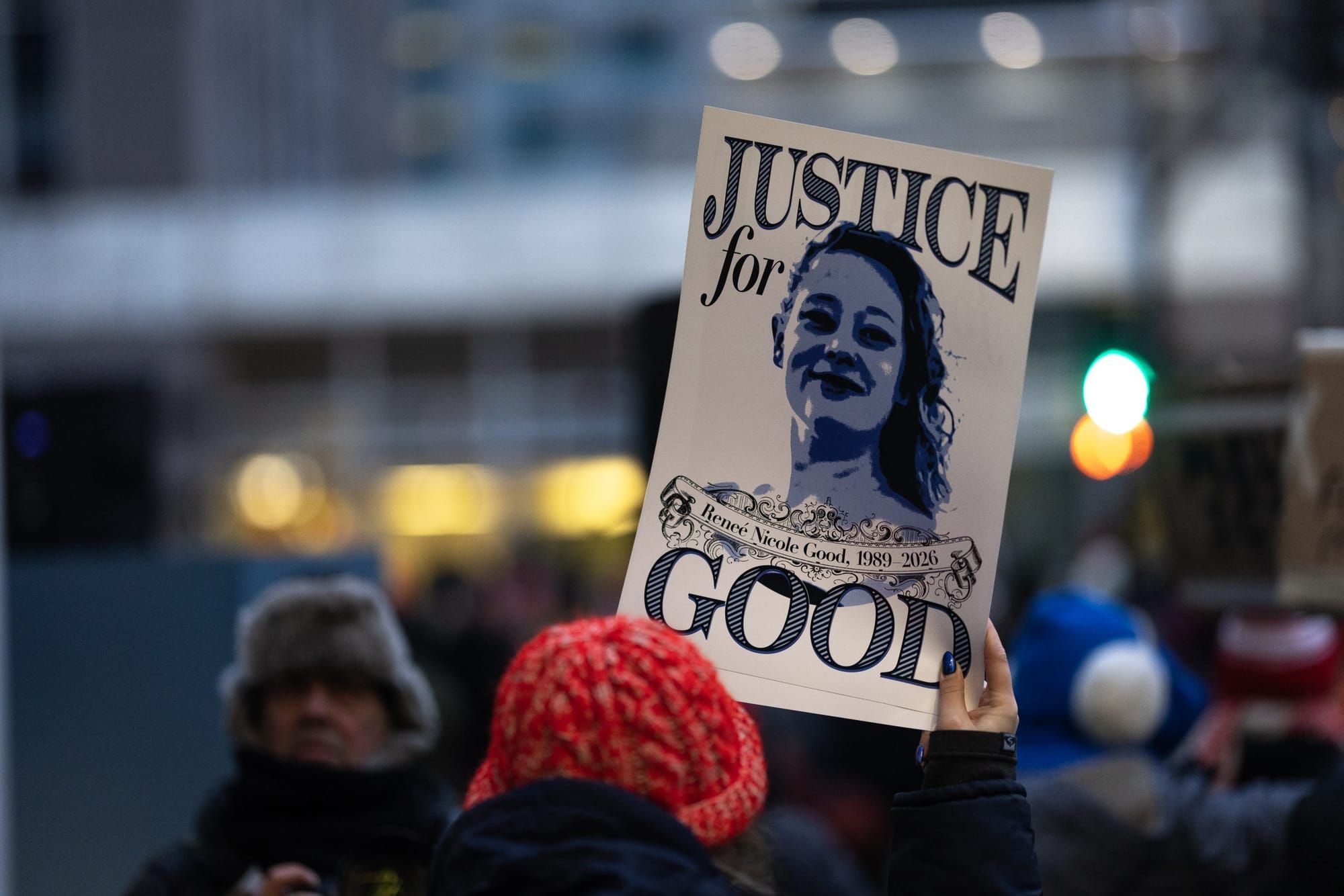
Weeks before Pretti was killed, ICE fatally shot Renee Nicole Macklin Good. On Jan. 7, Renee and her wife, Becca Good, dropped off their son at school. Then they noticed ICE on their Minneapolis street. Video footage shows Renee behind the wheel of an SUV. Becca stands outside filming, telling a masked agent to leave.
“I say go get yourself some lunch, big boy,” Becca says to agent Jonathan Ross. More ICE agents then approach the car, yelling at Renee to get out, while one agent appears to pull at the driver’s side door. Renee turns the steering wheel away from Ross, appearing to try to drive away. Ross then fires three shots into the car. After the fatal shooting, Renee’s car crashes on the side of the road. Off camera, a man believed to be Ross is heard calling her a “fucking bitch.”
In the wake of her wife’s murder, Becca released a statement: “We had whistles. They had guns.”
People nationwide are voicing their outrage over the deaths of the two Minneapolis residents. Pretti was an intensive care nurse with Veterans Affairs who died trying to protect a woman. Renee was a Christian, a mother, and a legal observer supporting her neighbors. But most conversations about Renee didn’t highlight how her queerness entered the encounter, how the very thing that likely made her a target also situated her in a legacy—one of queer protectors looking out for the vulnerable.
Renee leveraged her whiteness and citizenship in an effort to disrupt ICE’s reign of terror. Her whiteness and Pretti’s is part of what makes their murders media-worthy, the revolting reality of a culture that dehumanizes immigrants and people of color. Federal immigration agencies have brutalized and murdered those communities for decades, and under the Trump administration, the agency’s violence is rising.
In a Chicago suburb last September, an ICE agent shot and killed Silverio Villegas González, a father and Mexican national. In October, a Border Patrol agent in another Chicago suburb shot Marimar Martinez while she was behind the wheel. Like Renee, Martinez was an observer warning neighbors that ICE was nearby. Martinez, a Mexican American first-generation U.S. citizen, survived five gunshot wounds. Now she is fighting to have the evidence in her case made public. Martinez’s assailant later bragged about his brutality.
One week before Renee’s shooting, an off-duty ICE officer shot and killed Keith Porter Jr., a Black father and citizen, outside his Los Angeles home. But González, Martinez, and Porter didn’t garner the same widespread attention as Renee.
In addition to federal agencies’ cruelty on the street and in people’s homes, conditions inside ICE detention centers and Customs and Border Protection facilities have always been inhumane. Reports of sexual abuse in ICE detention are widespread. Last year, 32 people died in ICE custody, making it the agency’s deadliest year in more than two decades. Now, many white citizens are acknowledging, decades too late, the brutality immigrants face. White citizens who naively felt immune to ICE’s violence are waking up to the notion that all dissenters are under attack—especially those who are easily painted as outsiders.
It’s easy for me to identify with Renee. Like her, I’m a writer in my 30s living in the Midwest. Like her, I believe in alerting my neighbors when ICE is nearby. And like Renee and her wife Becca, I’m undeniably queer.
I can’t unsee Becca’s short hair, or how both women wore flannels and beanies, reminiscent of my own winter uniform. I can’t unhear Becca’s screams, “They killed my wife! I don’t know what to do!”
I can’t unknow how gender nonconformity incites violence from men.
Gender-based violence has long been normalized by the state, and research suggests it’s rising. A 2019 report by the American Immigration Council found that ICE encounters and arrests of women increased during Trump’s first term. In the 2022 “Protected and Served?” survey of LGBTQIA+ people, 25% said they were verbally assaulted during their most recent encounter with police, 13.4% said they were sexually harassed, and 12.8% said they were physically assaulted.
“Renee Nicole Good could be any of us,” goes the white liberal refrain. But that’s not entirely true. Not yet.
“Renee Nicole Good could be any of us,” goes the white liberal refrain. But that’s not entirely true. Not yet.
I didn’t know Renee. I don’t know Becca. I don’t know how they’d describe themselves. I don’t know Ross’ motivations, but I see the play-by-play: A man appeared to be emasculated by a queer, masculine-presenting woman. Then he shot and killed her wife while she tried to drive away. Then government officials lied, claiming without evidence that Renee “weaponized her vehicle.” And they unabashedly suggested that she and Becca got what they deserved.
“The woman and her friend were highly disrespectful of law enforcement,” said President Donald Trump—the same man who praised and pardoned right-wing insurrectionists, whose Jan. 6, 2021, attack on the U.S. Capitol led to multiple deaths and injuries.
In the days immediately following Renee’s shooting, mainstream media outlets erased her queerness, presumably to make her more palatable. Then, right-wing outlets weaponized Renee’s identity to justify her execution.
Initial mainstream reports underscored Renee’s role as a mother of three. Some featured photos of her with her late ex-husband. Others said she lived with “a partner,” instead of citing her marriage to Becca. The Star Tribune quoted her 6-year-old son’s grandfather, who claimed, “There’s nobody else in his life,” despite Becca’s existence as Renee’s wife and coparent. Even a statement from Renee’s family failed to recognize her spouse.
Media coverage on conservative platforms emphasized Renee’s queerness, invoking her creative work and values with sneering disdain. Fox News called the award-winning writer a “self-proclaimed poet” with “pronouns in her bio.” Vice President JD Vance named her a “victim of left-wing ideology.” The word “ideology” seems to be a favorite of the Trump administration, appearing in executive orders condemning diversity, equity, and inclusion and censoring trans-inclusive language. Last year, U.S. Attorney General Pam Bondi issued a memo stating that “adherence to radical gender ideology” falls under “domestic terrorism,” which is also exactly what the Trump administration accused Renee of after her death.
Experts warn that the U.S. is edging toward genocide against trans people, and vitriol against all LGBTQIA+ people is rising. On Jan. 11, ICE agents arrested a Minneapolis legal observer before one reportedly told her, “You guys have got to stop obstructing us. That’s why that lesbian bitch is dead.” Renee’s and Becca’s queerness is part of what made them prey, and it is also likely integral to what made them advocates for their immigrant neighbors.
Queer people have always been protectors. Activists Marsha P. Johnson and Sylvia Rivera supported unhoused youth; butch drag king Stormé DeLarverie helped queer New Yorkers get safely home; and Jewish, trans activist Leslie Feinberg demanded justice for Palestine.
Our role as outsiders—and our own intersecting oppressions—often prime us to help others, sometimes by putting our lives on the line.
After Renee’s death, I had a sinking feeling that she would not be the last legal observer murdered by ICE. She certainly won’t be the last queer person to feel the agency’s wrath.
In her first statement to Minnesota Public Radio, Becca said she plans to teach her son, “there are people building a better world,” one in which we “keep each other safe and whole.” While federal officials appear to be backpedaling their brazen justification of public executions, we must continue to keep each victim whole in our minds.
Make no mistake: Media outlets will continue to favor some victims over others. Federal officials will continue painting the murdered, the detained, and the hunted as “illegal criminals,” “domestic terrorists,” and “fucking bitches.” But here’s what will remain true: Decades of immigrant torture and deaths are what led us to this moment. The only way toward a better world is through our solidarity with all victims of state violence and our absolute, unrelenting dissent.
Editorial Team:
Tina Vasquez, Lead Editor
Carolyn Copeland, Top Editor
Rashmee Kumar, Copy Editor
Author

Ro White is a Chicago-based writer who covers sex and public health. You can find Ro’s work in Teen Vogue, SELF, Them, VICE, and more.
Sign up for Prism newsletters.
Stay up to date with curated collection of our top stories.