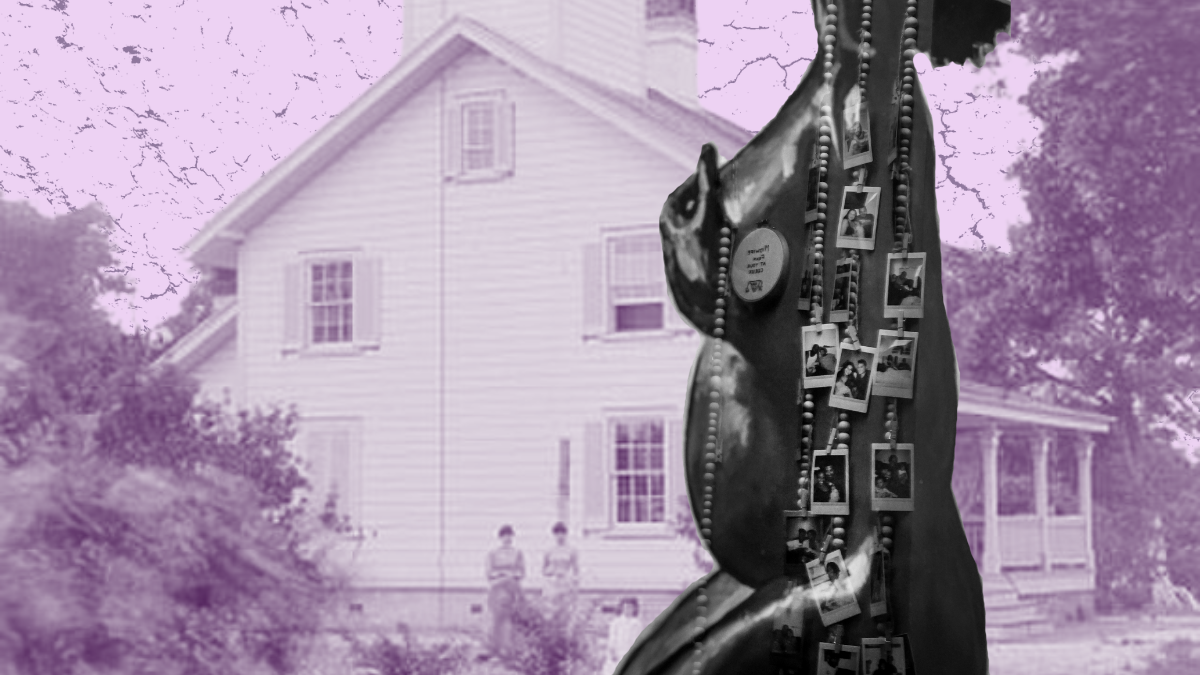
Her eyes—piercing, firm, and unrelenting like a gaze into another universe—stopped me in my tracks. I saw these eyes time and time again as I walked to and from my room at the Strachan Mansion at Haig Point on South Carolina’s Daufuskie Island. The eyes belonged to a Black woman whose framed portrait hung on the wall. And underneath, a delicate placard with her name: Sarah Hudson Grant.
But who was she?
Her portrait seemed out of place. Here she was, a dark-skinned Black woman of another era slapped on the wall for all to see. Grant had to be important, valuable, a relic of remembering from Daufuskie Island, a place where I rarely saw any other Black people. Paying homage to her seemed intentional.
A prick of intrigue motivated me to Google her: She was a Parent Teacher Association (PTA leader), enthusiastic community member, mother, and the island’s midwife. After I left Daufuskie Island, I let the thought of her vanish from my memory. Until now.
Grant’s work helping and advocating for women who were bringing children into the world is part of a much larger legacy, one in which generations of Black midwives throughout the rural South have played crucial roles in their communities despite limited resources and people to care about the plight of Black maternal and reproductive health. Grant’s work is another voice, story, and vision in a chorus of Black women who have always cared deeply about us.
Answering the call
Wedged between the vacation destinations of Savannah, Georgia, and Hilton Head, South Carolina, is Daufuskie Island, a 5,000-acre lowcountry sea island off South Carolina’s southernmost tip. The New River and Cooper River separate Daufuskie from the mainland, connecting the island to the mouth of the Savannah River.
The marshlands and sweeping sunsets make this island a picturesque place, and it is also one central to Black midwifery history. In June 1982, Daufuskie Island was listed on the National Register of Historic Places following a nomination by South Carolina community member Rebecca Starr, who characterized the island as an “antebellum plantation society.” This is reflected in the island’s five cemeteries for enslaved people and various preserved tabby structures made from oyster shells, water, and sand.
Daufuskie Island, unlike the nearby storied tourist destinations, is only accessible by boat. I learned this leading up to my own trip there, handling the logistics and specific instructions for safety during a pandemic while steeling myself for this journey into the unknown. Visiting Daufuskie Island feels like entering a portal that not many have access to—one that allows us to connect with former residents like Grant, who have gone on and left little nuggets of their lives behind.
This quiet and remote coastal isle was home for Grant, and it is where she answered the call to become a midwife, despite practical hurdles. Daufuskie Island’s small size meant basic necessities came much later than for those living elsewhere. For instance, the island didn’t have electricity until 1953 or phones until 1972.
Grant started her midwifery work in 1932 and delivered her last baby in 1969 when she retired. By the end of her midwifery career, she ushered 130 babies into the world. This means that for 21 years, she did so without electricity or phones to communicate with clients.
Grant wasn’t originally from Daufuskie. She was born in 1888 in Albany, Georgia, to Alice Moore and William Hudson. In 1912, she married Joseph Grant, and two years later, she gave birth to their only child, a son named Louis.
Save for the portrait I saw at my hotel in Haig Point, there are few traces of Grant on the teeny island that is home to roughly 400 residents, who zoom around on golf carts because there are few paved roads. On tourism websites about the area, Grant is mentioned in the air as a heroine, though there are few details about her life outside of the work she did as a midwife. But there is one exception.
On April 2, 2016, the Daufuskie Island Historical Foundation brought Grant’s original carriage back to the island after having it restored. Whenever Grant got word that her midwifery services were needed, she’d hitch her horse Tillman to her carriage and set off. The carriage was more than transportation for Grant; it represented self-determination and embracing her destiny. The carriage, built in 1883, is on display at Daufuskie Island History Museum, along with insightful little details related to Grant, including her $5 fee for midwifery services—$10 for services that included a week of care and laundry.
Grant remains a luminary, one who practiced midwifery alongside countless Black women who faced uphill battles to do the work they felt called to do.
Black midwives from the South we lost
When Grant began her midwifery work in South Carolina in 1932, she wasn’t entering alone into the vocation focused on community care. She had the wisdom of ancestral knowledge as she became a practitioner in one of the world’s oldest professions that has specific cultural and racial ties to Black people. Black midwifery in the South was birthed in African practice, where herbal medicine, spiritual practice, and tricks of the “granny” midwife trade fueled the services provided to people giving birth.
It was midwives—chiefly Black women midwives—who were seen as the experts, not doctors who chose a specialization in obstetrics and gynecology. Giving birth in a hospital was a faraway reality for most women at the time; many journeyed through birth at home, surrounded by their usual comforts and a midwife to facilitate the process.
For many Black rural communities in the South, midwives were the difference between life and death because of their knowledge of life-saving interventions and their commitment to proper care and empathy for all human life, including Black lives.
Dr. Gertrude Jacinta Fraser, an associate professor of anthropology at the University of Virginia, published in 1998 a foundational text on the history of Black women in midwifery, “African American Midwifery in the South: Dialogues of Birth, Race, and Memory.” In her book, Fraser contextualizes the long history of Black midwives in the South alongside field research in a small, rural town in Green River County, Virginia, illuminating the important role African-American midwives played in the reproductive experiences of Black and white Southern women.
According to Linda Janet Holmes, an independent scholar and writer with a focus on African-American midwifery, in Virginia in the 1920s and ’30s, there were about 10,000 practicing licensed lay midwives, most of whom were Black women. Data from the Texas State Historical Association shows that in 1924, there were 4,000 midwives practicing in Texas.
Midwifery played a significant role in the reproductive lives of women in the 1920s, but the decade also brought a slew of changes to the profession. These changes still have repercussions today, illustrated by the dwindling number of Black midwives—especially in the South where it was mostly Black women who practiced midwifery.
Legislation was the primary reason for these changes. Take, for example, the 1921 federally funded social welfare program called the Sheppard-Towner Maternity and Infancy Protection Act, which purported to “reduce alarming rates of maternal and infant mortality.” But Black midwives knew the truth. The legislation was an attempt to regain control from Black-led midwifery networks throughout the South that operated outside of white purview and reliance.
White medical professionals at the time implied that Black midwives were uneducated, unprofessional, and unsanitary. They also claimed that hospital births would lead to improved sanitation, among other things.
These became popular talking points. A 1928 report from the U.S. Department of Labor asserted that infant and maternal mortality was a result of “having a large negro population with negro midwives as attendants at birth.” The report also said, “The old, the unfit, the diseased, ignorant, superstitious, and dirty midwives are being eliminated, and a better type of negro midwife is being developed.”
The Sheppard-Towner Maternity and Infancy Protection Act also gave states the power to enact their own midwifery standards, which led states throughout the South to mandate that midwives become certified. By default, this criminalized midwives who learned the profession through an apprenticeship model outside of traditional medical environments.
Effectively, this led to the structure we have today in which there are three types of certified midwives: nurse-midwives, midwives, and professional midwives. However, the government’s goal in the 1920s seemed to be dehumanizing Black women, instilling fear in these midwives and minimizing their expertise. These attacks were also about controlling and surveilling Black women’s bodies and movements.
The lasting damage and legacy of this legislation still lingers, as illustrated by demographic data featured in a 2021 report from the American Midwifery Certification Board (AMCB), the national certifying body for certified nurse-midwives and certified midwives. As of Dec. 31, 2021, 7.3% of the nation’s 13,409 certified nurse-midwives and certified midwives are Black, compared to 84.9% who are white. AMCB notes that this low percentage of Black midwives is actually a slight increase from data published in 2020.
Numbers don’t lie, as hard as they may be to accept. According to Fraser, these numbers tell a story, one of elimination.
“The historical erasure of midwifery, I am sure there are consequences for that,” she said. “[P]ost-1960s and 1970s in the South, there has been no kind of cultural tradition of mother care and infant care. There was just this disruption of it.”
In reflecting back on the legislation that emerged in the 1920s, Fraser said the most chilling part remains how vitriolic the anti-midwife messaging was and how it portrayed Black midwives committed to their work and communities as being less than. But it wasn’t just a matter of rhetoric; these attacks led to a loss of knowledge and Black practitioners.
“To me, the worst part of it is the shaming,” Fraser said. “The disparaging of midwives. So, it’s not even to say, ‘Let us now shift to hospital-based, scientifically based birthing care.’ But the need to undermine their history, their authority, and their personhood is what went with it. That happens a lot in colonized situations, where people, to get access to scientific, biomedical care, they have to disparage and leave behind all aspects of traditional indigenous healing traditions. And that’s the tragedy, I think, because it’s hard to recapture it.”
The wisdom that Black midwives have always held and practiced is crucial, especially when considering the gaps in care for pregnant Black women—gaps that Black midwives in the South readily fill.
A new generation of Black midwives in the South
Though the history and legacy of Black midwifery in the South is tattered with violence, there are torch bearers who have tapped into their ancestral knowledge and are bridging gaps that traditional health care providers simply cannot. These are Black women across the South continuing the work of forbearers like Grant.
Racha Tahani Lawler Queen is a certified professional midwife in Virginia and owner of the first and only Black-owned central Virginia birthing center, Gather Grounded Midwifery, near Richmond. Lawler Queen says this work essentially chose her. Generations of women in her family have dedicated themselves to midwifery.
“I feel like it’s extraordinarily common in Black families for your family members to do really incredible and miraculous things,” she said. “But it’s talked about in a very benign, everyday way. And that’s how midwifery was talked about in my family.”
Lawler Queen’s ancestors were originally Southerners from Elmo, Texas, but her family moved to California as part of the Great Migration. Her aunt Althea Hall made history as a Black nurse midwife in Los Angeles. According to Lawler Queen, her aunt formalized an in-hospital nurse-midwifery community program at California Hospital that allowed nurse midwives to have their own patients and clients. That program still exists today.
The certified professional midwife has come a long way from the 20-year-old who first witnessed a family member’s home birth. At 43, Lawler Queen has supported more than 1,600 home births, and, like her aunt, she too has made history—and not just in Richmond. Prior to moving to Virginia, Lawler Queen owned and operated Community Birth Center, the first Black-owned birthing center in Los Angeles.
Lawler Queen said she is comforted by the connection between spirituality and midwifery. During the years of her midwifery certification and training, she traveled to South Africa to retrace her family’s roots. What she found were undeniable ancestral connections to this work.
“Midwifery and spiritual practices are one in the same outside the U.S.,” she said. “It is not uncommon for a midwife to ask spirit, ask ancestors to protect the pregnancy, to protect the birth, to protect the midwife … It’s all very much intertwined.”
Beyond spirituality and the ancestral wisdom that is accessed through Lawler Queen’s work, her presence highlights a greater truth about the true impact of Black midwives in both rural and urban Southern communities. A 2023 report in the American Journal of Obstetrics and Gynecology speaks to their impact and influence. The report referred to midwives as having the knowledge and wisdom to provide “comprehensive reproductive and well-person care throughout the life span, from adolescence to postmenopause” and discussed the importance of midwives being a part of “nonhierarchical” and collaborative health care teams. In Virginia, Lawler Queen’s work is crucial and desperately needed.
Former Virginia Gov. Ralph S. Northam set an ambitious goal in 2019 to “eliminate racial disparity” in the state’s maternal mortality rate by 2025. His plan hinged on implementing evidence-based practices at 10 preselected hospitals and fast-tracking Medicaid applications for pregnant women.
More than 40 districts in Virginia are considered “maternity care deserts,” and the Black maternal mortality rate is more than double what it is for white women. Organizing and movement work have become vital pathways for subverting these dire statistics. Organizations like Birth in Color prioritize Black people and families—the same Black people and families that are integral to the work Lawler Queen does.
Lawler Queen has experienced a great deal of racism in her field, including from potential landlords as she searched for a location for her Virginia birthing center. Her family has helped carry her through. Lining the walls of Gather Grounded Midwifery are pictures of her ancestors who were midwives and family members she helped bring into the world.
“My credentials are actually in my office,” she said. “And the reason why their pictures are out is because I tell everyone, ‘These are my greatest credentials. These people all say that I’m a good midwife.’ And that means more to me than any credential piece of paper that I have.”
Like Lawler Queen, Efe Osaren has a passion for maternal health that propelled her to midwifery. Growing up in Houston, Osaren’s sister became a young mother, and Osaren offered support that few other family members did. And when a friend became pregnant in college, Osaren supported her by learning what she could expect at various stages of her pregnancy. Eventually, Osaren went to Austin, Texas, for a doula training that sparked her interest in reproductive justice. She eventually moved to Brooklyn, New York, where she worked as an abortion doula.
Osaren has returned to Houston, where she started midwifery school in 2018 and finished in 2022. According to Osaren, racism has kept her from getting certified, and it has deterred her from finalizing the certification that would allow her to work as a midwife. As one example, she said she has had to repeatedly send paperwork to the certification committee, whose members claimed it was incomplete or otherwise nitpicked how the paperwork was filled out.
Despite the challenges, Osaren hasn’t given up completely on what she knows to be a spiritual calling—even if she has to navigate a more untraditional path.
“[T]hroughout this journey, I just realized I’m pretty sure I’m going to be a traditional African midwife,” she said. “That is where my energy is going to. And so I’m at a space right now where I identify as a midwife. My community identifies me as a midwife. I don’t need racist white women … deciding my fate.”
Grant delivered her last baby in 1969. Over the years, she faced mounting racist pressure, but she did not turn her back on her calling. Instead, she walked away on her own volition. Women like her ushered in generations of Black birth workers. May Grant’s legacy—and the legacies of all Black midwives in the South—be carried by all who continue to embark on this sacred work.
Author
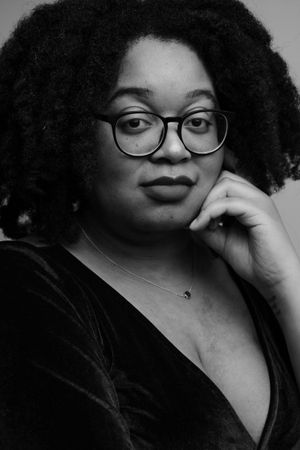
Nneka M. Okona is an author and journalist from and based in Atlanta, Georgia. She is the creator of the dead zine, a digital magazine on Black grief.
Sign up for Prism newsletters.
Stay up to date with curated collection of our top stories.