When a massive pipeline ruptured in the steep slopes of Appalachia earlier this year, regulators in charge of environmental and community safety looked the other way. They shared no details with the residents living near the Mountain Valley Pipeline (MVP) who watched sediment pollute delicate ecosystems and municipalities’ water sources. Designed to push up to 2 billion cubic feet of methane gas through the mountains of West Virginia and southwest Virginia every day, the pipe ruptured during a standard water pressure test.
The incident is emblematic of regulators’ unwillingness to hold the company accountable for safety concerns, leaving residents to live in fear of a deadly tragedy.
A crisis of faith has emerged surrounding the regulatory agencies that are tasked with protecting public health and safety. For a decade, community members living along the Mountain Valley Pipeline route tried to convince officials and institutions—whose stated purpose is to protect us and the environment—to do their job. It doesn’t matter how many listening sessions an agency offers if they don’t meaningfully incorporate scientific and community feedback into their decisions. But these agencies have turned their backs on science and the common good, and they’ve made decisions that lock us into fossil fuels for decades.
At a critical point for our democracy and climate, regulatory agencies must immediately address the crisis by refusing to back polluters. Instead, they must listen to science and the public. Their unwillingness to do so directly impacts communities’ mental and physical health, and these conditions will only worsen as the climate crisis intensifies.
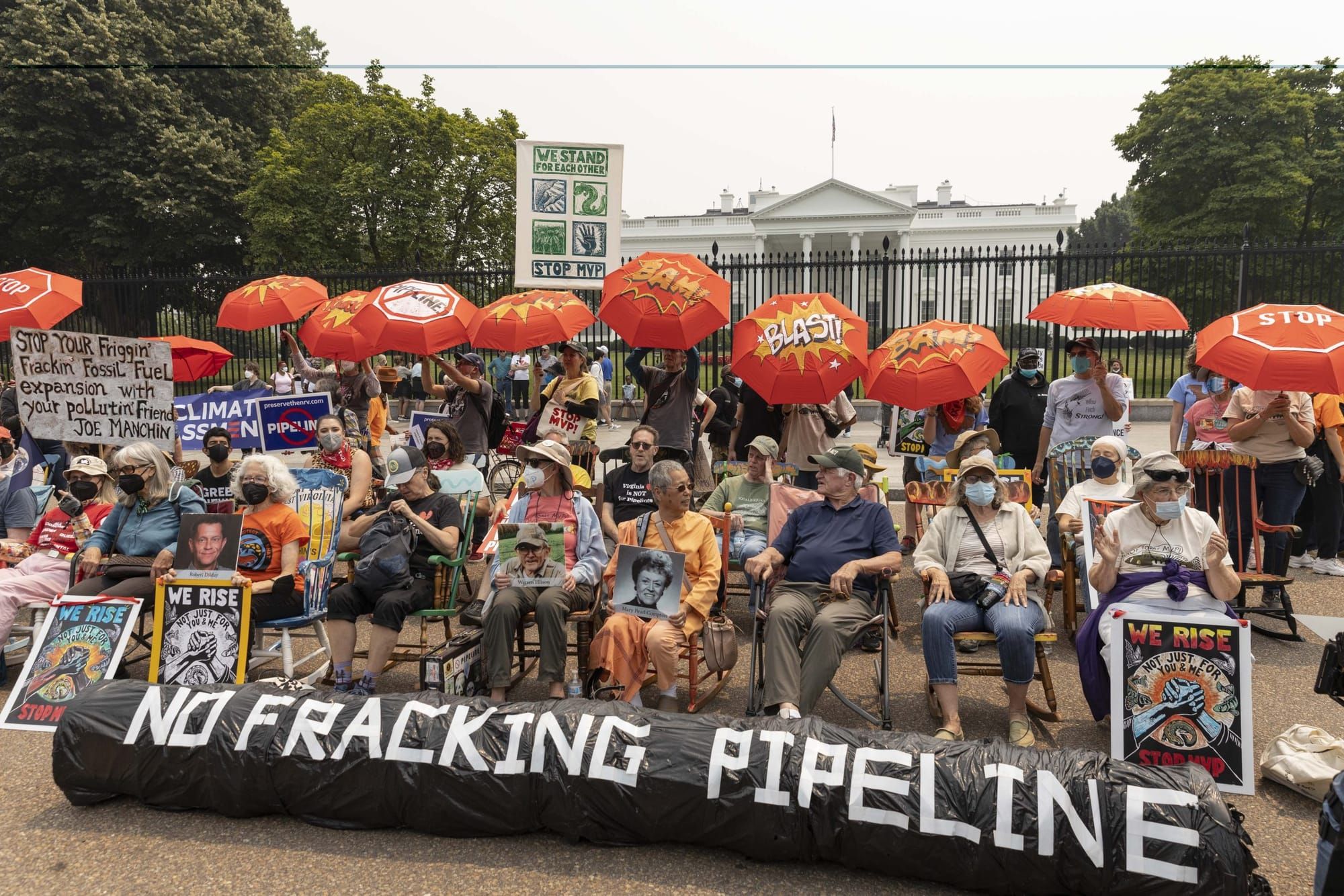
As a climate activist in Appalachia, I am certain that only we can protect ourselves from the disaster of MVP, a 303-mile methane gas pipeline that snakes along the landslide-prone mountains and seismic zones of West Virginia and southwest Virginia.
As a young person with depression and anxiety that are worsened by the reality of the climate crisis, I know that my mental and physical health is further at risk by these regulators’ dangerous decisions. Like many others, I have lost faith in public agencies’ ability and willingness to do their job.
Agencies like the Federal Energy Regulatory Commission (FERC) are known for their acquiescence to industry, despite being tasked as an independent observer. FERC is a safety commission overseeing the pipeline industry where 1.7 incidents occur per day, yet in the past 20 years, FERC has approved more than 99% of pipelines. Additionally, FERC considers pipelines based on “public necessity,” but we don’t need new fossil fuel projects to meet energy demands—especially in the Southeast.
Similarly, the Virginia Department of Environmental Quality, which ensures environmental safety, is run by Michael Rolband, who previously did consulting work for MVP. Over the last decade, the agency has continually looked the other way as MVP desiccated streams and ruptured pipes, endangering both the environment and surrounding communities.
Scientists have said for decades that methane—the fuel that will run through MVP—warms the planet 80 times faster than any other greenhouse gas in its first two decades after release. The best-case scenario is that pipelines like MVP constantly leak, and the worst-case scenario is deadly explosions.
On June 4, a month after the pipe pressure testing rupture, another segment of the pipe testing equipment ruptured, and yet again, community members were the only source of information and transparency about the rupture. On June 11, FERC allowed the MVP to start pumping high-pressure methane gas.
Many community members are left wondering, what if it was gas instead of water flowing through the pipe when it ruptured? What if the rupture led to an explosion? One resident put a lock of her hair in a safety deposit box so that her body can be identified if the pipeline explodes. Others say they feel hopeless and have fallen into a deep depression. Because of pipeline construction, farmers have lost their access to clean water and, thus, their livelihood.
The MVP greenlight from FERC came after a diverse movement of community members, environmental advocates, and Indigenous water protectors fought the pipeline for a decade. In 2023, after numerous legal challenges, hundreds of environmental violations, and many retracted permits, West Virginia coal baron Sen. Joe Manchin forced President Joe Biden and Congress to fast track the pipeline using an unrelated debt ceiling bill. Soon after, every state and federal agency rushed MVP to the finish line with little to no accountability for the company’s alarming disregard for worker, environmental, and community safety.
The same week Congress greenlit the pipeline, there was wildfire smoke and a heatwave on the East Coast. Due to the culminating stress of these incidents, I experienced a prolonged bout of depression and anxiety that kept me in bed for a week. My mind was racing with thoughts of how methane gas leaking from the pipeline will contribute to climate change and endanger the lives of my neighbors and friends. When agencies side with companies, they show us they don’t care about our well-being and prioritize projects that kill us.
Regulatory agencies are set up to make the public think someone is watching out for our safety. But when they prioritize corporate profits over public health, they directly harm people and force communities to take care of themselves.
Climate change is worsening individual health outcomes by causing trauma and mental illness. In 2023, I contributed to research that found when opportunities for public participation are generally performative and not taken seriously, many of those who took part in them experience psychological distress, physical health impacts, and loss of trust in the government. I know this from my own experience with MVP. While my depression and anxiety are worsened by the existential threat of the climate crisis more broadly, when I see the government allowing corporations that caused this crisis to continue destroying the planet, I feel a deep despair.
Federal and state regulatory agencies must stop committing environmental crimes. They are endangering our physical and mental health while claiming to make decisions for the good of the people. They must immediately stop backing fossil fuel projects and instead use their influence to speed up the transition to renewables.
Meanwhile, we’ll be paving our own path to a livable future as long as our lives are at stake.
Author

Denali Sai Nalamalapu is a climate organizer based in Southwest Virginia. Denali is co-director of the POWHR Coalition, an Appalachian grassroots environmental justice organization, and author of HOLL
Sign up for Prism newsletters.
Stay up to date with curated collection of our top stories.