Never eat the candy on your pillow: The ache of uncertainty
My first months of reentry are forcing me to confront the reality that freedom, while liberating, brings its own set of burdens and responsibilities
Dear Reader,
If incarceration is a nightmare, then reentry is an awakening—one that requires taking stock of where you’ve been and where you want to be.
Where to begin? That’s the question so many newly released people experience on the first day of reentry. To help myself answer the question, I took inventory of what I did not want to do now that I was out of prison. I didn’t want to go backwards by making bad decisions, such as returning to my old neighborhood and my old ways. Yes, I missed my family terribly, but they would have to come see me. Yes, I missed my hometown, but stipulations kept me from traveling. Parole is all about rules. Freedom is decidedly not free. Everyone pays their dues, either by following the rules of law or else by losing years through incarceration.
I am free now, yet the fear of incarceration still looms. When I left prison earlier this year after almost 20 years, I didn’t realize all of the ways Kentucky’s Northpoint Training Center would continue to haunt me.
Adjusting to life outside has required reevaluating every aspect of my daily routine. Simple activities, such as deciding what to eat or where to go, have sometimes felt unfamiliar and overwhelming. I have come to realize the importance of setting small, daily, achievable goals to help guide me through this major life transition. This approach is slowly allowing me to regain confidence with each step forward.
This might not make sense to you, but one of my first major steps was recognizing that I am actually free. For many newly released people who spent years behind bars, this is actually a very hard thing to do. For me, there have been quite a few sleepless nights and many nightmares about returning to prison. The dreams are so vivid that upon waking, I am filled with dread for many days after.
Stepping into the world after so many years behind bars, I often feel swallowed by a storm of emotions: excitement tangled with raw fear; hope shadowed by doubt. The outside world is unfamiliar and almost feels hostile in its indifference. As the rhythm of daily life beats on, I cannot help but think of those who remain locked away. Even the simplest acts—finding a meal, dialing a phone number, walking down a busy street—become monumental struggles, reminders of everything I lost to prison and all I have to re-learn.
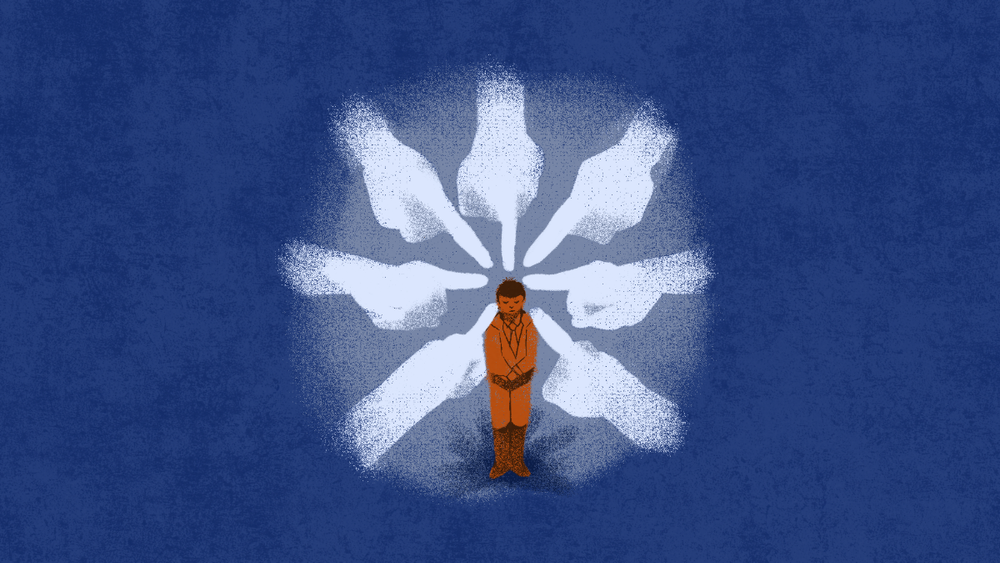
Each moment is a battle against the voices in my head, whispering that I would never fit in; that I was unworthy of trust or forgiveness. I sometimes question whether redemption is truly possible and whether the wounds of the past can ever truly be healed. There are times when I stand frozen by the weight of it all, longing to move forward but terrified I’ll be dragged back into old cycles. Still, every day I try to hold onto hope, desperate to believe that I can build a new life and that I deserve another chance. The ache of uncertainty is constant, but so is the burning need to prove—if only to myself—that I am more than my worst mistakes.
I have since learned that these kinds of nightmares and fears are common for many newly returning people. Having someone to talk to about these issues is helping me to make sense of the trauma created by prison, and to look beyond my fears. If I want any real chance of achieving balance in my life, I have to vocalize my feelings and accept my new reality of living life by an entirely new set of rules.
“Tell me what’s bothering you,” said the elderly church woman I was relying on for rides to my parole meetings.
“How could you tell?” I asked, slightly ashamed.
“How could I not? You look like you haven’t slept in days.”
In theory, I know that I have to be more open about what I am going through, but sometimes it’s hard to express my fears. I somehow feel that being a failure is all I’ll ever be good at.
But each time I have opened up and forced myself to reach out instead of vanishing into silence, something fragile and profound stirs within me. My words tremble, heavy with uncertainty, but sharing them feels like letting a sliver of light pierce the darkness I’ve carried for so long. Vulnerability, once a source of shame, becomes an act of courage—a lifeline in a sea of isolation.
As I spoke my fears aloud to the woman driving me, I uncovered unexpected moments of grace: the warmth of a gentle hand on my shoulder, the solace of tears shared in quiet understanding. I realized I was not alone in my struggle; others have walked this same shadowed road, and their compassion is a balm I never knew I needed. Slowly, I glimpsed something resembling hope—an ember that flared each time I dared to trust, each time I allowed myself to be seen in all of my brokenness. Through these raw exchanges, I discovered my first hints of strength on the outside, and for the first time, I felt my belief that healing might not be impossible begin to melt away.
The struggle to adjust, to shed the weight of the past while embracing a future defined by uncertainty, is an ongoing battle. Every day outside is a test of resolve—each interaction, each decision a choice between slipping back into old patterns or forging ahead with determination. I realize that grand gestures do not measure progress; it’s really the small victories that show my evolution: choosing honesty over avoidance, asking for help when pride tells me to stay silent, and learning to accept kindness from those willing to offer it. With time, and the gentle patience of people who believe in second chances, I am discovering that the path to stability is not linear. Setbacks will come, but the important thing is to keep moving forward, to believe in the possibility of becoming more than my mistakes and allow hope to take root.
“I’m scared,” I said to the woman driving me.
“You should be,” she said, turning to stare deeply into my eyes. “If you said that everything was fine, I would begin to wonder if you were a sociopath.”
I was far from being fine.
“Sometimes I feel like we all have to be sociopaths, just to keep going on in this world,” I said, hoping my tone showed levity.
“I wake up in pain every single day. Fibromyalgia and old age sucks, but I keep doing it. Just like you keep on assessing your situation and following the plans you made to remain out here with the rest of us psychos.”
“I just don’t want to go back,” I finally admitted, “but I’m also tired of being afraid. I want to live a normal life.”
She shook her head, her expression softening as if she had heard this sentiment before.
“No one’s immune to fear or to the ways this world can harden you. But it’s not a weakness to feel; it’s what makes us human. Even if none of this seems normal,” she told me. Her words settled over me like a blanket, offering comfort I didn’t realize I was craving. For a moment, it was enough just to sit together in the quiet, letting shared vulnerability bridge the distance between us.
Sitting in her presence, allowing her words to sink in, I realized that what I missed most was acceptance. Feeling like I was a part of something. She reached for my hand but hesitated. Holding hands, even with a friend, was against the rules. Instead, she nodded.
“Go inside. Tell your parole officer how wonderful you are. I’ll be waiting for you when you come back out.”
My first days of reentry forced me to confront the reality that freedom, while liberating, brought its own set of burdens and responsibilities. Each choice I make feels heavy with consequence, and I still struggle to trust my instincts after so many years of having my decisions dictated by others. The anxiety of possibly making a wrong move—and ending up back where I started—is a constant companion. But as the days have passed and I begin to find my footing, I am learning to give myself grace. I focus on small victories: finding a healthy meal, making it to a required appointment, or simply enjoying the quiet of my own space.
With each accomplishment, no matter how minor, I am reclaiming a sense of agency over my life, slowly easing the grip of fear and uncertainty that prison has had over my life. By allowing myself to accept help from others and by acknowledging my progress, I am finding the strength to keep moving forward, even on the toughest days.
But above all else—and despite the many challenges of reentry—I am learning that patience and self-compassion are essential in navigating my new reality. Reentry isn’t a straightforward path. Setbacks are inevitable, but I remind myself that progress comes in small increments. Leaning into moments of discomfort is teaching me resilience and helping me appreciate the growth that is quietly happening—even when it feels slow or invisible.
Slow and steady wins the race.
The Right to Write (R2W) project is an editorial initiative where Prism works with incarcerated writers to share their reporting and perspectives across our verticals and coverage areas. Learn more about R2W and how to pitch here.
Editorial Team:
Tina Vasquez, Lead Editor
Carolyn Copeland, Top Editor
Rashmee Kumar, Copy Editor
Author
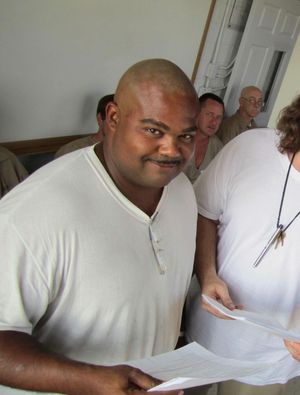
Derek R. Trumbo, Sr., a multiple-time PEN Prison Writing Award winner, is an essayist, playwright, and author whose writing has been featured in "The Sentences That Create Us: Crafting A Writer's Life
Sign up for Prism newsletters.
Stay up to date with curated collection of our top stories.