‘Recognizing Palestine now, at a time when we are being wiped out of existence, is a meaningless gesture’
In a wide-ranging conversation with Prism, Palestinian American author Ramsey Hanhan discusses his book about living under Israeli apartheid occupation
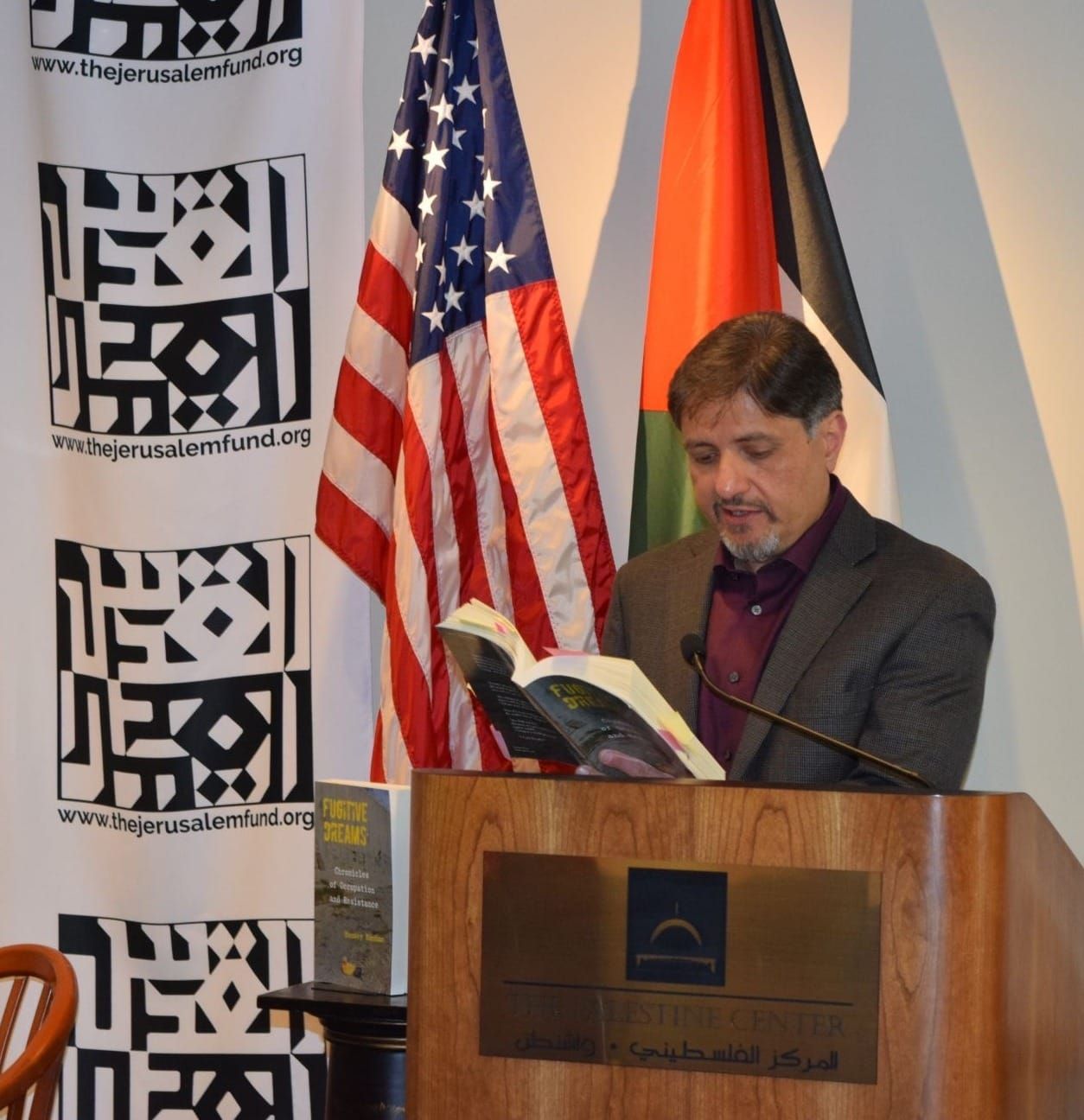
“Those used to be our orange groves,” writes Palestinian American author Ramsey Hanhan in “Fugitive Dreams,” his literary exploration of the Palestinian experience through the lens of 50 years of Israeli apartheid occupation. Later in the same chapter, the author recounts how he and his siblings—eager to see their mother’s childhood home in Yafa—watched tears stream down her face when they found it had become “an empty lot covered with stones and rubble.”
The images from “Fugitive Dreams” become seared in the minds of readers as Hanhan recounts emotional memories from Ramallah—a place he left as a teen and from where he recalls the Israelis “made life extremely difficult with checkpoints, walls, water rations, and home demolitions.” The book encapsulates the aspirations of a people exiled and of their diaspora-born children, many of whom maintain a deep connection to their homeland. It speaks to their resistance struggle against illegal occupation and the colonization of their Indigenous lands. It pays homage to a people whose humanity the world has witnessed over and over again, especially over the past 365 days of genocide.
In September, Prism interviewed Hanhan about his experiences as a young person in Ramallah, Zionism, and what the world gets wrong about Palestine.
This interview has been edited for length and clarity.
Lola Rosario: Work for what became “Fugitive Dreams” began in the 1990s, though the book was published in 2022. What motivated you to publish it now?
Ramsey Hanhan: You can say “Fugitive Dreams” was 30 years in the making. Ever since I came to America as a teen in 1989, I was shocked at the level of ignorance and misinformation about Palestine. “Where are you from?” became a dreaded question. Few could fathom what daily life was like for a Palestinian living under Israeli apartheid occupation. The corporate media flouted the “peace process” and other Washington, D.C.-speak, while over there we waited for hours at a checkpoint to simply visit the next city. Someone needed to document that lived Palestinian experience in painstaking detail.
Rosario: Some call the Palestine/Israel territorial conflict an existential one—where both cannot equally exist as separate nations. How do you view the so-called two-state solution?
Hanhan: In a recent opinion piece, I call it the “two-state scam.” Thirty years since the Oslo “process” began, and there still is no Palestinian state. The whole idea of partitioning this tiny strip of land the size of Maryland has “repeatedly crashed onto the rocks of a land that refused to be divided,” as I write in the book. In the 1948 Nakba, my parents were expelled from their homes in Yafa and Ramleh. A Palestinian state in the West Bank and Gaza does not restore my right to return to claim my inheritance.
In “Fugitive Dreams,” I propose a more wholesome vision of a “Palestine without walls,” a single government serving all the human beings within its borders—equally and without distinction. The two-state idea, on the other hand, reinforces supremacy by enhancing Israel’s “demographic purity” to the detriment of the rights of the remaining Indigenous Palestinians. We cannot wait for governments to do this, but have to come together as people. [In my book, I wrote]: “It will take a communal healing before we can get to the point where we treat each other with equal respect, therefore we must start that project now, instead of continuing down the easy path of injustice and sorrow.”
Rosario: In Algiers on November 15, 1988, when the former Chairman of the Palestinian Liberation Organization (PLO) Yasser Arafat declared Palestine’s Declaration of Independence, Algeria became the first country to recognize Palestine. Since then, 143 of the 193 member nations in the United Nations General Assembly have followed suit. In 2024, the Bahamas, Trinidad and Tobago, Jamaica, and Barbados joined Spain, Ireland, and Norway. Other than the strong solidarity on a global stage, how do you see this recognition factoring into the future of Palestine?
Hanhan: In 1988, the first Intifada was raging—an unarmed uprising against the Israeli rule of violence. That was an exciting time for a fourteen-year-old, with schools mostly closed, daily protests, and turmoil. I regularly followed international news on shortwave radio and was hopeful about the PLO’s declaration. I even tracked which countries offered recognition and solidarity.
Today, nearly 40 years later, such optimism is unfounded. Recognizing Palestine now, at a time when we are being wiped out of existence, is a meaningless gesture. What we need from other countries is to step in and stop the genocide in fulfilment of their obligations under international law.
Rosario: What are some of the things people in the U.S.—and Western media in general—get wrong about the Palestinian liberation struggle?
Hanhan: Where do I begin?! It’s no exaggeration to say that I spent the 1990s watching Arab-like characters get shot in movies and video games, so we have that. Then there’s the T-word. The most common epithet to “Palestinian” in the media was “militant”—though we are mostly a civilian population confronting occupation soldiers and military equipment.
The disinformation is everywhere. Much of it is subliminal and as intentional as the earliest Zionist slogans, “land without a people” and “making the desert green.” The racist colonial trope of “civilizing the savages” is the main lens through which Americans are made to see Israel and Palestine. Israel’s response to the Oct. 7 Gazan prison break—a genocidal rampage bombing tents of refugees they displaced—is the modern equivalent of U.S. rangers terrorizing and burning Indigenous villages and communities here. The corporate media was quick to join Israel’s dehumanization and marginalization campaign, calling the Hamas attack “barbaric” and asking us to condemn it as an excuse to deny Palestinian voices airtime.
Then there’s the whole Christian Zionist culture that falsely equates Israel with its Biblical namesake, and the Palestinians with the Philistines.
Rosario: We saw from the response to the global pro-Palestine university encampments that there is a prevailing sentiment of fear and silence in academia. As someone who spent time in academia, what would you say is driving this sentiment? Are you hopeful it will change?
Hanhan: What 30 years in academia taught me is that American universities are not free. More than half of faculty members are non-tenure-track adjuncts and research fellows who could be fired at-will and depend on government funding for their positions. The institutions themselves are vulnerable to the flow of big donor money and overhead on research grants—mostly from the military. Such an influx of funds is antithetical to academic freedom. I write in the book about my activism, first as a student in the 1990s and later as faculty advisor for Students for Justice in Palestine (SJP). Today, “antisemitism” is weaponized to suppress any criticism of Israel, while donors pressure schools to shut down SJP chapters and violently tear down student encampments. This should alarm everyone because the same tactics can and will be used to suppress dissent on any issue.
Rosario: Over the course of the genocide, the world has watched Israel position itself as the victim—and one that’s in need of protection from Palestinians. In your book, you write, “Victimhood debilitates. A ‘victim’ sees the monumental effort needed to get him out of the situation and feels it’s beyond his reach, so does nothing. For my own well being, I need to reaffirm: ‘I am NOT a victim.’” Would you say one way for future generations of Israelis to end this cycle of violence is to adopt your mindset?
Hanhan: Absolutely! Israel today is the embodiment of victimhood—a culture where hurts and grievances are not only left to fester, but are nurtured and weaponized. “The tiny country in a sea of enemies—forever on the brink of extinction.” Holocaust survivors landed in Palestine after being refused at every other international port. After their harrowing experiences, they deserved healing and rehabilitation. Instead, they were each given a gun and told to seize their plot of land to farm. As I write:
“To the Jewish refugees escaping extreme anti-Semitism and genocide, Israel’s creation was supposed to be an empowering rejection of victimhood. Any healing as such was thwarted by Israel’s continued denial of the Nakba. Few Israelis who acknowledge the event show remorse.
Nobody is forced to go into a lone village throwing grenades through the windows, like they did at Deir Yassin. They chose to do this. They bear full responsibility. When a whole society is indoctrinated to believe that the actions of their founders have been dictated by circumstances, that people have no choice, they are led to conform, to obey whatever their leaders tell them is ‘necessary’ for their security.”
As an American, it is imperative to liberate America from America.
Ramsey Hanhan
Rosario: You maintain close ties to Palestine, visiting family many times since you immigrated to the U.S. as a teenager. How has your activism and personal experiences living in the diaspora shaped your views on both Palestinian identity and U.S. policy vis-à-vis citizenship.
Hanhan: I write about the hesitation upon applying for U.S. citizenship. Besides the natural ambivalence of any immigrant deciding upon a new home, I had to weigh American support for Israel. My tax dollars were being used to pay for munitions to threaten and harm my loved ones. Ironically, the devastation such weapons heaped on Palestine is the only reason I’m here.
I now identify as Palestinian American, no hyphen. Palestinian because no distance or passage of time will erase Palestine from me. American because, like it or not, I parent a child born here, whose fate is affected by what happens to America. I find it impossible to stay away from activism. As a Palestinian, we speak for our lives. As an American, it is imperative to liberate America from America.
Author
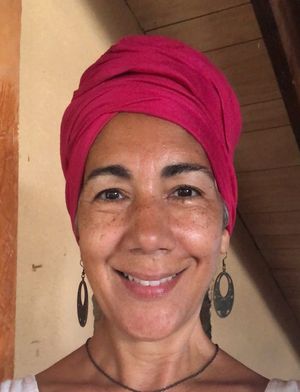
Lola Rosario is a Puerto Rican spoken word poet, freelance journalist, and translator from New York City. Her first poetry collection, Daughter de Borikén (Editorial Pulpo) is out summer 2024. Her soc
Sign up for Prism newsletters.
Stay up to date with curated collection of our top stories.