This Ramadan, the war rages inside us
Months after a ceasefire was declared in Gaza, survivors are still wrestling with guilt, pain, and despair, even during this sacred month
Real journalists wrote and edited this (not AI)—independent, community-driven journalism survives because you back it. Donate to sustain Prism’s mission and the humans behind it.
How long we waited for this time: the month that gathers us with our loved ones around the iftar table, the feel of sticky, sweet dates and the aroma of simmering soup filling the air as we break our fast together.
But as the genocide has unfolded across two devastating years, we thought it impossible that we would ever see a ceasefire—and though the bombing continues, the first day of Ramadan still feels like a miracle.
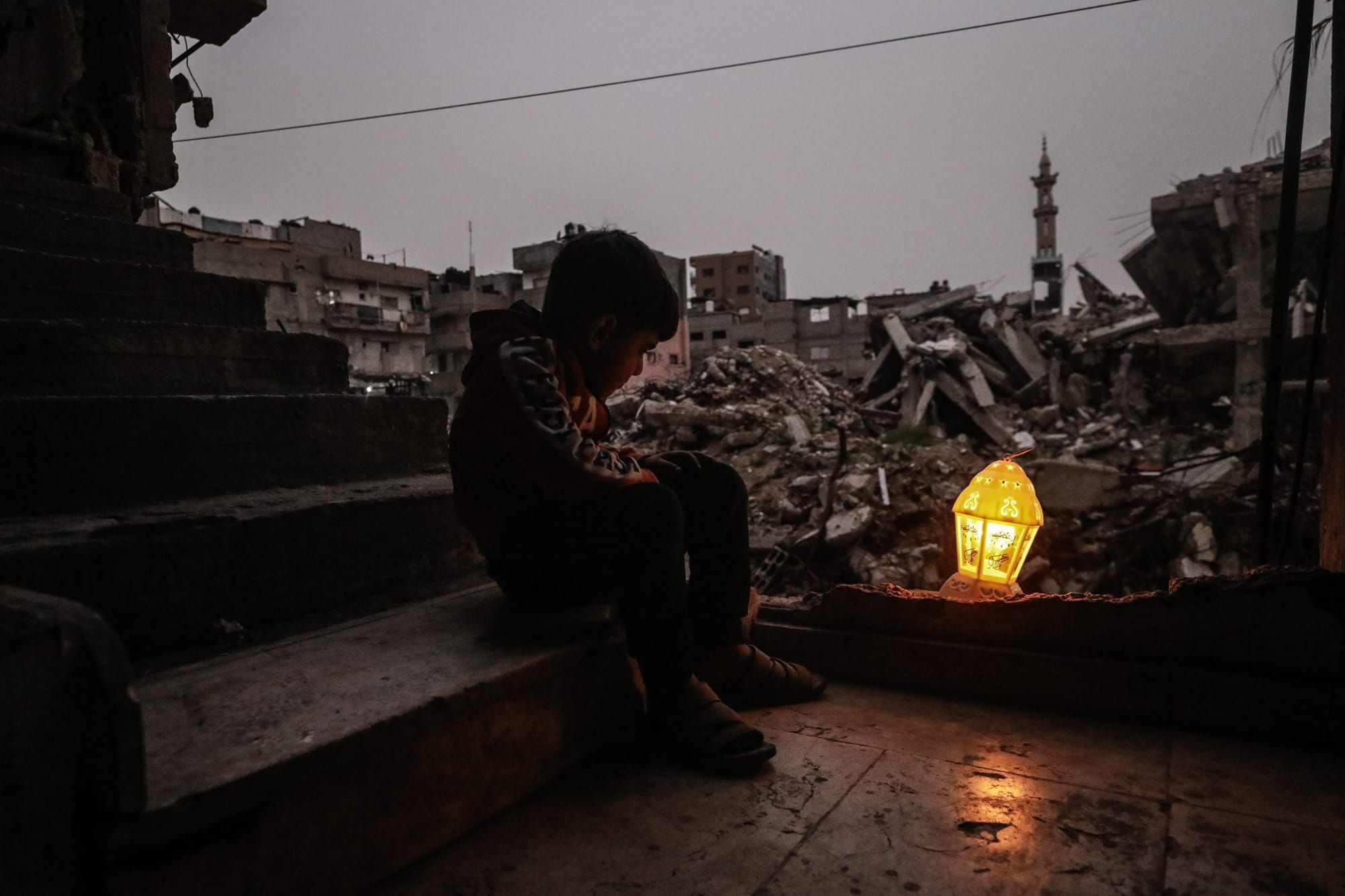
But Ramadan also feels so different from what it once was. We are heavy with grief, having lost our loved ones and our homes, many of us still living among the rubble. But for the first time in years, we can breathe without the constant fear of bombs and hunger. Our sorrow can now live in a quiet air. If only for a little while.
Typically during the week before Ramadan, the streets glowed with festive lights and lanterns that local businesses handed out to children. Every family shopped together to prepare, buying treats and gifts to honor their loved ones. Ramadan is about togetherness and each day during the month, we visit each other, sharing meals and prayer. We also retreat into itikaf, praying countless units, making supplications, and reading the Quran in unison at the mosques.
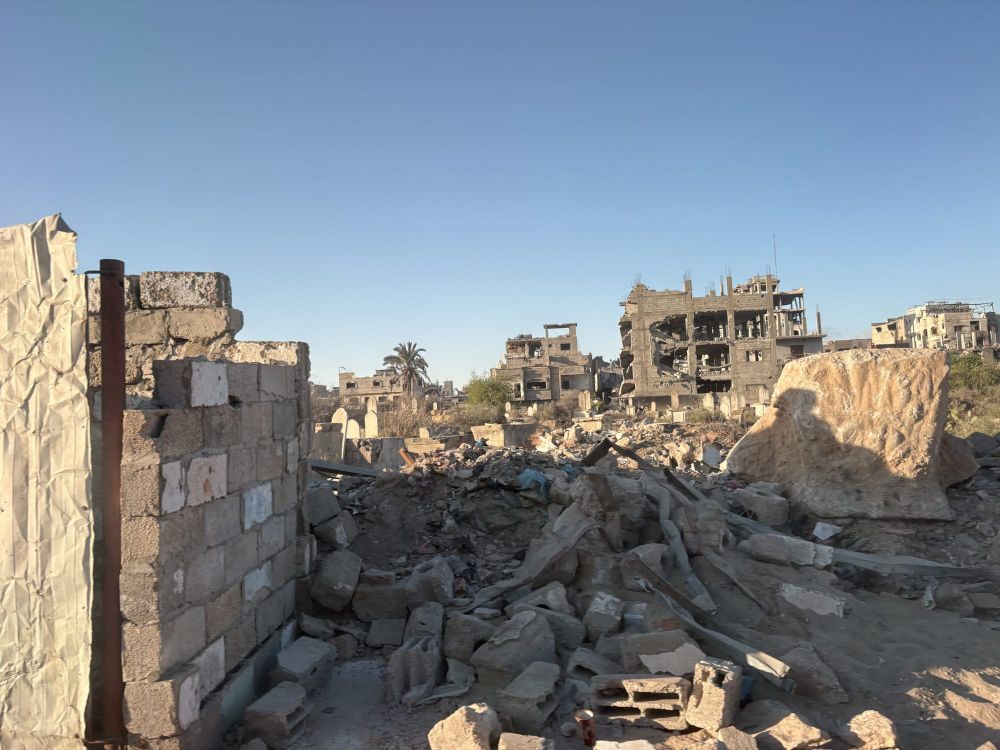
One aim of genocide is to destroy culture. I am thinking of this during Ramadan, as Gaza’s mosques lie in ruins, and our homes are reduced to rubble. What is Ramadan now, in a city soaked in the blood of 70,900 martyrs slaughtered by the Israeli occupation? Gaza is a city where Ramadan’s light and joy has been drowned in fire and despair.
Last week, I went for a walk with my father. A strange joy filled me as I thought about experiencing a quiet Ramadan this year.
But then I looked around.
The streets are filled with tents operating as makeshift homes, and everywhere there is trash and rubble. The tired, hungry faces of people are weighed down by sorrow. It all made my heart sink. Then every step I took reminded me of the bombings that struck those very spots, and of those who had fallen where I now stood with my father—the two of us very much alive but not quite living.
I heard an exchange in the street, someone lamenting about having nowhere to sleep during Ramadan. Their neighbor reminded them to be grateful: “There are those who have lost not just their homes, but their entire families.”
The exchange led me to ask myself: Why have we come to measure our suffering against those who have lost everything? Does it make us feel better, to think our loss is lighter than theirs?
I called my friend, whose mother traveled to Turkey at the start of the genocide while she stayed in Gaza with her father. She longs to see her mother and siblings again. Technically, their family remains intact. They are all alive, and they can speak to each other. I asked my friend how Ramadan would feel to her, after enduring two Ramadans under a war of annihilation. Her voice trembled. What is Ramadan without family? Without her mother and siblings? For my friend, reuniting her family has become but a dream, as travel to and from Gaza remains almost impossible.
Ramadan has always been a mirror for our hearts, and this year, in the delicate stillness of the ceasefire, the faces of our lost loved ones linger in every thought, their absence filling the air.
My uncle died from a heart attack in the middle of the war, overwhelmed by grief and the hardships of repeated displacement. Ramadan is now an occasion of mourning for my cousins. Soon they will gather together at the table and stare at his empty chair.
As my father and I continued our walk, we came across our neighbors. I saw their 22-year-old daughter and as we began to talk about the start of Ramadan, it seemed that the beautiful occasion was weighing heavily on all of our hearts. It would be her second Ramadan without her mother, she told me. They remain separated by checkpoints that operate as extensions of the occupation. The pause in bombing and the siege has made everything feel different—there is less of an imminent risk of death—but our circumstances remained largely the same: a demolished landscape, a lack of food and resources, missing family. The war may have ended on American television screens, my neighbor said, but on the ground it continues to rage.
Everything I heard and felt along the way confirmed that life remains unbearably hard, and that the people who remain in Gaza are carrying guilt. We were all so focused on surviving, we never thought about how surviving would actually feel.
I always believed that once the bombing stopped, everything would become easier as long as we stayed alive. But the wounds we carry with us will not heal.
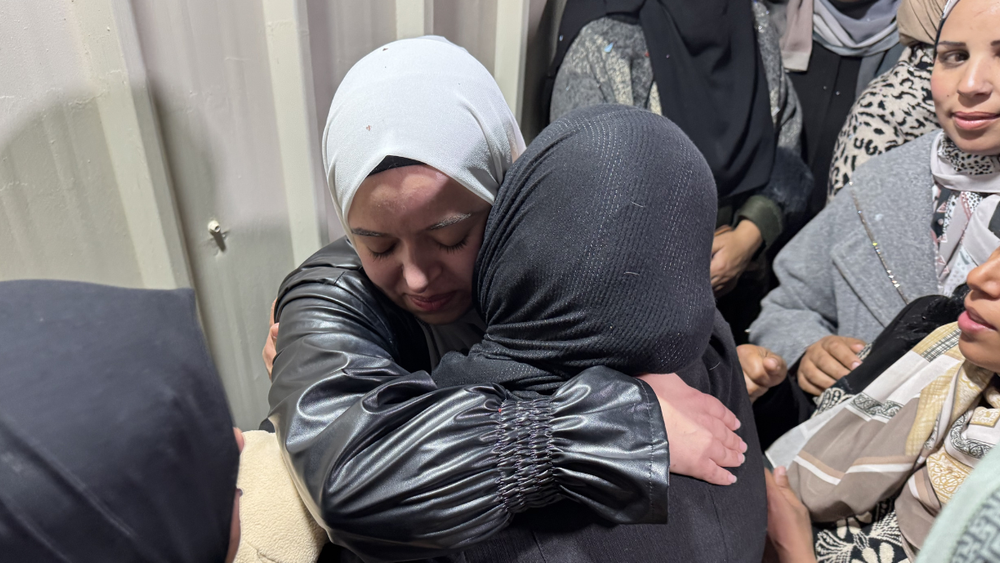
Amid this rubble of stories, the war suddenly collapses into one person, into a single absence that nothing can replace. So many of my friends are surprised by the way their grief is emerging this Ramadan; their pain is bitter and sharp. A friend told me that the end of the war came too late because everything is gone—including her mother.
“Ramadan will be like any other month that simply passes,” she said. “I will only miss my mother: her laughter, her cooking, her warmth. Ramadan will remind me of every dish she used to make.”
Yes, a ceasefire may have been declared, but the wars within us are still raging. The people of Gaza fall asleep each night to the memories of their loved ones. During Ramadan, they will sit alone at the table and stare at empty chairs.
Editorial Team:
Tina Vasquez, Lead Editor
Lara Witt, Top Editor
Rashmee Kumar, Copy Editor
Author
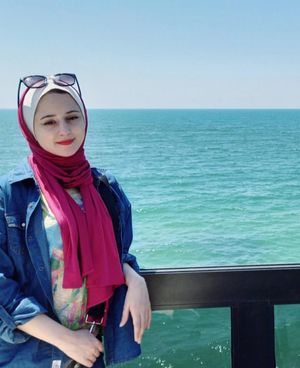
Dalia Abu Ramadan is a Palestinian writer from Gaza whose evocative storytelling brings to life the humanity amid siege and pain. Her articles have appeared in Truthout, Washington Report, We Are Not
Sign up for Prism newsletters.
Stay up to date with curated collection of our top stories.