Rafah crossing opens, but freedom remains conditional in Gaza
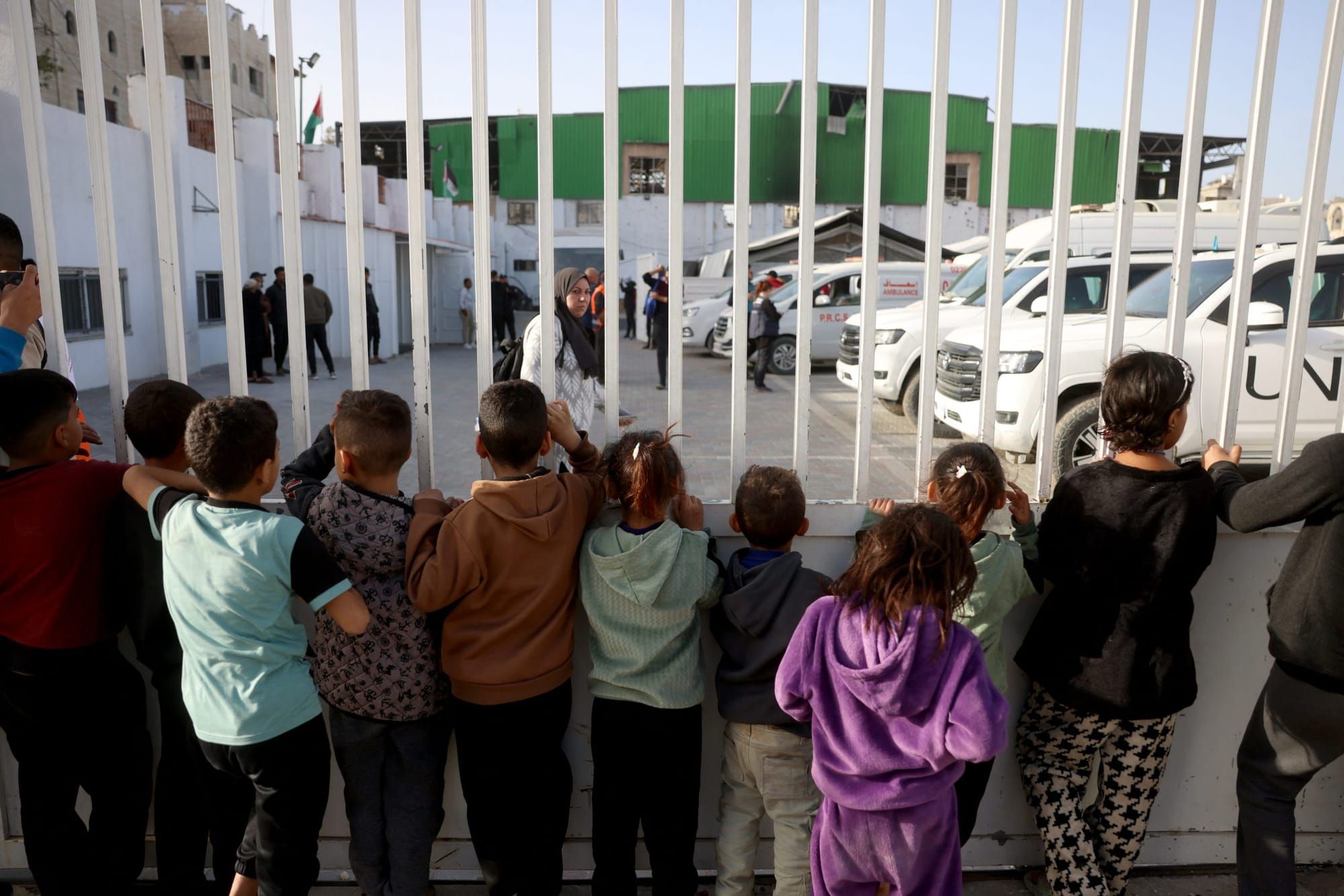
Very few people have been permitted to cross in or out of Gaza after a partial reopening of the Rafah border
Real journalists wrote and edited this (not AI)—independent, community-driven journalism survives because you back it. Donate to sustain Prism’s mission and the humans behind it.
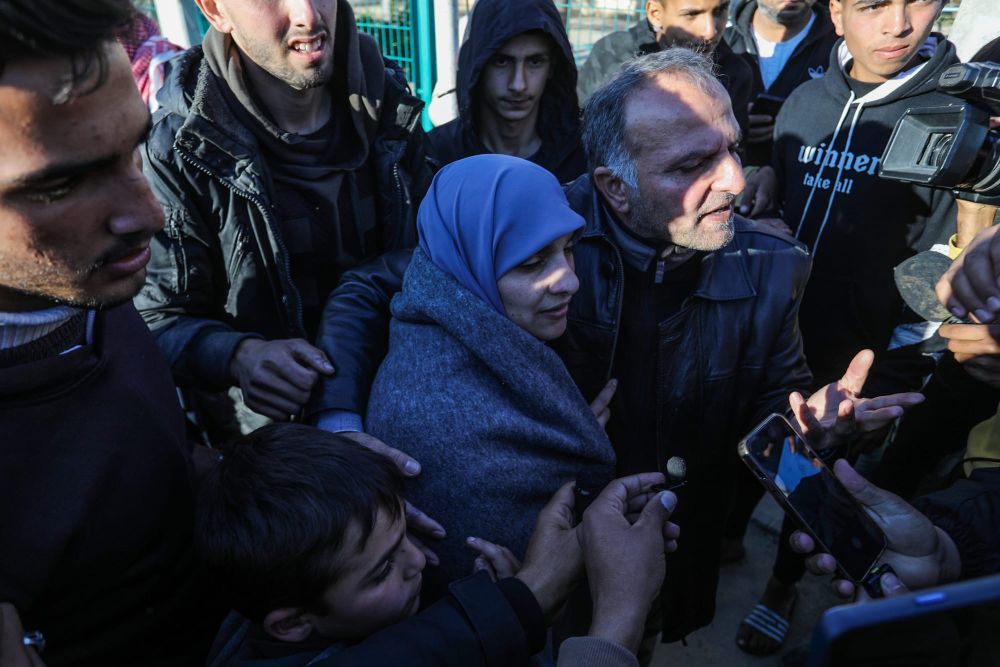
The news spread in a frenzy over WhatsApp groups in Gaza on the morning of Feb. 2: “The Rafah crossing has opened.”
For each group, ranging from scholarship discussion groups to circles of friends and families, the crossing represented a lifeline in its own way. Patients waited for a chance to receive treatment abroad. Families separated by war hoped to reunite, either by welcoming loved ones home or joining them to restore what remained of their family unity. As for students—including myself and many others whose universities no longer exist in Gaza—the reopening of the crossing appeared as an opportunity to salvage what remained of our academic futures.
To the outside world, the crossing’s reopening seemed like a glimmer of hope after months of closure. But on the ground, the realities of the first week revealed a situation far closer to the hardship Palestinians have grown accustomed to over the past two years.
Those waiting to return or depart did not find what they had hoped for. The agreement governing the reopening of the crossing allows only 150 people to depart and 50 to return per day. Those numbers present a vast gap between the scale of need and what is actually permitted: Looking at medical cases alone, roughly 20,000 people are in need of medical evacuation to receive care unavailable inside Gaza.
Even the limited quotas were not fully respected. As of Feb. 8, 145 patients and their companions had left Gaza, while only 98 stranded Palestinians were allowed to return, without any announced or transparent mechanism regulating travel or return. Palestinians who returned to the Gaza Strip through the Rafah crossing also reported a recurring pattern of mistreatment, abuse, and humiliation at the hands of Israeli military forces, according to testimonies submitted to the United Nations Office of the High Commissioner of Human Rights.
Some returnees reported that they were taken to Israeli military checkpoints where they were handcuffed, blindfolded, forcibly searched, threatened and intimidated, and had their personal belongings and money stolen. They described patterns of violence, degrading interrogations, and harsh body searches. In some cases, they were kept blindfolded and handcuffed for extended periods.
Some also reported being denied medical care when needed as well as access to bathrooms, leading to severe humiliation—including, according to the testimonies, being forced to urinate in public.
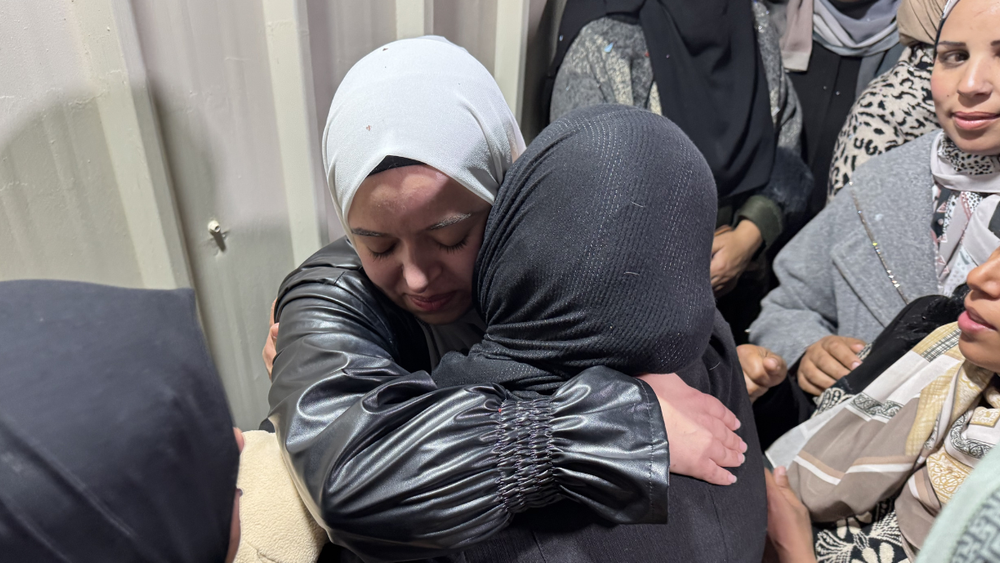
Raghad Al-Kahlout left Gaza for Qatar on Feb. 25, 2024, accompanying her two young cousins —the sole survivors of their family. The two girls had suffered severe burns and fractures, and with Gaza’s health care system collapsed, treating them inside the Strip was impossible.
“My departure wasn’t an escape. It was an attempt to save two children,” Al-Kahlout said. “I was forced to leave everything I belong to for their sake.”
Since that day, she has waited for Rafah to reopen so she could return. But the waiting turned into tragedy. During her absence, many members of her family were killed, including her father, who had been eagerly waiting to see her again and reassure himself of her safety.
“My father always used to tell me, ‘It’s almost over, my daughter, just come back so I can hug you and we can take pictures like we used to before the war,’” Al-Kahlout said. “Since his death, the waiting has no longer been about a crossing. It is filled with guilt, grief, and the feeling that I missed saying goodbye to my father—a goodbye that can never be replaced.”
When she imagines going back, she thinks of her mother and the grave of her father.
“Returning is not just going back to a place—it’s confronting a painful reality, but one I need to face in order to keep going,” she said.
The uncertainty of war or the harshness of life in Gaza are not the only things that worry Al-Kahlout.
I don’t fear death as much as I fear being deprived of my right to belong.
Raghad Al-Kahlout, palestinian seeking to return to Gaza
“I fear reaching a moment when I am forced to accept what happened. I fear a life where losing those we love becomes normal,” she said. “I don’t fear death as much as I fear being deprived of my right to belong.”
For Majd, a Palestinian woman from Gaza and a mother of two living in Egypt, both her departure and her anticipated return were shaped entirely by compulsion to escape the ongoing genocide.
“I left out of fear for my children’s lives and their psychological and physical safety,” said Majd, who wanted to use her first name only due to fear of retaliation that could affect her ability to return to Gaza. “I didn’t leave in search of a better life—I fled from a possible death, trying to protect them from scenes no child should ever witness.”
Majd has been waiting for Rafah to reopen for months, a period she describes as heavy with anxiety and inner conflict.
“Waiting as a mother is different. It’s a daily fear of the unknown, a constant struggle between my desire to return home and the painful question: Is it safe for my children?” she said. “I try to appear strong in front of them, while inside I live a conflict between hope, guilt, and fear.”
Despite the destruction and the possibility of renewed war, the thought of return remains strong for her.
“Gaza is my children’s homeland and their first identity. I fear they will grow up feeling rootless, without a sense of place or memory,” she said. “At the same time, I can’t escape my fear for them.”
While thousands of Palestinians outside Gaza wait for a chance to return, many inside the Strip continue to hope for a chance to leave, especially hundreds of students who have received scholarships in countries around the world.
Among them is 21-year-old Haya Al-Wadiya. Her desire to cross is not driven by a life-threatening injury, but by a future she feels is suspended and by a dream of traveling and discovering different cultures.
“I want to continue my education, reunite with my family, and achieve the dreams that were pushed to the margins,” she said. Most of her family already lives abroad, and she hopes to travel to continue her studies in Qatar after receiving a scholarship there. But her name is not on any travel list, and like thousands of Palestinians hoping to leave, Al-Wadiya has no idea how to achieve what she wants in the absence of any announced plan for students in similar situations.
If she gets the chance to leave, Al-Wadiya knows what she will carry with her: her laptop, some personal belongings, and a few photographs.
“Simple memories,” she said.
When asked what would be hardest to leave behind, her answer was blunt: “Most of it is already gone. Our home is gone. The streets we loved are gone. Maybe the hardest thing to leave—even after everything that has changed—is Rimal Street and my friends.”
The area was known to be a bustling and vibrant spot to shop and dine in Gaza.
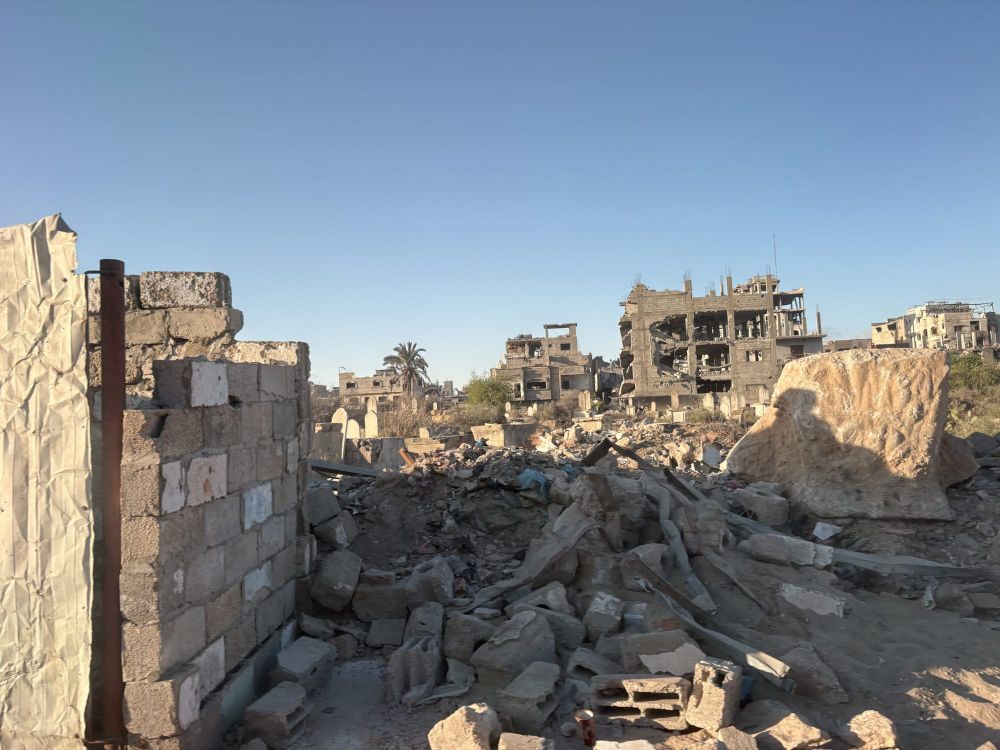
Despite slightly loosened restrictions on people traveling through the crossing, hospitals are still struggling to access medical supplies and equipment, and municipalities still lack resources to keep what remains of daily life functioning. As long as Israel continues to block the entry of much-needed supplies into Gaza, clearing rubble and rebuilding homes, hospitals, and infrastructure remains an impossible task.
Here lies the truth of Rafah: A crossing opened just enough to silence critics of its closure, and just enough to ignite a fragile hope among thousands of patients, students, and families torn apart by war—while remaining effectively closed to the vast majority. Those who cross are only a select few—patients and tightly defined humanitarian cases—while for most Palestinians, Rafah remains a constant reminder of a fate imposed on Palestinians as it has been for the past two years: conditional freedom, and an open-ended suffering with no horizon.
Editorial Team:
Sahar Fatima, Lead Editor
Lara Witt, Top Editor
Stephanie Harris, Copy Editor
Author
Hassan Abo Qamar is a Palestinian writer, programmer, and entrepreneur from Gaza, focusing on documenting the humanitarian situation in Gaza, as distinct from traditional political narratives. He writ
Sign up for Prism newsletters.
Stay up to date with curated collection of our top stories.