The spiritual, political, and liberatory work of unlearning
In a Q&A with Prism, journalist and activist Lewis Raven Wallace discussed his new book “Radical Unlearning,” a guide for breaking free from harmful ideologies
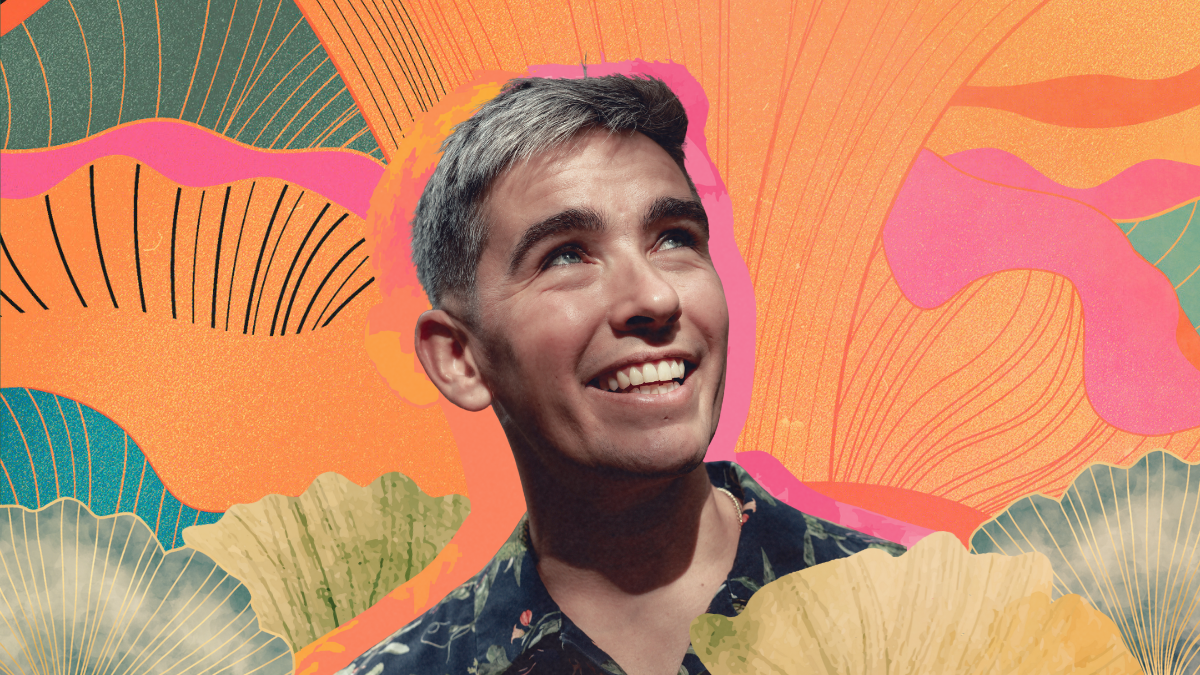
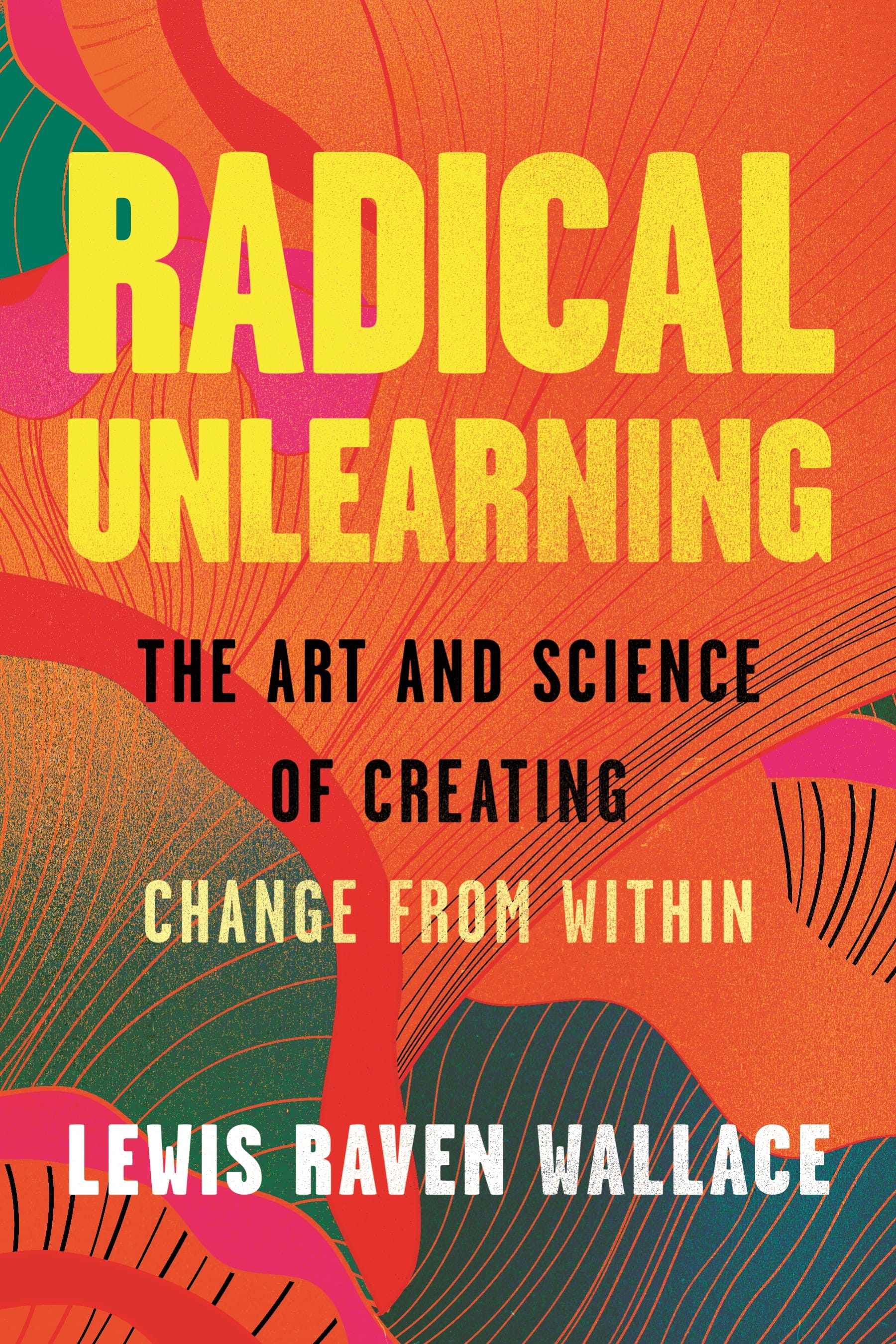
In “Radical Unlearning: The Art and Science of Creating Change From Within,” journalist and transgender anti-racist activist Lewis Raven Wallace argues that it’s possible for society to break away from the harmful beliefs our families often instill in their children at a young age. But how?
That’s the question Wallace explores in his new book, released this week by Beacon Press. Each chapter focuses on an interview with different activists, organizers, and others involved with social movements about the conditions that made their own personal transformations possible. Many interviewees refer to practices rooted in the concept of neuroplasticity, the ability to change what and how we think, which help us build new capacities, behaviors, and habits that align with our authentic selves and values. Ultimately, Wallace discovers that the key to unlearning lies in community, and in order to fight for collective liberation, we must also collectively embrace unlearning.
To welcome his book into the world, Wallace is hosting an interactive launch party called “Carnival of Unlearning” on Sunday, November 2 at Perfect Lovers in Durham, North Carolina. Ahead of the event, he spoke to Prism about the impetus for his new book, the role that journalism plays in Wallace’s own unlearning, and why the power of persuasion doesn’t really work when trying to get loved ones to let go of harmful ideologies. This conversation has been edited for length and clarity.
Adryan Corcione: While reporting on Donald Trump’s first presidency in early 2017, you published an article on Medium that critiqued objectivity as a journalistic framework. How did that experience lead you to the project of radical unlearning?
Lewis Raven Wallace: I was fired from my job in public media for publicly talking about the problems of objectivity amidst rising authoritarianism. Overnight, I became an advocate for the end of objectivity. I went around the country giving talks and answering questions about journalism and objectivity. There was an urgency and confusion about where Trumpism came from. At almost every public talk, somebody would ask, “How do we change people’s minds?” Something about the question felt off to me. In my talks, I started turning the question back to the audience and asked them to collectively reflect on a time when they changed their own mind about deeply held beliefs. What conditions created that change? I became really focused not on the question of how do we change other people’s minds, but the question of what are the conditions that make it likely to let go of deeply held beliefs and ideologies—and how can we create those conditions in our own lives and in our communities?
Corcione: As a journalist, you personally realized that facts alone won’t change a person’s mind. What informed that?
Wallace: My reporting revealed that over and over again. Sometimes, even the facts of your own life don’t change your deeply held beliefs and ideologies. The sort of power of propaganda and ideology is so powerful that even lived facts don’t necessarily overcome it.
I saw a lot of that when I was interviewing people in 2016 and 2017 during the rise of Trump, and I saw that in my own family. [In “Radical Unlearning”], I talk about my grandmother and also my mother, both born and raised in Columbia, South Carolina. My grandmother was raised in the belly of a very racist, homophobic worldview. She did eventually begin to work through that, but simply knowing that scientific racism had been debunked wasn’t enough to get her to a place of change. She had a visceral reaction to homosexuality and a fear of Black people. That inner work around those visceral reactions is where the hard unlearning really comes in. How do you change not just what you think you think, but how you actually react in a moment? Her long-term dedication to her own unlearning was always an incomplete project.
Corcione: You invite readers to unlearn with you as an author. Did you experience any transformation in unlearning through writing this text?
Wallace: I went through so much unlearning in the process of writing this text. The first couple of years of working on it were hard because I had to unlearn my own preexisting bias towards science and evidence. I wanted to find a science of unlearning. How can you explain it as this objective process? Even though I’d written a whole book debunking the myth of objectivity, I still internalized these ideas that there’s some kind of scientific answer to any given question. The book ended up being subtitled “The Art and Science of Creating Change From Within” because I realized that a lot of the answers actually lie in undefinable, sometimes indescribable experiences like poetry, love, and surrealism that make unlearning likely. Those are not scientific conditions. Those are conditions about engagement and creativity and art, and to some extent, random chance and desire—all these things that thousands of years of philosophy have never gotten to the bottom of. Clearly, I wasn’t going to get to the bottom of it while writing “Radical Unlearning.” I had to really sit with not providing answers, but by telling stories and suggesting frameworks.
I had to sit with my own unlearning that relates to this epistemology and knowledge and just how much my framework for knowledge is embedded in Western European, English-language, and settler colonial traditions of thought. I did a lot of reading and reflection that made it into the book a little bit. Much of it was for background about Indigenous worldviews that are not what I was raised with, but that my whole upbringing actively works against as a participant in settler colonialism and as a descendant of settlers. That took the form largely of self-reflection and spiritual work. The hardest thing about unlearning, in some ways, is that you don’t know what you don’t know. You can’t recognize what you need to unlearn until you’re in some way confronted with it.
Corcione: What are the ways to invite someone into unlearning?
Wallace: People are often invited into unlearning by love in the expansive sense—not just romantic love, although romantic love also can be very powerful for unlearning. The people that I interviewed who went through the hardest struggles of unlearning were people with high stakes, in terms of community and a sense of being loved; if they let go of the ideology, they would lose their whole social world. That included people who were completely ensconced in white nationalism or Zionism, people who, as they unlearned those things, did lose their whole social world. What created the conditions for unlearning was, in part, or sometimes almost entirely about relationships. They did receive invitations. They also received confrontations and challenges. Invitations don’t always have to be a gentle handholding or even a “calling-in” model. Sometimes, confrontation sets up the stakes of the unlearning. You’re going to lose access to people or spaces if you don’t confront your own racism, for example. I think that can be a really powerful tool when it’s paired with the opportunity to land a new set of relationships and community.
Corcione: You interviewed an anti-racist trans woman named Adrianne Black, who was once a white supremacist activist. She mentioned how college peers challenged her racist beliefs and doxed her online. Do you think that agitation can ever be a form of care?
Wallace: Yes, I do. I reached out to her specifically because she wrote a memoir about her life as a white nationalist activist and her conversion to anti-racism. She also had a wonderful book written about her by a Washington Post reporter, Eli Saslow. Part of what made her want to unlearn and let go of white nationalism was the people who were very confrontational with her at the New College of Florida. In the environment of a college campus where people embraced her, some people rejected her. That tension created both possibility and pressure for her to unlearn. She does say: You can’t just reach out and change someone’s mind who you don’t care about and who you don’t know. It doesn’t work like that. The people on her college campus were connected to her. They were invested in her. In retrospect, she now sees the campus protests against her as an invitation to belong; if she didn’t matter at all to those people, why would they protest her, right? They wanted her to change. That meant something.
When it comes to directly confronting the person espousing bigoted ideas, there has to be room for a confrontational aspect because it’s honest, it’s real, and the stakes are actual humanity, our life and death.
Lewis Raven Wallace, Author of “Radical Unlearning”
There are many forms of agitation that can be an act of care. Sometimes, we agitate in order to make a point publicly for a different audience other than the person we’re protesting. It can be very appropriate and strategic. You’re not trying to change that person’s mind, but you’re trying to show others. You’re trying to display a challenge. When it comes to directly confronting the person espousing bigoted ideas, there has to be room for a confrontational aspect because it’s honest, it’s real, and the stakes are actual humanity, our life and death. Those stakes were made clear to Adrianne Black by people protesting her, not just by people checking in with her.
Corcione: You mentioned that unlearning is not about persuading another person. Can you elaborate on that?
Wallace: I wanted to get away from liberal writing about the idea of persuasion and mind change, the idea of civil discourse, though these are valid tactics and approaches for a variety of things. I wanted to focus on the radical potential of creating spaces where unlearning is ongoing. People on the liberal side of the spectrum believe that it’s just those Trump people over there who are problematic, but we know that there’s a lot of racism, a lot of homophobia, a lot of Zionism, and anti-Palestinian sentiment on the liberal side of the political spectrum in the United States.
I wanted to set up an invitation for everyone who might read the book to start by thinking about unlearning in terms of ourselves. What do I need to unlearn? What am I working through? Then, that becomes a tool of compassion for others whose unlearning you want to support. Because you’re not saying, “I have it all figured out and I’m going to show you.” You’re actually saying, “I don’t have it all figured out, and I can really empathize with someone else who doesn’t have it all figured out; we can be in this together.” That kind of humility and curiosity is essential to movement work.
Corcione: How do you recommend that people start that process?
Wallace: Who’s in my community? How are we thinking? What are we doing? These are questions we can actually answer and address. It gives us a new kind of power. We don’t need to go out and change everyone we disagree with. We can just start working in our own immediate communities on things that we actually can change. How can I activate myself, the people I love, and the people around me to do the next right thing, to do more of the kinds of action that are needed to unlearn in ways that support our escalated political engagement?
Corcione: Unlearning sometimes can be misunderstood as exclusively reserved for those with social power tasked with unlearning oppressive ideology, like white people unlearning racism. What about those without social power who grapple with unlearning?
Wallace: Unlearning is not just for people with privilege. Ideally, it’s a shared human experience of recognizing oppressive ideologies in our society. The U.S. filters into every part of our lives. Our culture filters into how we relate to one another, into how we think about the world. Prisons are such an intensive case study of ideology in action. Everything about prison life is about dominance, control, and dehumanization. I learned so much in the process of working on “Radical Unlearning” while working with incarcerated journalists through my job at Interrupting Criminalization. The incarcerated journalists I talked to about this project were so excited because it was an opportunity to systematically reject and work through the ideologies that they’re constantly having forced on them, such as internalizing who is a “criminal,” why people are in prison, and who has a right to live a beautiful and connected life.
If you’re somebody who’s been told over and over again that you don’t have that right, that you’ve actually lost that privilege, and that you’re the part of society that doesn’t get to have a family, that doesn’t get to be in nature, that doesn’t get to connect with people, there’s so much to unlearn. Who am I? How do I relate to society? What do I deserve? This is a spiritual kind of work, but it’s also political. It’s also liberatory work. Once we start to unlearn with people who are experiencing the oppression of these systems, that will only lead to more freedom for more people.
Editorial Team:
Tina Vasquez, Lead Editor
Carolyn Copeland, Top Editor
Rashmee Kumar, Copy Editor
Author
Adryan Corcione is a white queer essayist and journalist living on occupied Lenape land. Their writing has appeared in Teen Vogue, Truthout, Filter Mag, and more, covering topics like harm reduction,
Sign up for Prism newsletters.
Stay up to date with curated collection of our top stories.