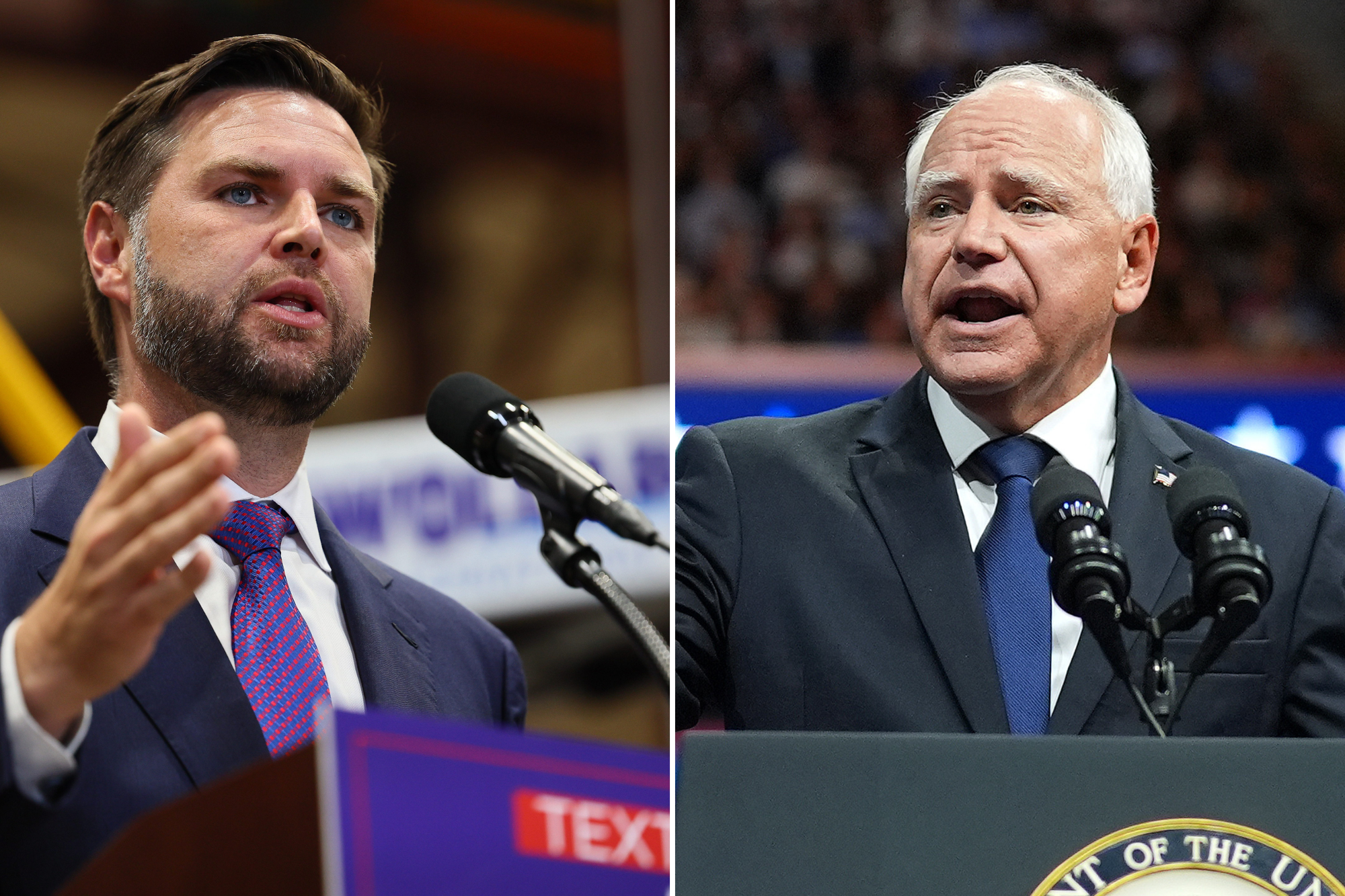
With Minnesota Gov. Tim Walz’s ascension to the Kamala Harris ticket, the stage is set for the most significant ideological gap on LGBTQIA+ rights in major party nominees in recent American history. According to leaders in the movement for queer liberation, the distinction between the Republican and Democrat vice presidential picks is hard to miss, with organizers describing Sen. J.D. Vance as a “barrier” to freedom and Walz as a “glimmer of hope.”
Vance’s brief career as a senator has been crowded with political ambitions to disenfranchise queer people, specifically the trans community. Last year, Vance introduced legislation that would ban gender-affirming care for minors and shutter medical resources for trans people. And beyond legislation, his rhetoric has consistently been comprised of homophobic and transphobic language, including words such as “groomer” to describe queer people. These attacks have not gone unnoticed by activists who are leading the resistance to Vance’s legislative agenda.
“Vance is a clear barrier toward queer liberation,” said Alphonso David, a NYC-based civil rights lawyer, president of the Black Economic Forum, and former president of the Human Rights Campaign. “Vance is advancing a climate of fear and discrimination … and he has telegraphed to us quite clearly that he is antagonistic toward LGBTQ+ people.”
Over the coming months, Vance is expected to join former President Donald Trump for campaign events across the country. But this GOP partnership was not always expected by the party or by Vance himself.
“Vance, in my opinion, is an opportunist and a hypocrite … Not too long ago, he referred to his running mate as ‘America’s Hitler,’” said Jim Obergefell, the lead plaintiff in the Supreme Court marriage equality case, an LGBTQIA+ activist, and a native of Ohio—the same state Vance represents in Congress. “He just will go whichever way makes him feel better and gives him power and visibility. So I really think he was picked as the running mate because he will do whatever he’s told.”
It has been heavily reported that Vance expressed public disdain for his running mate in previous years. This hypocrisy shrouding the Vance campaign is in great contrast to the initial reactions to the newly formed Harris-Walz ticket.
Walz has a long and affirmative resumé when it comes to the rights and protections of LGBTQIA+ people, a resumé that organizations like the Human Rights Campaign and the National LGBTQ Task Force have celebrated. As the governor of Minnesota, Walz signed an executive order banning conversion therapy. In Congress, he co-sponsored the repeal of the Defense of Marriage Act and advocated for the repeal of “Don’t Ask, Don’t Tell.” His defense of queer identity is not new; in 1999, when Walz worked as a teacher and a coach, he served as faculty adviser to his school’s first Gay-Straight Alliance. Twenty-five years later, advocates are looking toward his potential White House tenure with promise.
“I think that hearing about Walz being chosen as Vice President Harris’ running mate was encouraging. I felt a glimmer of hope about the direction that the Dems are taking,” said Raquel Willis, an award-winning activist and author focused on Black and trans liberation. “Walz also seems to have an immense amount of empathy at the core of his leadership, particularly as the governor of Minnesota. He has tried to make his state a refuge for LGBTQ+ people.”
The excitement for the Harris-Walz ticket among queer organizers directs eyes to the potential Walz’s candidacy can have on the mobility of Black and queer Americans.
“Walz is a leader with a comprehensive background in both public service as well as advocacy for economic justice and LGBTQ+ rights,” said David. “And when we talk about the rights of Black, gay, and queer people, generally, economic justice is at the top of the ticket … So I am extremely excited that we have a battle-tested leader who is an advocate for economic justice and LGBTQ+ rights.”
The distinction between each vice presidential candidate is striking to organizers in the movement-building space.
“Gov. Walz is willing to be in community with queer people. Vance is looking to discard queer people for political power,” said Michael Franklin, an LGBTQIA+ organizer based in Washington, D.C., and founder of Words Normalize Behavior.
Franklin nodded to the recent testimony from one of Vance’s law school classmates, Sofia Nelson. Nelson, a public defender in Detroit, went on record describing the version of Vance she knew as an ally and as someone who provided care for her during gender transition-related surgery.
But while some are excited about the Harris-Walz ticket, some organizers who align with farther-left political ideology are cautious.
“I think when you are part of the far-left wing of the Democratic Party, you often feel invisible or silenced,” said Preston Mitchum, a Black queer attorney, advocate, and activist. “I think we need to really focus on the sides of the party that rarely gets listened to, which are people who folks consider too radical or too progressive.”
Mitchum pointed to factions of the Democratic Party that are part of the Uncommitted movement and remain steadfast in their calls for an arms embargo and a ceasefire in reference to the genocide in Gaza. As the initial celebrations for the Harris-Walz ticket subside, the pressure applied from ceasefire advocates, many of whom exist in the movement for queer liberation as well, will be a consistent pain point for the Democratic ticket unless they start to listen.
“I hope that Harris and Walz will listen to the Uncommitted movement and also listen to the demands around Not Another Bomb, which is a campaign to push for an arms embargo for Israel. I think if we can see some movement there, they will get back a lot of the votes that I think the Biden campaign left on the cutting room floor,” Willis said.
Author

Nick Fulton is a Queer freelance journalist covering social justice movement building, LGBTQIA+ organizing, and progressive political commentary. In his full-time capacity, Nick works in political med
Sign up for Prism newsletters.
Stay up to date with curated collection of our top stories.