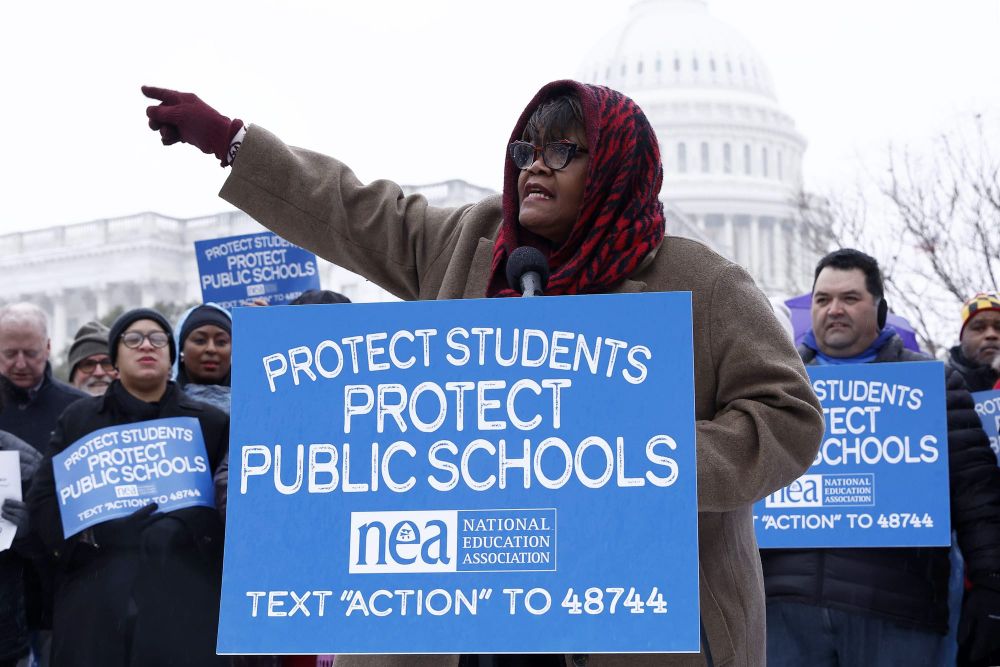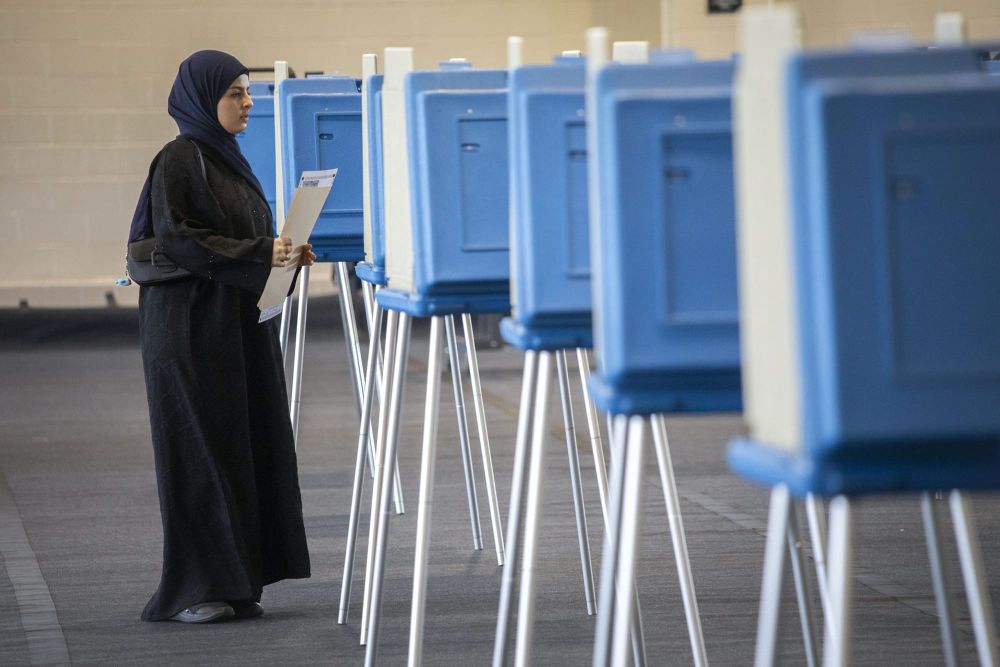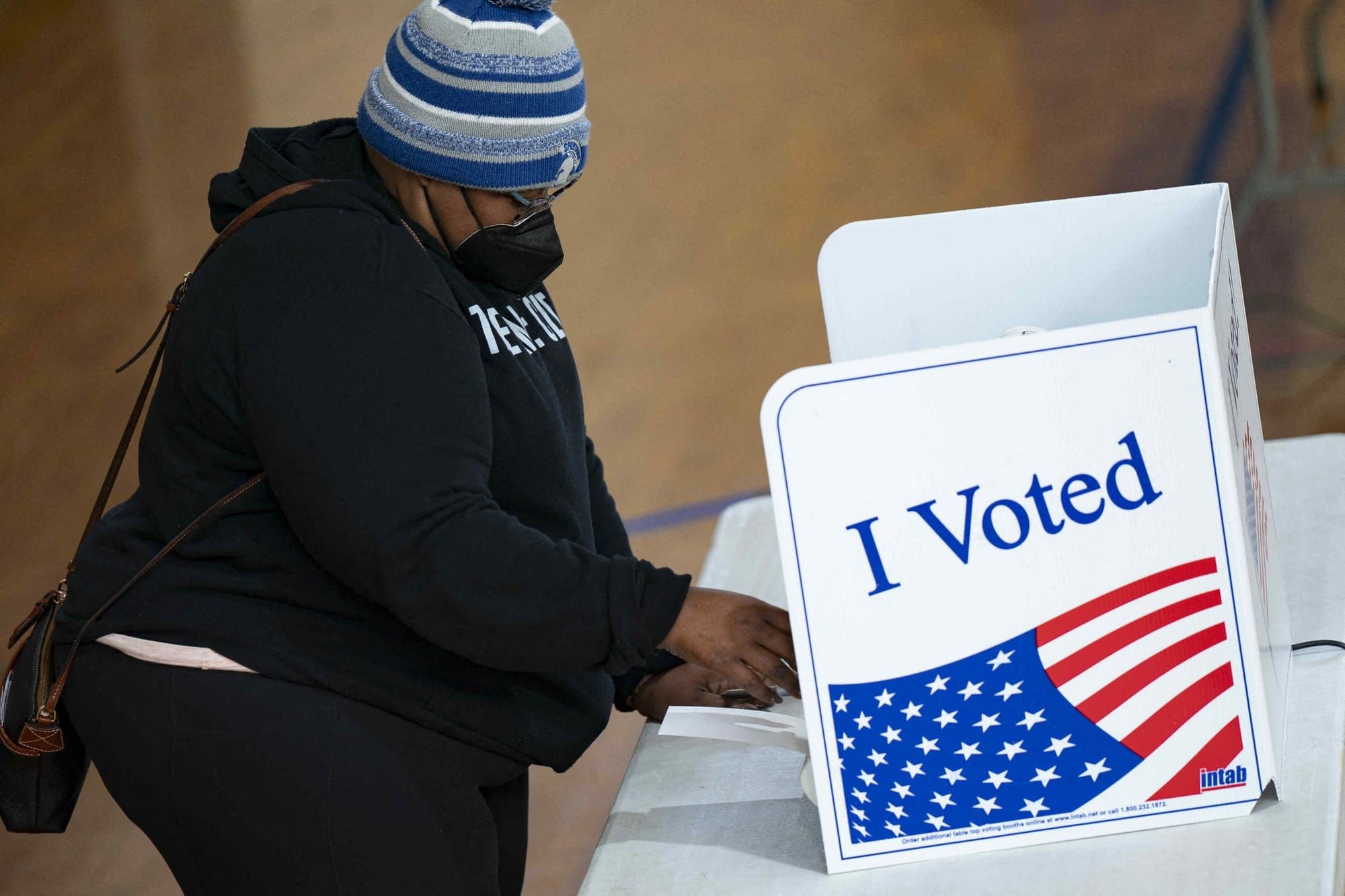
As the election primary enters full swing, voter suppression laws and intimidation tactics are increasingly hindering voter participation across the country.
In Tennessee, a new law requires signage at polling places warning voters that they can be charged with a misdemeanor if they vote for a candidate in a party primary without being a “bona fide” member of the party, a move voter advocates say is designed to intimidate people. In Louisiana, Gov. Jeff Landry approved a law ending the state’s 50-year tradition of open primaries. Though a later amendment allows no-party voters to participate in party primaries, those registered to third parties, including the Independent Party, will be unable to vote. Almost a third of the state’s electorate is registered as Independent or is unaffiliated with any party.
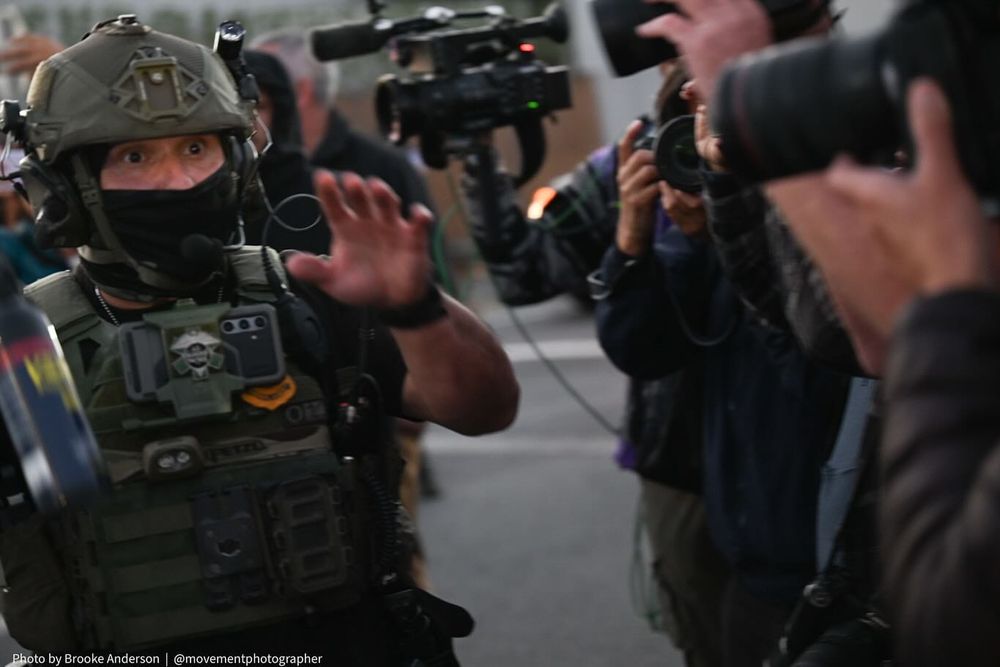
Other more nefarious activities are also intimidating voters. In Travis County, Texas, district attorney candidate and eventual winner José Garza said volunteers on his campaign had faced harassment from members of a pro-police biker club who allegedly followed volunteers as they canvassed the neighborhood and attempted to disrupt their conversations with voters. In New Hampshire, two Texas companies allegedly deployed pre-recorded robocalls using artificial intelligence to mimic President Joe Biden’s voice to discourage voters from participating in the state’s primary election.
Voting obstacles in the primaries bode poorly for voter accessibility in the 2024 general election, where partisan motivations make suppression and intimidation more likely. The impact of election interference laws introduced in 2023 in South Dakota, Texas, Arkansas, Georgia, and Florida will likely be mostly seen in November, as Republican-led states weaponize the threat of criminal penalties against election workers and voters for inadvertent process errors to suppress turnout to remain in power. Black Voters Matter Co-founder LaTosha Brown told Prism she is particularly concerned about the impact of former President Donald Trump’s takeover of the Republican Party, which has led to the firing of about 60 employees.
“I think that they are going to be more aggressive around not just intimidation, but also being willing to use whatever tricks they can to pressure Republican governors and secretaries of state to purge voters from the voting list,” Brown said. “I think it’s death by a thousand cuts.”
Election misinformation has also been pervasive throughout the primary season. In a closing pitch to New Hampshire voters, Trump said Democratic voters would infiltrate the Republican primary to vote for Nikki Haley, a rumor that gained traction on social media in conservative circles. While most large social media companies ban misinformation about voting, enforcement can be inconsistent.
Information inequality also disproportionately affects people of color. A 2020 study from MIT economics assistant professor Charles Angelucci found that older, wealthier, white males are more likely to be aware of news stories than people from other demographics. With politicians largely incentivized to cater to the interests of more informed people, poor information flow to people of color can result in their interests being less represented.
“Now they’re using AI and fake photos and circulating that to discourage people and create a narrative that’s not true,” Brown said. “I think the level and scale of the targeted disinformation and misinformation is probably going to be the most critical barrier we’ll face this year.”
This election is part of a larger trend in the degrading of voting rights since the 2013 Shelby County v. Holder decision, which revoked a provision in the 1965 Voting Rights Act requiring preclearance for new voting laws passed in states with a history of discrimination. A new report from the Brennan Center for Justice found that between 2012 and 2022, the racial turnout gap between white and non-white voters had increased from 10 percentage points to 12 percentage points. The study also found that the racial turnout gap grew nearly twice as fast in areas previously covered by the preclearance provision.
During the last congressional session, the John Lewis Voting Rights Advancement Act of 2021 and the Freedom to Vote Act of 2021, which created national standards for voting accessibility, passed the House of Representatives and received a majority support in the Senate. But both bills were blocked by the filibuster––just as civil rights legislation in the 1960s was blocked by filibusters from Southern politicians.
“We’ve been doing everything we can to prepare people about what to expect going forward, to be as preventative as possible, and make sure that people feel some sense of being empowered about what to expect and what they can do,” Brown said. “And we’re not waiting till the last minute.”
Organizations like Black Voters Matter, the Brennan Center, and the League of Women Voters are working in multiple states to protect Americans’ right to vote through legal challenges against discriminatory voter ID laws, attacks on voter registration, and other forms of voter suppression. The Brennan Center is currently suing the state of Texas for Senate Bill 1, a new law banning drive-thru voting and impairing election officials’ ability to stop harassment from poll watchers. The League of Women Voters Pennsylvania and other plaintiffs filed a federal lawsuit last month seeking to get the state to count thousands of absentee ballots that were rejected due to voters missing or listing the incorrect date next to their signature.
Many grassroots efforts to push back against voter restrictions have succeeded. In coalition with other civil rights groups, Black Voters Matter recently filed and won a lawsuit in Louisiana challenging racial discrimination in new state legislative maps, forcing the state to redraw lines to create more competitive districts for Black voters. Proposals to restrict Sunday voting in Georgia and Texas were walked back after pushback from Black faith leaders. Courts have also recently struck down a North Carolina election interference law and an Arizona law that would create restrictive proof of citizenship requirements for voters.
However, other efforts to stop voter suppression have failed. The League of Women Voters Tennessee, former Knoxville Mayor Victor Ashe, and voter Phil Lawson sued the state of Tennessee for its new signage requirement, arguing that it would confuse and deter voters from participating in the primary, but Judge Eli Richardson dismissed the case. Brown lamented not being able to stop Senate Bill 202, a 2021 Georgia law that created several impediments to voting, including reducing drop box access and restricting the distribution of food and water to people waiting in line at polling places.
Several states, including Massachusetts, Michigan, New Mexico, California, and Virginia are considering new legislation to stop armed intimidation of voters, something that happened in Maricopa County, Arizona, in October 2022 at a ballot drop site. A new California bill, the Peace Act, would create anti-intimidation protections for voters and election workers by treating the carrying of a gun outside a polling place as inherently intimidating. While current law already bans guns at polling places, the new language would allow people to directly seek recourse and preventative relief from people trying to intimidate them.
“I hope voters are not discouraged by [the racial turnout gap] but all the more encouraged to turn out and exercise their political power in the face of people who are trying to take it away from them,” said Sean Morales-Doyle, the director of the Brennan Center’s Voting Rights and Elections Program. “It is really important for us to have an inclusive democracy, and the only way we are going to overcome the effects of voter suppression in our democracy is if people go vote for democracy.”
Author

Sravya Tadepalli is a freelance writer based in Oregon. Her writing has been featured in Arlington Magazine, Teaching Tolerance, the Portland Tribune, Oregon Humanities, and the textbook America Now.
Sign up for Prism newsletters.
Stay up to date with curated collection of our top stories.