The New York Civil Liberties Union (NYCLU) and Palestine Legal have sued Columbia University in New York State court over its suspension of Students for Justice in Palestine (SJP) and Jewish Voice for Peace (JVP).
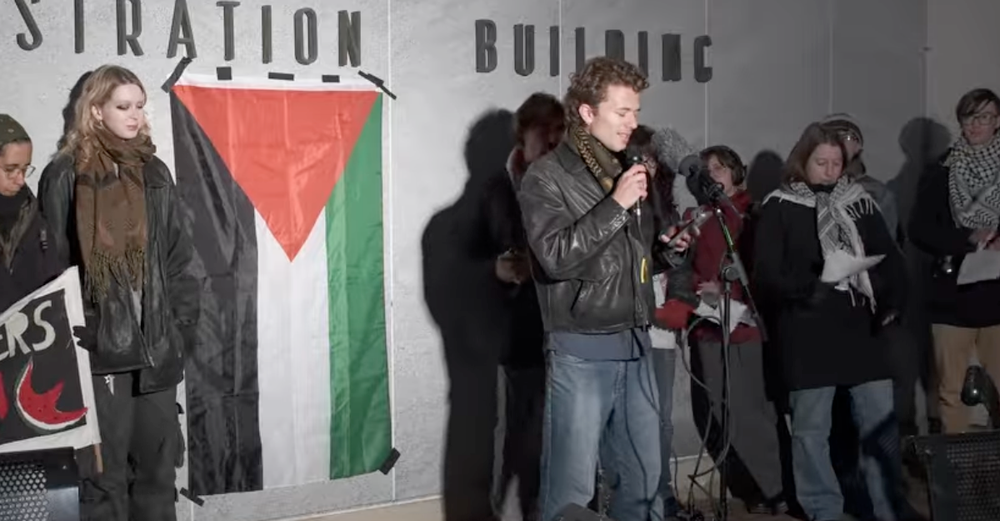
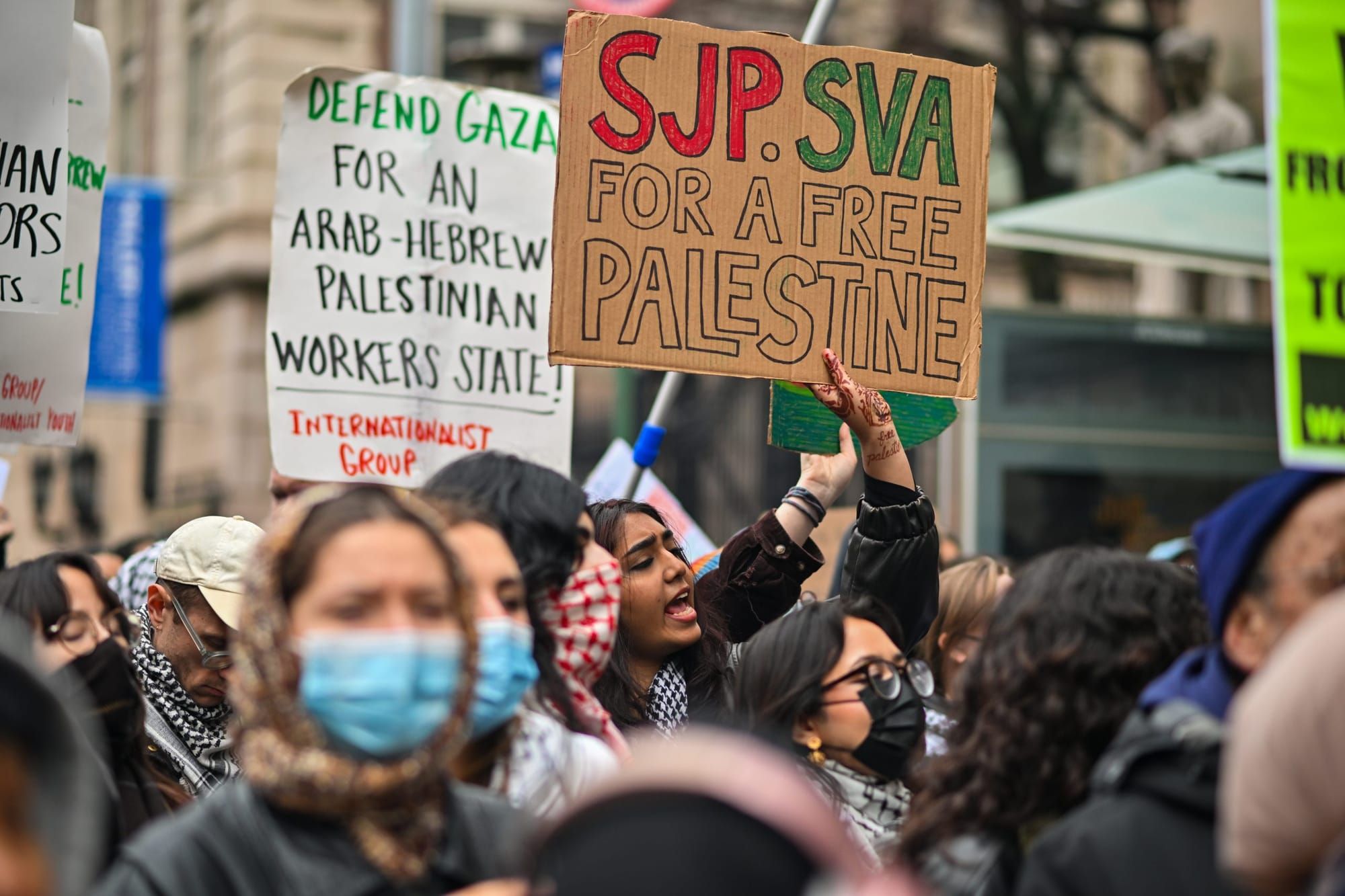
The Columbia chapters of SJP and JVP are student organizations that have organized many of the pro-Palestine events and demonstrations since Israel began its bombardment of Gaza in October last year. The organizations were suspended for allegedly violating the university’s rules about time, place, and manner of protests, shutting off their funding and ability to host student events. The suspension came after considerable pressure from donors to crack down on speech critical of Israel’s actions in Gaza.
“Universities should be havens for robust debate, discussion, and learning––not sites of censorship where administrators, donors, and politicians squash political discourse they don’t approve of,” said NYCLU Executive Director Donna Lieberman in a statement.
On Nov. 9, hundreds of Columbia and Barnard students participated in a demonstration organized by Columbia University Apartheid Divest organization members. The plaintiffs said Columbia University administrators asked SJP members to postpone the protest the day before it was set to take place. On the day of the event, Columbia University barricaded the Alma Mater statue and brought a heavy New York Police Department presence to surveil the demonstration.
The next day, Gerald Rosberg, the chair of the Special Committee on Campus Safety, announced the suspension of SJP and JVP, saying it was due to the groups having “repeatedly violated University policies related to holding campus events, culminating in an unauthorized event Thursday afternoon that proceeded despite warnings and included threatening rhetoric and intimidation.” Notably, only SJP and JVP were suspended, despite the involvement of several other student organizations. Student organizers said they received no adjudication process or opportunity to appeal the decision, which went into effect immediately.
Columbia’s student newspaper reported on Nov. 17 that the school had amended its University Event Policy and Student Group Event Policy and Procedure webpages on Oct. 24 to expand its definition of a “special event,” requiring 10-day advance approval from the university to hold events in outdoor spaces that have “generally more than 25 attendees.” This language specifically targeted protests.
“Now, as the number of Palestinians killed by Israel has surpassed 11,000, the university has repeatedly changed event approval policies and been deliberately vague about these changes,” JVP and SJP said in a statement on Instagram on Nov. 13 after their suspension. “This indicates Columbia’s selective censorship of pro-Palestinian student organizations in order to prevent protest against Israel’s increasingly brutal attacks.”
Israel has now killed more than 32,000 people in Gaza and the West Bank, nearly half of whom were children.
While the suspension was originally through the end of the fall semester, the university renewed SJP and JVP’s suspension past the fall term. On Feb. 29, NYCLU sent a letter to Columbia University asking administrators to reinstate SJP and JVP chapters or risk legal action. After Columbia failed to do so, NYCLU filed its lawsuit, alleging that Columbia violated its own policies by punishing SJP and JVP. Maryam Alwan, an organizer with Columbia’s chapter of SJP, said that Columbia and other Ivy League schools should not be seeking out students who care about justice or equality if they do not want to be held accountable to those ideals.
“I’m hoping that Columbia University will reverse the suspensions of SJP and JVP altogether and acknowledge that what they did was excessive, targeted, and motivated by external pressure rather than our own wrongdoing,” said Alwan. “Unfortunately, a lawsuit feels like the only way to set the record straight, the only way to find out the truth, and the only way to force the school to take us seriously and treat us with respect.”
Private universities are not beholden to First Amendment protections, but court precedent has established that even private universities in New York must execute disciplinary action against students and student organizations according to established policies and guidelines. The lawsuit cites the decision from Kickertz v. New York University, where a court ruled that a punishment to a student could not be harsher “than the punishment [NYU] has given to similarly situated students.”
The lawsuit highlights the fact that other student organizations have held demonstrations without submitting an event request and did not face investigations or sanctions for violating event policies. An affidavit from Elana Shanti Sulakshana notes how even after an eight-day sit-in in the Low Library by Columbia Divest for Climate Justice in 2016 that led to several events being disrupted, individual student participants faced minor penalties (such as temporary bans from the Low Library), but the group as a whole did not get suspended. Citing the sanction form from the University Judicial Board, the lawsuit argues that SJP and JVP’s treatment was “arbitrary and capricious.”
“The UJB Chair came to the conclusion that suspension or expulsion would not only be disproportionate sanctions for this class of protest, but wholly unsupported by prior Columbia precedent,” Sulakshana’s sanction form reads. “Because of this she, in consultation with the full UJB, created the situation specific sanctions.”
Repression at Columbia University has extended beyond SJP and JVP’s suspension. In January, pro-Palestine protesters said they were attacked with a chemical known as “skunk,” a weapon frequently used by the Israeli military against Palestinians. The incident led to several students seeking hospital treatment and is currently under investigation by the NYPD. At a listening session, Columbia University President Minouche Shafik said no disciplinary action could be taken against the alleged perpetrators of the attack until the NYPD completed its investigation.
“It seems like certain feelings of discomfort are weaponized against us to suspend our groups for peaceful protest and are privileged over concrete physical danger that we are in,” Alwan said.
In February, Columbia University released a new interim event policy without having it reviewed and voted on by the full university senate. Barnard College banned dorm door decorations after several students posted signs expressing support for Palestine. Columbia released a new social media policy prohibiting comments that make “references to distressing events or subjects, particularly when they’re off-topic.” Alwan’s personal Instagram account and the Columbia SJP account have now been restricted from commenting on Columbia University’s Instagram account.
“I have never felt as racialized or as targeted as I have in the past few months at Columbia University, and that is saying a lot given that I grew up in the South and then moved to a border town in France with racist anti-migrant police for two years,” Alwan said.
Cameron Jones, an organizer with Columbia’s chapter of JVP, said in a statement that Columbia University must support all Jewish students regardless of their political beliefs. He added that the suspension would not hinder anti-Zionist Jews’ efforts to organize on campus.
“As Jews, we acknowledge the significant privilege we hold regarding this issue and are committed to exerting every effort to maintain pressure on our institution until they enact the concrete changes we need,” Jones said in a press release.
Columbia University casts itself as a leader in the promotion of freedom of speech. Its Global Freedom of Expression program shares opportunities to attend conferences and submit papers on freedom of speech. It also operates a well-reputed Global Case Law Database that provides analyses of nearly 2,250 freedom of expression cases from more than 130 countries.
It may soon have to add Columbia Students for Justice in Palestine and Jewish Voice for Peace v. Columbia University to its database.
Author
Sravya Tadepalli is a freelance writer based in Oregon. Her writing has been featured in Arlington Magazine, Teaching Tolerance, the Portland Tribune, Oregon Humanities, and the textbook America Now.
Sign up for Prism newsletters.
Stay up to date with curated collection of our top stories.