Incarcerated writers struggle to be heard—the tech they use creates additional hurdles
Widely used prison tech company Securus has created communications issues for incarcerated writers. Some report losing all of their work, and others report being overcharged for their communications
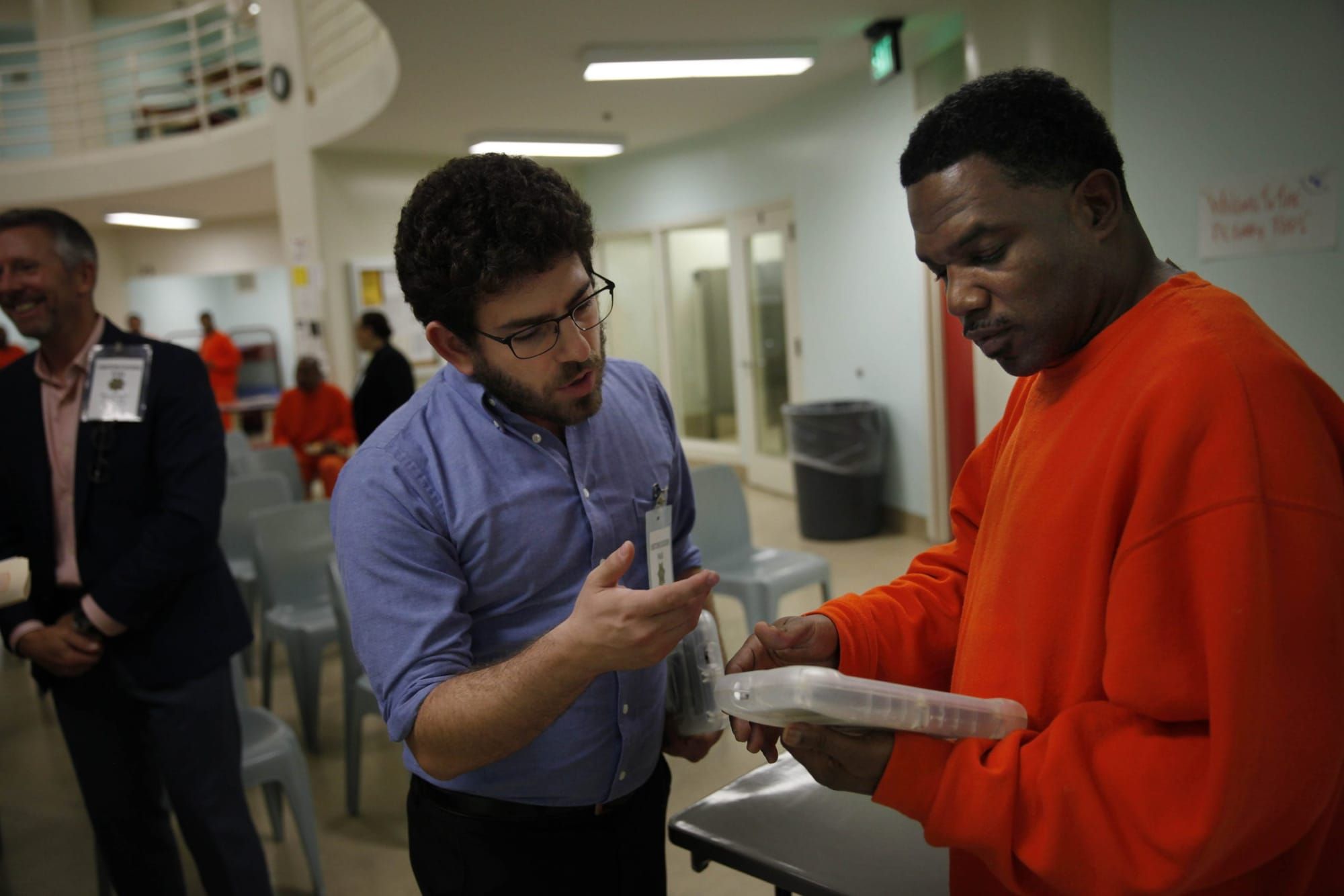
Securus, a major communications company that services prison facilities, persists in struggling with tech issues, greatly affecting incarcerated writers and their peers. While Securus assures that it “connects family and friends to the incarcerated through superior communication services,” the company’s problems, which include unstable phone connections, erasure of personal belongings, double-charging users, and system dysfunctions, are among the major injustices faced by incarcerated writers within facilities nationwide.
“They are [among] billion dollar companies that are profiting at every chance they get, and I don’t want them to be able to pat themselves on the back because they’re providing a service that people should have for free or for extremely low costs,” said Emily Nonko, director of Writing for Liberation with Empowerment Avenue, who has been advocating for incarcerated writers affected by Securus’ issues.
The company operates as one of the largest communications providers for incarcerated individuals, generating profits rooted in hidden charges, kickbacks, and fees imposed upon family members to talk to their loved ones in prison facilities. For years, Securus has faced scrutiny from incarcerated people as they and their families face strenuous fees while sacrificing to make calls. Other exorbitant costs have presented themselves in less tangible ways, causing mental distress and erasure for some while affecting people both inside and outside of prison systems.
In Washington, incarcerated journalist Christopher Blackwell and his peers recently faced a data erasure for the third time this year, causing devastating losses for many writers on the inside who depend on devices to save the progress of their work. Without such systems and with no backup options, writers are left hopeless and frustrated.
“I probably lost 150 hours of content, and I have to go back and recreate that,” said Blackwell. “It’s not only exhausting, but it really pushes you to not want to continue to write.”
Derek Trumbo, an incarcerated writer in Kentucky, lost more than a year of writing in a single system update on his tablet. “It sucks as a system; even the institution says it sucks as a system,” said Trumbo. “But it’s technology for us, so we’re grateful for it.”
Incarcerated journalists and writers are tasked with the strength and tenacity to project their voices despite communication challenges presented by limited tools or faulty tech. Without access to programs such as word processors or devices other than tablets where restrictions apply, writers have been left with nothing but apologies and empty promises that the problems will be corrected.
Blackwell explained, “It’s not just the content, but a lot of time when people from inside are writing, they’re dealing with expressing extremely traumatic moments throughout their lives.”
Many writing programs and publications exist for incarcerated writers to share their experiences and the conditions of their incarceration with readers on the outside. However, data erasure with system updates and restrictions preventing their writing from being saved present real obstacles to bringing attention to their conditions.
“They don’t want incarcerated journalists. It doesn’t serve the interest of predatory companies like Securus and other communication companies that prey on incarcerated people and their families,” said Blackwell. “And it doesn’t serve the interest of the Department of Corrections because they’d like to operate in the shadows.”
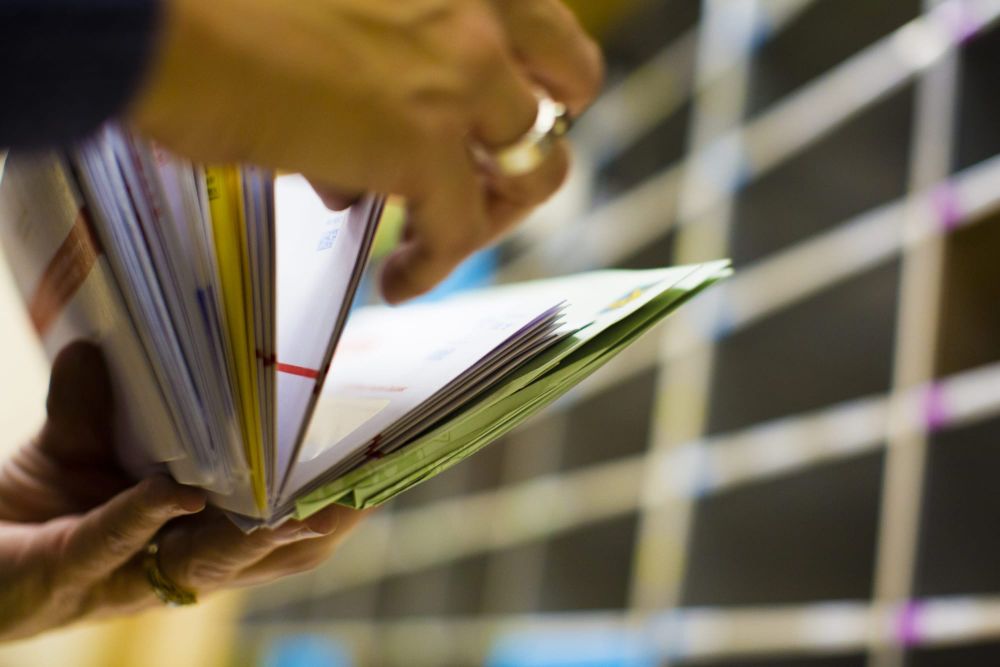
An expensive and faulty digitized mail system
After seven years of being in solitary confinement in a Texas facility with extremely limited phone access, then only a few months of having access to telecommunications services, incarcerated journalist Kwaneta Harris had to bear the financial and social cost for the new yet faulty digitalized mail services. With a long list of contacts saved to her Securus-provided device and duplicate messages spontaneously being sent from the device, she shared that she would receive 16 duplicate messages in a day while on other days, she’d receive up to 23 from a contact person.
“When [duplicate emails] got really outrageous, it was like June, early July. It kept saying, ‘You haven’t purchased enough stamps to send your messages,’” said Harris. “And I kept buying stamps, thinking that it’ll clear up, but people started saying, ‘You’re sending me repeat messages,’ and it just kind of snowballed from there.”
Stamps are sold at 10 for $4.50, which allows people on the outside to email loved ones inside for a charge of one stamp to the incarcerated individual. Stamps in Texas facilities currently cost about 42-47 cents (1 stamp) per email. Outside Securus customers must select an option to send a prepaid stamp to their incarcerated loved one, or they face bearing the cost themselves.
Texas joined other states this year in digitizing its mail system and now prevents those inside from receiving physical mailings. At least 14 states have made the same transition in the name of reducing the amount of contraband that enters facilities, though activists believe the change does not help reduce contraband entrance into facilities.
Nonko, who’s been helping Harris navigate duplicate email issues, stated, “We have been emailing with [a Securus] press representative and their customer service hotline for over a month pressuring them to address this. We had to conduct an entire email and Twitter campaign where they must have gotten at least 50 emails from the public, and then it still has taken them another week or two to resolve this.”
Jade Trombetta, a PR representative for Securus, stated the following as a follow-up to Harris’ issues: “After identifying the duplicate email issue, we investigated to confirm the root cause and deployed a fix as a formal resolution. Impacted accounts have been credited with stamps for the duplicate emails inadvertently sent.”
After her account was drained of over $2,000, Securus took more than a month to reimburse Harris, and even then, she received only e-stamps. “I never received the cash for their glitch, although I paid with cash. I only received e-stamps that I can’t transfer to family and friends. I can’t use the e-stamps to purchase phone time. All my previous text e-messages were removed and never restored,” said Harris.
Another impact of Securus’ issues is the degree to which they can deter outside journalists and others from communicating with incarcerated writers, which robs them of professional opportunities. “It’s really hard for me as a writer because as soon as people see the headache that they have to go through to try to communicate with me, that pretty much kills it, and they lose interest in wanting to work with me,” said Trumbo.
A need for better communications
Earlier this year, President Joe Biden signed the Martha Wright-Reed Just and Reasonable Communications Act, which allows for greater accountability from companies like Securus while granting better protections for incarcerated people and those they communicate with on the outside. While the Federal Communications Commission (FCC) is responsible for enforcing the legislation, they are not forced to regulate until late 2024. That lack of urgency will undoubtedly impact people forced to use the platforms in the meantime.
Ameelio, a nonprofit organization, has been asserting its way into the correctional facility communications space by offering free video conferencing technology to incarcerated people and their families.
Ameelio got its first statewide launch in Iowa. Sonja English, chief of staff at Ameelio, told Prism that the Iowa Department of Corrections director believed in the critical need for incarcerated people to have access to communication, ideally without the cost burden falling on their loved ones and generating revenue for the state and for-profit companies like Securus. “They actually decided to go with Ameelio and do away with the commission structure by choice because they could see the long-term costs as well as the humane element,” she said.
The company emphasizes humanity by providing better connectivity with free services, calling incarcerated people “residents,” and offering services to further their education. Thus far, they’ve been able to secure services in Iowa; Maine; Kane County, Illinois; and Colorado.
April Feng, chief operating officer at Ameelio, explained they are able to offer free services by working in tandem with corrections facilities and state legislators to help them understand the need to advocate for reformed laws that would allow for free calls to incarcerated individuals and those they communicate with. “When legislators asked us, ‘Hey, why are you guys so cheap? Are you cutting corners?’ I think one question we always ask is, ‘Why are [for-profit companies] so expensive?’” she said.
Because there is little to no regulation in addition to kickbacks and other hidden fees that benefit prison facilities directly, platforms like Securus charge higher rates to states with no accountability or question from facilities.
Movement across the nation toward legislation that would ban commission structures is key in breaking the monopolies of companies like Securus while increasing the impact of alternatives on the market that a handful of companies currently dominates.
With support from organizations like Ameelio, persistence from advocates like Nonko, and tenacity from writers inside, the fight to be heard and valued lives on and may slowly chip away at the precedence of oppressive companies like Securus, though writers inside are pressing for as much support and uplift of concerns on the outside as possible.
Trumbo emphasized, “There’s not really too many people in here that speak out and reach out to the outside, and it gets to the point where our families are being punished just as much as we are.”
Author

Rukiya (they/them) is a queer abolitionist + organizer, writer, and mother. As an agent of change, they believe in the importance of centering the voices of those who often go unheard or misrepresente
Sign up for Prism newsletters.
Stay up to date with curated collection of our top stories.