‘Everything in prison is done in a timely manner, except when our lives are on the line’
Prison is bound to a punitive clock—a clock that was ignored when it could have saved a life

One morning at six, staff at the Richard Handlon facility shut off the water system. No coffee, no showers, no face washing for the incarcerated who were beginning their days early. Thirty minutes later, officials swarmed the unit and forced us out of our cells one-by-one to be fully body searched. We lined up downstairs to remove our clothing in a shower by the officer’s desk. Some prisoners were still dazed from sleep and didn’t know what was happening; a few were even cuffed and sent to segregation for getting up late.
After stripping, 50 or so prisoners and I piled in a room to wait for cell inspections to be done. The timing of the raid meant staff suspected wrongdoing in the unit. Like with any other raid, we could expect them to cut up mats, rip the soles out of shoes, and tear up books that family had ordered for their loved ones. Most of our property would be destroyed.
Institutional raids are planned and timed. The accusations of weapons and drugs causing those raids are timed. Officer rounds are timed; every 52 minutes, an officer is supposed to stop by every cell in the unit to make sure prisoners are alive and accounted for. Laundry, visits, and food services all abide by a strict timeline.
Everything in prison is done in a timely manner, except when our lives are on the line.
The day after the raid, my cellie went downstairs to fill his cup with water and saw his friend unresponsive on his cell bed. Per policy in the prisoner’s guidebook, we are not permitted to go into or visit any other cell other than our own. He breaks that rule out of concern for a fellow incarcerated person’s wellbeing.
From the second floor railing, I saw a crowd of prisoners huddled outside the unresponsive person’s cell door. Correctional officers stormed into the unit, demanding we all return to our own cells immediately. Slowly, the crowd dispersed, each person’s face heavy with grief.
Back in our room, my cellie said he knew something was wrong with his hometown friend.
“He was lying on his bed, his feet propped on the lip of the toilet, his body stretched out. I’m tapping on the door and he ain’t moving,” he told me. “Then I noticed his stomach was bigger than normal, and his head was bent uncomfortably against the wall.”
My cellie had tried to get a CO’s attention, but the officer had walked right past him and the room where his friend was unresponsive. When he tapped the officer to make him turn around, the officer, face red, said, “You just touched me! That’s a fuckin’ assault!”
“No man, check on the dude in the cell you just passed!” my cellie had begged.
With difficulty, I tried to console my cellie about the carelessness of corrections. Death in prisons was common. According to the Prison Policy Initiative, each year in prison takes two years off an individual’s life expectancy. I wanted to tell my cellie that death comes with doing time, but he shouldn’t worry because his friend was most likely fine and having fears of others passing was a normal emotion.
It’s a part of an incarcerated person’s punishment to carry the knowledge that both we and the people we meet may one day never see a new morning. Our lives—which we give up to the state when we’re incarcerated—are fragile.
Outside, the commotion continued. We listened for updates from people in other cells who could see what was happening: After pulling the unresponsive prisoner from his lower bunk, an officer began pushing on his chest. Two minutes later, a staff member hit the unresponsive prisoner with Naloxone—a medication used to reverse opioid overdoses—thinking drugs might be the reason for his condition.
We listened, hoping for a groan to wail out from the unresponsive body. An officer was still pushing down on his chest. Drug overdose was ruled out. Soon, an ambulance pulled up to the building, the back door flying open as two workers poured out, carrying a heavy black bag. I said a prayer, the same prayer I had repeated the moment that the crowd gathered by the unresponsive prisoner’s cell.
The sad truth was: If the prisoner survived, the administration would bill him for the EMS visit. They’d blame him for doing something, giving the prison a means to gain retribution. This would be no surprise because prisons charge us for everything: food, hygiene products, communication with loved ones, health care, and, in some cases, “room and board.”
Eventually, the workers rolled a gurney out the door. No one was on the stretcher. Hospital equipment, bags, and more equipment sat where a responsive prisoner should be. Where was he?
Through the air vents above our sink, we could hear the people in a cell below us talking about how the unresponsive prisoner visited the hospital two days ago. Per policy, all prisoners may report an illness or other problems to a qualified health professional for a diagnosis and appropriate treatment. He apparently had chest pains and had sought help for his medical issue. The medical staff documented his chest pains and simply sent him away without any diagnosis. They never followed up.
Where was his body?
I kept thinking that if an officer had just checked on this prisoner during count, then maybe he would still be alive. Shouldn’t a place that adheres so strictly to the ticking clock also use that clock to protect human life? To look out for those who can’t drive to the hospital, go anytime for checkups, shop for healthy food choices, or get medication when they need it?
Shouldn’t time be used for more than just punishment in prison?
Eventually, the ambulance left, leaving many of us pacing restlessly in our cells. We asked the officer making the rounds when the lockdown would be over. He said, “Soon.” Soon felt like forever.
About an hour later, a dark hearse glided across the sidewalk, sleek in the sun. Through the vents, we heard the dead prisoner had been stripped, shackled, and left on his back on the cold cell floor. Then, before his body was taken away, the hearse driver had covered him with a red blanket.
When the hearse finally left, it felt like it had left the most important thing behind: the soul.
Editor’s note: While Prism often uses the phrase “incarcerated people,” this essay sometimes uses the word “prisoner” per the writer’s request and preference. As Demetrius Buckley explains, “Prisoners, incarcerated persons, convicts, and inmates all mean the same; the difference may be one less attribute than the other word. I believe the incarcerated person tries on each definition as they walk their time down. However, it is up to the individual to determine who they truly are.”
The Right to Write (R2W) project is an editorial initiative where Prism works with incarcerated writers to share their reporting and perspectives across our verticals and coverage areas. Learn more about R2W and how to pitch here.
Author
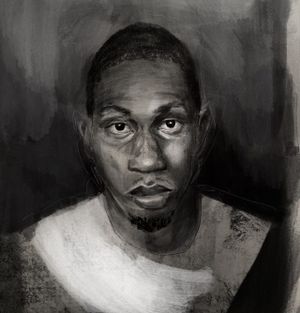
Demetrius Buckley’s work has appeared or is forthcoming in the Michigan Quarterly Review—where he won the 2020 Page Davidson Clayton Prize for Emerging Poets—Apogee, PEN America, and RHINO. He is also
Sign up for Prism newsletters.
Stay up to date with curated collection of our top stories.