The high cost of low-quality prison food
“The tray reflects how society views us, and when the food looks disgusting and inedible, it sends the message that that’s what we are”
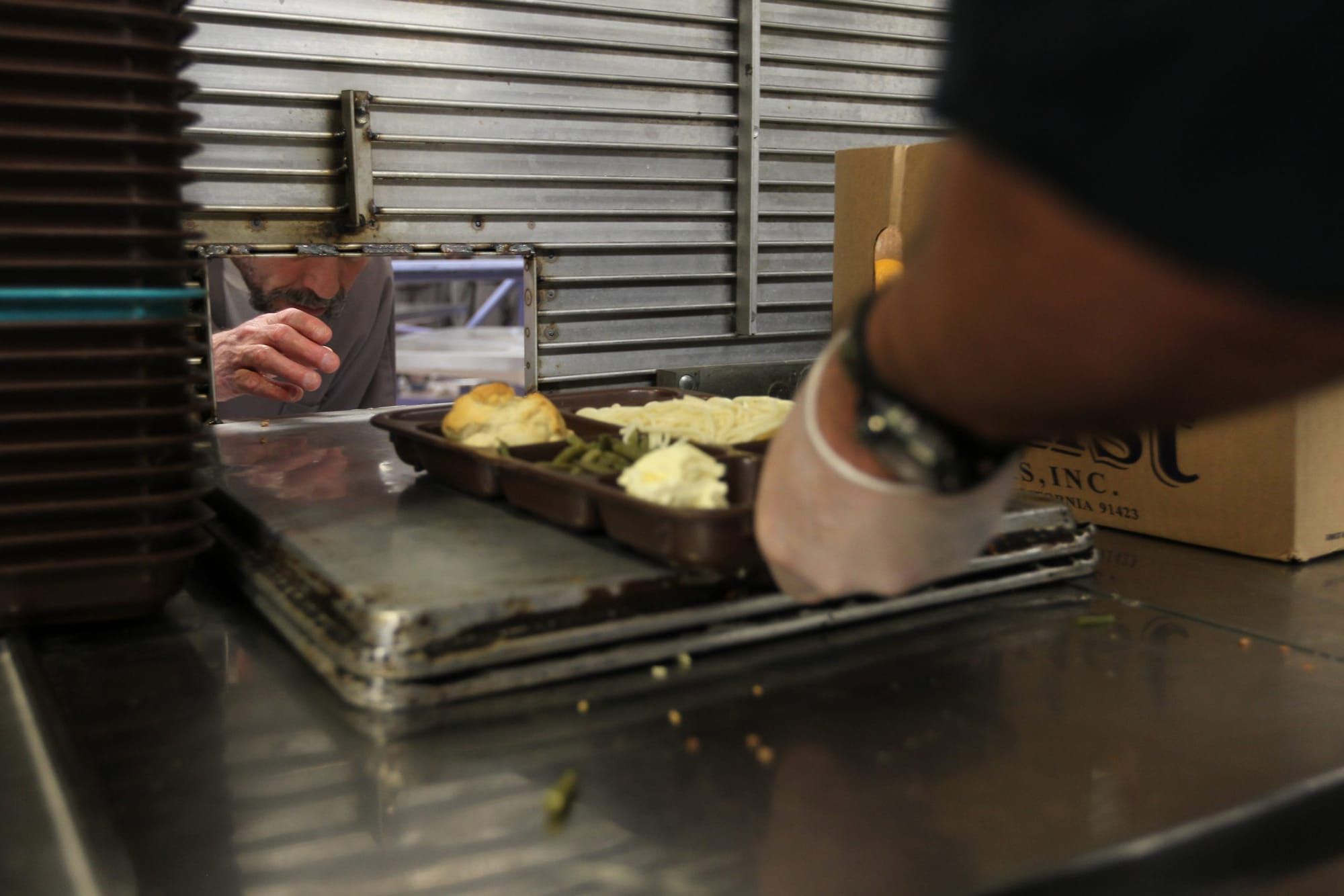
You would be forgiven for thinking prisoners were being pampered behind bars after hearing about some of the meals they eat. Chicken cacciatore, Tuscan-style beans, beef fried rice, chicken enchiladas, broccoli alfredo, beef stew and country potatoes, chorizo and fresh salsa. All of these items were featured on recent menus in California’s San Quentin Rehabilitation Center. At a glance, such prison food seems like standard fare you’d find at restaurants in nearby San Francisco. But if you were actually incarcerated at San Quentin—among the estimated 2 million people locked up in jails, detention centers, and prisons across the U.S.—you would encounter a very different reality on your tray: small portions of low-quality and ultra-processed foods that bear little resemblance to the items described on the menu.
Some people may say that this is what we deserve. However, a growing number of correctional and health experts, as well as people who are locked inside, are highlighting reasons why anyone who values fiscal responsibility, human rights, and public safety should care about the state of food in our prisons and jails. Given that over 95% of incarcerated people will eventually return to their communities, we should want them to be as well-adjusted, healthy, and productive as possible. And, if that’s the case, criminal justice environments ought to facilitate such outcomes. One way to do so starts in the kitchen.
“You eat it because you have to survive”
“The meal experience in prison is depressing,” said San Quentin resident Jesse Milo, who has been housed at 13 different prisons during his term. “It’s often hard to recognize the food concoction—you eat it anyway because you have to survive, but there’s no joy in it.”
Milo also said that the quality of prison food had a direct impact on a person’s rehabilitation. “The tray reflects how society views us, and when the food looks disgusting and inedible, it sends the message that that’s what we are,” he said.
Milo has fond childhood memories of eating his grandmother’s tamales at Christmas with his family, along with their Sunday morning ritual of sharing a pot of his auntie’s menudo, a traditional Mexican soup. However, he never learned about healthy eating because his family’s main concern was having food to eat in the first place. Derailed by a vicious cycle of discrimination, poverty, drugs, violence, and incarceration, Milo has been incarcerated his whole adult life. With his family unable to put money on his books, he’s had to subsist entirely on state food.
“I’m obese, pre-diabetic, and have high blood pressure and problems with my feet,” the 45-year-old said.
Milo is not alone in his predicament. A 2020 study by Impact Justice found that around 90% of incarcerated respondents said their meals looked and tasted unappetizing. Over half of the respondents also reported never or rarely having access to fresh fruits and vegetables. To cope with unappetizing meals, some incarcerated people—at least those fortunate enough to have money sent from their families—flock to their prison’s commissary or mail-order package companies, which are stocked full of ramen noodles, honey buns, and soda.
Prisons are food deserts that have created a recipe for diet-related chronic diseases like early-onset diabetes. Studies have shown that even short-term exposure to the prison food system can have long-term health consequences. A 2023 study published in the Journal of the American Medical Association (JAMA) hypothesized that the “evidence of accelerated aging” among incarcerated people was likely due to a combination of chronic and acute stress and variable access to healthy food, physical activity, and high-quality health care.
“Food is medicine, and investing in food as a preventative health measure can help prevent various health conditions down the line,” said Dr. Ilana Garcia-Grossman, the lead author of the JAMA study. “Frankly, it’s atrocious what [prisons] are serving.”
While the California Department of Corrections and Rehabilitation (CDCR) spends nearly one-third of its budget on health care, it allocates less than $4 per day per incarcerated person for all three meals. For comparison, the California Department of Veterans Affairs budgets more than twice that to feed each resident in its long-term care facilities.
According to CDCR’s manual, the department “shall provide inmates with a healthy and nutritionally balanced diet, served in an orderly manner with food flavor, texture, temperature, appearance, and palatability taken into consideration.” The manual also states that it is trying to combat diabetes and high blood pressure by standardizing its menu across facilities.
But the Impact Justice report tells a different story—one that is obvious to those who survive on the food behind prison walls.
“Most prisons rely on refined carbohydrates (e.g., white bread, biscuits, cake) to reach the mandated calorie count,” the report states, “and many have turned to fortified powdered beverage mixes as the primary source of essential nutrients—a cheap but woefully inadequate alternative to nutrient-dense whole foods.”
The right to heal
Garcia-Grossman said if she were in charge of CDCR’s food program, she would implement a menu that resembled the Mediterranean diet, focused on vegetables and whole foods, with moderate amounts of unprocessed meat, fish, dairy, and healthy oils. She and other health experts emphasize that incarceration is an opportunity to teach people about nutrition, which is especially important for those managing diet-related health issues. Garcia-Grossman points to the Norwegian prisons she’s toured, which employ a mix of meal service and self-service while giving those inside access to groceries and cooking classes, as models.
Dr. Rodlescia Sneed, a professor at Wayne State University’s Institute of Gerontology, also noted that, while the emphasis for reentry has traditionally been on housing and employable job skills, health and wellness education was equally important.
“If we can reduce the harm people experience … then upstream intervention can help prevent a variety of chronic health problems down the line,” Sneed said.
Several California institutional food managers and state nutritionists have expressed frustration with the challenge of providing better nutrition for the incarcerated population while contending with bureaucratic red tape. But, as the Impact Justice study states, “Corrections professionals who believe they’re doing the best they can, feeding people amidst a host of constraints, are not wrong. But when incarcerated people routinely feel humiliated by the food available to them and are often hungry … the baseline by which the profession measures itself is clearly too low.”
At San Quentin, resident Kelton O’Connor is advocating to improve the institution’s food program as part of his broader Right 2 Heal campaign. Incarcerated for over a decade, O’Connor believes everyone has the right to heal—physically, emotionally, and spiritually.
In prison, we have the right to kill ourselves with food, but not the right to heal ourselves with food.
Kelton O’Connor, organizer of the Right 2 Heal Campaign
“Incarcerated people spend millions of dollars a year out of their own pockets on food that is categorically unhealthy,” he said of residents supplementing the state’s meal service with canteen junk food. “Right now in prison, we have the right to kill ourselves with food, but not the right to heal ourselves with food.”
O’Connor’s vision is ambitious; he hopes to “remake food systems in prisons and in all marginalized communities, whether urban or rural.” Part of this remake would include consumer food cooperatives, onsite biogenerative food production, food pharmacies, and grocery prescriptions. Reforming the prison food system could also have a positive impact on incarcerated people’s safety and recidivism rates, as studies in nutritional criminology have found links between improved nutrition and significant reductions in violence and antisocial behaviors, on par with psychologically based treatments for violent offenders.
“All of these manifestations of metabolic distress are outcomes of a toxic food environment that can actually also cause mental health problems in some people—depression and mood disorders—so there is a direct connection to prison safety,” O’Connor said. “The Right 2 Heal campaign is not just about protecting incarcerated people’s right to heal. It’s about protecting all people’s right to heal.”
This work was supported by a Ridgeway Reporting Project fellowship through Solitary Watch.
The Right to Write (R2W) project is an editorial initiative where Prism works with incarcerated writers to share their reporting and perspectives across our verticals and coverage areas. Learn more about R2W and how to pitch here.
Editorial Team:
Rikki Li, Lead Editor
Carolyn Copeland, Top Editor
Stephanie Harris, Copy Editor
Author

Joshua Strange is a formerly incarcerated journalist whose award-winning reporting has appeared in San Quentin News and Wall City Magazine.
Sign up for Prism newsletters.
Stay up to date with curated collection of our top stories.