Never eat the candy on your pillow: You are what you eat
Incarcerated people have extremely limited choices when it comes to the food they have access to in prison. The steady diet of carbs and starch makes them sick
Dear Reader,
“You are what you eat.” How many times have you heard this phrase? In prison, the phrase takes on a whole new meaning. Incarcerated people have no control over what they eat or how it affects their health. It’s a well-established fact that prison food makes people sick.
That’s because most of what incarcerated people eat is carbohydrates and starch. There is no fresh food in prison.
I—like a lot of my fellow inmates—am diabetic. While I do have a family history of diabetes, I wasn’t diabetic when I first entered prison. For many incarcerated people, there’s a direct link between the prison menu and their health issues, so in this week’s column, I’m breaking down how prison food has led to a tidal wave of chronic health conditions in American prisons.
Incarcerated people have extremely limited choices when it comes to what they are served from the prison kitchen. What’s on the menu is all you get. You don’t have to attend every meal, but if you can’t afford to purchase alternatives from the canteen, you don’t eat—and canteen items aren’t cheap. Let’s not forget that most people inside come from impoverished families, many of whom can’t afford to send money to their incarcerated loved ones.
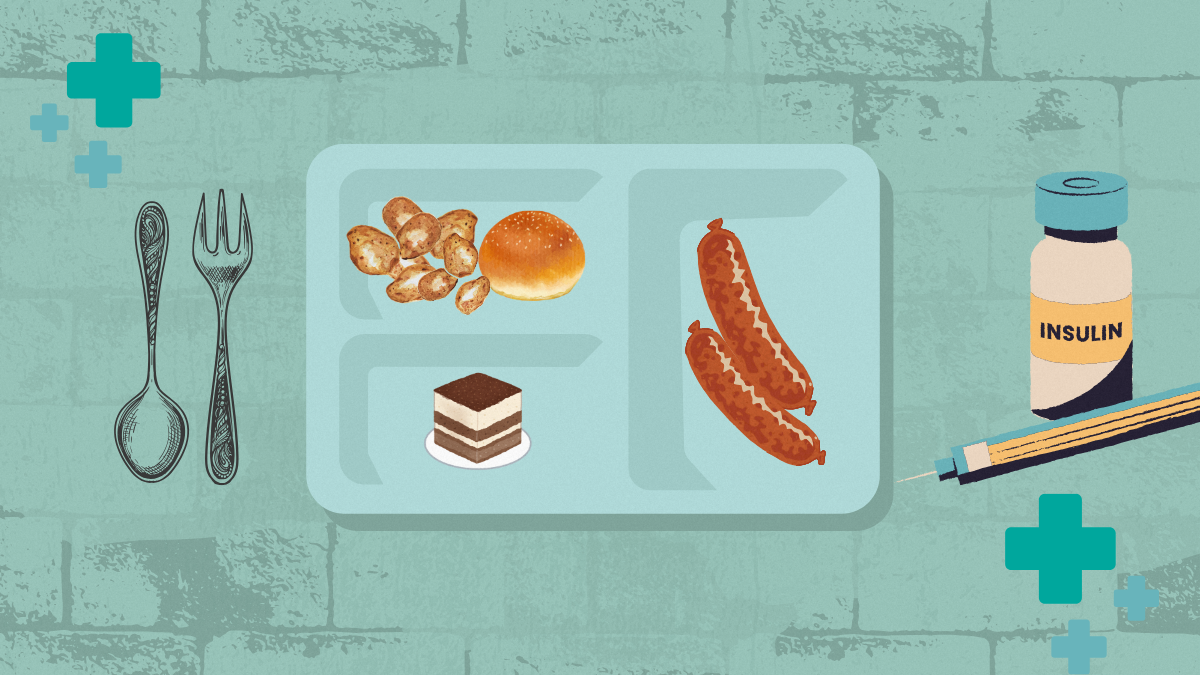
On a Monday at the Northpoint Training Center where I’m incarcerated, breakfast was biscuits and gravy; lunch was nacho chips, rice, and a cookie; and dinner was smoked sausage, potatoes, bread or a roll, and cake. Donnie, a 65-year-old also incarcerated at Northpoint, told me it wasn’t always this way.
As of August 15, 2024, Donnie has been incarcerated for 40 years, nearly 20 of which he has been diabetic. He told me he still remembers when the Roederer Correctional Complex operated as a prison farm or “work camp.” While these institutions are tied to legacies of slavery, Donnie said they offered better food options. Roederer had a cannery, he said, along with crops, pigs, and chickens used for food.
Donnie said that in his earlier days in prison, few people inside had diabetes.
“In a prison that had 2,300 inmates, I only knew of 10 or 15 who were diabetic,” he said. “We had our own dairy. We ate fresh vegetables and real meat every day. Today, all of the meat products served are processed chicken and turkey bone meal byproducts. Beaks and feet.”
In the years since, the state of Kentucky has largely sold off its farmland and privatized prison kitchens. “Food quality and our health went downhill from there,” Donnie said. “We used to have access to all kinds of agriculture, and then it was gone. Everything changed.”
By design, today’s prison menus are small, cheap, and repetitive. The food is bland and flavorless, despite being full of sodium. The gravy, mashed potatoes, and soups are watered down and come from a box. The rice is bloated. The smoked sausage is soggy and weeps.
At Northpoint, every month, the menu is based on a rotating list of items to be served. Biscuits and gravy are served three to four times a week. Potatoes are on almost every lunch and dinner tray. Pasta and bread are served on nearly every lunch and dinner tray on a near-daily basis.
Donnie told me his health is failing. In prison, he’s had a major heart attack and five bypasses. Being diabetic has made life more challenging. According to our unofficial poll, there are dozens of men inside Northpoint who are on insulin and countless others who take the medication metformin, which is used to treat high blood sugar. Soon, they’ll graduate to the insulin shot.
“Diabetes caused the heart attack, the doctors said,” Donnie told me. “It also caused me to heal so slowly that three years later, I’m still not back to the shape I was in before the heart attack. I’m fed a diet of starch, pasta, white bread, peanut butter, and milk. Everyone gets the same biscuits and gravy, oatmeal or grits, sandwich, muffin, coffee cake, potatoes, and noodles. The menu sounds really great on paper, but in person, it’s a whole other story.”
A friend who worked in the kitchen showed him the labels stamped on the meat eaten by the inmates: “for institutional purposes only.”
At the Eastern Kentucky Correctional Complex where Donnie was previously incarcerated, he told me that a friend who worked in the kitchen showed him the labels stamped on the meat eaten by the inmates: “for institutional purposes only.”
“In prison, you either eat what they serve, or you starve,” Donnie said. “We get a serving of salad on our trays that amounts to maybe two bites of lettuce and a half a spoon of whatever dressing they offer. There’s sometimes carrots, cooked to mush, or soggy green beans that manage to be hard on the inside. There’s always pasta and dehydrated potatoes. And if the calories aren’t right, there’s a spoon of butter.”
Guys who still find themselves hungry and can’t afford to purchase canteen food settle for eating any extra helpings they can, which usually means more bread, potatoes, and pasta. In 2021, an estimated 51% of state prisoners and 43% of federal prisoners reported having a chronic health condition.
I’d argue that we can’t know for sure how widespread diabetes is in American prisons because chronic health issues are greatly undertreated in the carceral system, and the outright denial of needed interventions for imprisoned people with diabetes is pretty common.
According to Donnie, it costs taxpayers more to cover the health care costs of incarcerated people than it would to simply feed us decent food.
“The state feeds us crap. No one on the streets would pay to eat what they feed us. Nearly all of the officers here bring their own meals. Very few eat the food here, and they are told not to drink the water. We have to drink the water every day—it’s all we got,” said Donnie, who also noted that he’s basically eaten “the same damn meals” on rotation since 2005.
During the summer, lunch is a single sandwich: two pieces of bread and one thin slice of meat. On the side, we get potatoes, salad, or pasta, and a cookie.
“No one likes it, but what choice do I have?” Donnie asked. “I can call home and tell my family about it, but what can they do? Everything will remain the same, slopped onto our trays like we’re hogs.”
The Right to Write (R2W) project is an editorial initiative where Prism works with incarcerated writers to share their reporting and perspectives across our verticals and coverage areas. Learn more about R2W and how to pitch here.
Author

Derek R. Trumbo, Sr., a multiple-time PEN Prison Writing Award winner, is an essayist, playwright, and author whose writing has been featured in "The Sentences That Create Us: Crafting A Writer's Life
Sign up for Prism newsletters.
Stay up to date with curated collection of our top stories.