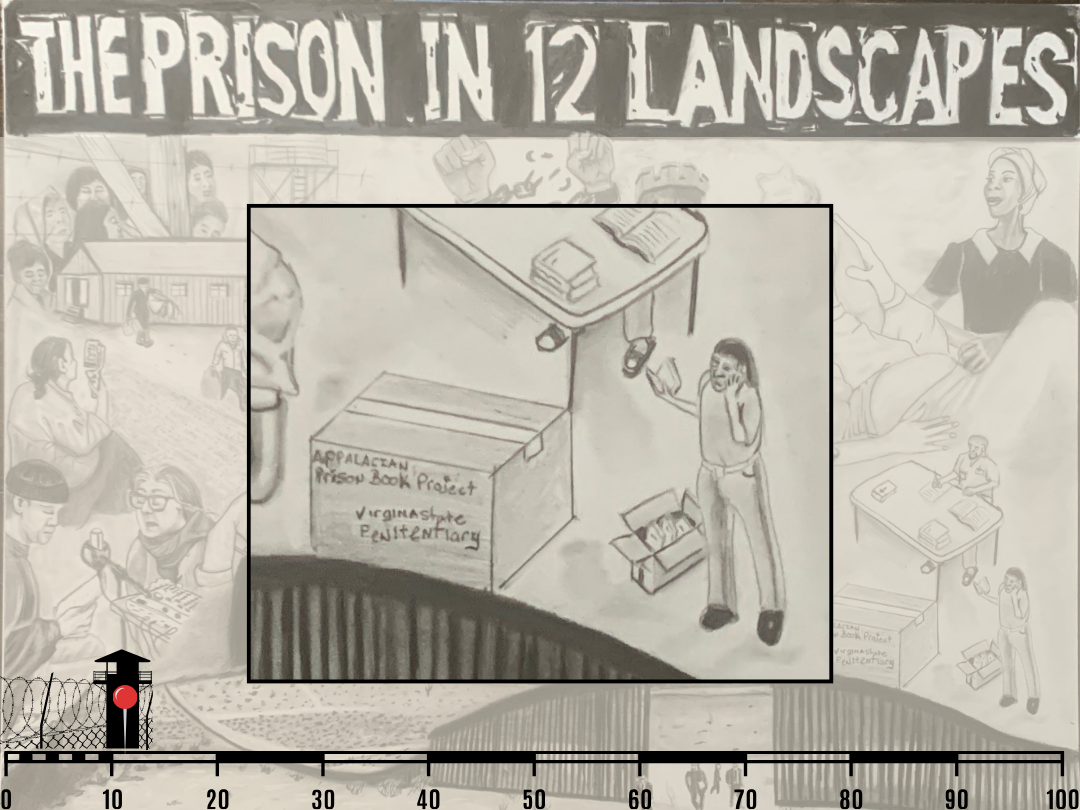
For two decades, the Appalachian Prison Book Project (APBP) has mailed books to people in prisons and jails across six states in Appalachia. More than 70,000 reference, nonfiction, and fiction books have reached people behind bars who would not have otherwise had access to them.
Lydia Welker is the digital communications coordinator for the project, which is run by an all-volunteer team in Morgantown, West Virginia. In 2021, the Appalachian Prison Book Project expanded by creating a pen pal program, facilitating book clubs, and supporting an associate’s degree program at a prison in Pennsylvania. In December 2024, the organization will publish a book of art and letters by incarcerated people with West Virginia University Press.
On the 20th anniversary of the project, Prism’s Ray Levy Uyeda spoke with Welker by phone about the work that has—as she said—changed her perspective on everything she encounters and her outlook on her “entire life.”
This Q&A is part of a series, Prison in 12 Landscapes, featuring companion pieces from Ray Levy Uyeda and Tamar Sarai, running through September and organized to introduce readers to subjects beginning with the most—and easing into the least—proximate to prisons’ material form. You can read through the full series here.
This interview has been edited for length and clarity.
Ray Levy Uyeda: What does it take to send a book to someone in prison?
Lydia Welker: Sending anything—especially books—to people who are incarcerated is extremely difficult. Federal, state, and county governments each have different rules about what can be mailed inside. Individual wardens also have a say, and then it often comes down to the discretion of someone working in the mail room.
The Appalachian Prison Book Project keeps very detailed records about different prisons and jails in the region that we serve. We keep careful records about what books have been rejected and why. Most prisons won’t accept hardback books and won’t accept books that aren’t in “good” condition. If a book has a ripped cover, torn pages, pencil or pen marks, it will get rejected. There are also content-based reasons for rejection. We’ve learned that violence, nudity, and maps are all reasons books won’t be accepted, which can include action books or art books like Michelangelo’s David.
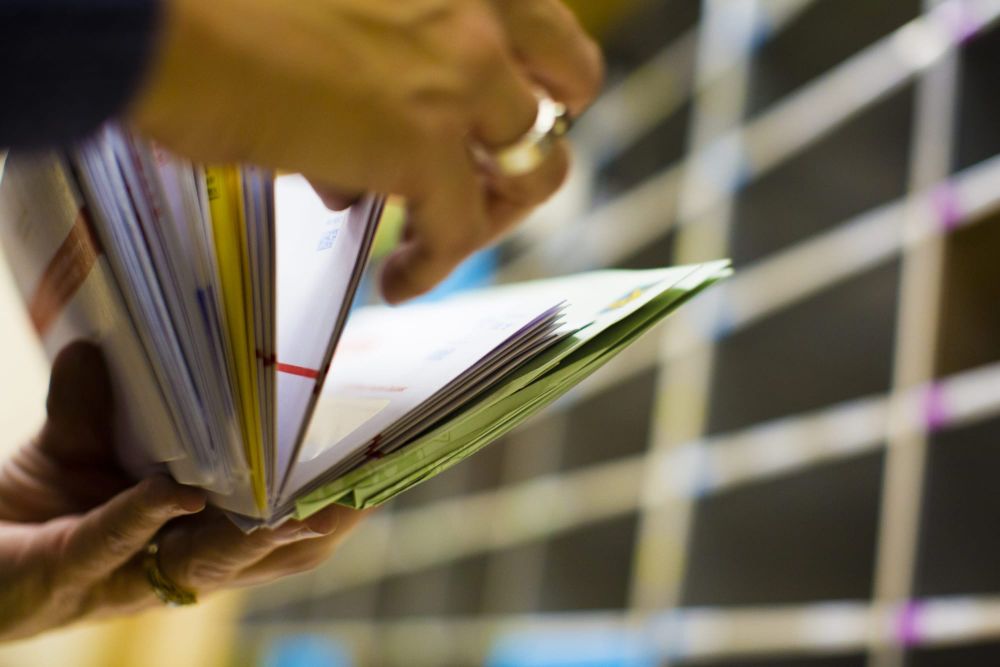
What’s in the package is just as important as what’s on the outside. You have to include the person’s name and their ID number and then their mailing address, and then inside we include a note that says, “This book is free and yours to keep.” That is a very important language that we have to include in each package so it’s not seen as an exchange where someone would need to pay us for that book.
Levy Uyeda: Some prisons have libraries, but many don’t. How does APBP fill the gap in book access?
Welker: Overwhelmingly, we’ve seen that prison libraries are deeply underfunded. They have so few books, limited hours, and many restrictions about who’s allowed to access the library [and] when. The American Library Association recommends a minimum of 15 books per incarcerated person, but according to one survey, the average prison library has seven titles per incarcerated person. That’s why we do what we do.
Levy Uyeda: What’s the most requested book?
Welker: The title that is most requested by our readers (and also anyone in any other prison book program in the U.S.) is a paperback dictionary, which goes to show what incarcerated readers need. They’re looking for information. They’re looking for education. People on the outside have the internet. We have access to all the world’s information at our fingertips. You don’t have that on the inside. So, if you’re trying to write a letter to a parole board or a loved one, you rely on a dictionary.
Levy Uyeda: According to the project’s website, “Because of your book program sending me Michie’s West Virginia Code Annotated, I was able to litigate an amended sentence order from life without parole to eligibility for parole after serving 15 years. In other words, you helped save my life. Thank you.” What are other ways APBP has affected people?
Welker: I think about that quote all the time. How literally, all it took to make significant change and save this person’s life was a book. That’s it. That’s all it took. Why didn’t they have access to that book already? The other thing I’ll say, related to that quote, is I’ve learned how much the prison system in this country is based around technicalities. I can’t imagine how many people are locked up for the rest of their lives based on technicality. I can’t fathom that.
We hear time and time again from people how much they love and cherish the books that we send them. There’s a quote from someone incarcerated in Virginia who said the books were their “peace” while they were locked in their cell. There was a writer who talked to us about how we sent them a book that allowed them to help them prepare for teaching a creative writing class inside. Some people will write and say they loved the book so much they shared it with others and then eventually donated it to the prison library so everyone in the prison could access it. Seeing the journey a book takes inside a prison is wonderful to me—a book that was sent to one person has touched the lives of so many different people.
Levy Uyeda: Book bans are at an all-time high in the U.S. But we rarely refer to these restrictions on prison books for what they are—censorship. Can you talk about that?
Welker: Every year, there’s Banned Books Week, but at Appalachian Prison Book Project, we also have Prison Banned Books Week. As we see this creeping fascism reaching schools and public libraries across the country, it’s important to recognize the history of prison book bans and how that’s related to school and public library book bans. We can speculate why federal and state systems ban certain books or don’t provide funding for prison libraries and educational programs. Is it because an educated population will start to become more aware of how cruel the prison system is? Is it because building communities while you’re incarcerated is dangerous to the system? Is it because bridging the gap between the inside and the outside world is a challenge to mass incarceration?
There are individuals within the system who see the value of books and education and want to make it possible. Religious leaders, correctional officers, or prison education coordinators can be very enthusiastic about getting books inside prisons. At the same time, these larger systems in this country, by design, do ban books. There’s the state action and apparatus, and then there are people working within it, and people working to dismantle it.
Levy Uyeda: What have you learned through your work with the project?
Welker: APBP allows volunteers in Morgantown to get a glimpse into what life is like when you’re incarcerated. Because our society doesn’t do that, right? We’re very divided—and divided by design. It reminds me of this Angela Davis quote. She says, “Prisons do not disappear social problems, they disappear human beings.” Working with APBP was the first breaking of that barrier there for me—of recognizing those divisions and connecting with people inside.
Author
ray levy uyeda is a staff reporter at Prism, focusing on environmental and climate justice.
Sign up for Prism newsletters.
Stay up to date with curated collection of our top stories.