Filed Under:
A trans woman made Pride history in a Kentucky prison
In a rural Kentucky prison, a trans woman made history by organizing what is believed to be the first LGBTQIA+ Pride festival at the Lee Adjustment Center
Mo Viviane
Real journalists wrote and edited this (not AI). Independent, community-driven journalism survives because you back it. Donate to sustain Prism’s mission and the humans behind it.
Real journalists wrote and edited this (not AI)—independent, community-driven journalism survives because you back it. Donate to sustain Prism’s mission and the humans behind it.
Jayda DaShay Jett Hester is a 45-year-old trans woman who was previously incarcerated at the Lee Adjustment Center in Beattyville, Kentucky, about 70 miles from where she grew up in Lexington.
She entered Lee in 2023 and spent nearly a year and a half at the private state prison that holds more than 800 people. Like many incarcerated LGBTQIA+ folks, having a sense of community inside required finding her people and doing what she could to help keep her small circle safe.
This was not easy inside prison.
When she was incarcerated, the Kentucky Department of Corrections (KY DOC)—like other state agencies—did not allow LGBTQIA+ people to live together as a safer housing option because it would be “segregative.” While the Prison Rape Elimination Act (PREA) encompasses LGBTQIA+ people in an effort to better protect them from sexual abuse and harassment on state and federal prison sites, trans people face tremendously high rates of sexual violence inside. Much of this abuse comes from guards. (Under the Trump administration, the Department of Justice has moved to end PREA protections for trans and intersex people, and the agency now omits data about trans people from PREA reports.)
Hester was never one to sit idly by. She tried to get the prison to consider safety by agreeing to let queer and trans people choose who they house with.
Though ultimately unsuccessful, Hester knew she had to try.
“I have a lot of sisters and brothers that I got to meet. I am a go-getter. I’m not a person that’s just going to sit in my cell and wither away. I am one that’s going to pick up pen and paper, walk around [and ask], ‘What do you need? What can we do?’ I’m an activist for us; I’m going to fight for us. We need panties? OK. We need bras? OK … we’re going to do all this and we’re going to get all of this,” Hester told Prism.
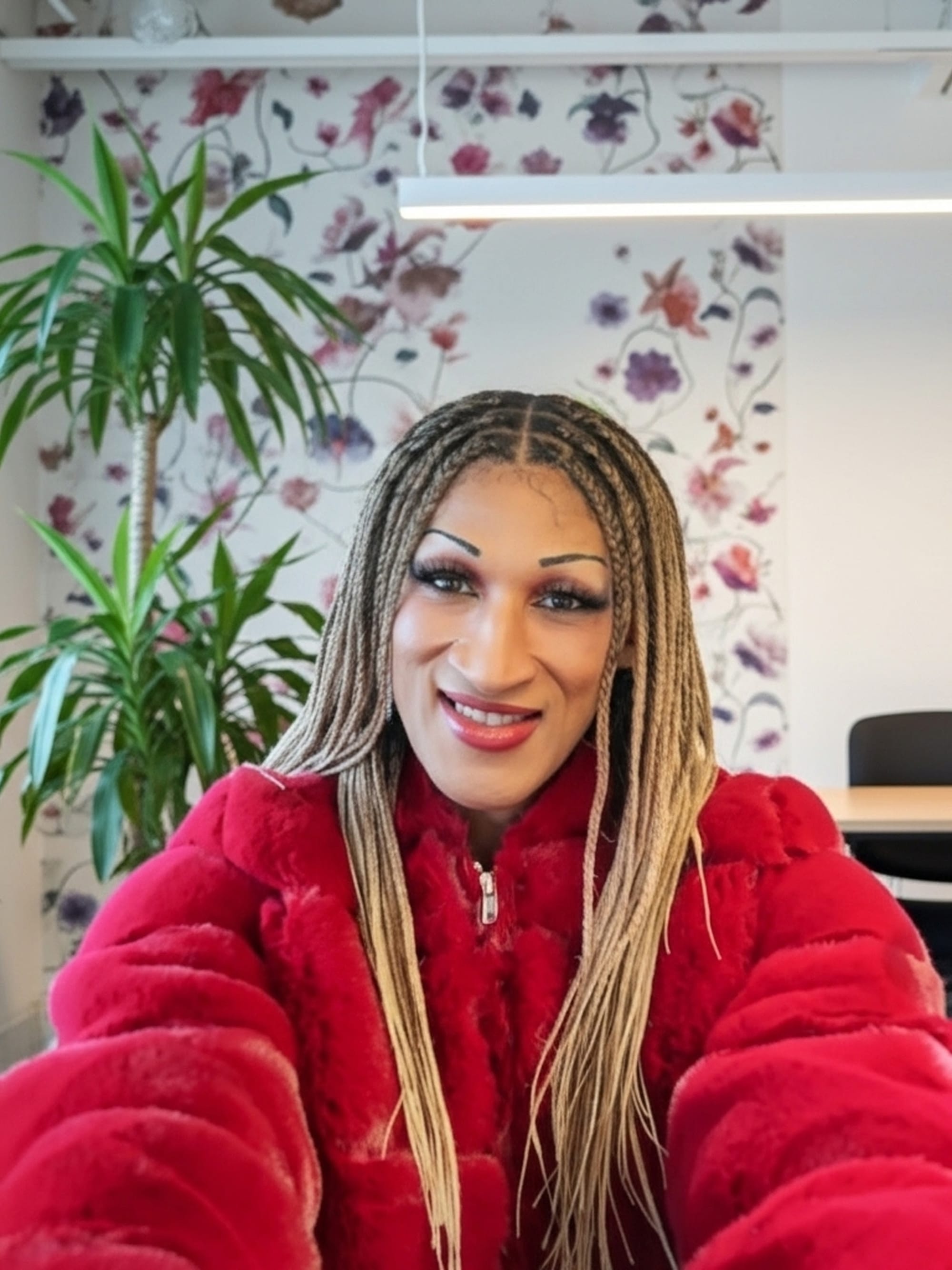
Being trans in Kentucky—a state that is home to a number of anti-trans laws—Hester knows most of her efforts for the LGBTQIA+ community will require fighting an uphill battle. This is especially true under the broader political landscape ushered in by the Trump administration, which has made every effort to worsen conditions inside for trans people, in part, by banning gender-affirming care.
But even in this environment, Hester was able to accomplish something extraordinary: She is likely the first person in state history to organize a Pride festival in a Kentucky prison.
Circles lead to liberation
Inside the Lee Adjustment Center, Hester was a liaison of sorts, connecting those in the LGBTQIA+ community with needed resources. For example, she advocated for shower curtains to provide more privacy and safety.
Almost 700 people were incarcerated at Lee when Hester was there, she told Prism, and the mental health department did not have the capacity to provide services to the number of LGBTQIA+ people inside who needed services. According to Hester, there were more than 270 LGBTQIA+ people at Lee—not including those “that were down-low.”
KY DOC declined to comment and provide data regarding LGBTQIA+ people incarcerated inside Lee.
Despite the large population of LGBTQIA+ people at the facility, Hester said only four people were participating in a new LGBTQIA+ support group formed by the prison’s mental health department. The low attendance ate at Hester, and she decided to do something about it. She visited every wing of the prison and every building—even buildings she wasn’t supposed to be in.
“[I] said, ‘Look, we’re going to have hot dogs, popcorn, sodas, candies, cupcakes—come to our next meeting. Here’s a flyer,’” Hester recalled.
But she didn’t stop there.
Hester spent her own funds at the commissary to purchase items for the meeting. She also introduced herself to every department head at the prison during her first two months of incarceration, learning the ins and outs of the education department and church services. She put flyers on all of the prison’s bulletin boards, doing everything in her power to grow the meetings.
The next month came, and the group’s membership jumped from four attendees to 22.
“I said, ‘OK this is better, [but] we can get even bigger,’” Hester said.
While working on growing the membership, Hester also stepped into a leadership role and began leading the LGBTQIA+ support group meetings as “circle conversations.” Linked to Sista Circle Methodologies, this approach, common in transformative justice practices, helps cultivate a narrative sharing space for oppressed people. Hester told Prism she had the group circle up because it allowed their meetings to feel more open for everyone to speak and be heard.
Transformative justice is not prioritized inside the carceral system, and many inside are likely unfamiliar with these methods. Indeed, Hester told Prism that many of the people at Lee’s LGBTQIA+ meetings were afraid to speak up. She wanted them to feel safe sharing their thoughts and feelings, so she grounded the room each meeting by ensuring attendees that what they shared was confidential. She also encouraged them to bring a friend to the next gathering.
“Our largest group became 65 people. From four to 65 in less than six months,” Hester said.
With the group’s growing membership came the need for a bigger space. Hester heard that the prison’s field could be used for meetings, so she went to the chaplain and asked if she could reserve a spot—conveniently omitting the fact that a Lee staff member was no longer leading the group.
“It’s for our LGBTQ+ members to get together, bond, just have fun activities out there. So we can just get [spirits up],” she recalled telling him. To her surprise, he approved.
The meetings continued to gain popularity and along with the games and food, the gathering soon expanded to include activities such as yoga and aerobics. Hester’s goal was positivity and fun, but when the prison staff saw such a sizable crowd gathering without any designated staff—even with the approval of the chaplain—the LGBTQIA+ meetings received pushback.
Prison officials instructed the group to stop meeting, but Hester knew their gatherings were necessary—especially after she learned that none of the members were very familiar with LGBTQIA+ history. “Nobody knew the history of us. Nobody really knew what a Pride festival was because they never went to one,” she told Prism.
Hester, once again, decided to take action.
‘Leave that place better’
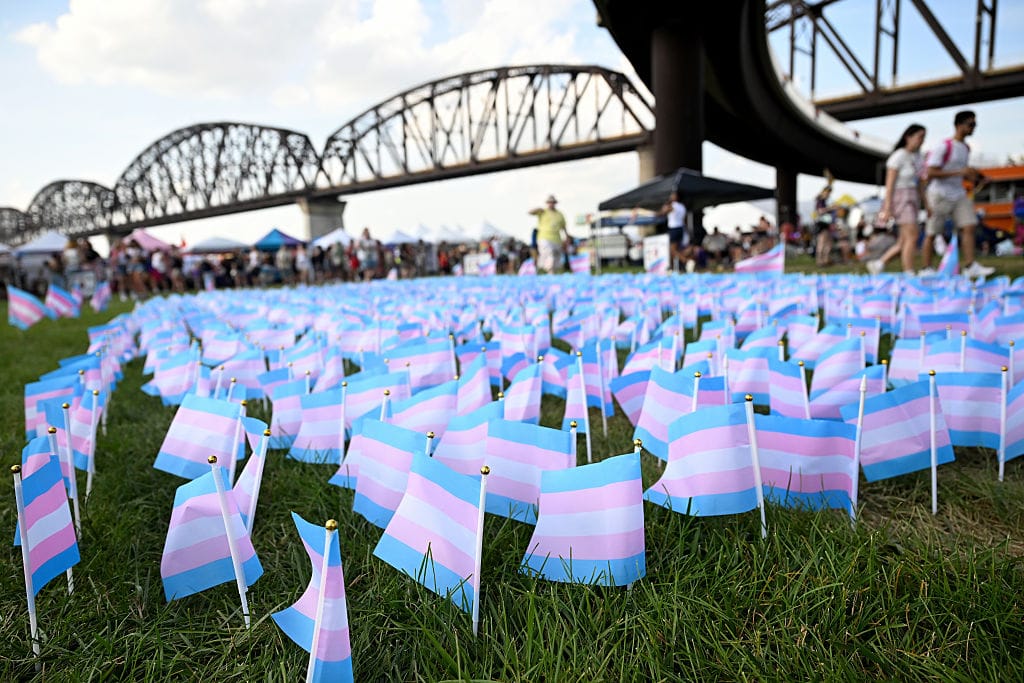
While mass incarceration typically isn’t the focus of Pride festivals nationwide each June, it should be.
According to the Prison Policy Initiative, LGBTQIA+ people are overrepresented throughout the criminal legal system, including high rates of juvenile justice involvement and LGBTQIA+ adults receiving longer sentences. According to The National Transgender Discrimination Survey, 1 in 6 trans people have been incarcerated at some point, and lesbian, gay, and bisexual people are also more than twice as likely to be arrested as straight people. Lesbian and bisexual women in particular are more than four times as likely to be arrested as straight women. Still, there is little government data to help explain these extreme disparities, the Prison Policy Initiative reports.
And while the LGBTQIA+ population inside American prisons remains high, it continues to be rare for official Pride events to take place inside these facilities. There are a few examples, mostly on the West Coast in Democrat-led states such as California and Oregon. But even without state-sanctioned Pride events, queer and trans incarcerated people find their own ways to celebrate.
In Kentucky, Hester knew she wanted something more official.
She quickly got to work planning a teach-in inspired Pride event for June 17, 2024, though technically she didn’t have permission from the warden for the event. Her reasoning was that she was able to maintain the LGBTQIA+ meetings as a weekly support group that was co-faciliated by the prison’s mental health director, who informed Hester that if the Pride event functioned as the support group’s meeting, permission wasn’t necessarily needed.
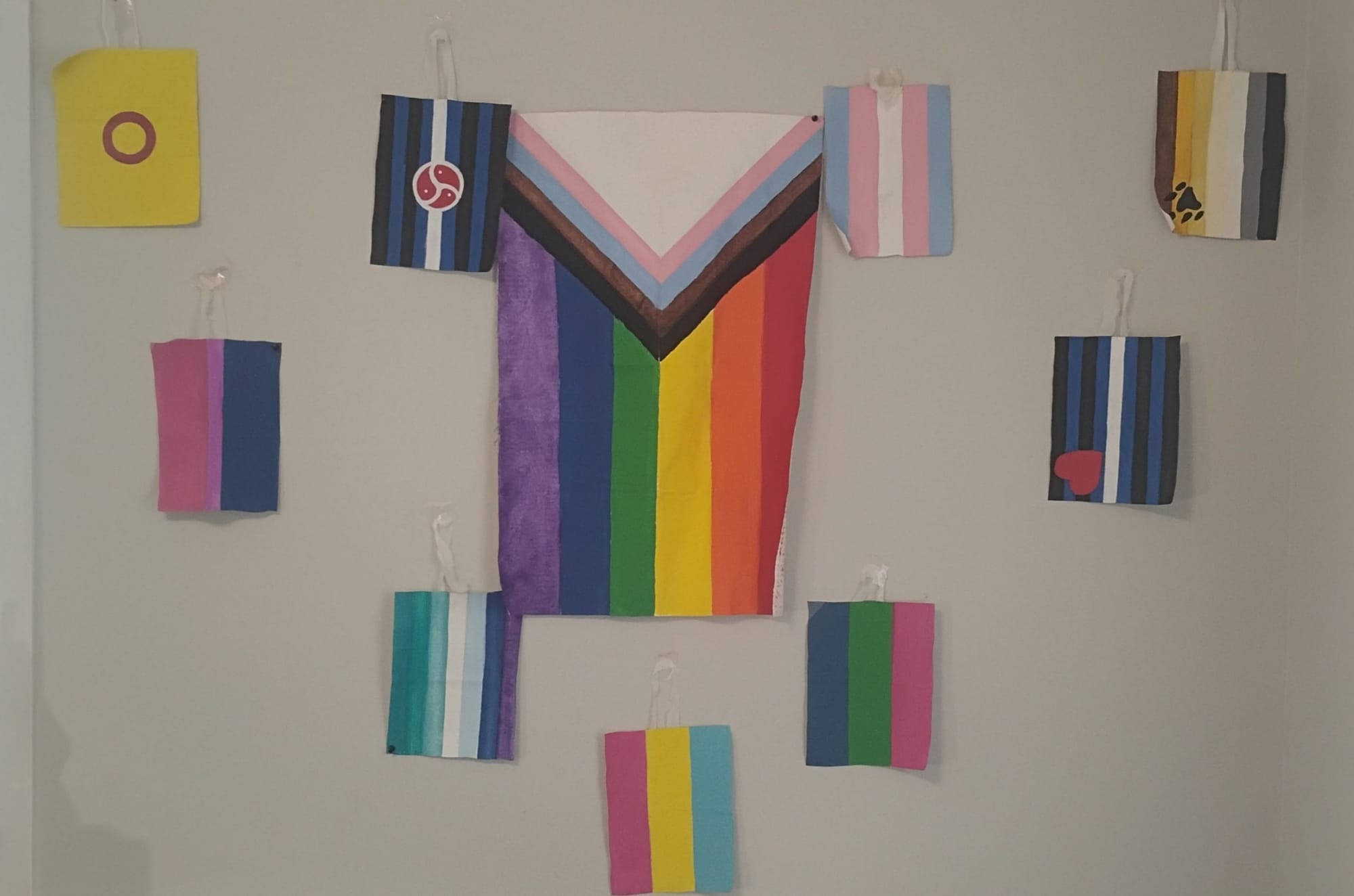
Some prison officials were aware of Hester’s plans. For example, for the teach-in portion of the Pride event, Hester collaborated with Lee’s education department. This allowed her to delve into the history of drag, Pride festivals, the meanings of each Pride flag, and the backgrounds of prominent figures in LGBTQIA+ movements.
Hester’s excitement for the event took over and she told anyone who’d listen about what would likely be the prison’s first Pride.
“During this Pride event, we’re going to have a drag show, we’re going to have comedy, we’re going to have music. We’re going to invite everybody. We’re going to have food. We’re going to have pompoms, we’re going to have all types of things,” she recalled telling people inside.
The support group continued meeting weekly until the day of the event, and members helped with decorations by utilizing the prison’s art rooms to create paper Pride flags with construction paper. Hester’s fiance, also incarcerated at the Lee, helped her decorate, making rainbow paper rings hung throughout the yard and streamers for doorways of common areas.
For prison staffers not in the know, the preparations were a surprise. “When the warden’s secretary walked past the day before … I was in the hallway,… and she said, ‘What in the hell is going on in here? What happened in here?’” Hester laughed.
News circulated among prison staff, and about 15 minutes before the Pride event was scheduled to take place, three officers pulled Hester aside and told her she was needed in the warden’s office.
While not thrilled that she didn’t ask his permission for the event, the warden seemed in awe of the Pride event’s agenda—especially the educational component. He allowed the event to move forward, as long as he could sit in. Hester’s drag performance, however, was banned. While she spent weeks practicing her routine, she agreed to omit her performance for the sake of the larger event.
The event’s programming featured a short prayer by a community member, a survey about self-efficacy, and a presentation supported by the prison’s education department that allowed Hester to share the history of Pride festivals and the meaning behind various LGBTQIA+ flags. There were also musical and poetry performances, and information was disseminated about substance use in LGBTQIA+ communities. The event closed out with a short talk from a prison official.
While KY DOC declined to respond to questions regarding the Pride event, Hester said 14 prison staff members and nearly 90 people participated in what she believes to be the Lee Adjustment Center’s first Pride festival. There would have been an even larger crowd, but people were turned away so the event wouldn’t go over capacity.
Two years later and out of prison, Hester remained in disbelief about what she was able to accomplish.
“We have to mention: We are in Kentucky. Matter of fact, a Kentucky prison. This has never been done before, in the history of the Department of Corrections of Kentucky!” she proudly exclaimed.
While Hester’s event was a success, helping to strengthen and instill a sense of pride in the prison’s LGBTQIA+ community, it seems no other Pride festivals have emerged from Kentucky prisons in the years since. The reasons are likely complicated and include the broader anti-trans atmosphere ushered in by President Donald Trump’s second term and the state’s efforts to ban gender-affirming care for people inside. When combined, there is little reason for LGBTQIA+ people to feel comfortable congregating inside prisons.
As Pride season is underway nationwide, Hester said local LGBTQIA+ organizations can help lead efforts to host more Pride events inside of prisons. In Kentucky, Berea PRIDE, Lexington Pride Center, and Fairness Campaign are located near the Lee Adjustment Center and can not only help facilitate Pride events inside, but can aid in educating LGBTQIA+ people in prison of their history.
It’s a shame these efforts aren’t underway this year, according to Hester. Her fiance, who is still incarcerated at Lee, routinely tells her that people still talk about the Pride festival and want it to return to the prison.
“I’ve done something that will be part of the very history I was teaching,” Hester said. “I just really hope that there’s a way to continue this, whether it’s me getting some volunteers ready to go inside and put on a show or someone else from the inside taking the reins and putting forth the effort and energy to continue my legacy.”
The organizer is now building her legacy outside of prison. Today, she volunteers with local LGBTQIA+ grassroots organizations in Kentucky, and she is working to build a sober-living facility for formerly incarcerated LGBTQIA+ people.
Still, Hester can’t help but think about the LGBTQIA+ people who remain inside—including her fiance. While happy to be out, she hopes that people incarcerated at Lee will one day organize another Pride celebration. For them, she has a message: “Remember: Leave that place better than you were when you came in.”
Editorial Team:
Tina Vasquez, Lead Editor
Lara Witt, Top Editor
Stephanie Harris, Copy Editor