Parents and teachers call for Philadelphia district to reinstate teacher suspended over Palestine controversy
Pro-Israel groups successfully petitioned Philadelphia high school to censor a student project about Palestine and suspend teacher Keziah Ridgeway, who assigned it
A coalition of parents whose children attend Philadelphia district schools is calling for the superintendent to reinstate Keziah Ridgeway, a Northeast High School teacher temporarily suspended at the start of this school year after the coalition says she was “wrongfully accused of bias” and antisemitism. A petition released this month for her reinstatement has already garnered more than 1,400 signatures. In addition to her suspension, Ridgeway continues to wade through online harassment as well as a complaint filed Sept. 4 by a pro-Israel nonprofit alleging that the teacher was spreading hate in social media posts in late August and early September and using her curriculum to advance a “toxic campaign against Zionism.”
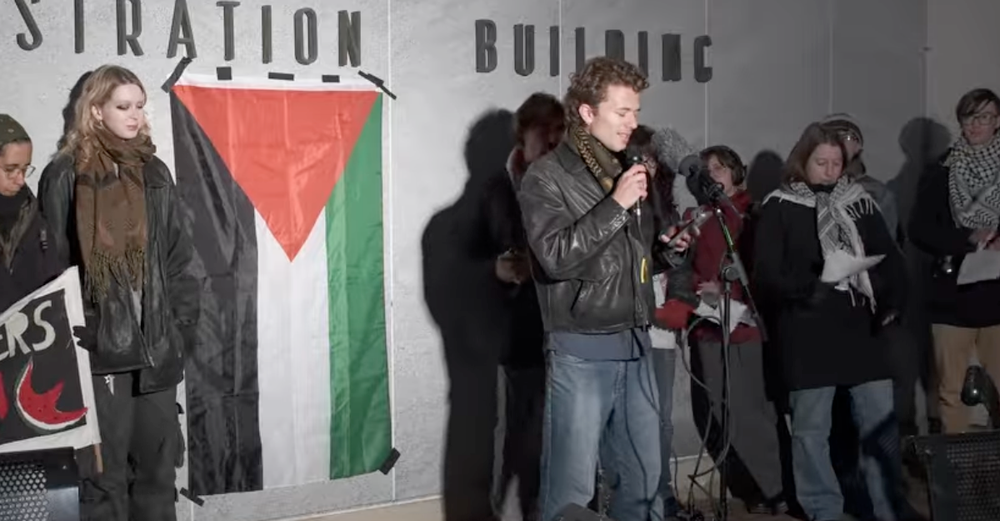
Besides calling for other demands related to free speech and an end to the genocide in Palestine, recently formed advocacy groups Philadelphia Parents for Palestine and Philadelphia Educators for Palestine have also been inquiring about whether the district has been prioritizing the desires of external pro-Israel organizations and donors over student needs and safety.
The School District of Philadelphia did not provide Prism with a comment on Ridgeway’s suspension or the allegations of censorship in time for publication.
‘I lost hope in the district’
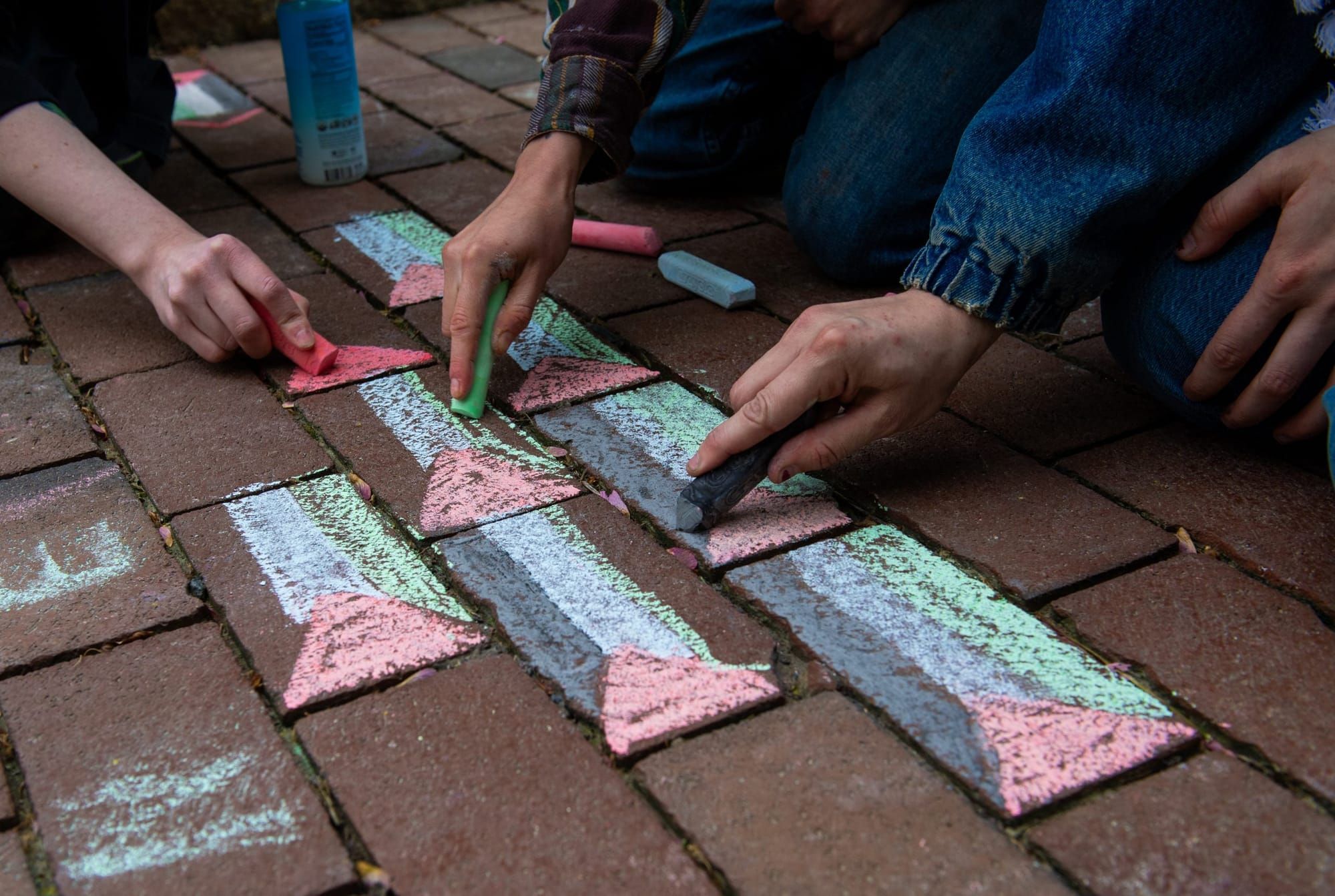
The storm of controversy that has swept over Northeast, one of the oldest, largest, and most diverse high schools in the Philadelphia School District, began in February. Ridgeway, who teaches history and anthropology, assigned her students a project that required them to identify an Indigenous community that uses art as a tool of resistance and then compare that practice with the use of spirituals among enslaved Black Americans. The most impressive project would be presented to the entire school at a series of assemblies hosted for Black History Month. The winning project with the highest grade was a podcast, created by two students, that focused on Palestinian murals.
After the video podcast was presented at the first assembly, a Northeast teacher condemned the students’ work as antisemitic and forwarded it to the School District of Philadelphia Jewish Family Association, a recently formed pro-Israel organization that operates independently of the Philadelphia School District despite its name. The Association then successfully petitioned the school district to ban any further screenings of the video.
“I was really, really upset because I had seen the podcast, and it wasn’t antisemitic in the slightest,” said Hazel Heiko, a junior at Northeast who was in Ridgeway’s class last year. “They mentioned Israel once, but they didn’t mention Judaism or Islam at all. They just mentioned Palestinians and how they use art. I just kind of lost hope in the district at that point. I was like, wow, they just don’t care about the students at all.”
In a March interview with Al-Bustan News Service, Ridgeway shared that having to tell her students that their project was going to be pulled was “gut-wrenching.” In the weeks following the assembly, the identities of the students who created the podcast were released by a Northeast teacher online, community members said. Ridgeway has also been featured on Canary Mission, a website that doxes anti-Zionist professors, students, organizers, and activists.
The targeting of Ridgeway comes despite her positive reputation across the Philadelphia education community and the extensive media coverage she has received in recent years for her focus on issues related to free speech, racial equity, and telling more honest, comprehensive historical narratives.
In a 2020 profile on her pedagogical approach for Grid magazine, Ridgeway explained, “I’m here to teach real history and it can be uncomfortable, but Black and Brown people are uncomfortable from the moment we come into this world.”
‘Who is actually running the school system?’
The swiftness of the district’s disciplinary actions against Ridgeway has led her supporters, including Northeast teachers and parents, to question who the district is answering to and how much power these forces wield.
In September, The School District of Philadelphia Jewish Family Association (SDPJFA), which has since been renamed the Jewish American Family and Friends Alliance, was mentioned in a formal complaint against Ridgeway filed by the Jewish Federation of Greater Philadelphia, with the Deborah Project serving as its legal counsel. The suit alleges that Ridgeway used her own personal social media to threaten violence against SDPJFA members based on an Instagram story where she inquired about Black-owned gun shops in the Philadelphia area.
The suit states that SDPJFA remains purposefully tight-lipped about its membership body and leadership so as to avoid the possibility of harassment of its members by Ridgeway or her allies. However, the group’s vague origins have made Northeast community members question how to hold the group and the district accountable when their actions harm students.
“In a meeting [with Northeast High Principal Omar Crowder], I learned that there were no complaints by any parents or students about the podcast,” said Jethro Heiko, a co-founder of Philadelphia Parents for Palestine and Hazel Heiko’s father. “In the largest high school in the city with over 3,500 students, many of whom are Palestinian American, Muslim, or Arab and African American—the two students that were targeted were Black—who is actually running the school system? And how could an outside group influence what happens in school?”
One potential answer has been an overlap in school leadership with that of these outside groups and the city’s Board of Education. Joan N. Stern, a member of the city’s Board of Education (notably an appointed, not elected, position) is also a trustee of the Jewish Federation of Greater Philadelphia.
A recent announcement by the Levin Foundation, a philanthropic organization that runs a memorial fund for a Northeast alum, also serves as a clue for how political and economic pressures may be shaping the ongoing censure of pro-Palestinian faculty, students, and families. While the fund has donated consistently to Northeast over the past 13 years, in an email sent to donors in September, the fund co-chairs announced that they would be reconsidering their relationship with the school due to concerns “with the rise of antisemitism based on issues with a teacher at Northeast High School. Although there has been much progress made, there is still more work to be done.”
Fearing a return to the past
Ironically, 12th-grade social studies teacher Katherine Riley was teaching a lesson on free speech cases the week the podcast was presented and subsequently banned.
Riley, who spoke to Prism in her capacity as a member of Philly Educators for Palestine, also serves as the faculty sponsor for the Muslim Students Association. She said that since Oct. 7, faculty at Northeast have not been given specific guidance on how to approach conversations about Palestine and Israel. Still, their students continue to have questions, concerns, fears, and anxieties. That lack of clear guidance for faculty has led to varying approaches and levels of willingness to engage with students’ questions.
“Anecdotally, I think there is a very clear racial line and [the] generational difference between teachers who are comfortable or not comfortable” talking about Palestine, Riley said.
Riley, who is Asian and says she is younger than most of the school’s faculty, has incorporated discussions about Israel and Palestine into lessons about Presidential versus congressional war powers. Meanwhile, she says that older colleagues even in the social studies department have been apprehensive to broach the topic.
Students in the AP African American History classes that Ridgeway would be teaching this semester have no permanent substitute teacher and have thus begun to fall behind, Riley said. A large number of them have chosen to drop the class entirely.
“Not only is the district humoring these outside groups, [but] they’re burning through all this money to hire lawyers and to investigate these complaints against teachers like Keziah,” said Riley. “[Meanwhile], the desks in my classroom don’t match; some of them are just straight up broken, they’re cracked, they’re bent—my students’ parents were probably born after these desks. So I’m just thinking, this is a waste of everyone’s time.”
The reverberating impact of this censorship is one that some Palestinian families at Northeast High perhaps see most acutely. Rouz Lami, a newer member of Philadelphia Parents for Palestine, has had four children attend Northeast and has applauded them and their friends’ courage in openly displaying pride in their culture. That pride is a world away from her experiences as a young person, where she was advised not to talk about her heritage out of fear of violence. That very fear of potential retaliation, she says, has already prevented some other Palestinian parents at Northeast from speaking out against Ridgeway’s treatment.
“I’m so proud of this new Gen Z. They’re not scared. They want to wear their keffiyeh, they want to put their flag on, they want to say they’re from Palestine,” said Lami. “Whatever’s happening to Mrs. Ridgeway right now is what we were afraid of when we grew up.”
“She was just out there just supporting our kids, talking to our kids, speaking out about Palestine, and look [at] what’s happening,” Lami said. “If she loses her job, it’s going to be a slap in the face for all of us.”
Author
Tamar Sarai is a writer, journalist, and historian in training. Her work focuses on race, culture, and the criminal legal system. She is currently pursing her PhD in History at Temple University where
Sign up for Prism newsletters.
Stay up to date with curated collection of our top stories.