“I can’t even put into words how much I miss you,” says a caller right before dedicating a message to her husband. But despite the feeling that her words may fail to capture the depth of her longing, she still tries, along with the dozens of loved ones who leave weekly messages with “Calls From Home.”
The radio station WMMT receives calls every Monday night from partners, spouses, children, parents, and friends of people incarcerated across Central Appalachia. The “Calls From Home” radio show later plays these calls, averaging about 50 messages each Monday night. WMMT’s local radio signal reaches seven correctional centers in Kentucky and Virginia, as well as smaller local jails and detention centers. Listeners inside use MP3 players and radios to hear these messages and song dedications from their loved ones.
Loved ones share updates both big and small, from a wife recalling a funny anecdote about their son to a girlfriend’s update on how graduate school is going. “I couldn’t do it without you,” she says across the airwaves. Some callers simply recount their daily routine, while others note their anticipation about an upcoming in-person visit. Some use the space to make amends and offer reassurance, including one woman who assured her fiancé that their bond remains strong despite a recent argument.
Calls are at times filled with levity; this is particularly true when updating a loved one about recent events in pop culture, sports, and music. More often than not, the calls are laced with longing and uncertainty about when they will be able to speak to one another again. That anxiety is made worse by the fact that so much of prison communication operates as a one-way street. These WMMT radio messages, for example, can only be placed from the outside in, just as telephone calls can only be made from prison to a list of recipients on the outside.
Prison email is one of the few free-flowing methods of communicating, but in addition to it being costly, it also depends on technology that is often unreliable and, ultimately, under the control of the facility’s leadership. In a recent broadcast, numerous callers mentioned that they knew their loved ones’ prison tablets had been taken away, cutting off their ability to send emails to one another.
But “Calls From Home” is a stark reminder that love is not just about worry or concern—even as those facets are particularly resonant for those with a partner inside prison. Love is also about sharing the mundane parts of your day, bits and pieces of information that could not be more irrelevant to the public but mean the entire world to whomever the message was intended for. The show also illustrates the creative strategies romantic partners separated by incarceration must use to remain connected to their significant others. Meanwhile, couples who share their love across prison walls in parts of the country far outside of WMMT’s range have to employ other methods to preserve intimacy while navigating a system that constantly seeks to police and deny it.
“Not even a little peck”
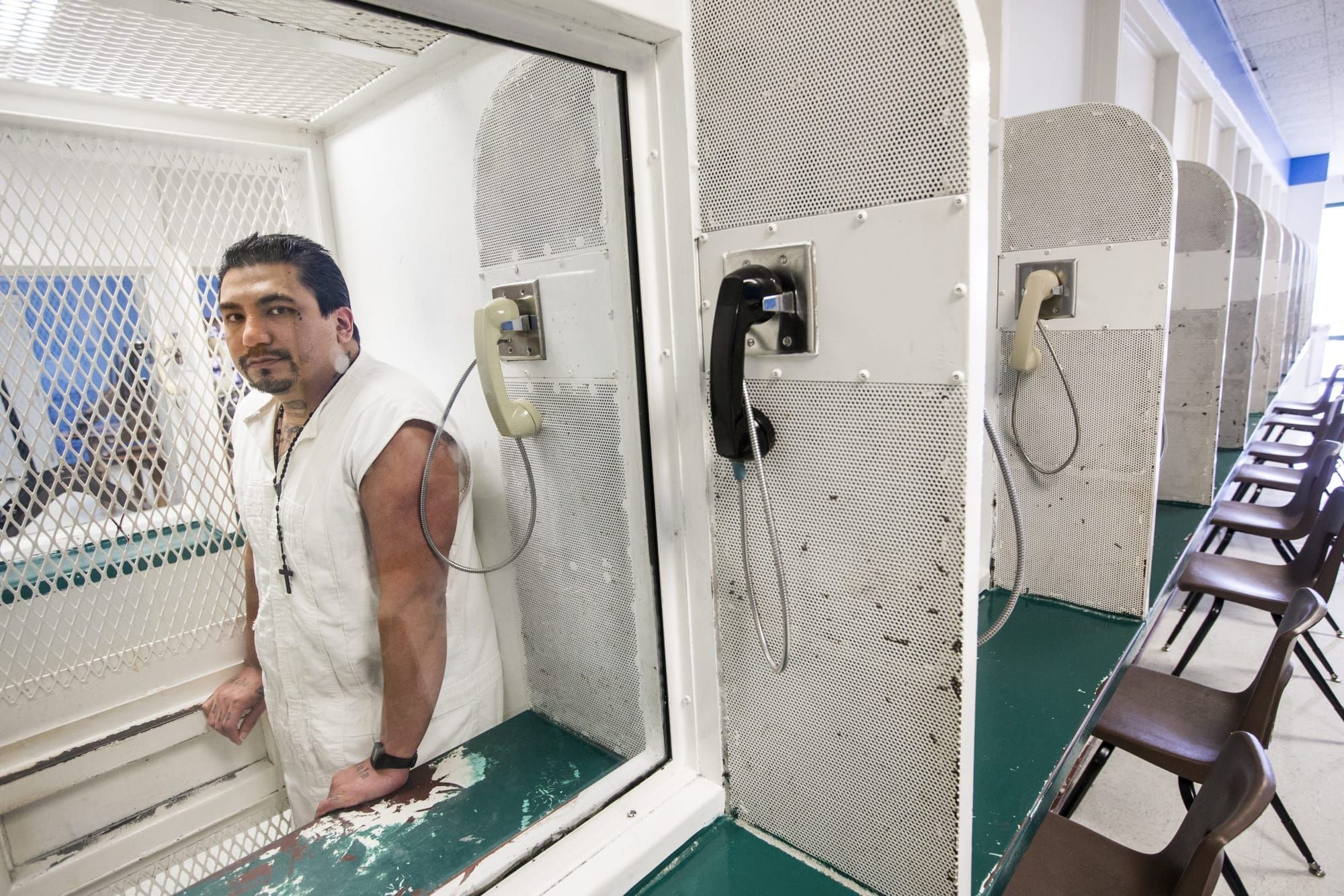
Over the past 25 years, there has been a gradual decline in states that offer extended visitations, most commonly known as “conjugal visits.” While in the late 1990s, 17 states offered some kind of extended visitation program primarily for couples, today it’s only California, Connecticut, New York, and Washington. The pandemic halted some of the programs in these states, and many were slow to reestablish, even as the country opened back up. For those living in states without overnight or multiday visitation programs, in-person visits last just a couple of hours or, in some cases, even less—and all take place under the watchful eye of correctional officers. While policies vary from state to state and facility to facility, many prisons restrict lingering hugs, open-mouth kissing, or even holding hands. Partners who try to sneak moments of intimacy risk their visits being terminated and the prospect of future visits forfeited. Thus, even in the company of a loved one, real closeness is elusive.
The often remote locations of prisons across the country also means that when visitation is available, it might require hours of travel. Kentucky’s Northpoint Training Center, a medium-security facility in Boyle County, is a roughly hour and a half drive from Louisville and an hour from the state capital of Frankfurt. The facility allows four in-person visits per month and only during preapproved time slots. While these visits have a two-hour time limit, Northpoint allows longer visits for those who have traveled farther. Michael, who is using a pseudonym, is currently incarcerated at Northpoint. He told Prism that his partner must travel two hours from Indiana to visit. The brevity of the moments they physically share can be agonizing compared to the time spent in travel.
“I am not allowed to give or receive a kiss from my wife, not even a little peck on the forehead or cheek—just a timed 10-second hug,” said Michael in an interview conducted via J-Pay, the facility’s email service.
Michael explained that contact is not allowed during the remainder of his visits outside of the timed hugs. This makes the fact that visitors are scanned and sometimes even strip-searched particularly difficult to stomach.
“It don’t seem right to me that they have a body scanner right there and scan you in,” noted Michael. “It feels degrading just to see my wife that I can’t even touch but for 10 seconds in front of the C.O.”
Andy Passmore, who is also incarcerated at Northpoint, reiterated the highs and lows of in-person visits shared with his fiancé Haley, who is often joined by his mother and sister.
“I love to see Haley, but it kills me seeing them bring my ID and saying time is up,” said Passmore. “But overall they are nice. Momma makes sure to bring 20 dollars in quarters to get things out of the vending machines, and we just talk about any and everything under the sun.”
However, the ease and bliss of those visits is tempered by the heavy restrictions that govern them.
“When they come in they are in a 3×3 square box you can stand in, and you’re allowed a three-second hug, and that’s it. No kissing or anything of that nature,” said Passmore via J-pay. “You sit with a small table in between you, and I’ve got to remain sitting at all times. I can’t get up; my feet have to stay on the floor. I can’t cross my legs or anything, and my hands have to stay above the table at all times. They are very strict here, so I abide by the rules because I don’t want the visit canceled, so I don’t do anything to jeopardize my time.”
Making visits can require extensive advanced planning for both those on the outside and their incarcerated loved ones. For one, visitation lists in states like Kentucky can only be updated twice a year at specific times of the year. New visitors must fill out an information form and mail it to the facility’s warden to finalize their approval. On the day of the visit, visitors—particularly women—must abide by Northpoint’s strict dress code or else run the risk of not being able to move forward with their visit. The facility bans visitors from wearing earrings, more than one necklace, facial jewelry, watches, low-cut or “provocative” clothing, leggings, skirts or shorts higher than 2 inches above the knee, ripped jeans, and open-toe shoes.
The gradual process of learning these rules and regulations was closely studied by sociologist Megan Comfort in her 2008 book, “Doing Time Together: Love and Family in the Shadow of the Prison.” In her work, Comfort discusses the “repercussive effects” of mass incarceration on families whose loved ones were incarcerated in California’s San Quentin prison. Comfort draws on the idea of “prisonization,” a concept coined by sociologist Donald Clemmer that describes how incarcerated people gradually adapt to the carceral environment by learning its lexicon, changing their behavior and appearance, and understanding its demands and expectations. Comfort expands this concept beyond the walls of the prison and describes how women with an incarcerated partner undergo “secondary prisonization,” meaning that they too are absorbed into the prison system as they alter the rhythms of their day-to-day life to accommodate prison rules, policies, and schedules.
In an essay on her research, Comfort describes how prisonization takes shape in the lives of women with incarcerated partners, writing that “women who couldn’t afford a separate wardrobe of prison-specific outfits started to consider, ‘Can I wear this into San Quentin?’ before purchasing any new item of clothing. In time, their everyday clothes were ‘penitentiary clothes,’ conforming to the regulations imposed by the correctional authorities … Their daily routines became synchronized with the institution’s timetable, more attuned to administrative requirements than the comfort and convenience of non-incarcerated women and children.”
People with an incarcerated loved one might also reorganize their work, social, or child care schedules around prison’s visiting hours. As heard in the many “Call from Home” messages, partners often adjust their sleep schedules to ensure that they are awake in case their partner calls.
“I miss you like really bad,” noted a recent caller to her husband, before dedicating Toni Braxton’s “How Many Ways” to him. “I have my phone stuck to me in case you call.”
The struggle to connect
For Passmore, when in-person visits don’t provide enough time to discuss all that he wants with his partner, he uses calls and email messages—a self-described “luxury” that others aren’t always able to access—to catch up in the interim. Northpoint recently provided tablets to people inside, but the prison shuts the tablets off in the evenings. These interim hours can feel particularly lonely.
“Nights in here are the worst,” said Passmore. “They are often quiet and that is when my mind wanders, and the loneliness takes over and almost drives me insane.”
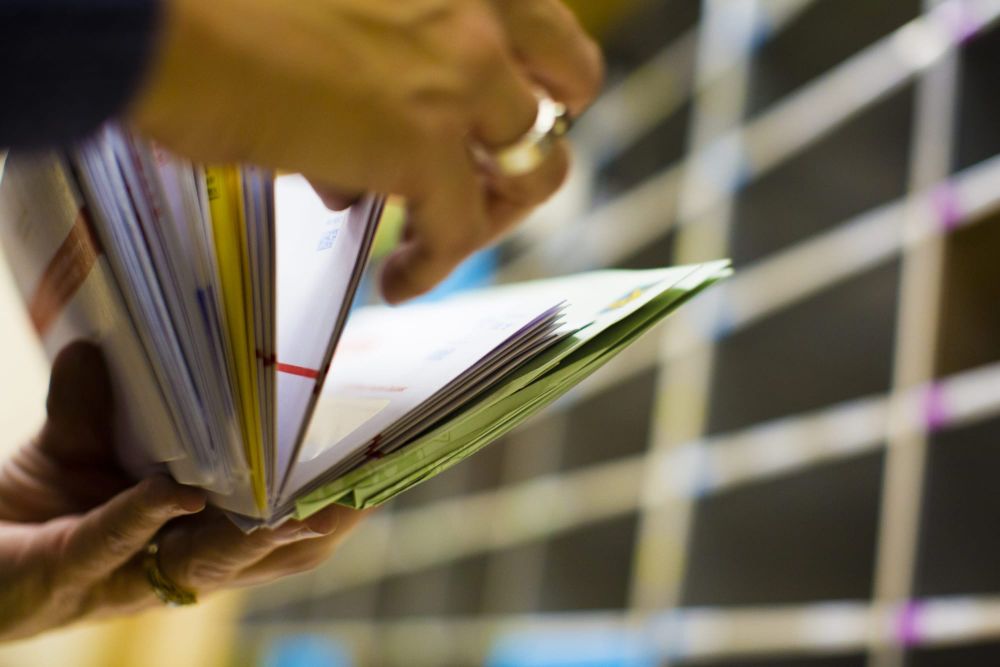
Families and couples often rely upon video visits, email messages, written letters, and packages to remain connected. Physical mail has the benefit of being more sentimental, though increasingly less so—packages can be denied if the items inside fail to abide by strict standards, and more facilities have begun to ban physical letters, cards, and pictures, instead opting to scan them and send duplicates to the incarcerated recipient. The mail-scanning technology used by prison systems is often offered by the same vendors that provide prison email and phone services, such as Securus. While the policy is said to limit the flow of contraband items that could be smuggled in via paper mail, studies analyzing at least two states that have adopted the practice have found that it has little to no effect on drug use or overdoses inside their prisons. Meanwhile, telecommunication services may be faster than snail mail and packages, but in prison these digital tools only appear similar to technologies the public uses on the outside. Often, they are far less sophisticated. There’s also the extraordinarily high costs to consider, and potential glitches can make staying in contact feel more taxing.
Robert Kidwell, who has been incarcerated at Northpoint for six years, says he and his partner share video visits during the weekdays that last about 25 minutes and cost roughly $5. At Northpoint, three video visits are allowed per week.
“We usually try to call at least two times a week and email sometimes four times a week,” said Kidwell. “And yes, the cost does play into this, as my fiancé works and takes care of two wonderful girls, so money is tight. Often I send them stuff through the mail.”
Even for those who do have the funds to make consistent calls or send emails, the infrastructure of prison messaging and call platforms is unreliable at best. To connect with incarcerated sources as part of this reporting, it took Prism almost an hour to create a Securus account, upload credit card information, and purchase “stamps” to send emails. A pack of stamps costs $3.50, and there’s a $3 processing fee per transaction. Each message must be sent using one stamp, and users on the outside have an option of sending an additional stamp for their recipient to use when they reply. Constant error messages only made matters worse. Prison emails are also subject to censorship. For example, guards at Northpoint read every email that enters the facility. This can slow down correspondence, interrupt the flow of conversations, and also erode a couple’s privacy and ability to send more personal messages to one another.
Family members, advocates, and other journalists have noted similar glitches in setting up video calls, often lamenting about the anxiety induced by the thought of their incarcerated loved one waiting for them at the other end of the line as they struggle to connect. Sending a message or making a video call via Securus is far more difficult than calling a friend on FaceTime or sending an iMessage; it requires both tenacity and tech savvy just to navigate the process.
The private equity firm Platinum Equity purchased Securus for $1.6 billion in November 2017. Almost immediately the company found itself in a tailspin of negative press and relentless pushback from prison phone justice advocates, notably those within the Connecting Families coalition that advocates for free prison phone calls and expanded prison visitation. Despite a slew of Connecting Families campaign wins, the pandemic was a saving grace for Securus, as in-person prison visits were indefinitely suspended and more families were forced to rely solely on video visitation services. In 2020, Securus saw a 10% —or almost $70 million—increase in revenue.
The pivot toward video services and phone calls necessitated by the pandemic allowed Securus to present itself as providing a winning solution for families required to adhere to social distancing protocols. This transition also benefited an unsavory policy that the company had previously unsuccessfully attempted to establish. In 2015, Securus announced that it was rolling back a controversial contract stipulation that required prisons using its video visitation services to ban in-person visits. After public uproar, former Securus CEO Richard Smith released a statement detailing how, upon review of their contract language for video visitation, the company “found that in ‘a handful’ of cases” Securus was “writing in language that could be perceived as restricting onsite and/or person-to-person contact at the facilities that we serve.” The company has since eliminated that language from facility contracts and now defers to rules set by each facility regarding in-person and video visitation.
However, two recent lawsuits from Michigan families with incarcerated loved ones in Genesee and St. Clair counties allege that Securus as well as its competitor Global Tel Link (GTL) conspired with county sheriffs to ban in-person visitation while splitting profits from forced use of telecommunication alternatives. The lawsuits name as defendants Genesee and St. Clair County sheriffs, GTL, Securus, and each of the company’s owners, as well as Platinum Equity, the private equity firm that manages Securus. Taken together, the litigation efforts have come to be known as the Right to Hug campaign.
Live for the moment
The threat of losing in-person visitation and the fervor with which families have fought to preserve or restore them underscore how much touch deprivation impacts partners whose romantic relationships are divided by prison walls.
“The most challenging part of keeping our relationship strong is the lack of physical contact,” wrote Passmore. “We were very close and spent many days together without being apart. We thrived on this. We now live for the moment when we can be together again.”
That desire for physical contact includes and also extends beyond sex, although discourse around “conjugal visits” tends to focus almost exclusively on sex in ways that are salacious and limiting.
“She and I share our dreams and goals, which drives our passion to be together,” said Passmore. “We share common goals and interests. She supports me in all my escapades. We share the love of crash derbies. With us it is more than sex. We love the old-fashioned front porch talking and rocking. I guess we are old-fashioned to an extent.”
Just as Passmore noted the acute loneliness that strikes at night, other men at Northpoint Training Center highlighted holidays and birthdays as times of the year when they most long to be with their loved ones. The brevity and at times infrequency of visits shared both online and in-person can also present a snag for couples who find themselves needing to broach difficult conversations.
In her 2020 book, “The Shadow System,” journalist Sylvia Harvey discusses some of the unexpected ways that prison can shape the emotional connection between children and their incarcerated partners. Harvey notes that due to the brevity of visits, it’s often less likely that children will bring up serious life problems because there isn’t enough time to divulge intimate details and then resolve the problems. Since it’s unlikely they will be able to “recover and return to normal,” many children choose not to bring up thorny topics at all. This dynamic is similar to the negotiations that people with incarcerated partners must make.
“The most challenging part of relationships is not being able to be there when something goes bad for them out there or when they just need to be held and comforted,” shared Kidwell.
But couples deepening their relationships across prison walls still develop strategies to help curb some of these difficulties. For some, it means using calls and emails to their advantage and observing the ways that a lack of physical touch can heighten their appreciation for other parts of their partner.
“As for the romantic life, a lot of people think you can’t have romance while in prison, but you still can in different ways, whether it be the way you have a phone conversation or even through emails—you just have to be creative,” said Kidwell. “And people think that prison ends relationships, and for some it does, but for others [like me] it gave me a chance to get to know someone on a different level not based on looks or money, but on honesty and openness.”
Kidwell said he keeps all of the messages and pictures sent by his partner whom he’s been with for over a year, the mementos serving as a reminder of what he has to look forward to when he gets out. Creating pet names, sending handwritten cards, and fielding requests for drawings are other personal and sentimental ways that Kidwell stays in touch with his partner.
One of the most important albeit difficult ways that couples fortify their bonds is discussing what they anticipate life will look like when they are free to be together again. Dreaming together about a shared future after release—a practice surely more challenging the longer the sentence is—can help instill a sense of normalcy. It also provides the kind of levity necessary to bridge an otherwise impossible distance.
“We both are counting down the days when I can get home,” said Passmore. “We have been planning to get married and expand our family. You’re gonna think I’m crazy, but we have already come up with where we want to get married, and we have also thrown out names to each other for our future child—both boy and girl names. We talk a lot about our future and what all we want to see done and things we want to do around the house. I’ve got a huge ‘honey do list’ when I get home.”
Author

Tamar Sarai is a writer, journalist, and historian in training. Her work focuses on race, culture, and the criminal legal system. She is currently pursing her PhD in History at Temple University where
Sign up for Prism newsletters.
Stay up to date with curated collection of our top stories.