Never eat the candy on your pillow: Freedom, fear, and the future
Nothing inspires hope and dread quite like a meeting with the parole board, a group of strangers who hold your destiny in their hands
Dear Reader,
Waking up in prison each day is a horrible experience, one that tests a person’s very reasons for living. Many incarcerated people only find the will to wake up each morning because it moves them closer to the day their prison sentence will come to an end.
Some might argue that this is hardly living—and for the more than 97,000 people serving life with the possibility of parole, the day they are waiting for may never come. For these folks, their spirits are truly tested and some hit a breaking point. When their feelings of abandonment become too much, or the separation from their families weighs too heavily on them, some give up. Suicide is the leading cause of death in local jails, and 187 people in federal prisons died by suicide between 2014 and 2021. In prison, hope is a double-edged sword: It’s dangerous and exactly the thing that helps you get through the day.
There are rare people like Danny who’ve simply resigned themselves to life behind bars, making peace with the fact that parole may never come.
But as Danny will tell you, freedom can come as a shock—and it also comes with fear.
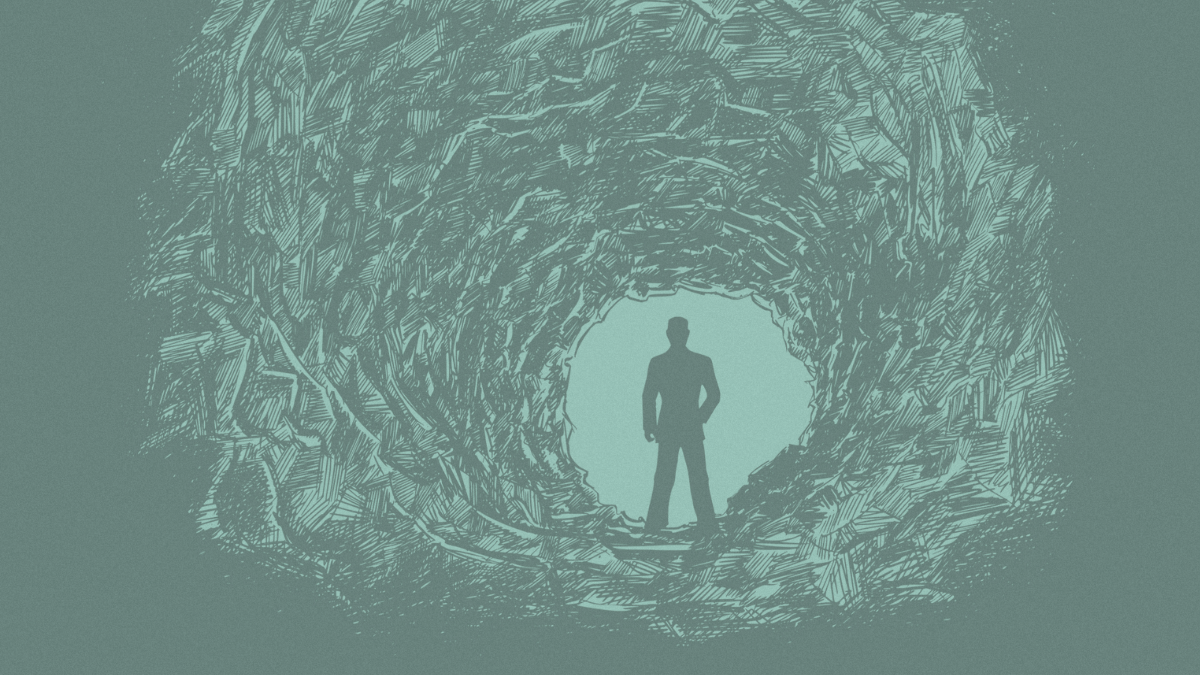
Danny has been incarcerated since April 1990, when he began serving a life sentence with the possibility of parole. It was this “possibility of parole” that became his light at the end of the tunnel. But in 2003, when Danny first went up for parole 13 years after first entering prison, he realized his hope was on shaky ground.
“I got an 18-month flop,” Danny said. In prison slang, a “flop” is a parole board deferment. In Danny’s case, it meant he had to wait 18 months before he could see the parole board again. The larger problem is that each time a person meets with the parole board, they run the risk of receiving “a serve-out,” which means an end to their chance of receiving parole.
“The 18-month flop was a mixed bag for me,” Danny said while chewing his lip and picking at his cuticles. “A part of me was like, all I have to do is wait 18 more months and I’ll be free. The other, cynical part of me assumed the next time I saw the parole board, it would be a serve-out. I never really thought I’d make parole the first time up anyway.”
Danny did receive some helpful feedback along with his deferment. No one on the parole board spoke rudely to him, as he often heard others complain about. In fact, Danny thought they were pretty nice to him. When he was back up for parole 18 months later, he really didn’t know what to expect. Danny walked in to find an all-new parole board full of unfamiliar faces.
“I did not expect to make parole then, and I surely wasn’t expecting what they were getting ready to give me,” Danny said.
Most incarcerated people speak of the parole board as a sort of mythical creature that can grant their most coveted wish or entirely destroy their world. In part, this is due to the lack of communication between Kentucky’s parole board and the people they oversee: The distance between the two is vast, and it often leads to a lot of confusion. Many feel they cannot properly prepare for their date with the board, or even speak on their own behalf, because of the separation. Others believe the parole board makes its decision in advance, making the actual meeting relatively meaningless.
At Danny’s second parole hearing with the new board, there were fewer niceties. Instead, the parole board focused on all of the illegal things he did before his incarceration.
“We barely even talked about what I was actually in prison for, and they didn’t seem to like that the last parole board only gave me an 18-month deferment,” Danny explained.
Asked to step outside the room for a moment while the parole board discussed his fate, Danny said he never felt so anxious in his life. It was like the clock on the wall was ticking in slow motion. Eventually, an officer told Danny to step back inside. With a stern look and a cold voice, the parole board spokesperson told Danny they were giving him “240 months” to think about what he did. Danny’s brain couldn’t exactly compute what that meant at the time—his anxiety was still through the roof. All he could think to do was thank the board for their time and tell them he was sure they did what they thought best.
Once back with the others inside the prison, Danny had to ask someone how much time 240 months was in years. This is how he learned the parole board gave him a 20-year deferment.
Later that day, an officer asked Danny if he was going to be all right, given the news he received from the parole board. Danny felt horrendous, but he knew that answering the question honestly would only invite a trip to the hole for psychiatric observation. Danny assured the officer he was going to be fine, and he went on with his day, trying his best to behave normally, now that he knew officers were watching and the bad news from the parole board had spread. Twenty years is a very long time, and he simply had to pretend that it wasn’t.
Perhaps it was the pretending that got Danny through the time. The parole board did eventually grant Danny his freedom after more than 35 years in prison. When I spoke to him for this story, Danny had just learned the news.
“I never thought I’d get out of prison. Now I’m going to face a world I don’t even really recognize. It’s actually scary.”
“I never thought I’d get out of prison,” Danny said, growing emotional. “Now I’m going to face a world I don’t even really recognize. It’s actually scary.”
Danny is 63 years old, with no employment prospects. He is leaving prison with just $334 to his name. Like a lot of us, he found it hard to save money when the prison pays less than $1 a day in wages for the work we perform.
“The only reason I even have $334 is because the canteen was always out of stock, and I got so mad about it a while back, I stopped shopping,” Danny said.
Speaking to Danny, it was clear that the shock hadn’t worn off and that he was trying to make sense of how he would live and support himself outside. It’s a lot to figure out. I’ve seen many guys struggle with how they’re feeling—the excitement for their freedom mixed up with fear for their future.
As I write this story for you, readers, I’m days away from my own date with destiny. Will I make parole, or be served-out? This question is the only thing I can focus on lately. Watching others make parole over the last two decades has taught me there is no consistency to incarceration, there is no making sense of it. I know how hard I’ve worked to improve myself, but I cannot control how the board sees me.
Do I feel I deserve parole? Of course. Everyone deserves a second chance to make amends for their wrongs. Everyone deserves forgiveness and grace. I never just stacked my time inside. I made the most of it, working, pursuing an education, becoming a published writer, serving as a mentor, and more. But will the parole board see me?
No matter how my meeting with the parole board goes, I’m most looking forward to the end of this uncertainty. I simply need to know what my immediate future holds and if I don’t get the news I want, I won’t give up.
I hope you never know the pain and drudgery of waking up each day in prison. I hope you never have to live your life always expecting the worst yet hoping for the best, just to have something to cling to that helps you survive another day. I hope you never fear your future because it hinges on the opinions of complete strangers who only want to see the worst of you.
I have trained myself to always seek the light, no matter how impossible and insurmountable it may feel. The next time you hear from me, dear reader, I will either have my freedom or more of the same behind bars.
As always, I am hoping for the best.
The Right to Write (R2W) project is an editorial initiative where Prism works with incarcerated writers to share their reporting and perspectives across our verticals and coverage areas. Learn more about R2W and how to pitch here.
Editorial Team:
Tina Vasquez, Lead Editor
Carolyn Copeland, Top Editor
Rashmee Kumar, Copy Editor
Author
Derek R. Trumbo, Sr., a multiple-time PEN Prison Writing Award winner, is an essayist, playwright, and author whose writing has been featured in "The Sentences That Create Us: Crafting A Writer's Life
Sign up for Prism newsletters.
Stay up to date with curated collection of our top stories.