Are you misbehaving in your parasocial relationships?
What we know about the people we follow online is curated information, but some social media users overstep boundaries out of a false sense of familiarity

As a person with a relatively large online platform and following, over time I’ve had to interrogate the realities of parasocial relationships. In my online spaces, I’m known as someone who has good boundaries. This did not always come naturally. I’ve had to strengthen my ability to set boundaries due to when people on social media often attempt to engage with me in ways that are too familiar, inappropriate, or otherwise disrespectful.
If you’re unfamiliar with the phrase “parasocial relationships,” it’s commonly defined as a one-sided relationship or bond with a person you don’t personally know. This often applies to celebrities, but it also applies to influencers, podcasters, or accounts with large followings on social media sites like Twitter, Instagram, and TikTok.
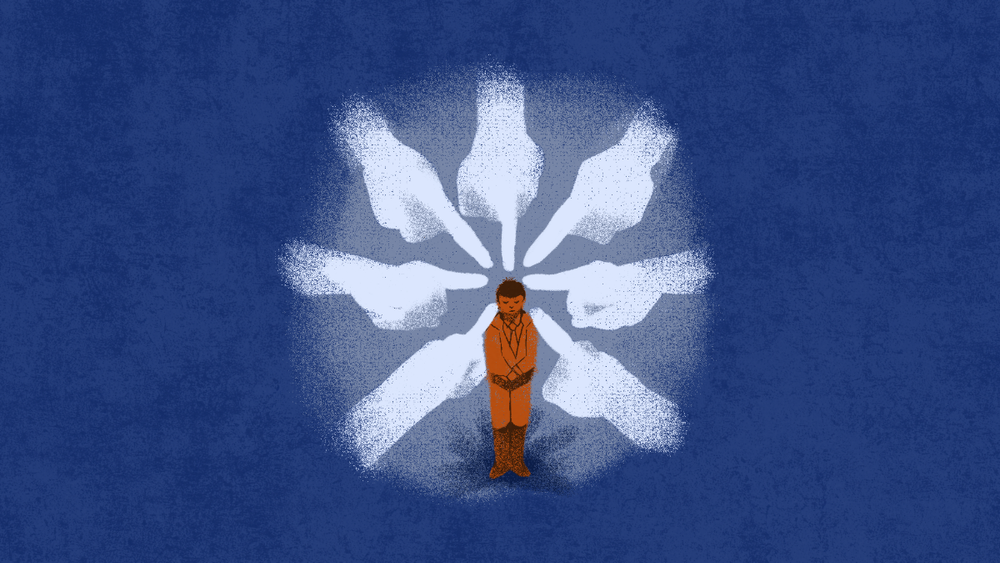
I’ve been reflecting on parasocial relationships over the last few months, ever since a disabled activist shared on social media that they were hospitalized and not receiving appropriate care, noting repeatedly how few health care workers were masked, exposing them to grave medical risks. In their initial post, the activist was clear that they didn’t want to be bothered while hospitalized. But social media users overstepped the boundary to alarming degrees; some of them called the hospital where the activist was located or otherwise attempted to reach their care team ostensibly to advocate on their behalf.
This was not the first time something like this happened to the activist, who has a large social media following. Those of us in community with them felt strongly compelled to speak out against the extreme intrusion of privacy they experienced from social media users.
It was clear to me at that moment that people wanted to “help” someone they perceived to be in crisis, but they unintentionally overstepped boundaries by failing to understand that their one-sided relationship to the activist did not function the same as those who know them closely offline, or “in real life.”
No matter how much a person shares, we don’t actually know them.
What we know about the people we follow online is curated information, whether it’s good, bad, funny, mundane, or weird. No matter how much a person shares, we don’t actually know them—even if we feel like we do and even if we’ve interacted with them online. This realization is a tough one, particularly for communities in which forging online relationships is vital to have any form of community at all.
The incident with the activist pushed me to consider the words of disability advocate and educator Tasha Nelson, widely known as Supernova Momma: “‘Misbehavior’ is communicating unmet needs.”
Now that I’ve had time to reflect, I’ve pinpointed the exact nature of the “misbehavior” exhibited by the people who overstepped the activist’s boundaries, which is illustrative of the larger boundary-crossing I’ve seen and experienced as part of online parasocial relationships.
What does the misbehavior in these parasocial relationships look like in practice? It’s displaying a reactive approach to stressful situations, rather than an appropriate one. In the activist’s situation and many others, followers were feeling helpless as the crisis played out, and perhaps some in the disability community were even feeling triggered. Many of us have experienced health care mistreatment, and seeing another instance of it play out online with a beloved community member led to a projection of their own emotions. And for other followers, it might not have been more complicated than a savior complex.
Each of these misbehaviors highlights our own inability at times not to project our lived experiences, traumas, fears, egos, and emotions onto people we do not know. These intense feelings can cloud our judgment and rationality, opening ourselves up to doing the very thing we wanted to prevent in the first place: harm.
When we act on our emotions and fail to pause and truly process a situation, we risk miscalculating the best course of engagement to take—if any action is even proper to take at all. Sometimes, the right course of action is simply resharing or retweeting to raise awareness, so that our thoughts and actions aren’t centered and overshadow what is happening to the person experiencing the injustice.
I have my own rules of engagement when interacting with a follower I know well offline, online mutuals, and even strangers. For example, if they’re sharing a painful moment online, it is not for me to center myself in it. This means I avoid any action that would have me become an unintended stressor or agitator in the moment taking place.
Understanding online boundaries for real-life friendships matters too.
Even when someone online shares a positive moment, I celebrate them rather than spinning the interaction into an effort to overly connect with them. This action, though well-meaning, can also translate to centering yourself in a moment that isn’t yours. Just because you care about what’s happening to a person doesn’t give you the right to intrude and make the person feel unsettled. If I know the person well offline, I privately engage them in a way that is appropriate for our friendship. I don’t have to “overreach” online when I can simply call, direct message, or text the person—if our friendship has evolved to that level of connection. Understanding online boundaries for real-life friendships matters too.
Every one of us is responsible for ensuring that we’re establishing a safe environment online with those we interact with, even if we know the person offline. Making the people we follow feel safe and respected online is important to me, which is why I discuss it often. Given the great diversity of experiences and voices online, it’s paramount that creating respectful and safe online communities is the norm and not an exception.
Parasocial relationships aren’t inherently bad; they are simply a type of relationship that exists. Given how much time we all spend online, in many ways, these relationships are unavoidable. This is why it’s so important to be mindful and intentional in how we interact and engage in these relationships.
The next time you find yourself feeling emotionally overwhelmed by a crisis facing a person you’re in a parasocial relationship with, take yourself through these steps I’ve developed for regulating my own emotions when I find myself in a similar predicament:
- Pause and assess your actual relationship to the person experiencing the crisis.
- If detailed information is being shared about the person experiencing the crisis, examine who is sharing the information. Is it someone who is a part of their actual support or care system, or is it someone who also has a parasocial relationship with them? Identifying the authoritative voice(s) matters to ensure that you are receiving the appropriate information and directives if a call for action is requested.
- If you feel compelled to act, take inventory of your determination: Is the action you want to take simply feeding your savior complex, or is the desire to help stemming from an actual call for action from the impacted person or their support/care system? If it’s the former, pause and regulate yourself to ensure that you do not cross boundaries or exacerbate an already stressful situation.
- Remember: Intention will never supersede impact. Are you alleviating stress or contributing to it?
- Finally, remember that what is taking place is not about you and it is not happening to you. Take time to grasp the reality of the moment so you don’t fumble your engagement with the actual people involved in the crisis.
Taking this kind of deep self-inventory is necessary, and if needed, you can also process what’s happening with those you are in community with. It’s this last step that can make a tremendous difference, especially for those who are triggered by what they’re seeing online because they’ve experienced similar injustice. Having networks and connections that expand your world is tremendous and a great privilege of technology and social media. Using these tools to improve how we connect, communicate, and engage in relationships in this vast world ensures that we’re doing our part to create safer, more inclusive, and, most importantly, more caring online environments.
Author

Vilissa Thompson, LMSW, is a contributing writer covering gender justice at Prism. A macro social worker from South Carolina, she is an expert in discussing the issues that matter to her as a Black di
Sign up for Prism newsletters.
Stay up to date with curated collection of our top stories.