Palestinians in Gaza doubt phase two of the ceasefire and Trump’s Board of Peace
The day after the U.S. announced the start of the next phase of the “ceasefire,” Israel killed at least 10 people in airstrikes on Gaza
Real journalists wrote and edited this (not AI)—independent, community-driven journalism survives because you back it. Donate to sustain Prism’s mission and the humans behind it.
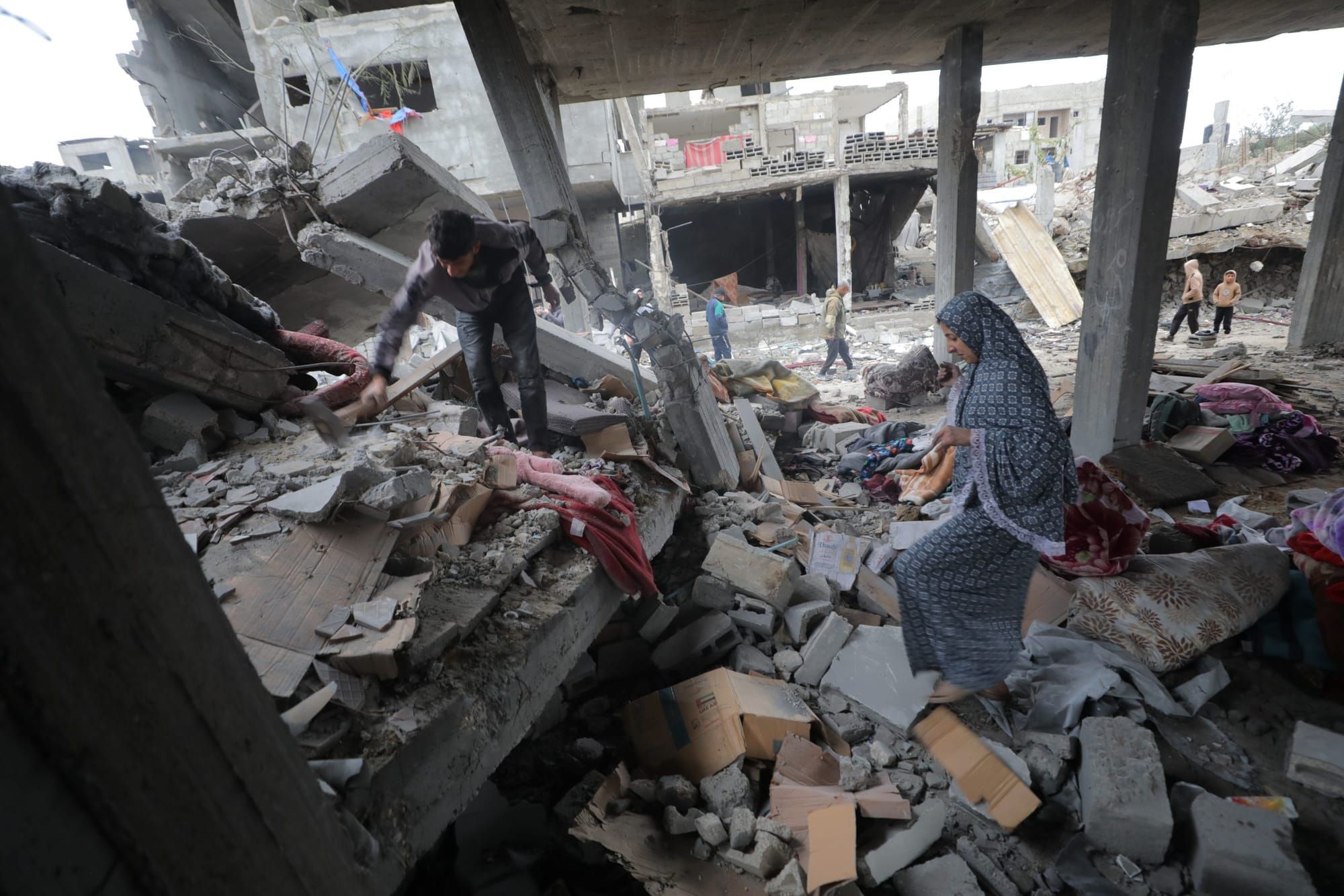
My family and I watched on TV the moment when Steve Witkoff, U.S. special envoy to the Middle East, announced the start of the second phase of the so-called ceasefire between Israel and Hamas. His announcement came after a week in which Israel’s pace of bombardment and killing in Gaza escalated. This occurred alongside a long record of violations throughout the period that followed the ceasefire agreement, despite the establishment of an international monitoring point to track violations of the agreement.
“They ask us to commit to the second phase while Israel did not commit to the first!” my uncle shouted at the TV while watching Witkoff.
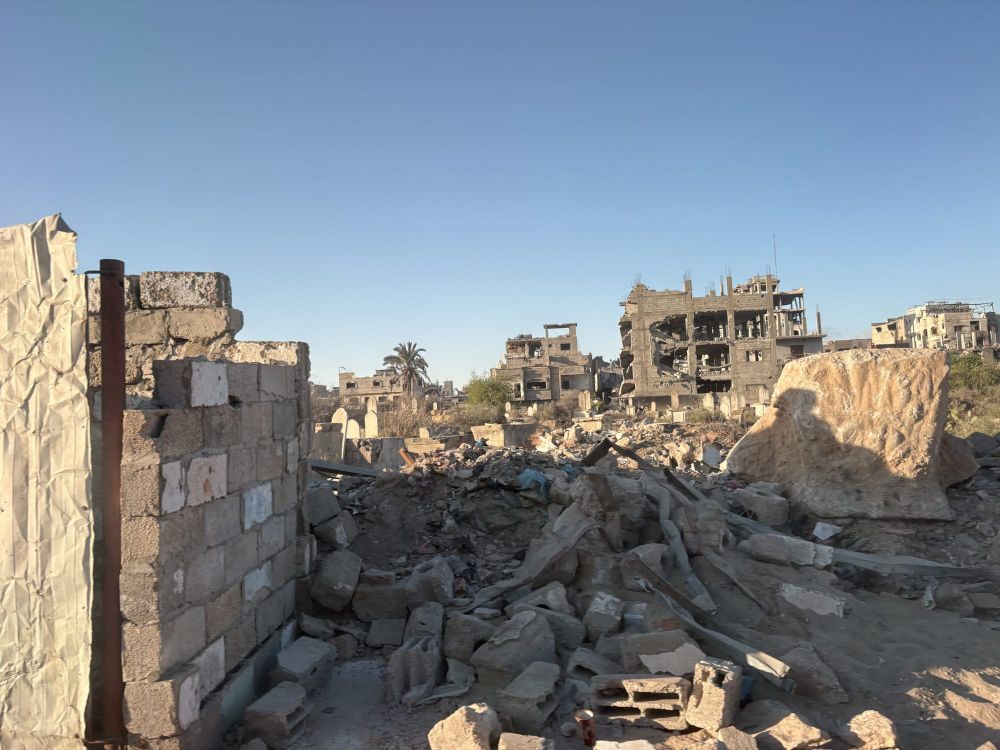
Days later, President Donald Trump announced the establishment of what was called the “Board of Peace” to govern Gaza. According to the board’s structure, ultimate authority is granted to Trump and U.S. officials known for their strong support for Israel, while the role of Palestinians is reduced to limited municipal tasks. At the World Economic Forum in Davos, Switzerland, on Jan. 22, Trump’s son-in-law and real estate developer Jared Kushner presented the outline of a “master plan” for Gaza that includes up to 180 skyscrapers, a new airport, and more than 100,000 housing units alongside industrial parks. Palestinians were not consulted in the plan, which envisions a glittering development atop bodies still buried under the rubble of the genocide. There’s no clarity on who would have rights over the territory within the plan that Palestinians have referred to as imperialistic.
On Jan. 15, the day after Witkoff’s announcement of the start of phase two, Israel carried out a series of strikes inside the Gaza Strip, killing at least 10 people, which deepened Palestinians’ doubts about the durability of the ceasefire and the seriousness of the second phase they had been waiting for.
“I began to doubt”
In Gaza, we believed that the second phase of the agreement would be less violent, less criminal, and more committed than the first. We expected that some of the population’s basic needs would be met, which is why we waited for it as a gateway to safety.
“I was waiting for the second phase impatiently because I believed Israel would commit to its obligations, especially opening the Rafah crossing,” Shaher Al-Nattil, an English-language teacher at Al Maghazi Camp in Gaza, told Prism. “My wife, son, and two daughters were evacuated during the war to Italy, and I was left alone in Gaza. I was waiting for the moment when I could travel and reunite with my family after the war separated us.”
Maryam Qishta, who lost her home and was displaced from Rafah in 2024 and now lives in a tent, also said she has been waiting to return to her city for the past two years.
“In the news, they said that during the second phase, residents would return to Rafah. I waited for it eagerly, but when Israel opened the phase with heavy bombing, I began to doubt how serious it really was,” Qishta said. “It is as if Israel, through its bombing, is telling us that it is here and will not allow a return or an agreement.”
For many people in Gaza, phase two represented the bare minimum: safety, movement, and reunion with loved ones. Israel’s immediate escalation of violence stripped the phase of its meaning, deepening the perception that Palestinians are being asked to believe in a process that has never been honored in practice.
These doubts were not without basis. About two weeks after the ceasefire agreement was signed in October, Israel resumed its attacks on the Gaza Strip in a large-scale bombing campaign that killed 104 people. Since the ceasefire began, Israel has killed at least 488 people and injured 1,350, according to Gaza authorities.
Israel continued violating the ceasefire not only through military attacks, but also by refusing to comply with its obligations to allow the agreed number of aid trucks to enter, along with full supplies of medicine, tents, shelter materials, and mobile homes. This systematic breach of the agreement’s terms cast doubt on the idea of a “smooth transition” to the second phase inside the Gaza Strip.
A new name for colonialism
Awaad Khattab, a pharmacist and football coach, described the Board of Peace to Prism as “deception under attractive titles,” adding that it is “colonialism with soft hands.”
“If Trump’s goal were to protect civilians, the United States should have stopped arming Israel or forced it to halt its brutality against Gazans and implement [United Nations] Security Council resolutions,” he said.
Palestinians question the goals of the board and its members, as all of them are businesspeople, investors, and first-degree supporters of Israel. Khattab told Prism that the reasons behind the U.S. proposal of the Board of Peace serve two goals: the first is protecting Israel, and the second lies in Gaza’s vast resources of oil and gas, in addition to its strategic location as a launch point for American control over the resources of Arab countries.
Skepticism does not stop there. The wide powers granted to the leadership of the Board of Peace raise serious questions about its true function.
“Trump’s goal is to consolidate his rule even after his term ends, and what is being applied to Gaza today will be applied elsewhere, such as Yemen, Sudan, and others,” Khattab said. This aligns with statements made by the U.S. Secretary of State that what was done in Gaza would be implemented in other countries around the world.
Notably, multiple parties were invited to join the Board of Peace, including war criminal and Israeli Prime Minister Benjamin Netanyahu, who is wanted by the International Court of Justice, while the most important component—Palestinians—was ignored and excluded. This exclusion denies Palestinians their right to self-determination or even to express an opinion, reducing their role to mere executors of decisions made by the Board of Peace. Ultimate authority remains in the hands of Trump, who holds veto power and is widely believed to use it in line with Israel’s interests and vision for Gaza.
What Palestinians reject
According to Khattab, Palestinians view the Board of Peace as a substitute for the U.N., which they categorically and definitively reject.
“The danger of the peace board lies in stripping the Palestinian cause of its national character and turning it from a political issue into a humanitarian one,” Khattab said. “Palestinians are seen as social cases in need of food and water, not as a people with political rights. This completes what Israel deliberately pursued throughout two years of war.”
As many in Gaza see it, this transformation not only erases the right of return, Jerusalem, and sovereignty, but also prevents Palestinians from demanding those things, in the absence of a political entity representing Gaza and through cutting political and geographic ties with the West Bank and Palestinians abroad.
With the establishment of the Board of Peace, Gaza’s residents became tenants on American-controlled land, administered by the White House and Trump. Any carefully engineered economic crisis could then lead to the displacement of Gazans from their land, completing Israel’s dangerous plans to expel Palestinians—plans that failed throughout two years of war.
“The day after” that wasn’t
With the start of the second phase of the ceasefire, anxiety in Gaza has not ended, but only changed its form. People here do not view this phase as an achievement, but as a new testing ground: Will Palestinian lives be respected this time, or will the same violations be reproduced under a different name?
“We hoped the world would grant us a state—a legitimate right to self-determination—but instead, a people are being arrested and pushed out of their land,” Khattab said.
Palestinians’ demand for a homeland is neither an emotional slogan nor a radical position; it is the logical result of decades of siege, wars, and so-called reconstruction efforts that rebuilt nothing except the same cycle of violence.
What is happening today makes one thing clear: No life can be built on rubble without sovereignty, and no future can exist without the right to self-determination.
If the world is searching for “the day after,” Gazans have already decided: The day after will not be one of new refugees, better-organized tents, or postponed international promises. The day after must either be a livable homeland, or the continuation of a conflict that will grow harsher as long as its roots remain unaddressed. This is not a threat, but the conclusion drawn from the experience of a people who have been subjected to everything except justice.
Editorial Team:
Sahar Fatima, Lead Editor
Carolyn Copeland, Top Editor
Stephanie Harris, Copy Editor
Author

Mohammed Al-Ta'ban is a Palestinian writer from Gaza who focuses his work on documenting the humanitarian situation in Gaza, away from traditional political narratives. He writes for Al Jazeera and th
Sign up for Prism newsletters.
Stay up to date with curated collection of our top stories.