U.S. halts visitor visas for Palestinian medical evacuees
Nonprofits say the decision will have “a devastating and irreversible impact” on their ability to bring critically ill or injured children from Gaza to the U.S.
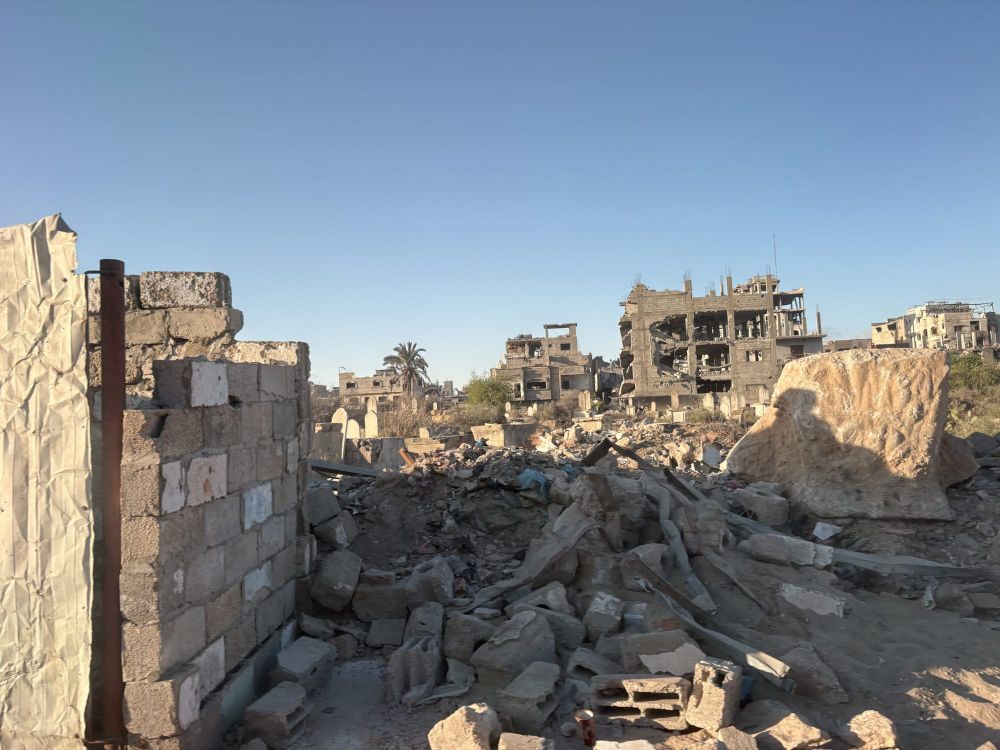
The U.S. State Department announced on Aug. 16 that it would stop all visitor visas from Gaza while it reviews how approvals are handled, creating another roadblock for thousands of Palestinians needing urgent medical care through the ongoing genocide.
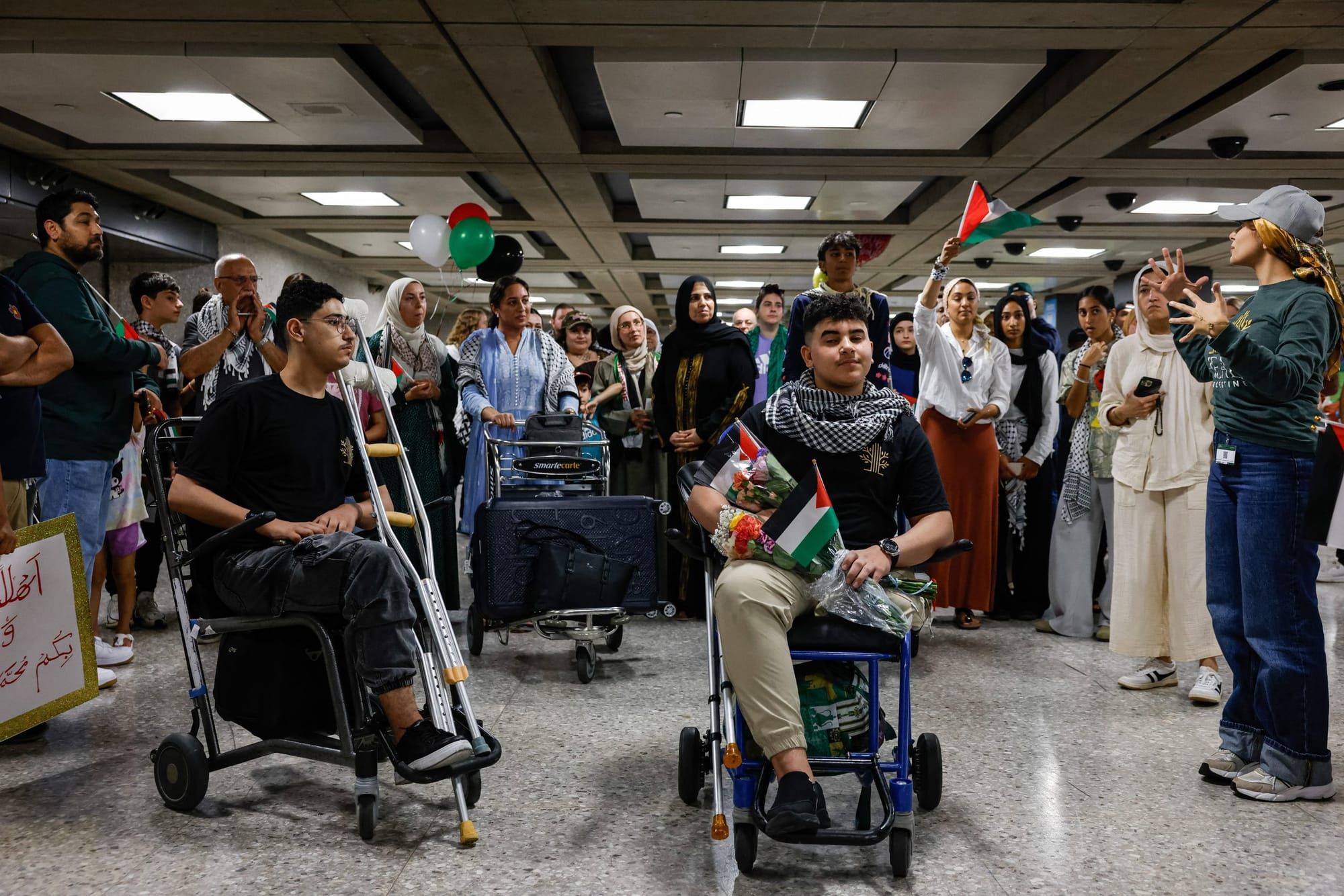
This restriction came directly after an outcry by right-wing activist Laura Loomer, claiming that she spoke to Secretary of State Marco Rubio about how the temporary visa program through HEAL Palestine, a nonprofit organization that has been bringing Palestinian children and their caretakers to the U.S. to receive urgent medical care, posed a “national security threat.” HEAL Palestine released a statement on Aug. 17 that it was “distressed” by the decision, while 70 physicians and nurse volunteers who served in Gaza sent a letter to the State Department on Aug. 21 urging it “immediately reverse the decision.”
“After treatment is complete, the children and any accompanying family members return to the Middle East,” HEAL Palestine said in a public statement. “This is a medical treatment program, not a refugee resettlement program. Our mission gives children a renewed chance at life, whether through life-saving surgery or the ability to walk again.”
HEAL Palestine, founded in 2024, has evacuated at least 50 children from Gaza to receive life-saving surgeries, prosthetics, and rehabilitative care in the U.S., according to its website.
The Palestine Children’s Relief Fund (PCRF), which has worked on medical evacuations and care for more than 30 years, said the new policy will have “a devastating and irreversible impact” on its ability to bring critically ill children from Gaza to the U.S.
“Recognizing mounting obstacles to international travel and anticipating growing restrictions, PCRF proactively scaled up its treatment abroad programs in Egypt, Jordan, and other countries in the region in recent months,” PCRF said in a statement. “Medical evacuations are a lifeline for the children of Gaza who would otherwise face unimaginable suffering or death due to the collapse of medical infrastructure in Gaza. PCRF will never abandon its commitment to the children of Palestine.”
The visa restrictions come as health care in Gaza crumbles under unprecedented attacks. On Aug. 25, Israel killed 21 people, including five journalists, in “double-tap” airstrikes on Nasser Hospital in Khan Younis, striking once and then again when rescue workers and journalists arrived. Israel’s siege on the Strip has also blocked necessary medical supplies, leaving doctors working with limited materials to try to heal patients with devastating injuries.
Although the latest visa restriction comes from the U.S., which has been heavily bankrolling the ongoing bombardment and siege of Gaza and the occupied West Bank, Israel has a longstanding history of arbitrarily delaying and preventing Palestinian medical evacuees from receiving treatment. This heavily increased after the land, air, and sea blockade of the Gaza Strip in 2007, with Israel providing no other reasoning apart from “security concerns.” Before the most recent genocidal campaign by Israel, around 50 to 100 patients were leaving Gaza every day, according to the World Health Organization (WHO). Now, that rate has dropped to around 11 patients per day.
Thaer Ahmad, an emergency medicine physician based in Chicago and one of the 70 physicians who contributed to the letter to the State Department, has been working in and out of Gaza since 2009. Ahmad spoke to Prism about how compounding effects of the genocide, such as the aid blockade, attacks on water infrastructure, malnutrition due to the forced starvation by Israel, and displacement orders, have “compounded to create a space where Palestinians cannot get the care they need at hospitals.”
“We don’t want to take Palestinians out of Palestine,” Ahmad said. Ideally, before Oct. 7, 2023, patients in need of more specialized care would travel to the West Bank or East Jerusalem (after obtaining permits from Israeli authorities), where they could be treated by Palestinian doctors and medical institutions.
“But that’s not what’s happening, and that’s not what we’re seeing here,” Ahmad said. “We’re talking about a full-blown assault on life in Gaza. We’re talking about a policy that’s trying to make life in Gaza unsustainable.”
Ahmad said one of the main reasons the U.S. restriction is so cruel is because medical evacuations are one of the few areas where governments “are able to have some sort of leverage or influence with the Israeli government.”
“Almost 600 of the [close to] 15,000-person [medical evacuee] list have died just waiting,” Ahmad said. “ I mean, the depth of depravity by the State Department and kind of suspending these humanitarian visas as if there was some massive influx of Palestinians seeking medical care here at the cost of the United States government is just so absurd.”
“HEAL, PCRF, all of these organizations that bring people here, they provide the logistics, they are making sure that all costs are covered outside of the American taxpayer. The American government is not fronting any of these costs,” he continued. “The only ask of them is that they allow the permits, the visas, to allow these people to come through, and so it’s a terrible decision. It is inexcusable, it’s inhumane, and it makes no sense.”
Mohammad Subeh, a Palestinian American emergency room doctor based in California, embarked on his first medical mission to Gaza in February 2024 and has been working directly with hundreds of medical evacuee cases since returning.
“ During my first medical mission, I already saw the need for an exponential increase in the need for medical evacuations, not only for children, but just for the population at large,” Suheh said. “Because the infrastructure, whatever was remaining previously that could address some of the treatments, was no longer there.
The current process to evacuate Palestinians takes several months, as Subeh described. Each case must go through Gaza’s Ministry of Health, the Israeli military’s Coordinator for Government Activities in the Territories, the WHO, a receiving hospital for acceptance, followed by providing health records, passports, applying for temporary visas, and receiving exit permissions. Subeh said that with the rise in thousands of child amputees and ongoing malnutrition, this process creates nearly impossible pathways for treatment or recovery.
Subeh said many heart and stroke patients would die because he and other doctors in Gaza were unable to treat them.
“You don’t have nine months to try to evacuate a heart attack patient,” Subeh said. After his first medical mission to Gaza, he became more involved in trying to get people evacuated, specifically children. “Generally speaking, it’s a lot easier to evacuate children than adults, even though all of the folks waiting on the wait list need to be evacuated.”
Subeh provided an example of a patient who was successfully evacuated to the U.S. through a nonprofit in 2024 after losing her eye, right leg, and sustaining a crush injury through a missile strike on Oct. 16, 2023.
“ In order for her to come for treatment, she had to be identified out of thousands of other patients awaiting definitive treatment,” Subeh said. “Despite there being an attempt to maintain a kind of cohesiveness in the organization of the health ministry, it’s still very difficult. There’s no computer system to keep track of folks. There are no landlines to call people.”
Subeh first identified the patient as someone in need of evacuation during his second medical mission to Gaza in June 2024. When he returned to the U.S., he got a local health care facility to sponsor the patient.
“Ultimately, it sits on the desk of the Israelis to give final approval, as well as the State Department to give the green light,” Subeh said.
Yassar Arain, a neonatologist based in Fort Worth, Texas, who served on a medical mission to Gaza in April 2024 and a few missions in the occupied West Bank, helped evacuate Mustafa, a 9-day-old baby who was shot in the head and developed seizures due to significant brain damage. Arain told Prism that he gathered all of the information health officials and government officials needed for Mustafa by May 2024, but that he was not evacuated until February 2025 to Italy.
“There’s a chance that Mustafa can improve his developmental skills and capabilities if he is provided with timely therapeutic services like physical therapy, occupational therapy, speech and language therapy while he is going through the first crucial developmental years of his life,” Arain said. “The textbook tells us that a baby will typically take their first step at around 12 months of age, but these developmental milestones are at high risk of being delayed or absent because of the brain injury that he suffered.”
Arain said that, had a baby suffered a similar injury in the U.S., multiple doctors would be tracking the infant’s development and intervening early, when necessary. They’d have answers to basic questions such as what degree of visual impairment the baby might have and what developmental milestones are not being met. But Palestinian children in Gaza don’t have access to any of those services.
“He hasn’t had any of those services for almost an entire year,” Arain said of Mustafa.
Arain said it is also difficult to know whether the malnutrition and illnesses he has seen in children and premature babies will manifest into long-term health problems, regardless of whether patients are evacuated.
“The visa restriction is incredibly hypocritical when [the U.S.] is still supporting financially and materially the bombs that Israel’s dropping on children,” Arain said. “The least that we could do as a country, as a government, is to take in injured children that have been bombed or set on fire or have lost limbs or who have been orphaned because of the bombs that we’re sending to Israel. It’s just mind-numbing to me, that our government has taken such a disgraceful approach to helping children in Gaza.”
As the United Nations declared a Phase 5 famine in Gaza on Aug. 22, 14,800 people in Gaza need urgent medical evacuation. Meanwhile, the restrictions for Palestinians to receive basic medical care increase daily as almost all aid is either blocked from entering the border or thrown away, while denial rates for health care workers to serve on missions to Gaza have gone up. Ahmad, Subeh, and Arain have all been denied reentry to Gaza over the last few months.
“ Nobody should be under any sort of illusion that when you announce a ceasefire—if there’s ever a ceasefire that’s announced—that the suffering stops,” Ahmad said. “In fact, people will still unnecessarily die because of the way the Israeli military has prosecuted their assault on the people of Gaza. That should give people an understanding of how devastating the situation is in Gaza.”
Editorial Team:
Sahar Fatima, Lead Editor
Carolyn Copeland, Top Editor
Stephanie Harris, Copy Editor
Author
Neha Madhira is an award-winning gender, health and politics reporter with a focus in South Asia and the Middle East. Previously, she was a breaking news reporter in Austin, Texas, where she broke the
Sign up for Prism newsletters.
Stay up to date with curated collection of our top stories.