As the genocide in Gaza rages on, the U.S. does nothing to stop Israel from killing American citizens in the West Bank
The Israeli military has killed several U.S. citizens, and each time, the State Department does little more than request an investigation
“I don’t know how to explain it in English,” said Hadeel Igbara, a dual Palestinian and U.S. citizen.
She sits at a desk at the school where she works in Turmusayya, a village in the Israeli-occupied West Bank, her hands folded neatly in front of her. “They say, ‘Muharram duwaliyyan’—it’s not allowed.”
She turns to Lafi Adeeb, the mayor of Turmusayya, who accompanied us on our March 12 interview. “How do you say ‘muharram duwaliyyan’?” she asked him.
“Dumdum,” he replied.
“That’s right. Dumdum,” she said. “Nobody uses that kind of bullet. Once it goes in, it shatters, explodes. They shot him in the side of his chest. Not on the side where his heart is, but since the bullet exploded, it cut all the arteries in his body, and that caused him to bleed internally and choke to death.”
Igbara’s 5-year-old son and 2-year-old daughter played with a toy in front of the desk. Igbara shifted in her seat. I asked her how many times she has told this story.
“Maybe 90, 100 times?” she responded. “It’s exhausting. I almost want to say I don’t want to say it. I don’t want to talk about it. But whatever it takes to help, I’m willing to do. I’m still not accepting of the fact that he’s gone.”
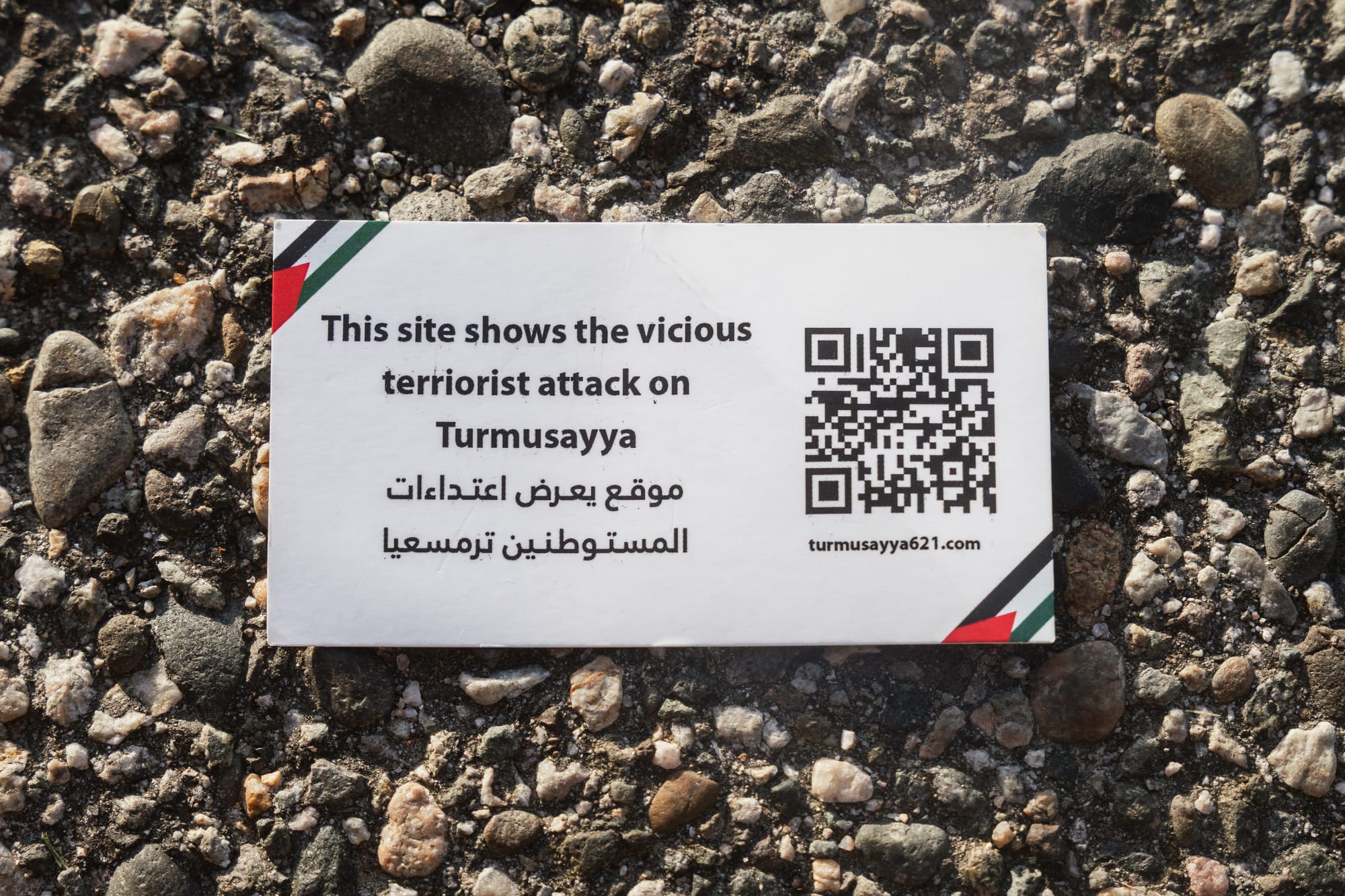
On June 21, 2023, hundreds of Israeli settlers from nearby settlements moved through the small village of Turmusayya on a rampage of destruction. They tore down retaining walls, smashed windows, and set fire to more than 60 vehicles and 30 homes. As flames engulfed one house and then the next, the local mosque used its speakers to call for anyone in the area to come help put out the fires.
Igbara’s husband, Omar Qattin, a U.S. green card holder, responded to the call.
“He left work and he went to help,” Igbara said. “He was taking kids out of the homes that were burning. He was taking out the elderly.”
“He was not armed. He had no form of weapons, nothing to fight back with,” she continued. “And that’s what hurts me the most. He was just helping, and he got killed for it.”
He was not armed. … He was just helping, and he got killed for it.
Hadeel Igbara, Palestinian American dual Citizen and wife of Omar Qattin
Whether Qattin was shot by Israeli police or a settler is unknown, as charges have still not been filed specifically for his murder. Israeli police claimed that an “unknown rioter” was fired upon who “endangered their lives.” The bullet used, however—a dumdum, also known as a butterfly bullet—expands on impact, causing extensive damage. Though these bullets have been banned under international law since 1899, Israeli soldiers, settlers, and police continue to use them against Palestinians.
In Turmusayya, these bullets and other weapons are also used against American citizens.
“Take and kill”
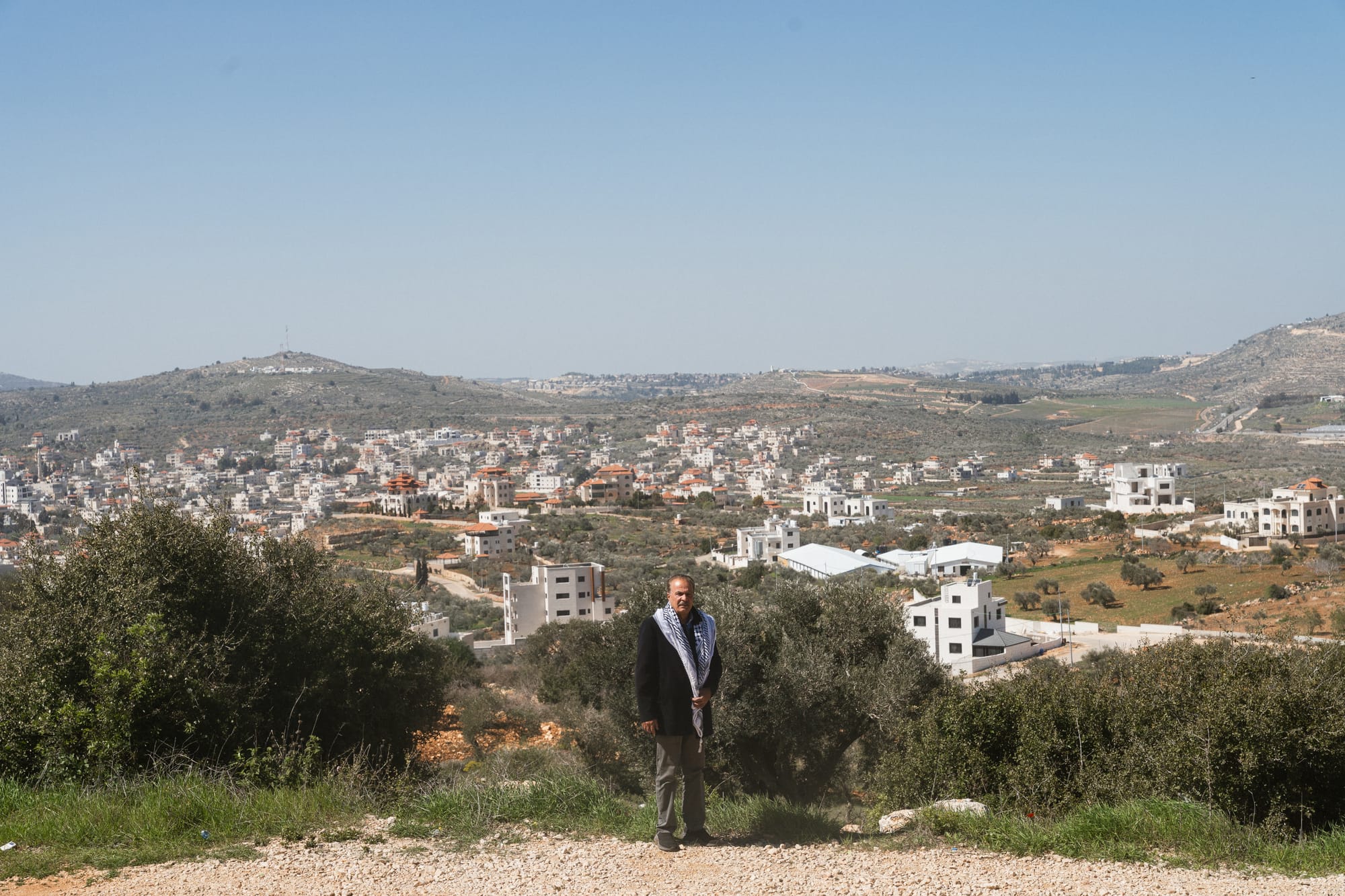
The vast majority of the Turmusayya’s population, about 85%, according to local officials, are dual Palestinian and American citizens. The latest census data from 2017 estimates the village’s population at 2,464, but newer estimates put the population at roughly 4,000. Adeeb, Turmusayya’s mayor, estimates roughly 16,000 Turmusayya residents live abroad, mostly in the United States.
Adeeb emphasized the various professions of residents who travel back and forth from Turmusayya to the U.S., including doctors, teachers, and even an Illinois state representative. “There’s even people in the U.S. military that live here,” he said.
The death of American citizens at the hands of Israeli settlers and military is nothing new. In recent years, the Israeli military killed two Americans with shots to the head: Palestinian American journalist Shireen Abu Akleh in May 2022, and Turkish American activist Ayşenur Ezgi Eygi in September 2024. Just two months ago, the Israeli military also shot and killed Palestinian American teenager, Omar Mohammed Rabea, in Turmusayya.
In each case, the U.S. State Department and other federal agencies have urged Israel to perform an internal investigation of U.S. citizen deaths, and each time, the Israeli military has either justified the killings or labeled them “unintentional” with no charges filed.
On the day of Qattin’s death, 12 other Palestinians were hit with settler or soldier fire, three of whom were either American citizens or U.S. green card holders, according to a Turmusayya town council member.
Qattin’s cousin, Chedly DeJesus, is also a U.S. citizen. DeJesus owns two olive farms in the village—farms that have been effectively confiscated by the Israeli military since Oct. 7, 2023.
“They have an excuse that it’s because of the war, but we are not at war here,” DeJesus told Prism. “They confiscate at least about 7,000 acres here.”
Of the 50 acres of farmland under his name, he said the Israeli military has taken all but three acres.
“It cost me over $100,000 because the olive is not a tree that you grow today and tomorrow. It takes from 10 to 15 years. And during that time, you have to get the water all the time, you have to fence them because the deer and other animals can eat it,” DeJesus explained. “So it’s a lot of work. We’ve been working on those two farms for the past 20 years, and now that they are ready for us to start making money from them, they are confiscated.”
He and other residents have tried every possible avenue to get their land back, including speaking with lawyers and reaching out to the U.S. Embassy in Jerusalem. No available options have been helpful.
“Every day, they keep taking more. They keep stealing,” DeJesus said. “They arrest you, they kill you. Take and kill. They have guns and they’re protected by the [Israel Defense Forces]. They’re protected by the U.S. government.”
Violence continues
The Israeli government granted gun licensing preference to settlers living in the West Bank long before Oct. 7, 2023, labeling the area a “danger zone.” Settlers also make up groups known as “civilian guarding squads” led by “civilian security coordinators”, who are appointed by settlements and supervised—on paper, at least—by the Israeli military. However, a 2014 report by the Israeli human rights group Yesh Din found that the activity of these quasi-military groups “not only fails to promote the rule of law in the West Bank, it also undermines them and weakens Israel’s ability to fulfill its duty under international law to protect the Palestinians and their property.”
Meanwhile, the United States continues to send semiautomatic and automatic rifles and ammunition to Israel, and the Israeli military continues to distribute the guns to illegal settlers with U.S. approval. Far-right Israeli National Security Minister Itamar Ben-Gvir, a settler himself, announced in March 2024 an addition of 100,000 settler gun permits handed out since Oct. 7. And while dumdum bullets may not be directly manufactured and shipped to Israel by the U.S. as part of gun and ammunition packages, sophisticated manufacturing is not required to make them. Most ammunition can be turned into dumdum bullets rather easily.
But weapons are not the only American contribution to settler and military violence throughout the West Bank.
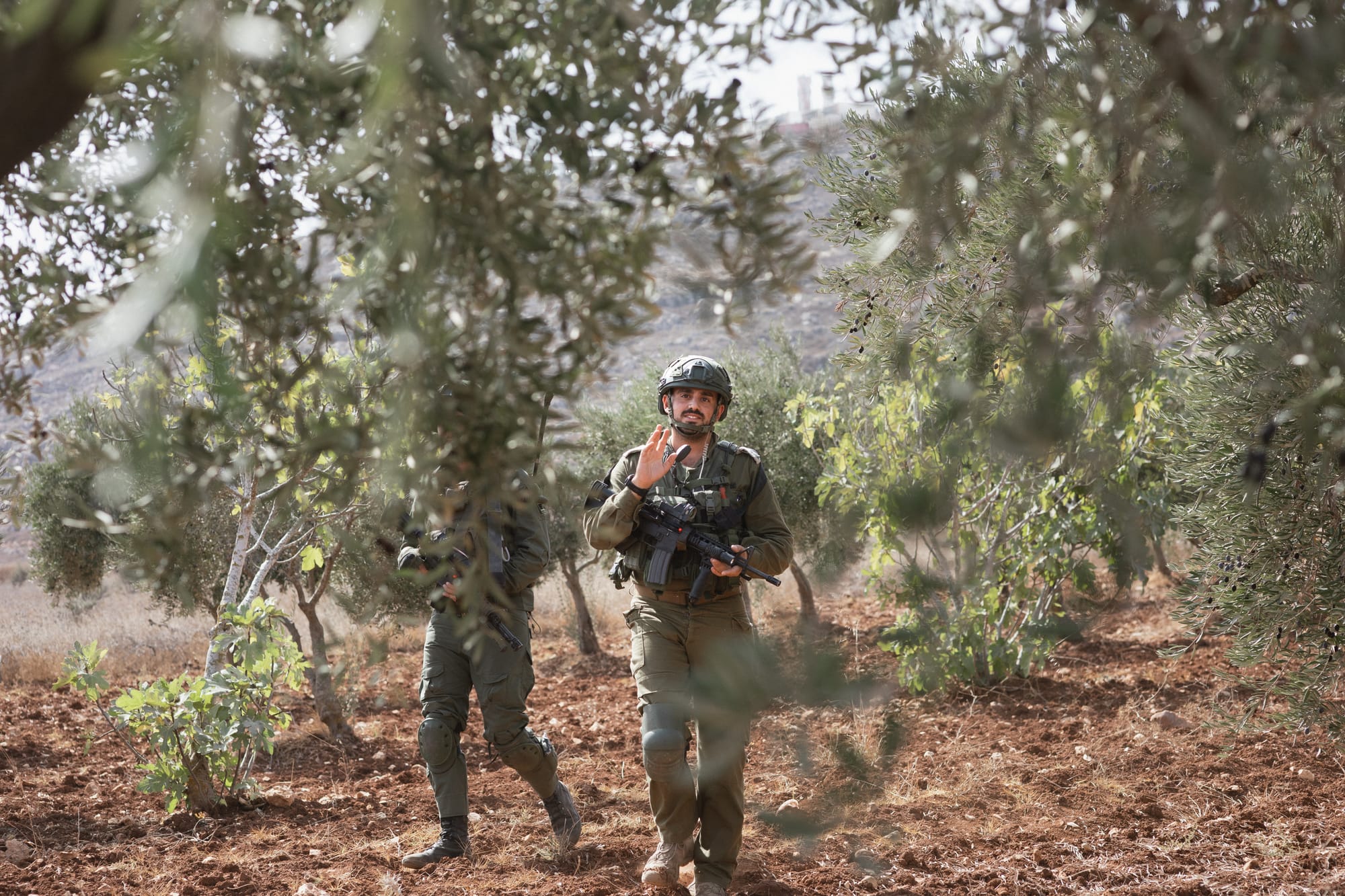
There is currently a bill in Congress, introduced by Republican Reps. Guy Reschenthaler and Max Miller, that would require U.S. citizens who voluntarily serve in the Israeli military to be “treated in the same manner as service in the uniformed services.” In short, the bill would extend U.S. military employment benefits to American citizens serving in the Israeli military.
According to reporting last year by the Washington Post, around 23,380 American citizens currently serve in the Israeli military, a number also referenced by Reschenthaler on his website, where he claims that his proposed legislation “will ensure we do everything possible to support these heroes who are standing with Israel, fighting for freedom, and combating terrorism in the Middle East.”
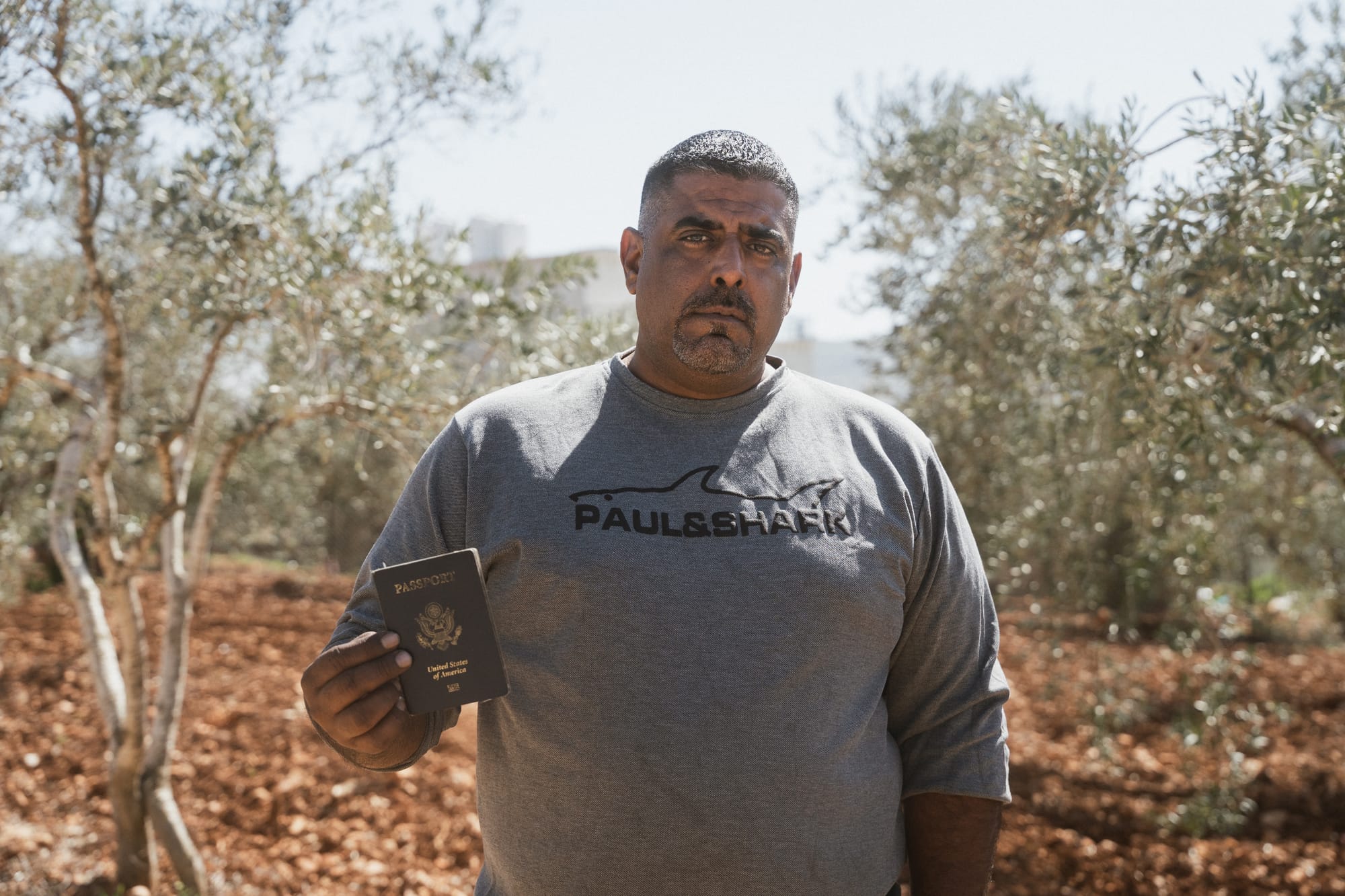
The last time DeJesus was confronted by the Israeli military, he was asked for his passport. When he handed over his American passport, he said the soldier threw it on the ground.
“My grandpa was in the military. My uncles, my cousins in the U.S. Army, Marines, Air Force. My grandpa was a pilot,” said DeJesus. “My question is now, ‘Why are we sending so much freaking money to Israel? Why do we send the money to people that don’t even respect American citizens?’”
Like DeJesus, Igbara also reached out to the U.S. Embassy for help after her husband was murdered in June 2023. A month later, then-U.S. Ambassador to Israel Thomas R. Nides visited her home. “He just came to hear my story, to give his condolences, to ask if I need anything,” she said. “I asked for protection, honestly. Just like me, there’s a lot of U.S. citizens here in Turmusayya that need protection from settler violence. But after he came and visited me, he resigned.”
Outside the school where Igbara works in Turmusayya, children emptied into the playground and scurried back and forth from the slides to the swings and back again. The air filled with their laughter.
“My kids ask about their dad all the time,” said Igbara. “Not one day goes by where they don’t ask about him. Where they don’t say, ‘I want to show this to Baba.’ I still wait for him. Till this day I haven’t been able to take his clothes out of his closet. I haven’t been able to get rid of his shoes. Everything is exactly where he left it. Because I haven’t gotten to the point where I’m accepting of what happened.”
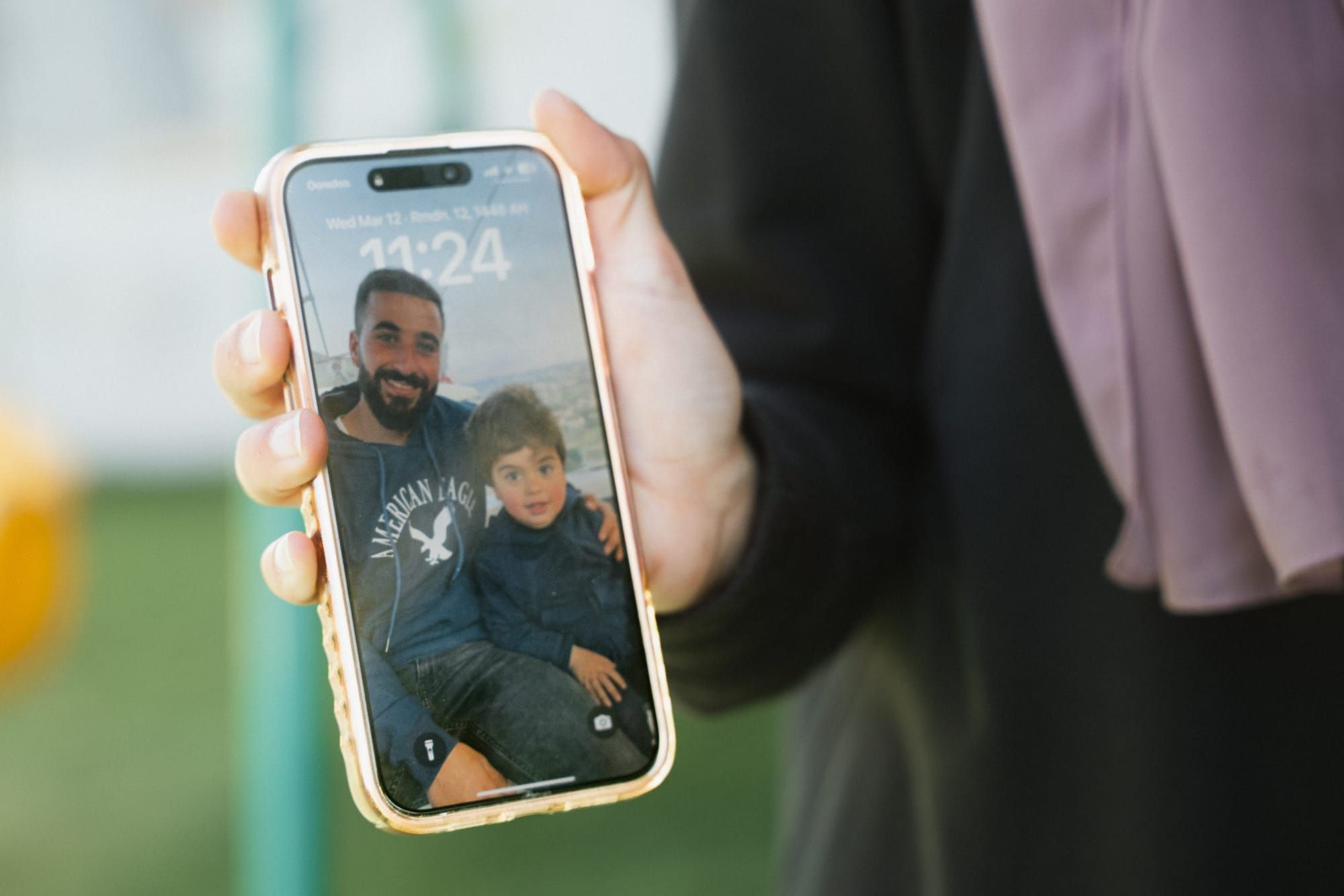
She pulled out her phone and showed me her lock screen image: her husband sitting with a giant smile, his arm wrapped around their son. “The best times of my life were with him,” she said. “He was literally the best person I’ve ever met.”
Editorial Team:
Tina Vasquez, Lead Editor
Carolyn Copeland, Top Editor
Rashmee Kumar, Copy Editor
Author
Jenna Martin is a freelance journalist, photographer and filmmaker who currently splits her time between Yellowstone County, Montana and the West Bank, Palestine. She writes about resistance movements
Sign up for Prism newsletters.
Stay up to date with curated collection of our top stories.