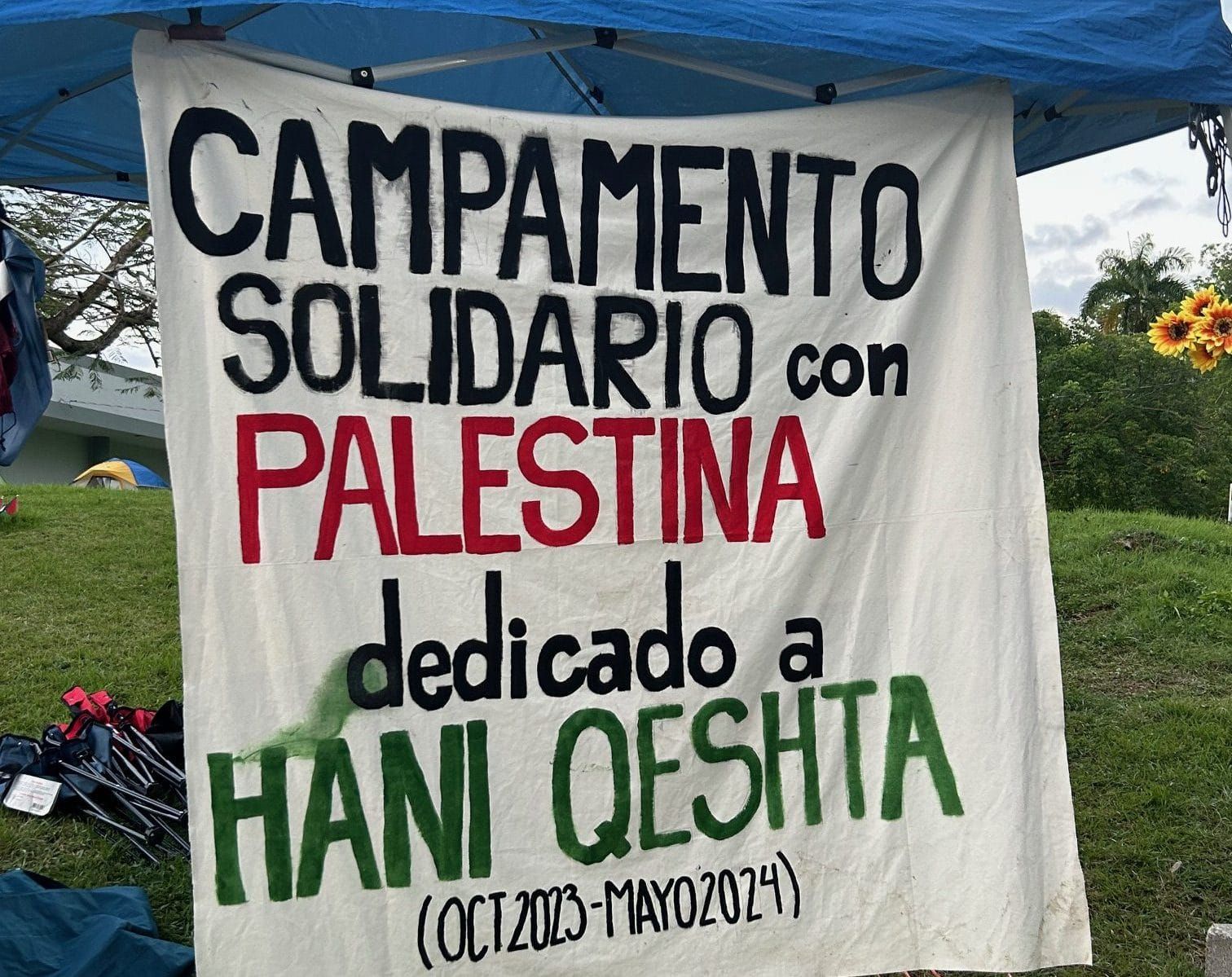
“Puerto Rico por Palestina.” The poster encapsulated the resounding sentiment that permeated the entrance of the University of Puerto Rico’s (UPR) Río Piedras campus in San Juan. Like countless pro-Palestine encampments across the globe, students here had the same goals as their peers: To shine a spotlight on how academia benefits from the Israeli government’s genocidal campaign against Palestinians. In doing so, they also drew attention to the complicity of various Western countries and leaders—including the Biden administration that heads the clan.
The UPR encampment only lasted about two weeks, but what made La Colectiva Estudiantil Combativa (CEC), or the Combative Student Collective, different from other pro-Palestine student movements is the archipelago’s colonial relationship with the U.S. When coupled with the fact that three American arms manufacturers—Lockheed Martin, Raytheon, and Honeywell—have a presence here, the fight became more urgent. Against this backdrop of an imperial power exerting control over a population, Boricuas have a deep sense of solidarity with the Palestinian cause.
For Ceiba, a CEC spokesperson who is only using their nickname for safety reasons, there are many links between our struggles. The student encampment was named after Hani Qeshta, the baby who survived an Israeli airstrike last year and then died this past May.
“We wanted to honor [the baby’s] memory and that of so many other children who were killed during the Israeli military’s siege,” Ceiba said.
For countless Boricuas, the horror of what Israel is doing to Palestinians feels very personal. We, too, have a history of being bombed.
Take, for example, the U.S. Navy’s history of using the islands of Culebra and Vieques for bombing target practice. In an effort to claim ownership of Culebra beginning in the 1940s, the Navy tried to forcibly remove the island’s people. The U.S. military branch also hammered the tiny isla with “artillery and aerial bombardments, which increased with the development of jet strafing. Eminent domain put a third of the island and all of the once-public coastline under naval control by the 1950s, with many Culebrans forced from their homes,” Atlas News reported. In 1969, the Navy bombed Culebra for 228 days.
From the early 1940s until 2003, the Navy also wreaked havoc on the larger isla of Vieques, mostly in the form of its munitions trainings that pummeled “the island with bombs … including 900 kg bombs fired from ships, jets, helicopters, and tanks, all while the island’s civilian population of roughly 9,000 lived just a few kilometers away,” Al Jazeera reported. The Navy later admitted to the use of napalm, depleted uranium, and other toxic materials on the island.
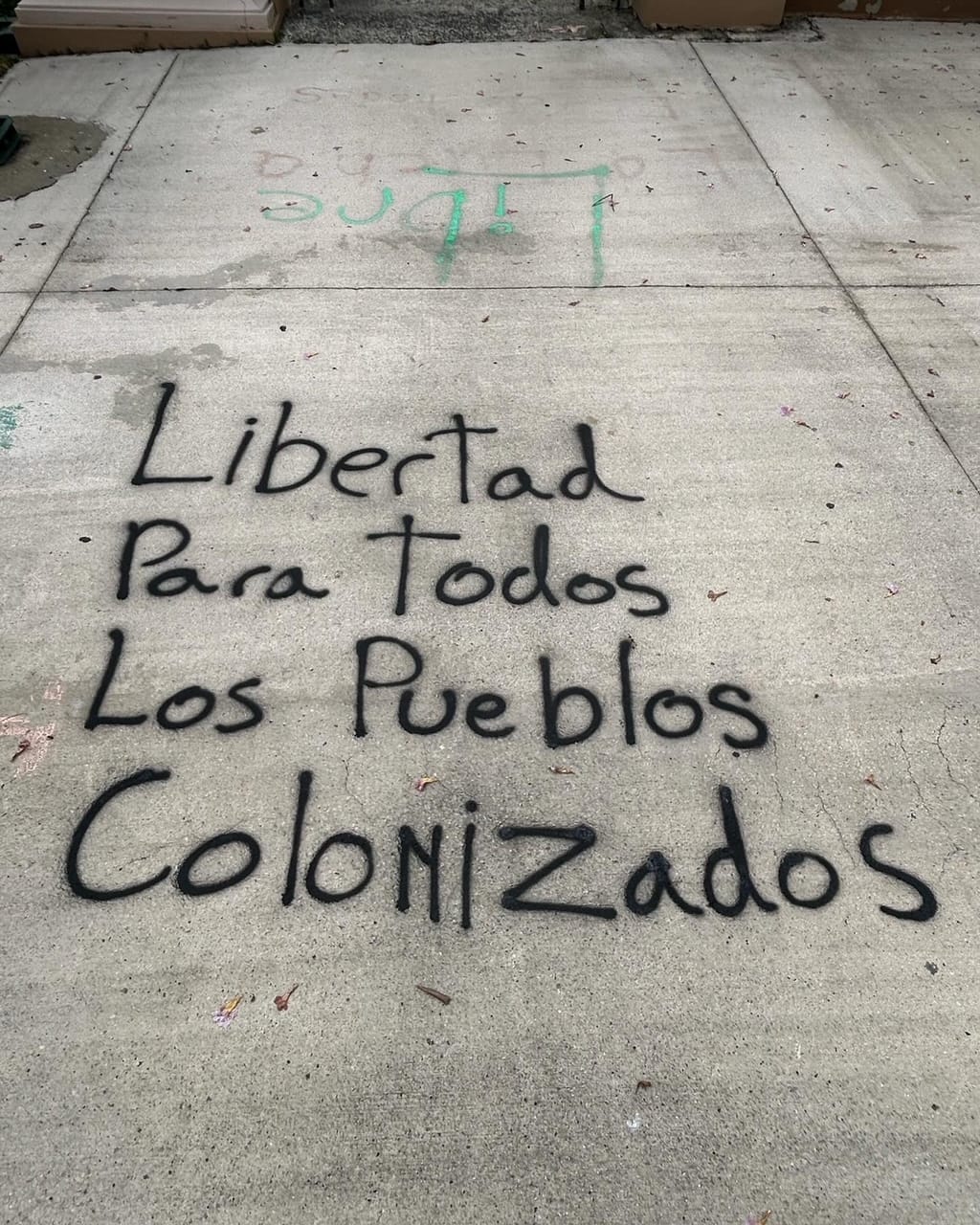
As a U.S. colony, knowing that our unceded lands were used to test military equipment that may be used in Palestine is another point of connection, according to CEC. This is why, among their demands, the group wanted UPR to cease any negotiations with Lockheed Martin, Raytheon, and Honeywell, as these arms manufacturers are directly responsible for the military weapons Israel uses in its genocide of Palestinians in Gaza.
Lockheed Martin, which purports to be the “world’s largest defense contractor,” says it is “proud of the significant role it has fulfilled in the security of the State of Israel.” Raytheon, which merged with United Technologies Corporation in April 2020, supplies a range of arms to Israel, including Iron Dome missiles, and Honeywell supplies F124-GA-200 turbofan engines to the Israel Ministry of Defense.
To better understand how all of this directly affects students of the University of Puerto Rico, look no further than the west side of the main island—specifically Mayagüez and Aguadilla. Under its STEM Grants program, in November 2019, Lockheed Martin awarded $95,000 to UPR’s Recinto Universitario de Mayagüez (RUM). According to UPR, the donation was intended for Lockheed Martin Scholar students studying mechanical engineering, electrical engineering, and software development.
A 2023 report from the Puerto Rican government’s Department of Economic Development and Commerce illustrates just how connected major arms manufacturers are to our land. The same year that Honeywell’s aerospace division relocated to San Juan, Puerto Rico, Raytheon Technologies’ Collins Aerospace established a global engineering center in Puerto Rico “to serve both commercial and defense contracts.”
According to Ceiba, during campus job fairs, Raytheon and Lockheed Martin recruit students. “Though it’s not as fierce here as it is on the UPR campuses of Aguadilla and Mayagüez, where they have internships and a strong link via [the engineering programs],” they said. “We’re asking our fellow students in those locations to join us in this fight.”
Of the 11 UPR campuses, Río Piedras was the sole university to set up an encampment. Ceiba said several professors showed support, dropping by the encampment to speak with students. However, the administration was a different story. The CEC spokesperson said other than trying to shut down the encampment a few times, administrators largely ignored the student protest—and so did the media.
When CEC reached out to large news outlets like CNN to cover the student encampment, they only received silence. This is yet another reminder of what our colonial status means: The U.S. has no qualms about taking advantage of our youth—using their brilliant minds to further its imperialist goals around the globe by training and hiring them to work in their war machine via Lockheed Martin, Honeywell, and Raytheon. At the same time, mainstream U.S. media doesn’t care enough to provide these same students a platform to voice their staunch support of Palestinians and their opposition to Israel’s ongoing genocide in Palestine.
CEC’s encampment created an opportunity for Boricua students to connect with other student movements, primarily those in Latin America, Ceiba said. CEC is now in touch with student organizations in Costa Rica, Chile, Colombia, and one from La Universidad Nacional Autónoma de México, the largest university to set up an encampment in Mexico.
The importance of these connections cannot be overstated. As solidarity grows with Palestine—across campuses, countries, and borders—so, too, does our commitment to collective liberation. When the students of CEC chant, “From the river to the sea, Palestine will be free,” they are also fighting for a free and sovereign Borikén.
Author
Lola Rosario is a Puerto Rican spoken word poet, freelance journalist, and translator from New York City. Her first poetry collection, Daughter de Borikén (Editorial Pulpo) is out summer 2024. Her soc
Sign up for Prism newsletters.
Stay up to date with curated collection of our top stories.