Our country does not value the people who help build, feed, and sustain it
ICE raids of farms are a cruel reminder that the U.S. has long devalued immigrant labor, while also being wholly incapable of surviving without it
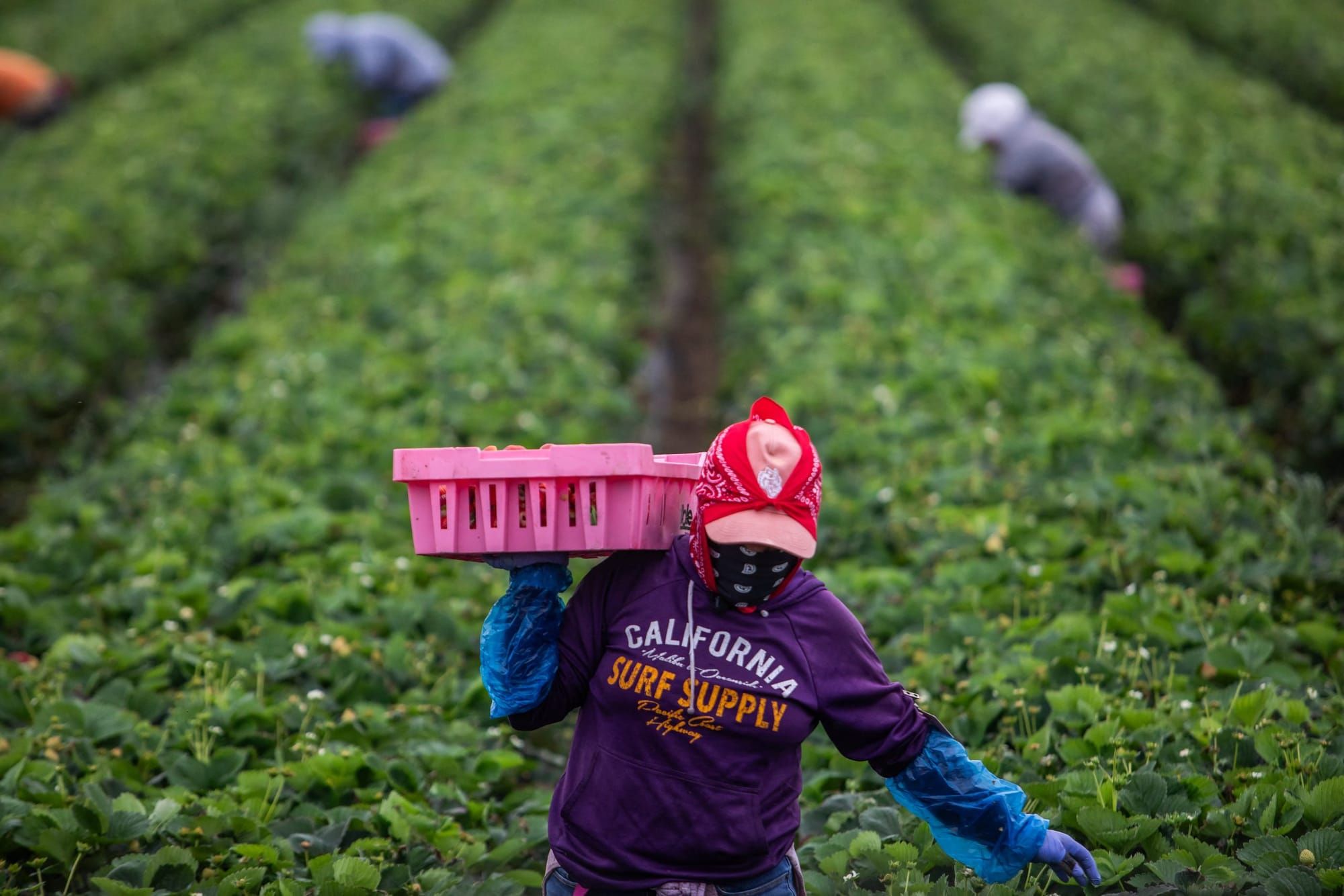
A farmworker died last week after sustaining injuries during a chaotic immigration raid on a California farm, one of many workplace raids in recent weeks. The images of farmworkers being chased by federal agents have made me reflect on a lesson I learned as a young farmworker: America values immigrant labor more than actual immigrants, and so we must recognize our own worth.
I was only a teenager when I worked my first full shift at a Wisconsin green bean farm and canning plant. My parents started the season in May 2020, and I joined them in July after turning 18. At the height of the pandemic, the job felt unsafe and uncertain, but we all recognized our role as essential workers tasked with feeding the country.
While there were no direct channels to voice our safety concerns, our employer did supply gloves and masks. Others weren’t so lucky. Employers and local governments abandoned farmworkers at the height of COVID-19, leading to thousands of needless farmworker deaths. More broadly, unsafe working and living conditions, low wages and lack of job security, food insecurity, and other systemic injustices are normalized for farmworkers across the agricultural industry.
Perhaps these conditions persist because the overwhelming majority of U.S. farmworkers are Latin American undocumented immigrants and migrant workers.
This is true for my family. Just three years prior to taking my first shift at the green bean farm, I landed in Texas from Nicaragua, carrying two torn suitcases filled with books and trinkets. My trip from Texas to Wisconsin was a bigger culture shock than my very first introduction to America. That season, I stood beside my parents as a fellow worker. While it was the first time my mom and I worked in the United States, it was my dad’s return to the fields after more than two decades. We joined the plant during a chaotic time, but the work offered our family economic relief, and at the time, it felt like the best option.
My own work began on the canning line during a sweltering summer and then shifted to the warehouse when winter arrived. Most days, I returned to my family’s temporary housing reeking of “ejote,” the green beans clinging to my clothes and hair. The shifts were long and grueling, and though the plant could not have survived without our labor, our work was seldom met with dignity.
During the pandemic, migrant agricultural workers—usually Mexican or Central American families and those who were newly arrived—kept the country fed. Yet we rarely received the same respect granted to other essential workers.
Historically, immigrants have given everything for so little in return. Now, all they can expect from their labor is criminalization.
A quiet hierarchy shaped every shift. Longtime, local white American employees held leadership posts and the safest stations, followed by domestic seasonal crews, with newly arrived immigrants or migrant workers on short-term visas assigned to the toughest lines. With only one bilingual supervisor and one bilingual human resources officer for hundreds of workers, many monolingual Spanish speakers hesitated to report injuries or unfair treatment. When they did, their concerns were dismissed, and they were reminded that their job security might be at risk. Beyond the problems of our supervisors, skipping breaks, clearing dangerous machinery jams alone, and hunting for rides home after 13-hour shifts were routine parts of our jobs.
Historically, immigrants have given everything for so little in return. Now, all they can expect from their labor is criminalization. This administration is racially profiling, targeting, surveilling, detaining, and deporting undocumented and migrant workers like never before—even kidnapping them from American streets in broad daylight. These conditions can only persist in a country that never valued the people who help build it, feed it, and sustain it.
My family is intimately familiar with this reality. We worked long shifts with limited breaks, and injuries were common. My dad seriously injured his hands on multiple occasions, and I ended up in the emergency room with stress-induced tics after my 85-hour work week. Our pain and working conditions are too often dismissed. Meanwhile, immigrant communities keep showing up, joyful and ready to give more to a country that almost never gives back to us. We continue to harvest America, feed her, and build her up. I still think of the women I met in the fields and in the plant, they were older and proud of their 80-hour work week. They represent the best of us—not because of their broken bodies and endless labor, but because of the power and tenacity they carry within them.
“El Norte” is where the jobs are, a place where what seemed to matter the most wasn’t your birthplace, but rather what your hands can do. But make no mistake: As immigrants, we know that industries’ willingness to ignore our immigration status is not about fairness and inclusion. It’s about exploiting our labor. We know we are seen as providing cheaper and better work, and as being capable of laboring for longer hours. This dehumanizing narrative is why recruiters return to our border towns year after year, and why the Migrant Education Program helps child farmworkers attend school. I never saw these steps as care, but as investments in a system that only cares about keeping its stream of labor flowing.
Being an immigrant in the U.S. is not easy. It often means having to work harder for less; it means being both invisible and a lightning rod for controversy at the same time. But it also means carrying the legacy of a nation built by immigrants. It means showing up with a sense of pride, even when the work is heavy. In us, there is strength, generosity, and a belief in something better for ourselves and our communities.
Surely it’s incredible for Americans to have access to cheap labor, quick harvests, and an abundance of people eager for work, while still demeaning these highly sought-after workers as “low-skilled” and discarding them when convenient. What this country has never understood is that these skills of ours you covet come from our ethics, culture, and core values—and we come as a full package. As much as you try, you cannot separate us from our labor.
Editorial Team:
Tina Vasquez, Lead Editor
Carolyn Copeland, Top Editor
Stephanie Harris, Copy Editor
Author

Vanessa Trujano is a 22-year-old immigrant of Nicaraguan-Mexican descent and a proud Texan. She studies communications at Austin Community College, where she serves as Student Government Association v
Sign up for Prism newsletters.
Stay up to date with curated collection of our top stories.