Organizations address the racial wealth gap by increasing Black homeownership
Community-driven efforts like Reparation Generation and the Black Wealth Builders Fund aim to empower Black families by increasing access to homeownership and fostering long-term wealth
This story was originally published on Oakland Voices, a community journalism program for residents in Oakland, California.
George Floyd’s murder in 2020 sparked a reckoning with systemic racism and reignited conversations of reparations for U.S. descendants of enslaved Africans.
In the East Bay, a diverse region across the bay from San Francisco with high housing costs, some residents are working toward narrowing the racial wealth gap between Black and white people by increasing Black homeownership. Some initiatives focus on helping people find homes locally, while others assist in providing homeownership opportunities in markets with lower home costs, like Detroit.
Homeownership is a key method to generate wealth in the U.S. Black families typically rent and do not own their homes due to acute and harmful bias from banks and real estate companies. For decades, government-backed practices, often called redlining, denied loans to Black families and Black neighborhoods.
Reparation Generation
Floyd’s murder brought Berkeley, California, resident Karen Hughes to her knees in tears.
“Despite living a very conscious life, I was really shocked and amazed at the murder of George Floyd,” she said. “I thought, ‘Why is this shocking me so much?’ I’d done a lot of work on my own racism.”
Hughes and her husband wondered how they could use the rest of their lives to leave behind a more racially just world. They read Ta-Nehisi Coates’ article, The Case for Reparations, and watched “Traces of the Trade: A Story From the Deep North,” a film documenting how descendants of the largest slave-trading families continue to benefit from slavery. A “big ah-ha moment” for Hughes was The Great Wealth Transfer. As older generations die, many younger families will inherit their wealth. Since many older white families hold disproportionately more wealth compared with older Black families, the Black-white homeownership gap could widen even further.
Hughes met Kiko Davis Snoddy, a Detroit resident, through a colleague of Hughes’ husband. Together, they cofounded Reparation Generation. Hughes told Oakland Voices that RepGen believes that reparations need to be determined by the people being harmed, in this case, Black American descendants of slavery. The group identified homeownership, education, and entrepreneurship as key to generating long-term intergenerational wealth. Homeownership is their first initiative.
RepGen offers a $25,000 homeownership reparative transfer, or HORT, at escrow. It is a transfer of wealth, not a loan or a gift. Hughes said that this goes a long way toward homeownership in Detroit. Potential homeowners must complete a homeowner education course, agree to buy a home in Metro Detroit, use it as their primary residence, and agree to be part of an impact evaluation for two years. RepGen believes reparations should be for all descendants of slaves, regardless of wealth, so loans are grounded in descendancy, not wealth. The program is young and is learning as it goes. The first cohort of six people is in its second year of homeownership; all have been able to pay their mortgages. The second cohort has eight people.
RepGen has been life-changing for participants. One person, who previously had to drive her daughter 45 minutes each way to a school for gifted students, now lives close enough to the school that her daughter can hang out with friends and have her first sleepover birthday party at her home. Another family used to live in a small home, and they’d stay home after school. Now, they live near a park where there are animals, and their daughter gets to visit the park after school and be active.
In 2025, RepGen plans to scale up and expand beyond Detroit. The organization is learning from the small numbers they are working with now.
“It can have big implications for programs and policies that are of a much bigger scale,” Hughes said of how RepGen can help address wealth inequality. “So, when the federal government is ready to do reparations, RepGen will have evidence-based data to help that happen.”
The Black Wealth Builders Fund
Another group motivated by George Floyd’s murder and the call for reparations is the Black Wealth Builders Fund, or BWB, which helps Black people purchase homes in the East Bay through down payment assistance. Barry Cammer, a retired United Church of Christ pastor and member of Arlington Community Church, United Church of Christ, in Kensington, co-founded the organization with a fellow church parishioner, Susan Russell. During the 2020 reckoning, Cammer co-founded a chapter of Racists Anonymous at his church. He met Russell at a meeting, and they decided that they wanted to focus on reparations.
Cammer also recalled how he benefited from the loans his mother and brother gave him when he bought his first house, and later, an inheritance from the sale of his mother’s home after she died. “It’s me taking responsibility for being a white, middle-class man,” Cammer said.
Cammer contacted Mauve Brown, a Black attorney in Oakland and executive director of Housing and Economic Rights Advocates (HERA), for guidance. Brown told them that down payment assistance for new homeowners was a way to narrow the racial wealth gap in our country and community.
BWB follows a three-step process of raising money, identifying participants needing down payment assistance, and distributing the money. Arlington Community Church administers BWB, solicits donations, and provides interest-free loans of up to $20,000 to first-time home buyers to help with the down payment. It works closely with two other local organizations, Richmond Neighborhood Housing Services (RNHS) and Richmond Community Foundation (RCF).
RNHS identifies eligible loan recipients, does the initial qualifying, and provides federal Housing and Urban Development-approved (HUD) housing counseling workshops. RNHS Executive Director Nikki Beasley said the workshops provide necessary education for first-time home buyers, including identifying down payment sources and finding a lender.
RNHS counselors help participants gather documents necessary for loans, like paycheck stubs and tax forms, and provide one-on-one counseling to ensure they are “lender ready,” said Eric Mills, RNHS’s lead HUD counselor. Mills said the majority of people applying have received funding. Loans have to be paid back only if a person sells the house or refinances. RCF services the loans after people complete the first-time home buyer program, apply for funding, and are in escrow.
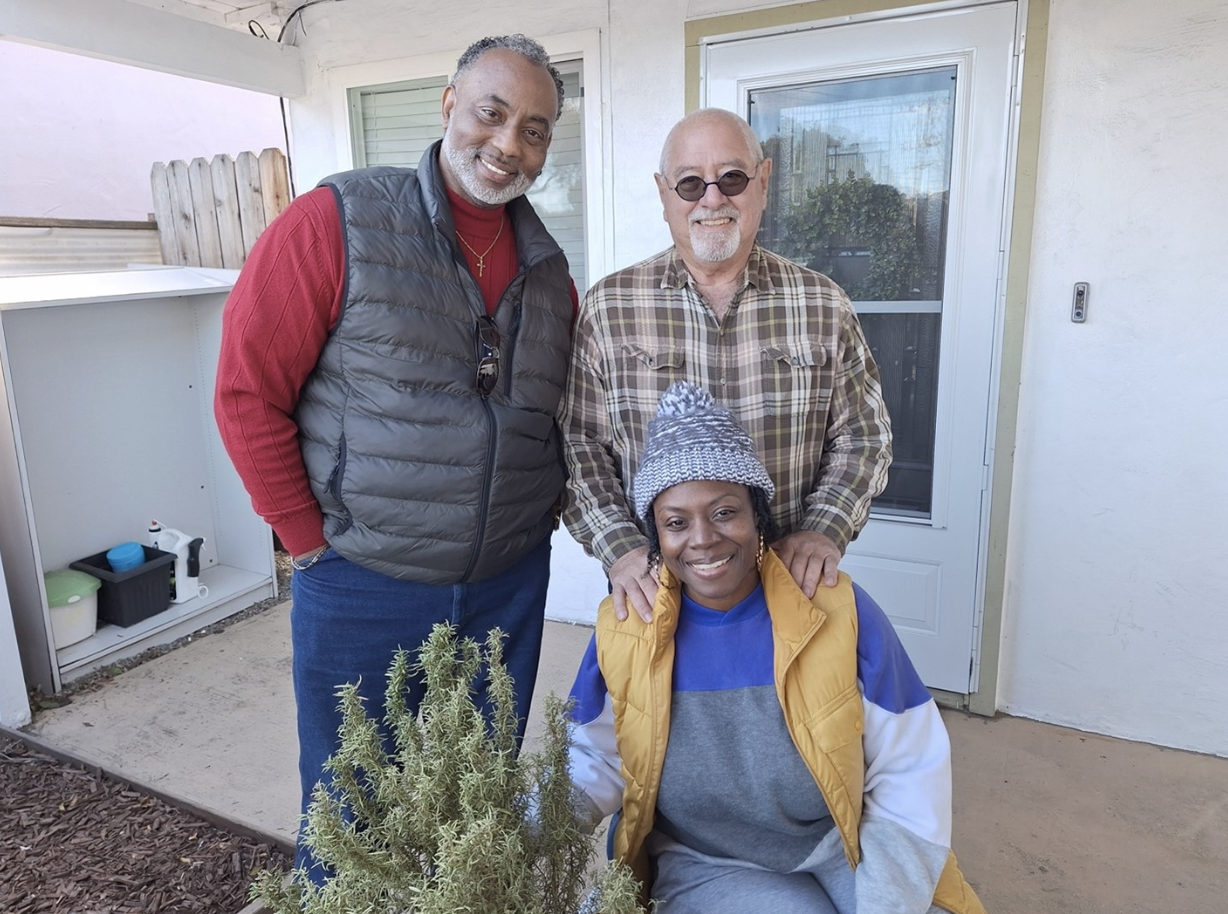
According to the BWB website, since first lending in May 2022, BWB has made 42 loans, 20 of them in Oakland. Ebony Blake received a loan from BWB. She moved into her home in February 2024.
Atonement or reparations?
BWB and RepGen’s efforts to reduce the wealth gap and make “reparations” to Black people have encountered some questions and opposition. Some have questioned whether using the term “reparations” is appropriate for these initiatives.
Cammer initially hoped to call their effort the “Black Reparations Fund,” but members of Richmond Community Foundation’s board, many of them Black, disagreed. Since there were national- and state-level reparations initiatives, they didn’t want to dilute those efforts. They also wanted to provide opportunities for Black community members to participate in the Fund. They suggested the Black Wealth Builders Fund to create generational wealth in the Black community through home buying.
Beasley does not want this work confused with the broader initiative about reparations for wrongs against African Americans and Black people.
“It may be those that are participating (use ‘reparations’) because they understand the entitlement and the things that they’ve gotten, and they’re wanting to give back,” Beasley said. “That’s their personal reparation, but it is not a part of the larger reparation conversation that folks are having throughout the state as well as the country.”
Roberta McLaughlin is a parishioner at St. Columba Catholic Church in Oakland. She supports both RepGen and BWB as part of a deep commitment to redressing the long-term effects of slavery at the hands of white people.
“It’s a way of atoning for our past misdeeds,” she said about reparative transfers of funds that she and her husband have made. They deliberately do not call them donations.
McLaughlin and her husband heard A. Kirsten Mullen, co-author of “From Here to Equality: Reparations for Black Americans in the Twenty-First Century,” speak, and she said that “reparations” is the duty and responsibility of the federal government, and we should be using some other terms to describe righting wrongs. “‘Atonement,’” McLaughlin said, “is the best word for churches to use. It’s atoning for our misdeeds. And it’s continuing to the present day. We still hear of atrocious behavior on the part of white privileged people towards Black people.”
Cammer and Russell said they used their own assets to start BWB as “personal reparations.”
“This was first a spiritual endeavor, and our church agreed to be the public home for the fund,” Cammer said. “We made it clear that it was for down payments.”
Down payments toward long-term repair
What BWB and RepGen are doing are small efforts to acknowledge the long-term effects of slavery and to address racial wealth inequality through supporting Black homeownership.
“They’re tapping into a real social need at this time and giving people a way to respond, to feel called to do something towards this injustice that has been part of our country for so long,” McLaughlin said.
“It’s not complicated, and it’s happening,” Hughes added.
Author
Katharine Davies Samway has lived in Oakland for many years. She is a long-term educator — a teacher, a researcher, a teacher educator, a professor of education.
Sign up for Prism newsletters.
Stay up to date with curated collection of our top stories.