One year of genocide backed by American tax dollars
Doctors describe the horrors they witnessed during a year of Israel’s genocide in Gaza as Palestinian Americans plead for the U.S. to stop supporting mass slaughter
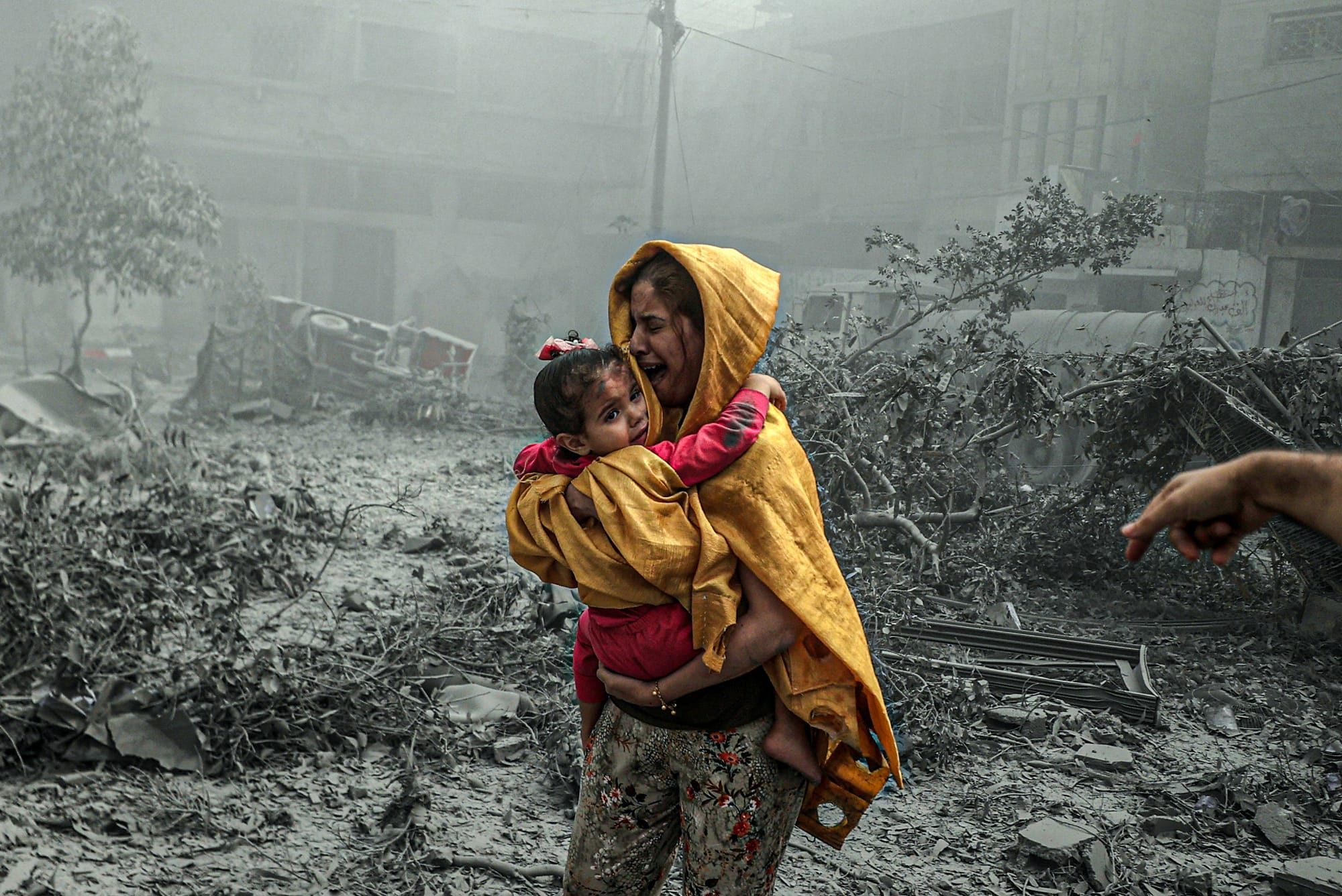
The Israeli genocide and siege on Gaza killed 10 of Morad Amar’s family members in the past year, but the Arlington, Texas, resident said he does not have much time to grieve.
“Any minute now, any day, at any moment in time, another tank could shoot at another tent or home and end up killing another 10 people,” Amar, an internal medicine resident, said. He communicates daily with five or six relatives who are originally from Sheikh Radwan in Gaza City but are now displaced to Nuseirat and Deir al-Balah. “Sometimes, the internet’s strong enough to where you can actually call via voice and hear each other. Most times it’s not, though.”
One year ago, on Oct. 7, Palestinian militants launched Operation Al-Aqsa Flood in southern Israel, with more than 800 civilians and more than 300 soldiers killed and about 240 people taken hostage. In response, the Israeli military began its most recent genocidal campaign in Gaza, killing more than 42,000 people, according to official death counts by the besieged Gaza Health Ministry, though experts suspect the real toll is several times greater. In September, Israel expanded its carpet bombing campaign to Lebanon, killing more than 1,000 people in the first two weeks alone, including Hezbollah leader Hassan Nasrallah.
The genocide is financed heavily with support from the U.S., which reportedly provided up to 16.5% of the Israeli military’s defense budget even before Oct. 7 and has since approved tens of billions of dollars in military aid. That aid is supporting unprecedented violence against Palestinians, medical workers who have served in Gaza tell Prism. The workers are joining Palestinian Americans to plead for the Biden administration to push for a ceasefire and stop arming Israel.
“[The situation in Gaza] is like nothing I have ever seen or experienced in close to 20 years of doing Doctors Without Borders,” said Naina Bhalla, a team leader for Doctors Without Borders/Médecins Sans Frontières currently in Khan Younis.
Targeted attacks on all of Gaza’s hospitals, including health care workers on medical missions, journalists, humanitarian workers, and “safe zones” across the strip, have left nearly the entirety of the population displaced with nowhere to go. Due to the Israeli aid blockade on food, medical supplies, and fuel, families have, on average, one meal every other day, with little ways to treat their malnutrition.
Faced with hygiene and water sanitation issues as well, many children are suffering from “the worst amount of skin diseases” Bhalla has ever seen.
Mimi Syed, an emergency medicine physician based in the U.S., who spoke with Prism from Nasser Hospital in early September, said she has seen children with gunshot wounds to the head. Other doctors serving in Gaza have reported the same.
“We have quite a bit of pediatric trauma and very young adults with single shots to the head and chest and major arteries,” Syed said. “[There are] lots of burns and shrapnel injuries, and it’s multiple times a day. To top it off, the evacuation orders have made it more complicated.”
Alia Kattan, an anesthesiologist and intensive care unit doctor, was serving on a medical mission at European Gaza Hospital in Rafah when the city was invaded in May.
“The entire hospital ground was turned into a displacement camp,” Kattan said.
Kattan said she witnessed an 8-month-old die of just a flu that could have easily been prevented, but the pediatric doctor was away evacuating his family.
“It’s a very stressful time, and you have to remember that they’ve done this eight, nine, 10 times over,” she said.
Along with the physical violence occurring in Gaza and the West Bank, a Health and Human Rights Journal study shows the psychological state of Palestinians include extreme levels of stress and post-traumatic stress disorder. Children who visit the hospitals for outpatient care are “traumatized,” Bhalla said.
“You can hear it in the way that they scream and the way that they react when they’re getting their dressing changes,” she said. Everyone “knows that there is nowhere that is 100% safe and that no day is guaranteed.”
Overall, more women and children have reportedly been killed in Gaza than the “equivalent period of any other conflict in the past two decades.”
“We were seeing so many young people come in with these just absolutely horrific explosive injuries.” said Abeerah Muhammad, an emergency medicine nurse who served in European Gaza Hospital during Ramadan. “Children were mangled beyond belief. We were seeing women die from kidney failure, from [preventable] UTIs and from lack of menstrual products.”
As human rights experts continue calling the ongoing genocide a “second Nakba,” many medical workers and Palestinian Americans living in the U.S. have been dealing with “survivor’s guilt.”
“In one instance, a 12-year-old and a 4-year-old came in,” Kattan said. “The 4-year-old died in my arms, and I was sitting there with the 12-year-old. I had this huge sense of panic come over me that she’s the only sole survivor in this family.”
Over the past year, Israeli militants have also committed other inhumane horrors, such as repeated sexual violence and torture of prisoners, opening fire on civilians who were gathering aid from trucks, and obstructing ambulances from people with life-threatening injuries. For Amar, these atrocities are harder to bear due to the U.S.’s unyielding support for Israel.
“Whenever you’re a Palestinian in this country, you’re just kind of looked at as the enemy,” Amar said, adding that both Democrats and Republicans vie to appear more supportive of Israel. “It’s always a battle to see who can bow down to this terrorist regime more.”
Amar recalled visiting Gaza throughout his childhood.
“What I remember from going is just actually realizing that I have a family that [thinks] like me, that looked like me, that loved me unconditionally,” he said. “You would think that’s a human right to be able to see family, but whenever you’re from Gaza, you just have to accept that you’ll never really get to see them [and] that they could die at any given minute.”
Yazan Alnahhas, who grew up in Ramallah in the occupied West Bank and moved to the U.S. for college, said the past year has felt “tormenting.”
“There’s a clear program to get Palestinians to leave and never come back, so being in the diaspora is tough because you’re a manifestation of what the end game is for the Zionist project,” Alnahhas said.
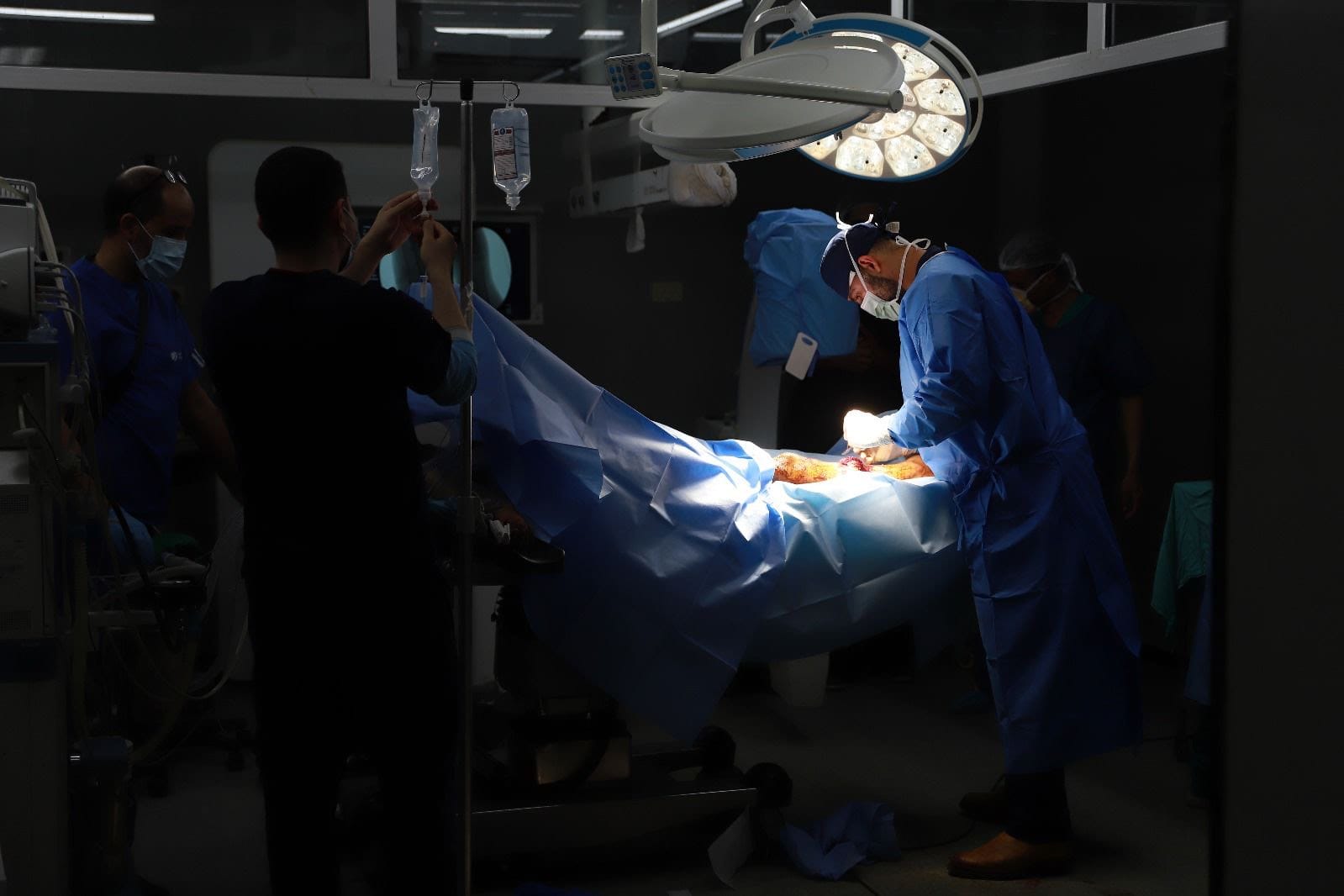
Ali Elaydi, an orthopedic surgeon based in Texas, moved to the U.S. from Khan Younis as a refugee when he was 5 and said it had always been his goal to help Palestinians.
“Pursuing medicine, I ended up choosing orthopedic surgery specifically because those are the most common injuries in war-stricken areas,” Elaydi said.
After Elaydi went on a medical mission to European Gaza Hospital in Khan Younis for two weeks in spring, he said he applied for a second mission before he even returned to the U.S.
“Everything I had worked to in life had been towards this point,” Elaydi said. “When I made it [to Palestine], I just dropped down to the ground and kissed the floor and cried.”
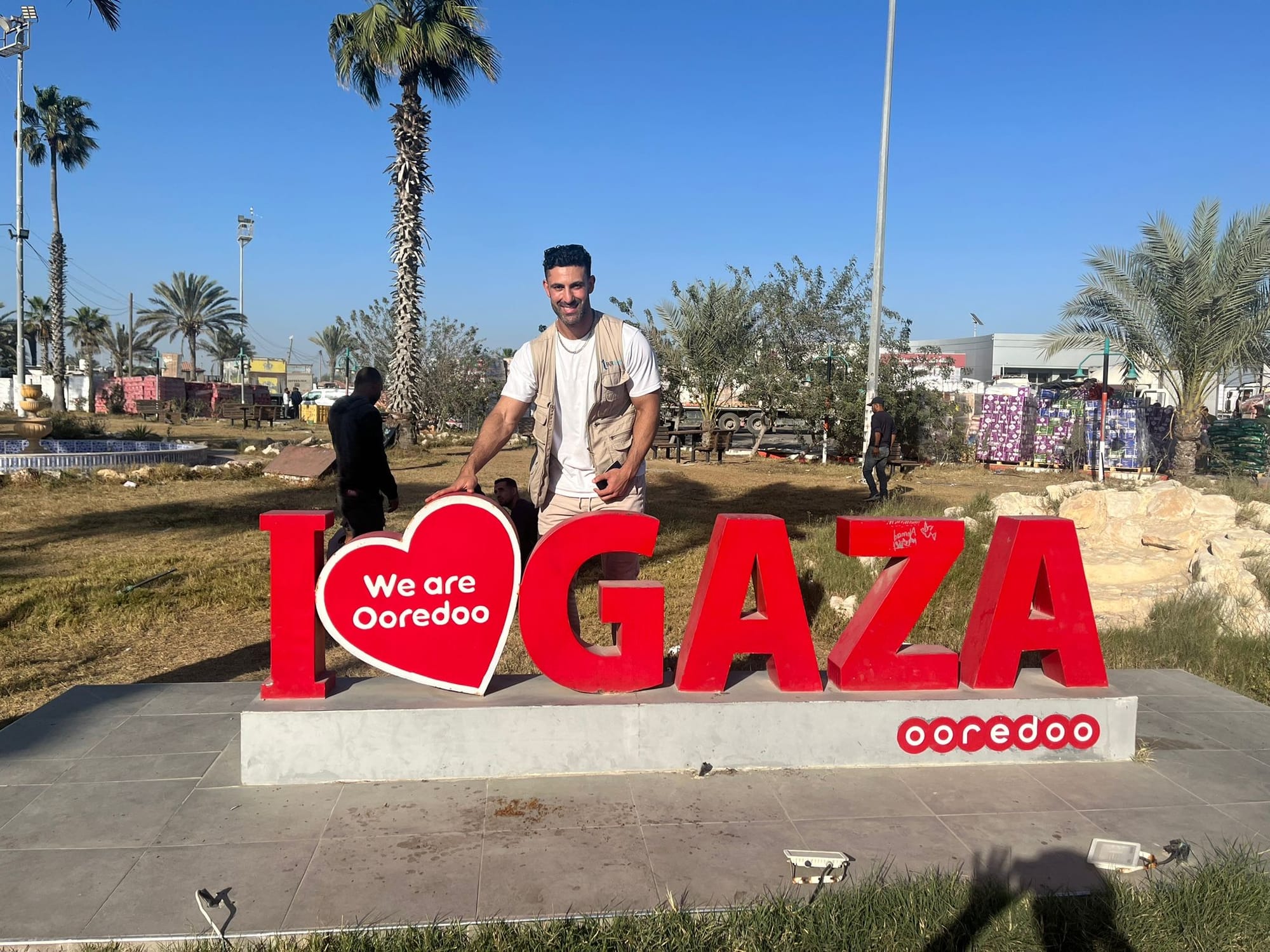
After Israel seized and shut down Gaza’s Rafah border with Egypt May 7, Israeli authorities began increasing restrictions to how many bags of supplies medical workers on missions could bring in. On June 3, Elaydi discovered he was one of the first doctors to be formally rejected from entering Gaza due to his Palestinian roots. This ban on physicians with Palestinian heritage continues to be upheld.
“Despite me being American, I do not share the same benefits as other Americans solely because of my nationality, my race, my identity,” Elaydi said. “This is a tactic that Israel is using to take away any success, any ability, from Palestinians. Once they took away my ability to help with what I’ve trained towards my entire life, I realized that now my voice has a lot more weight.”
Kattan has also concentrated on advocacy since returning to the U.S. by starting the Bukrah Foundation with a few other physicians, which aims to provide clean water to those in Gaza, as well as shelter for orphaned children.
In May, the International Criminal Court requested arrest warrants for Israel’s prime minister, Benjamin Netanyahu, and his defense minister, Yoav Gallant, over war crimes, but this has been challenged by Israel. As the Israeli government continues airstrikes in Lebanon, Yemen, and Syria, as well as in Palestine, Alnahhas said he continues to cope with the aggression through community.
“I hope that people open their eyes and look beyond the propaganda that tries to paint Palestinians as less than people,” Alnahhas said. “I think when you understand that this is just a chapter of something that’s been taking place for a hundred plus years, you see it with such clarity that the last year has kind of brought it all into good focus.”
Author
Neha Madhira is an award-winning gender, health and politics reporter with a focus in South Asia and the Middle East. Previously, she was a breaking news reporter in Austin, Texas, where she broke the
Sign up for Prism newsletters.
Stay up to date with curated collection of our top stories.