Local groups voice frustrations over massive oil spill cleanup on the Monongahela River
Community organizers are struggling to clean up large-scale pollution and say they shouldn’t have to
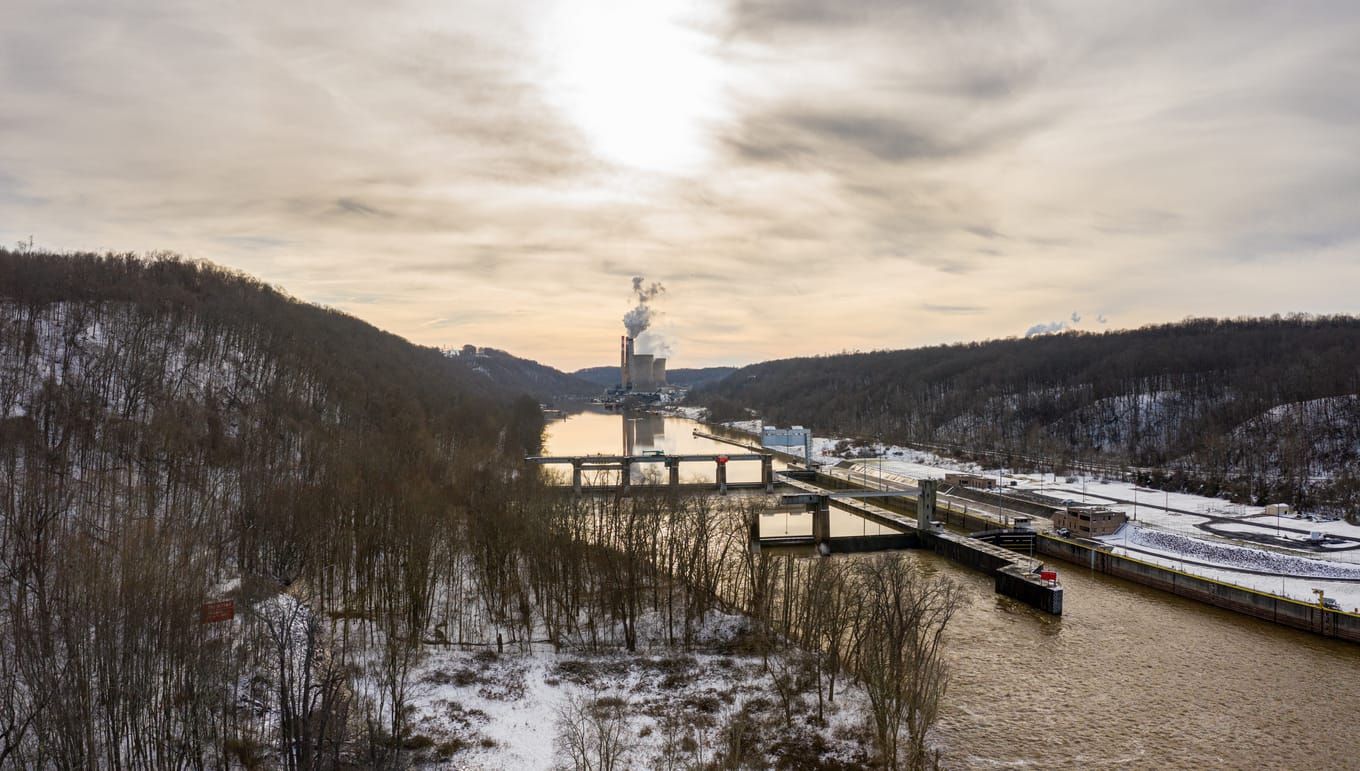
In the last six months, oil sheens up to 18 miles long were reported on the Monongahela River in West Virginia and Pennsylvania. But that’s not the only river affected. When one area is polluted, it has harmful effects miles away. In this case, for example, the Monongahela’s confluence with the Allegheny and Ohio rivers in Pennsylvania means that the pollution reaches drinking water sources for millions.
“We were able to see the effects of the oil spill 50 miles downriver lasting weeks,” said captain Evan Clark, the waterkeeper at Three Rivers Waterkeeper, an organization working to protect the water quality of the Monongahela, Allegheny, and Ohio rivers. “The oil spill left not only a sheen on the river, but also significant, potentially recoverable, emulsified oil built up along the banks, docks, and fallen trees at the river’s edge.”
Kathleen Gibi, the executive director of the nonprofit Keep the Tennessee River Beautiful, noted that similar outcomes were seen in other states and that their cleanups often require volunteers to clean the shorelines of three different states within a three-hour cleanup. “The water doesn’t care about city limits, county lines, or state borders,” she said. “All it takes is one storm to move trash from a shoreline in Tennessee to a shoreline across the river in Alabama.”
Lack of accountability
The serious widespread consequences don’t seem to generate equally serious accountability. For example, the U.S. Environmental Protection Agency (EPA) and Pennsylvania Department of Environmental Protection (PA DEP) issued U.S. Steel’s Irvin Works, one of the facilities with drainage outfalls in the polluted section of the Monongahela River, violation notices but no fines.
“The industries responsible are not being held fully accountable under the law; if they were, we would not continue to see such damaging and callous insults on the river, its ecosystems, and communities in the form of repeat spill/discharge events,” said Maya K. van Rossum, leader of the Delaware Riverkeeper Network and author of “The Green Amendment: The People’s Fight For A Clean, Safe, and Healthy Environment.”
“We need strong enforcement of the law, and responsible industries held accountable in a significant way so that it is not cheaper for them to continue to damage our environment, but instead they are incentivized to literally clean up their act to avoid future significant penalties,” she added.
At the moment, however, this doesn’t seem to be happening. The polluting companies and government, which should be taking action, aren’t, so people who shouldn’t have to are forced to. Nonprofit organizations and local, community-level volunteer groups are stepping in to clean the environment after seeing the increasingly disastrous consequences of the lack of accountability.
Clark said residents in their area started reaching out to their organization, saying they had lost hope after years of complaints and requests for help from enforcement agencies resulted in late reactions and a seeming inability to locate the pollutants’ source by the PA DEP, the state agency mandated with the primary responsibility to regulate industrial pollution via the Clean Water Act.
“I don’t buy the ‘it’s just too hard to figure out who’s responsible’ argument,” said Andrew Otazo, who partners with several cleanup organizations and has lectured at the University of Miami, Clemson, Cornell, and Miami-Dade College about marine pollution problem and grassroots organizing.
“Actors with monetary incentives to downplay the negative externalities caused by their business models absolutely cannot be expected to police themselves,” Otazo said. ”You must go as far upstream as possible because if you just rely on people and organizations like me who are cleaning up the downstream effects, you’ve already lost.”
However, cleanup organizations already seem to be playing a losing game. Clark said he was horrified while boating through continuous surface sheen for miles in the Monongahela River, and he wanted to do anything he could to mitigate the damage being done. Oil spills like this have disastrous effects on everyone, including humans and wildlife in the region. It makes the water unsafe for drinking, disrupts ecosystems and food chains, and contaminates the air when the polluted water vaporizes.
Unfortunately, there’s only so much organizations like these can do with limited resources, and many say they lack the funding, training, and equipment necessary to carry out large-scale cleanup projects.
“I reached out to some other local agencies to see if I could source absorbent booms to catch as much oil as possible or [get] technical assistance to clean the emulsified oil goop off the banks, with no success,” Clark said. “Even had we been able to source and use booms and train ourselves to use them most effectively, the cost of proper disposal of the oil-latent booms would have been untenable for us.”
Clark’s case isn’t unique; despite their best intentions and willingness to act, many organizations have to step back as they lack the resources to tackle these problems.
Funding is necessary, van Rossum said, to offer “ongoing and effective community training so that when an event does happen, they know how to respond in a way that is helpful and not jeopardizing to themselves, the environment, or the response action.”
Van Rossum added that funding is also needed “for cameras or other equipment necessary to document and report data and, if necessary, for legal actions to ensure the environment and communities are fully and fairly protected and restored.”
While this kind of funding exists, it’s restricted to a few select causes. For example, Gibi said there is significant funding in federal grants limited to litter cleanups related to the ocean. While ocean-based efforts are important, she added, statistics show that 70% of the plastic in the ocean originated from rivers or coastlines.
“It’s like spending your time cleaning puddles of blood on the floor while there’s still a patient bleeding out on the table,” Gibi said.
Why volunteer groups are carrying somebody else’s burdens
Amid conversations about how local volunteer groups can source funding, training, and equipment for such large-scale cleanup projects, the key question arises: Why do they have to? Why are small-scale community groups struggling to raise funding to solve problems that much larger corporations and government departments should be held accountable for?
“Accountability lies with the company responsible for the spill to ensure swift and meaningful cleanup and restoration that they pay for and with the government to ensure that the companies are acting swiftly and responsibly to clean up and address the harm they have created, not the public,” van Rossum said.
When this does not happen, local groups step up to take action because they face the disastrous consequences every day. “Nonprofit organizations seeking to deal with huge problems can take an inappropriate amount of responsibility simply because no one else is dealing with them in an effective manner,” Clark said.
He added that laws to protect the environment in such cases exist but are outdated and often difficult and expensive to enforce. For example, he cited the federal Clean Water Act and Pennsylvania’s Clean Streams Law as notable tools to work on pollution issues. However, he said, “the 50-year-old, amazing landmark piece of legislation has been somewhat degraded with poor precedents and court rulings over the years.”
Are there any solutions?
These are the kinds of problems funding alone can’t solve, no matter how many people volunteer their time and money. “We can march, organize, and post until we’re all blue in the face, but the roots of systemic problems like marine trash will never be resolved without legislation and regulation,” Otazo said. He believes people need to bother elected officials until the problem is so visible it has to be dealt with at the governmental level.
“People can keep their money and don’t even need to get their shoes muddy,” he added. “I want them to write their local commissioner, state representative, and congressperson.”
Beyond public action, Clark said organizations like theirs do have a role to play, but “if we are all going to be able to deal with the really big overarching issues like climate change and its effects on our world and water bodies, we need to be able to, as a society, effectively deal with some of the smaller symptomatic problems we see, like irresponsible industries and their regulation.”
He believes that having “simple issues” dealt with by responsible agencies in an appropriate and effective manner, like addressing an oil spill from a known source, would give everyone a better chance to focus on long-term climate change solutions.
Author

Sakshi Udavant is a freelance journalist and content writer with an academic background in psychology. She covers social issues, technology, mental health, and well-being for titles like Business Insi
Sign up for Prism newsletters.
Stay up to date with curated collection of our top stories.