OB-GYNs file brief debunking Florida attorney general’s anti-abortion rhetoric
Florida is poised to be the next battleground to return abortion rights to the will of the citizens
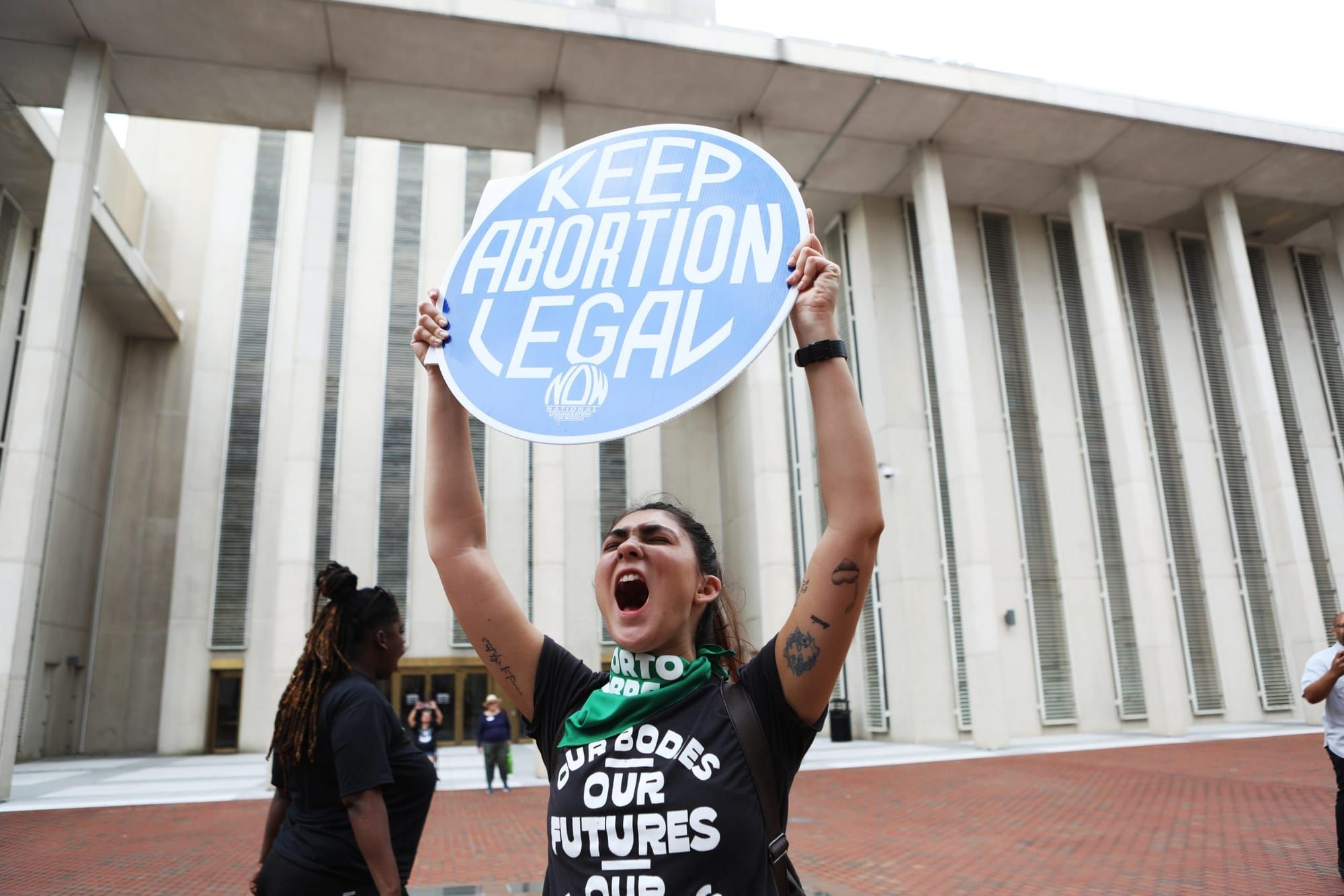
Florida Attorney General Ashley Moody is attempting to keep a constitutional amendment to protect abortion rights in the state off of the 2024 ballot. Moody has been distorting medical guidance from the American College of Obstetricians and Gynecologists (ACOG) to spread disinformation. In response, ACOG has filed an amicus brief correcting what it says are “misleading” medical claims and reemphasizing scientific facts. In the brief, ACOG states Moody has intentionally misrepresented the “concept of viability of a fetus … based on ideological principles.”
“In the wake of Dobbs, we’ve seen a number of states restrict or eliminate altogether that fundamental right,” said Skye Perryman, legal counsel on ACOG’s brief and CEO and president of Democracy Forward. “It’s incredibly important that people in Florida be able to exercise their right to vote in order to determine the course of their rights.”
The citizen-led ballot initiative campaign Floridians Protecting Freedom is leading the effort to let voters decide whether to make a constitutional amendment protecting abortion rights. Their goal is to collect 1.25 million petitions. They need about 892,000 signatures by Feb. 1 to get the initiative on the ballot. The campaign had nearly 500,000 signatures as of Nov. 9. Advocates from Floridians Protecting Freedom say they are confident they will get the needed signatures in time for the deadline and ensure that Floridians have a say in protecting their abortion rights come November 2024.
“Unfortunately, the attorney general is thinking to deprive people in the state of Florida of the ability to vote on this critical and foundational issue that can affect millions of people throughout the state,” Perryman said. “The attorney general has engaged in a number of tactics to seek to keep this critical issue off the ballot. One of those tactics includes misleading and misrepresenting the nation’s medical experts with respect to their guidance around reproductive health care and abortion. And so we’ve seen her take steps in the state Supreme Court to try to deprive people in Florida the ability to choose, the ability to vote on this critical issue through misuse and misinterpretation of medical information and guidance.”
Florida is poised to be the next battleground to return abortion rights to the will of the citizens, following the footsteps of Ohio, which passed an amendment in November to protect abortion. Florida has historically been a haven for abortion access in the South. A May 2022 poll from Florida Atlantic University found that 67% of Floridians want abortion legal in all or most cases.
“For many years Florida has been a haven, and [even] with the introduction of this six-week ban and further the implementation of the mandatory waiting period, Florida is still a beacon of hope for the South for folks who are able to make it to Florida, [though they] will still have to withstand the restrictions that exist here,” said Stephanie Piñeiro, the executive director of the Florida Access Network. “But I would no longer consider it a safe place for people to travel to because of the hostile climate right now.”
According to data from the Society of Family Planning, the number of monthly abortions in Florida has increased by an average of 40% since the overturning of Roe v. Wade. The increase is likely due to surrounding states banning abortions. Patients are now traveling to Florida to access care. Florida Access Network reports that 15% of its callers had to travel out of Florida this year for their care. If abortion rights in Florida are not restored, thousands of patients, especially those in communities of color who are more likely to bear the brunt of these limitations, will be impacted.
Piñeiro says that people have already been turning to self-managed abortion outside of the clinic setting, including using the abortion pill. A potential six-week abortion ban in Florida would mean their “last resort” would no longer exist.
“That means that people, especially in the South, are going to be forced to remain pregnant against their will or be forced to pay if they can afford or find the support, be forced to pay extraordinary amounts of money to leave their communities and travel to a place where they will be able to get care,” Piñeiro said. “And while there are many organizations ready and willing to provide that support, it does not mean that everybody who will need the care is going to be able to access that in time, and that’s just the reality.”
Florida is currently upholding a 15-week abortion ban, but in April Gov. Ron DeSantis signed a six-week abortion ban into law. The six-week ban won’t go into effect until the state’s Supreme Court determines the legality of the 15-week abortion ban, which is being challenged by abortion advocates and providers citing a 1989 decision in which the state Supreme Court ruled unanimously that Florida’s constitution, which guarantees a right to privacy, protected access to abortion.
“Decisions usually come out on Thursdays, and we’ve been holding our breath every Thursday since oral arguments in September,” Piñeiro said. “But the reality is, it can drop any Thursday at any time, and then we’ll have to adjust accordingly.”
Piñeiro says abortion funds are vastly under-resourced, and practical support organizations are what make abortion access a reality. Piñeiro says they have pledged close to $360,000 for people’s abortion care. “Abortion-funding organizations in Florida are on the front line of making abortion access a reality for Floridians and people who are still having to travel to Florida for care, and I encourage them to visit abortionfunds.org to find and donate to their local abortion fund,” Piñeiro said.
Author
Alexandra is a Cuban-American writer based in Miami, with an interest in immigration, the economy, gender justice, and the environment. Her work has appeared in CNN, Vice, and Catapult Magazine, among
Sign up for Prism newsletters.
Stay up to date with curated collection of our top stories.