NYU students, faculty testify about crackdown on pro-Palestine speech
A solidarity organization at New York University held the first hearing of an investigation into the university’s actions against those who protested Israel’s genocide in Gaza
Real journalists wrote and edited this (not AI). Independent, community-driven journalism survives because you back it. Donate to sustain Prism’s mission and the humans behind it.
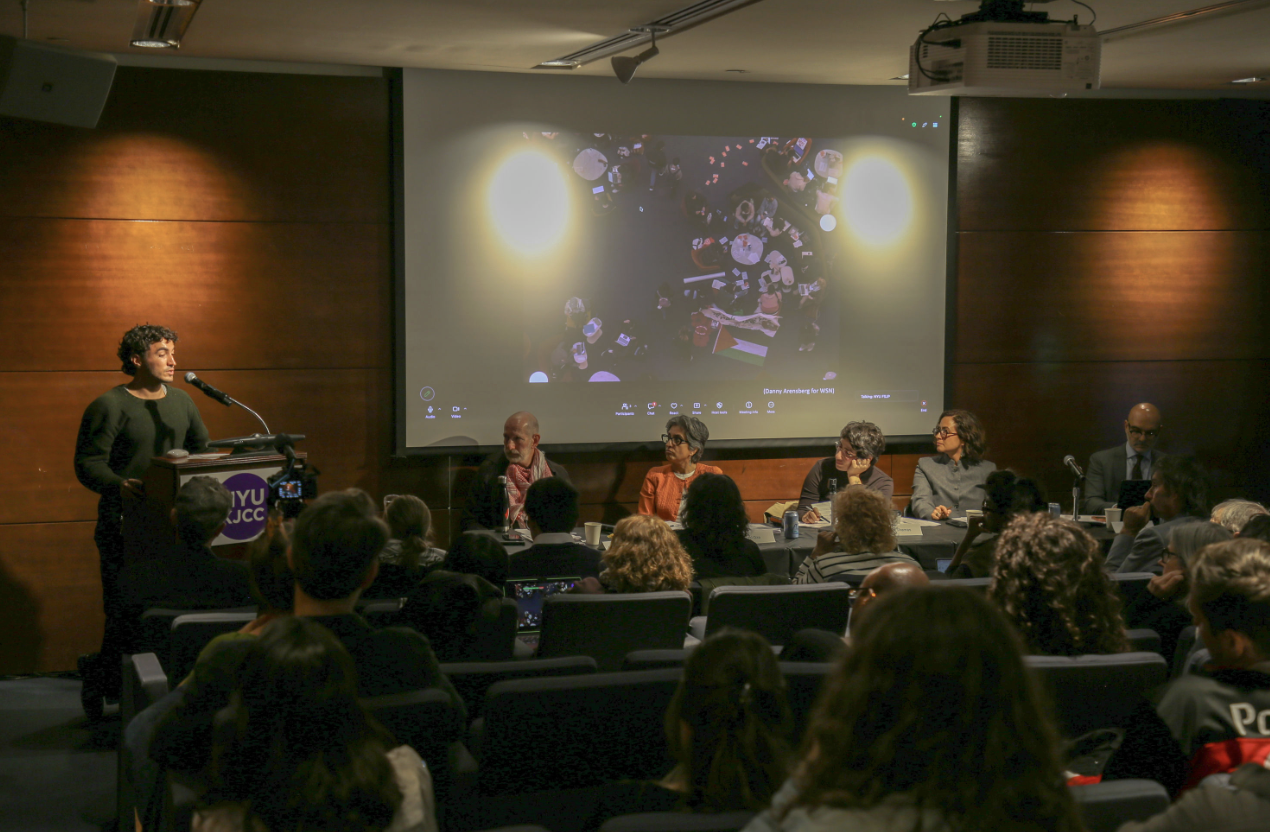
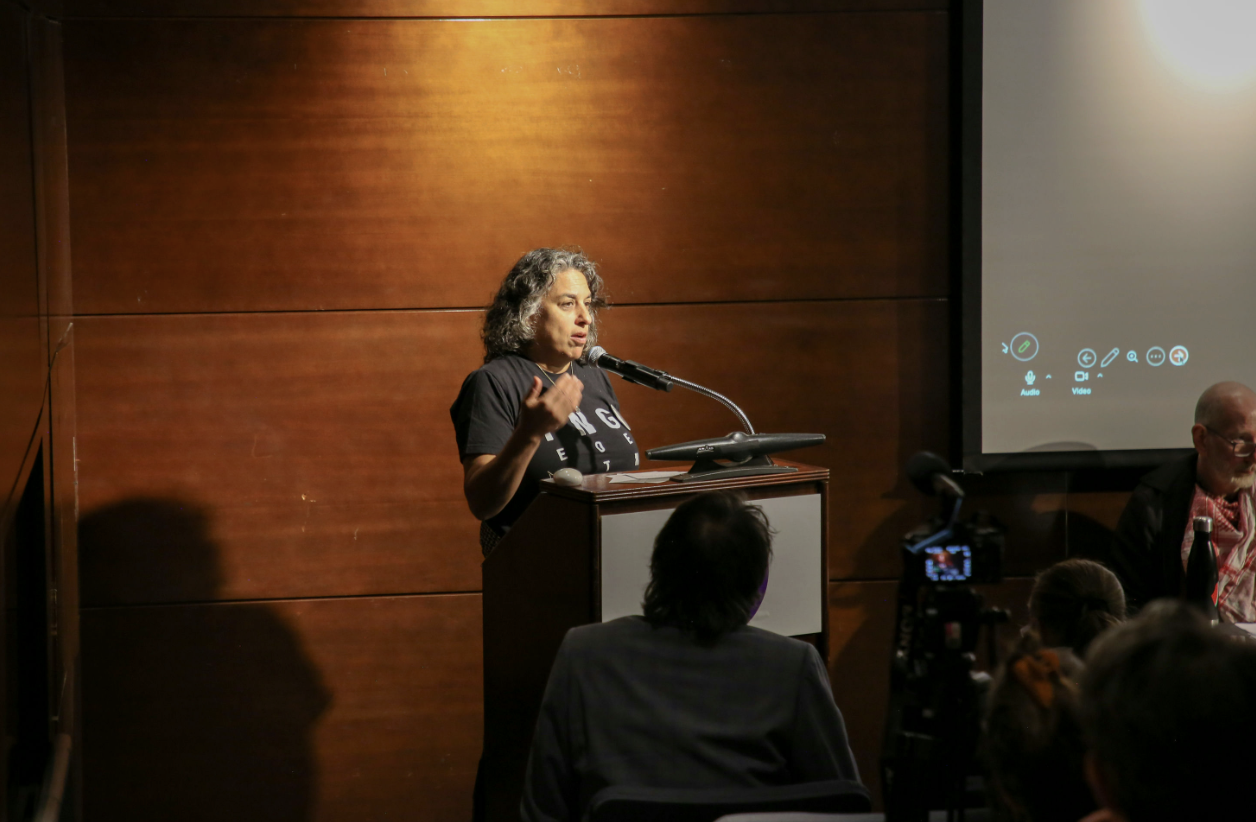
Dozens of New York University (NYU) students and professors gathered Monday for the first public hearing of a yearlong investigation into the university’s disciplinary actions against pro-Palestine protesters since October 2023.
The tribunal hearing—organized by Faculty and Staff for Justice in Palestine (FSJP)—featured testimonies from NYU students, alumni, and faculty about disciplinary proceedings, campus restrictions, and police violence in response to their advocacy against Israel’s genocide in Gaza. In front of a panel of six professors, lawyers, and human rights experts, speakers recounted NYU President Linda Mills’ authorization of police sweeps of the university’s two Gaza Solidarity Encampments and disciplinary measures against students and faculty who participated in library sit-ins.
Hamza Mankor, a doctoral and law student at NYU, testified about being designated persona non grata (PNG) and barred from university buildings following his participation in a pro-Palestine sit-in at the university library in December 2024. The demonstration, which resulted in the suspension of at least 13 students, called on NYU to disclose its investments and divest from companies with ties to Israel.
“As I walked around campus, I was told that every campus officer at every desk had circulated a picture of my face and name,” Mankor said. “I eventually decided to leave NYU, and I took the following academic year completely off because it was so unsustainable to attempt to continue my studies.”
FSJP launched the tribunal in April 2026, two years after the New York City Police Department swept the first pro-Palestine encampment on campus.
At the hearing, NYU professor Andrew Ross—who was arrested during a demonstration outside Bobst Library the day after the sit-in—said he and several other faculty members and students were designated PNG following their arrests.
“We were PNG and barred from many buildings on campus,” Ross said. “Effectively, barred from our workplace. This was a new low for NYU.”
Mehr Kotval, an NYU alum, recounted being arrested at the university’s first Gaza Solidarity Encampment in April 2024. Kotval said police grabbed her wrists, pulled her away from other demonstrators, and zip-tied her after she broke from a line to help a student who had fallen.
At her May 2026 graduation ceremony, Kotval said NYU staff told her she could not walk across the stage while wearing a keffiyeh. They gave her an ultimatum: “to either take it off and walk or to not walk at all.”
“Participation without expressing dissent felt impossible to me,” Kotval said. “I chose not to walk.”
Logan Rozos, another alum, had his diploma withheld after condemning the genocide in Gaza during his May 2025 graduation speech.
During the Nov. 2 hearing, Rozos testified that university advisers never required him to agree, “verbally or in writing,” to refrain from altering his speech or avoid controversial topics.
“If NYU says that I could only be a member of the community if I sat through complicity in apartheid and acts of genocide, then I will simply not be a member of their community,” Rozos said, attending the hearing over Zoom. “I do not feel entitled to a diploma that is soaked in blood.”
In a statement to Prism, NYU spokesperson Wiley Norvell defended the university’s disciplinary decisions and said the university “engaged our community through a series of listening sessions” and “applied NYU’s rules with fairness.”
“That this tribunal alleging an environment of repression is being held in an NYU building without any interference belies its very premise,” Norvell said. “NYU is a place where diversity of thought and academic freedom are respected.”
“I’m not sure they deserve much applause for this,” Sara Pursley, an NYU professor and organizer of the tribunal, told Prism, “especially given that they regularly censor Palestine-themed events organized by students, including banning outside speakers they consider controversial.”
In March 2024, NYU restricted access to a Students for Justice in Palestine (SJP) event over what an administrator called “events featuring contentious speakers.” The event featured Rashid Khalidi—Columbia University professor and author of “The Hundred Years’ War on Palestine”—and NYU professor Sinan Antoon. The administrator reportedly told SJP that they regretted the comment and did not mean to imply Khalidi was a contentious speaker, according to the Washington Square News.
A. Kayum Ahmed, a human rights professor at Barnard College and tribunal panelist, called for an independent investigation and full disclosure of disciplinary decisions. Ahmed told Prism what struck him most about the tribunal was the “courage of students and faculty, and the deeply personal consequences of NYU’s repression.”
Sonya Posmentier, an NYU professor who was also arrested during the December 2024 demonstration, told Prism the testimonies highlighted the lasting consequences of disciplinary action, including students missing graduation ceremonies, losing employment opportunities, and experiencing social isolation. Some students declined to testify out of fear of retaliation, while others remained barred from campus.
Posmentier said the organizers are demanding that NYU lift PNG designations, grant amnesty to disciplined students, disclose university investments, and adopt a policy prohibiting police from campus. The tribunal’s next hearing is scheduled for April 22—the three-year anniversary of the first NYU encampment.
“Perhaps there will be lawsuits to address some of the harms done, since that seems to be the only language the university speaks,” Posmentier said.
Editorial Team:
Sahar Fatima, Lead Editor
Carolyn Copeland, Top Editor
Lauren Hardie, Copy Editor
Yezen Saadah