In NYC, the fight for rent stabilization continues
Six years after the passage of landmark tenants’ rights legislation, landlords are getting creative—and tenants are getting organized
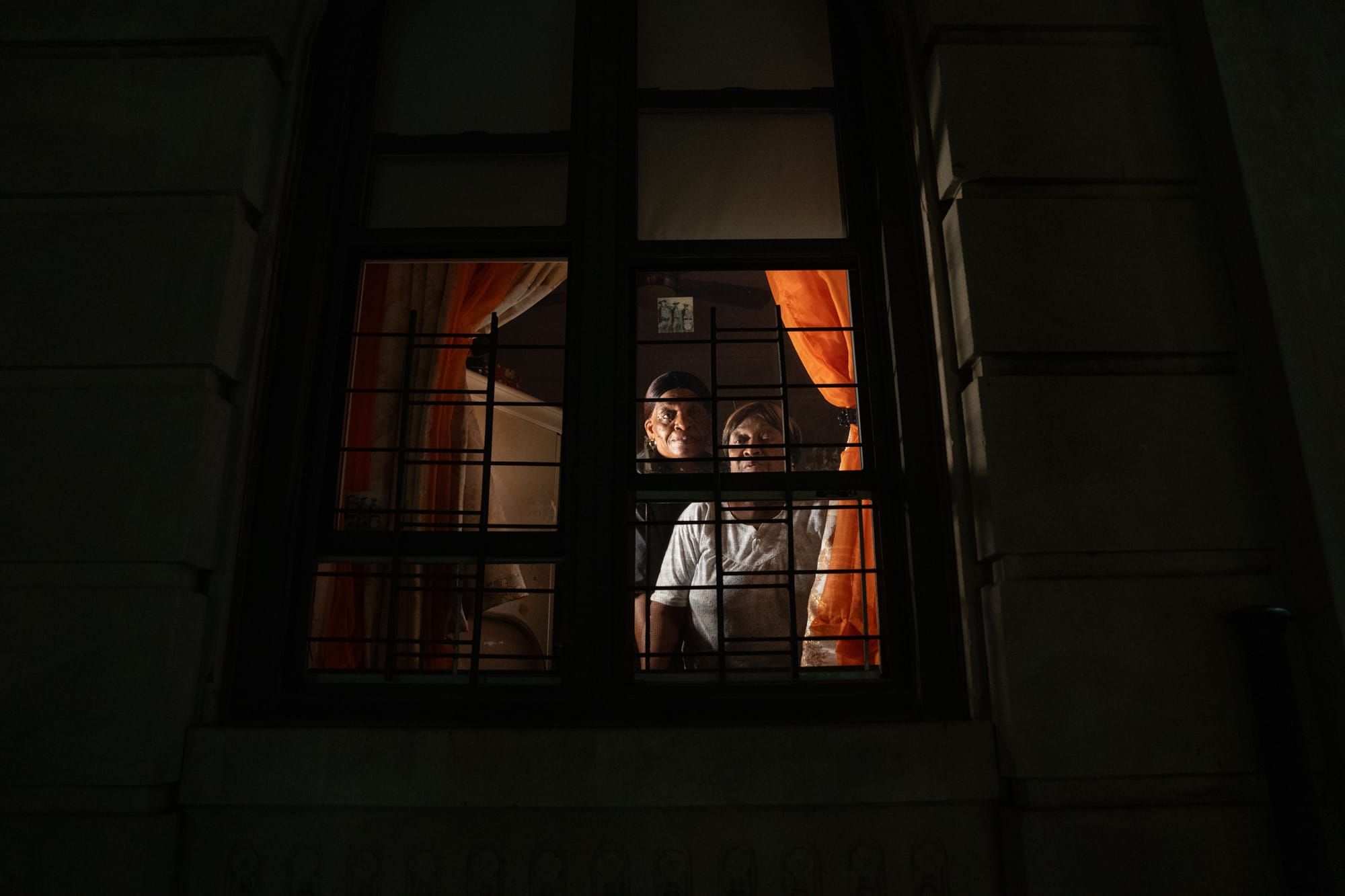
Pamela Hicken and Rosalee Frater do not want to move. Their families are the last remaining tenants at 285 Eastern Parkway, where they pay $570 and $830 per month, respectively, for their rent-stabilized Brooklyn apartments, more than 75% below the area’s market rate. They are also the last hope for the 100-year-old building to remain standing.
The owner, Renaissance Realty Group, wants to demolish the Crown Heights building and the already vacant 291 Eastern Parkway to build a 76-unit, market-rate apartment complex in their place. If Renaissance succeeds, it will utilize one of the few remaining legal avenues to force out rent-stabilized tenants and permanently deregulate an entire apartment building.
“They can’t put us out,” Hicken said. “We’re rent-stabilized.”
No intention of leaving
Unfortunately for Hicken and Frater, eviction is a real possibility—and the timing couldn’t be worse. After decades of deregulation, New York City is in the midst of a historic housing affordability crisis and a severe shortage of rent-stabilized units. A 2024 study commissioned by United Way of New York City found that 50% of the city’s residents cannot afford to pay rent without assistance.
Rent-stabilized tenants like Hicken and Frater won in 2019 when the New York State Assembly passed the landmark Housing Stability and Tenant Protection Act (HSTPA). The law made it harder for landlords to deregulate their apartments, and the number of deregulations dropped. Recently, however, housing law experts have been taking notice of the potential demolition of Hicken’s and Frater’s building, wondering if it’s a sign of the lengths landlords are now willing to go to charge market rate.
In 2023, Renaissance submitted a demolition application to Homes and Community Renewal (HCR), the state agency that oversees regulated housing, seeking permission to deny lease renewals to the remaining tenants. This came after a decadeslong campaign to offer buyouts and slowly empty the building.
That campaign is now nearly complete. Four holdouts became two when Jean Thompson and Rosalee Frater’s mother, Alema Finnigan, accepted buyouts and moved out in early 2024. With the exception of one resident who was evicted after attempting to take over a late relative’s lease, all 32 lessees at 285 and 291 Eastern Parkway accepted buyouts and left over the last decade or so—all but Frater and Hicken. The grandmothers have been neighbors in the building for over 40 years and have no intention of leaving.
“It’s a beautiful neighborhood,” said Hicken, who loves the proximity to the Brooklyn Museum and two subway stations, not to mention the affordable price tag.
Lashawn Diallo, Frater’s daughter and the head of 285 Eastern Parkway’s tenant association, recalled fond memories growing up in the building.
“It was amazing, so full of life,” she said. “We had big barbecues in the summertime with all the kids.”
Almost two years after Renaissance filed the application, HCR has yet to decide whether Frater and Hicken can be evicted. If Renaissance gets the green light, it’s legally obligated to compensate the tenants by either finding them comparable rent-stabilized apartments in the area or offering lump-sum payments equivalent to six years of market-rate rent. In Crown Heights, that could add up to over $250,000 each.
“That might sound really high. $250,000 is a life-changing amount for someone on a fixed income. There’s obviously going to be a huge incentive to take that,” said Liam McSweeney, an attorney at Brooklyn Legal Services who is representing the tenants along with his colleague, Parker Winship. “But they have to pay that higher rent forever. Really, they’re deeply underselling this tenant.”
Winship and McSweeney said that when Renaissance informed tenants of the demolition in 2023, the company misrepresented the amount of money tenants would be owed. Renaissance did not respond to multiple requests for comment.
That alleged deception is one of the attorneys’ challenges to Renaissance’s application. In a response to HCR they filed on behalf of the tenants in 2023, the attorneys argued that Renaissance unlawfully led Frater and Hicken to believe they had no choice but to leave when their leases were up on May 31, 2024. In reality, Renaissance’s application with HCR—a prerequisite to eviction—was still pending. The attorneys also alleged a yearslong pattern of harassment and retaliation against the tenants.
“They was trying to do the scare tactics,” Frater told Prism.
Frater’s daughter Diallo said that Renaissance agent Michael Schultz employed the services of Denelvi Ashton, a contractor, to put pressure on the tenants. (Schultz and Ashton could not be reached for comment.)
“He would call nonstop, five or six times in a row, then just sit outside in his truck in front of the building to intimidate the tenants,” Diallo explained.
Winship and his associates also accused Renaissance of acting in bad faith by trying to push through its application while there are still unsettled questions about regulatory agreements following the 2015 collapse of its lender, Signature Bank.
“The landlords’ agents tried to pull one over on [the tenants],” said Winship. “They went around the building saying, ‘Your lease is up, and you have to get out by May 31.’ It was a misrepresentation of the dual nature of what they’re entitled to and the consequences of the lease being up.”
Frater, for her part, is still not interested in the buyout, even though Renaissance has increased her offer to $285,000. But she and Hicken have said they are theoretically willing to reluctantly accept another rent-stabilized unit in the area as an alternative to a lump sum, though they’re skeptical Renaissance will provide one to their liking. “We’re not looking for money,” Hicken said. “I want comfort. I’m 74, and I want comfort.”
Frater and Hicken were confused and concerned when they initially received the warning that they had to be out by the end of May, so they called their state assembly member, Phara Souffrant Forrest, whose district includes parts of Crown Heights. Forrest, in turn, recruited Winship and McSweeney.
Forrest, a former tenants’ rights organizer, is a key figure in the tenants’ battle. She’s put up a fight on their behalf, in tandem with the Crown Heights Tenants Union (CHTU), a neighborhood organization founded in 2013 to oppose “gentrification, harassment, displacement, disrepair, and illegal rent overcharges.” Together, they’ve staged rallies outside the building and helped send Frater and her daughter Diallo to Albany to protest their eviction at the state capitol.
“The case at 285 is a prime example of how landlords harass people and try to force them out even though they’re rent-stabilized,” Forrest said. “Stop harassing people for their homes.”
“You plug one hole, and other holes open up”
Until 1994, almost every apartment in NYC in a building with more than six units was subject to rent stabilization or rent control, explained Sam Himmelstein, a retired tenants’ rights attorney and partner at Himmelstein McConnell Gribben & Joseph LLP. “Along comes George Pataki and Joe Bruno, notorious anti-tenant Republicans,” said Himmelstein. Pataki, the former New York governor, and Bruno, the former state senator, championed the passage of High Rent Vacancy Deregulation (HRVD) in 1994.
There were several components to HRVD. Vacancy increases allowed landlords to up the rent by 5% to 20% in between tenants, a policy that tenants’ rights advocates say incentivized some landlords to churn through tenants by making their living conditions unbearable.
“But the real kicker were IAIs, or as we call them, ‘oy oy oys.’” joked Himmelstein. Individual Apartment Increases (IAIs), along with Major Capital Improvements (MCIs), allowed landlords to increase the rent after making certain improvements to individual apartments or the larger building. If the increases from improvements and vacancies brought the rent above a threshold (initially $2,000, rising to $2,700 in 2015), the apartment became permanently destabilized, and landlords could charge whatever they wanted.
A sizable fraction of NYC’s stabilized housing stock was deregulated in this fashion between 1994 and 2019, resulting in a net decline of about 154,000 units over that time period, according to a 2023 study by the NYC Rent Guidelines Board. That all changed in 2019 with the passage of HSTPA, the most significant piece of state tenants’ rights legislation in a generation. The law effectively repealed HRVD, drastically limiting landlords’ paths to legal deregulation—and it appears to have succeeded in curbing the annual decrease in stabilized housing. The same study shows an average of roughly 5,000 units deregulated annually since 2019, about half the annual average for the 2010-2019 period.
There is, however, a heated debate about the impact of the law. In February 2024, the Real Estate Board of New York (REBNY) and the Rent Stabilization Association of NYC released the results of a survey of 781 property owners, concluding that HSTPA has led to an increase in vacant and neglected apartments by reducing landlord incentive to rent to new tenants, as well as to make repairs and improvements via Individual Apartment Increases and Major Capital Improvements. They argue that some landlords cannot afford to fix up apartments without the rent increases curtailed by HSTPA.
Tenants rights’ advocates contest the claims and argue that REBNY, a powerful landlord lobby group, is stoking fear in order to roll back vital tenant protections.
“One of the great victories in 2019 was to stop landlords from being able to deregulate through vacancy increases,” said Ellen Davidson, staff attorney at the Civil Practice Law Reform Unit of the Legal Aid Society.
“But you plug one hole, and other holes open up,” Davidson said. “The issues around demolition may be some of those new holes because landlords can’t maintain their pre-2019 practices anymore and get the reward of deregulation.”
Demolition isn’t the only remaining legal way to destabilize an entire building. Landlords can also deregulate via substantial rehabilitation, which requires 75% of the building’s systems to be replaced. However, landlords cannot get permission to evict stabilized tenants in order to pursue substantial rehabilitation, as in the case of demolition.
Davidson is paying close attention to the situation at 285 Eastern Parkway. If Renaissance succeeds in pushing out Frater and Hicken, she thinks it could embolden more landlords of regulated apartments to pursue demolition, evicting their tenants in order to build market-rate units.
Winship agrees. He referred to 285 Eastern Parkway as a “bellwether” but mentioned that he “hasn’t yet seen a massive uptick” in attempts to destabilize via demolition.
“Imagine a flowing river,” Winship said, referring to the pent-up demand to deregulate. “HSTPA created a dam, and at some point, that dam is going to break.”
As of now, Parker and Davidson’s concerns amount to informed speculation, though data from the Housing Data Coalition, as reported by City Limits, shows that demolition permit applications for rent-stabilized buildings increased from five in 2022 to eight in 2023.
Davidson is less sure of the exact numbers. “It’s hard to know how much this is happening,” she said, “but every time it happens, it displaces families, many of whom have lived in their communities for decades, and it is immensely devastating.”
“Dozens and dozens of cases”
A growing network of tenant organizations like the CHTU, as well as private attorneys like Himmelstein, are helping tenants take action against their landlords for illegally destabilizing their apartments.
This is, in a sense, the other side of the equation in the effort to protect NYC’s roughly 1 million stabilized apartments. HSTPA has done a lot to curb the deregulation trend—emerging questions around demolition notwithstanding—bringing restabilization into clearer focus as an important front for rent regulation advocates.
Himmelstein has noted an uptick in tenant-initiated litigation in recent years. “What we’re finding in our firm is that these cases are taking over,” Himmelstein said. “We have dozens and dozens of cases.”
The perceived uptick in litigious tenant interest can’t be directly tied to HSTPA since, in almost all cases, the alleged illegal overcharges predate the 2019 law. It’s far more likely that the increase in interest is due to an increase in awareness of the old, now-defunct laws and the ways they were flagrantly flaunted for years.
Viral videos on TikTok and Instagram over the past few years, as well as gradual membership growth in tenant organizations like CHTU, have spread awareness about how to check rental history and spot discrepancies that might indicate fraudulent destabilization. HCR has those records but appears to be extremely backlogged. While a year or two ago it took about two weeks to receive a rental history, now it takes about six, according to tenants who attended a CHTU meeting on Sept. 21, 2024, and complained about the long wait times.
It’s difficult to estimate the prevalence of illegal rent destabilization since doing so would theoretically require an audit of every rent-stabilized building in the city—including the procurement of decades-old receipts that may no longer exist. But CHTU members say they come across illegal rent destabilization all the time. The organization hosts regular meetings to teach members how to request their rent histories and what to look for, and they suspect illegal destabilization in a high proportion of cases.
“It’s kind of the story of this neighborhood,” said Landry Levine at the September CHTU meeting. Levine is an active CHTU organizer and has been on rent strike for over four years. “This is the motor that drives gentrification.”
Ben, a Brooklyn resident and tenants’ rights volunteer, works with a somewhat different slice of the tenant population. Ben is a member of informal mutual-aid networks that help some of Brooklyn’s most vulnerable tenants, including those experiencing acute housing crises. (Ben asked Prism to use his first name only due to the discreet nature of his volunteer work and the fact that he is in the midst of a legal dispute with his landlord.) This work is often done in collaboration with organizations like CHTU, where there’s a considerable amount of membership overlap. Most of these networks do not have names, and many trace their lineages to Occupy City Hall and the broader protest movements of 2020.
Ben described a situation he assisted with in Brooklyn, in which tenants were living with severe flooding. Their floor was intermittently inundated with five to six inches of water from broken pipes. Their landlord wouldn’t fix the problem or reimburse them for damage to their belongings. Ben’s network includes several tenants’ rights attorneys who volunteered their time. (They’re not permitted to legally represent clients outside of those assigned to them through the city’s underfunded Right-to-Counsel program, so this amounts to unofficial legal assistance.) The attorneys helped the tenants look up their rent history, discovering a strong illegal destabilization case.
“If you’re really getting fucked over by your landlord, you have to figure out what kind of leverage you have to stand up to them,” Ben said. “And one of the things that we’re finding is that rent destabilization is really common—and if you have a clear destabilization case, then it’s really strong leverage.”
Ben said educating tenants and empowering them to stand up to their landlords is often sufficient to stave off the worst-case scenarios.
“Famously, the vast majority of evictions are self-evictions, which means that the tenant vacates the premises at a time when they’re not legally obligated to,” Ben said. “We help tenants know their rights so they can stand up to illegal landlord harassment.”
When Ben and his fellow volunteers help tenants stand up to landlords—sometimes by using the landlord’s own illegal destabilization claim as a threat of litigation, or by organizing a rent strike based on that claim—the mere threat is sometimes enough for landlords to back off and make much-needed repairs or lower rent. Whether these concessions include re-registering the building as rent-stabilized for the benefit of future tenants is more dubious.
Know your rights
Like Ben, assembly member Forrest believes that on-the-ground support from neighborhood tenant groups like CHTU is the best solution to illegal deregulation.
“The fight now has to turn on the individual and collective level,” she said. “As a socialist legislator, my job is not only to pass laws but to stir collective action.”
Growing up in Crown Heights, Forrest described dangerous and unsanitary living conditions as the norm for her and her neighbors. “I need more people to understand that it is not normal to wake up and shake roaches out of a cereal box,” she said. But Forrest told Prism that she didn’t know what to do about her situation until she went to college and started working with CHTU. The experience opened her eyes to the power of collective action, educated her about her rights, and helped her form her own tenant association.
“That was the only way,” she said. “I wouldn’t have known about laws. There could’ve been bills, I wouldn’t have known. All I know is that I know my neighbors.”
Forrest’s background of organizing against landlord harassment and negligence inspired her to take action to help Frater and Hicken at 285 Eastern Parkway.
If a landlord is troubling you, it behooves you to trouble them.
Phara Souffrant Forrest, New York State Assembly Member
“If a landlord is troubling you, it behooves you to trouble them,” Forrest said.
Frater and Hicken said that if they hadn’t been supported by Forrest, CHTU, and their lawyers, they would have fallen for Renaissance’s tactics. “If we didn’t know what we had to do, we would have been out of here,” Hicken said.
In other words, without the assistance they received, Frater and Hicken would have essentially self-evicted, leaving their home of over 45 years—not because they had to, but because they were harassed and misled by their landlord into believing they had no other choice.
“If you don’t know what’s going on, they come, and they take advantage of you,” Hicken said.
In recent months, Hicken’s attorneys have grown more optimistic about their chances of winning the case. Rajiv Jaswa, deputy director of Brooklyn Legal Services and a colleague of Winship and McSweeney, found new evidence that Renaissance may have violated a no-demolition clause with their lender. The attorneys are arguing to HCR that this should rule out eviction of their clients.
“We feel a lot better about the odds now than before,” McSweeney told Prism. “Winning would be an important way to show landlords that post-HSTPA, they can’t just find some arcane way to evict tenants just because they’re sitting on a condo goldmine.”
On the other hand, McSweeney said, it wasn’t until a third attorney joined the effort that they found the crucial evidence that could lead to their victory.
“Imagine if Rajiv hadn’t found that one-line misrepresentation in a 300-page application? Winning this way would also highlight how screwed most tenants are, because obviously most don’t get this kind of support,” he said.
The fate of 285 Eastern Parkway remains uncertain. The case is still pending with HCR, but there are several possible lessons that can be gleaned from the still-unfolding story. The first is that landlords are experimenting with new ways of destabilizing buildings now that the pre-HSTPA deregulation heyday has ended.
A perhaps more important takeaway—suggested by Forrest, McSweeney, Ben, Levine, and others—is that the tenant-friendly policy changes brought about by HSTPA are of little consequence to those who don’t know their rights and don’t have legal help identifying and standing up to landlord harassment and deception.
“There’s the law, and then there’s the reality,” said Levine, the CHTU member. “Landlords rely on tenants not knowing anything.”
Editorial Team:
Tina Vasquez, Lead Editor
Carolyn Copeland, Top Editor
Stephanie Harris, Copy Editor
Author

Dana Edwards is a freelance writer, photojournalist, filmmaker, and graduate student at Columbia Journalism School. He has written about housing and gentrification in Brooklyn over the past year. He i
Sign up for Prism newsletters.
Stay up to date with curated collection of our top stories.