Just a few months after budget cuts left New York City’s public libraries open only six days a week, Mayor Eric Adams has proposed $58 million in further cuts. The libraries have called for a reversal of Adams’ proposal, as the changes would leave them operational only Monday through Friday, with extremely scaled-back services and hours. Sunday service was cut at the end of 2023 as part of Adams’ citywide effort to reduce the budget by $24 million.
City agencies were required to cut spending by 5% despite the City Council’s projections that there will be $3.3 billion more in tax revenue than the administration claims. Libraries still receive less than 1% of the city’s total budget.
It’s rare that budget cuts have been this chaotic and unpredictable. Library hours have already been shortened, and if the most recent proposal is approved, this would be the first time in almost a decade that libraries have not been open six days a week at every branch.
“There have been so many cuts in the last two years. You can’t plan more than a quarter ahead already,” said Lauren Comito, the executive director of Urban Librarians Unite and the library branch manager at a Brooklyn Public Library. “And then you get told there will be another.”
New York’s public libraries are home to more than books: they provide shelter and care, and many offer just about every social service imaginable—meaning Adams’ continued budget cuts are endangering the most vulnerable New Yorkers who deeply rely on their resources. For many, there are no other reliable places to access a social hub full of survival tools.
“In Chinatown, Flushing, Sunset Park, and any other places where there’s a lot of immigrants, a lot of the English language classes and the language access portals are there in libraries,” said Yuh-Line Niou, a former New York City assemblymember who currently lives in lower Manhattan. Many times, libraries are the only place where people can learn English. They’re also home to life-saving services like drug intervention—and a place where someone knows your name and can vouch for you as a community member, or treat you as human.
Libraries are also one of the only indoor places where people can gather for free, helping to combat loneliness. The public health outcomes of loneliness include increased risk for issues like heart disease, diabetes, and depression.
“Libraries are a solution to that,” Comito said.
Niou said libraries are especially beneficial for many elders in her community.
“This is where they find their friends, where people have social interactions that keep folks energized and part of the community,” Niou said.
Many turn to the library for safety and health resources, as well as love and care. For example, many libraries gave out free COVID-19 rapid tests and masks until the program officially ended in March 2024. They are often a place to access free menstruation products, too.
“[People] don’t necessarily understand how much human labor goes into making [libraries] function, keeping people safe, keeping programs going, keeping books on the shelf, and choosing the books that reflect the needs of the community,” Comito said.
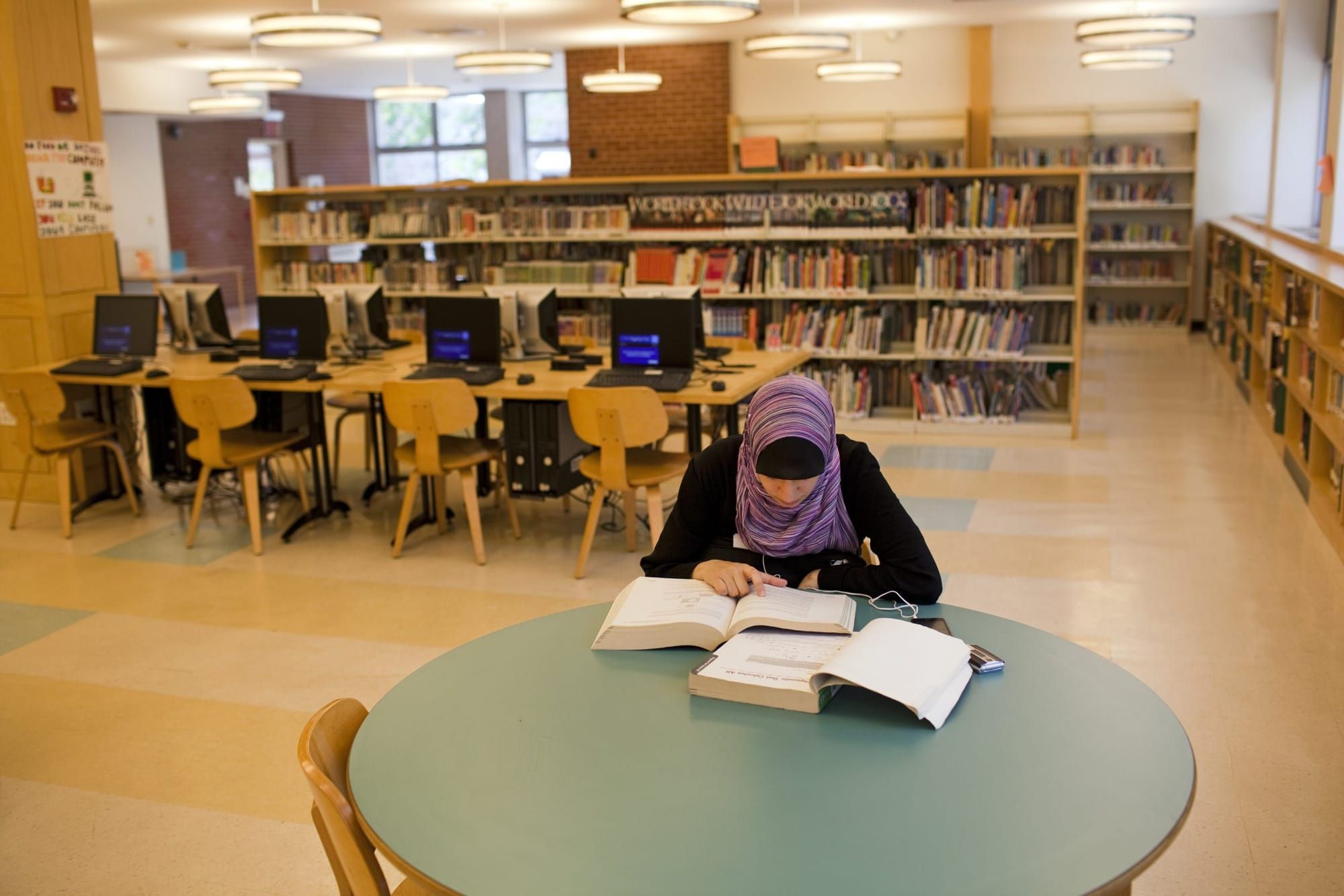
But reduced hours mean those who need it most don’t get to benefit from a quiet, clean place to be, surrounded by myriad resources. Someone who works all week but wants to find a better job won’t have access to computers to job hunt. People rely on library computers and programs held at libraries to sign up for Social Security, SNAP benefits, tax assistance, energy assistance programs, or apply for unemployment insurance. Parents who want to take their kids to the library and read books to them to support early literacy skills or to high-quality programs for socializing and learning won’t be able to with limited hours outside of work. Those who are housing insecure or houseless are left on the streets for greater amounts of time.
Gisselle Yepes, a middle school teacher born in Queens and raised in the Bronx, has relied on the library their whole life and has experienced how its services have kept people they love alive. They point out that libraries are one of the only public spaces where there isn’t a checklist to get in.
“It’s honestly one of the last spaces where you’re just a person who doesn’t need to tell your life story for support, nor do you need a [cover letter] or resumé,” Yepes said.
Yepes is seeing their young students at their school in Harlem struggle because of cuts, too—left without safe places to study, use computers, or print out assignments. That’s not to mention all the books that aren’t on shelves, with budget cuts severely limiting what library workers can purchase. Whereas Yepes used to pride themself on making sure students have library cards, that effort feels moot now.
Studies from Pew Research confirm that most people use libraries to improve their circumstances. People from lower-income households—defined as annual incomes below $30,000—often use libraries to get help. According to the research from 2015, 38% of Black and 32% of Latinx people rely on using computers and the internet there, and 31% of those living in homes with annual incomes of $30,000 or less have used online resources at the library.
“Libraries keep us alive … I love my city, but New York is made to dispose of you, where you work a thousand jobs for a small apartment,” Yepes said, adding that in contrast, “The library says, ‘You matter. You can learn English. You’re succeeding. Of course you can become a citizen.’ The library already loves you in a way that everywhere else does not.”
Niou shared that people have turned to her for help reading their mail and other tasks they formerly went to libraries for. She’s also watched many people try to attend an important class at the library, only to realize it’s closed. Yepes and Comito expressed worry that once people assume libraries are inaccessible, it will be difficult to spread the word and rebuild people’s trust in and reliance on libraries even if services return.
Current cuts are already making it difficult to plan things week by week. “You don’t know how many staff there’s going to be across the systems … We’re so short-staffed,” Comito said.
When renovations are done at some branches in fiscal year 2025, there may not be enough staff to send. Gabby Alexa, a Black woman from Brooklyn, said she hasn’t been able to access the library in her neighborhood for nearly two years because it was shut down for renovations. Being able to go there would help her feel more connected to the community.
“Everywhere has a special place that you go to for community. For some neighborhoods, it’s a parking lot, a karaoke joint, or a dive bar,” Niou said. “For a lot of people in New York, it’s a library.”
Should the new budget proposal pass in June, more than half of the library branches in Brooklyn and about 60% in Manhattan, Staten Island, and the Bronx would be open only five days a week beginning in July. In Queens, all branches except two, the main library in Jamaica and the Flushing branch, would close on Saturdays.
Meanwhile, Adams continues to hand out tax breaks to wealthy real estate developers and to the New York Police Department, whose spending still makes up 5.3% of the city budget.
“What we’re seeing under Mayor Adams is a disinvestment in our schools, libraries, and other public institutions that working families depend on,” said Jasmine Gripper, the co-director at New York Working Families Party. “His decisions have continued to benefit the wealthy few, while hurting just about everyone else.”
Several New York City councilmembers were contacted for this story but declined to comment.
Author

Elly is a Pun Enthusiast who loves cooking, making picnics for friends, their perfect yet mischievous cats, and poetry. They are dedicated to doing community organizing that centers getting resources
Sign up for Prism newsletters.
Stay up to date with curated collection of our top stories.