In North Carolina, Trump administration’s anti-climate deregulation agenda comes to a head
The federal agency in charge of pipeline permitting and approvals is fast-tracking the expansion of the Southeast Supply Enhancement Project, a pipeline sure to cause cataclysmic environmental harm
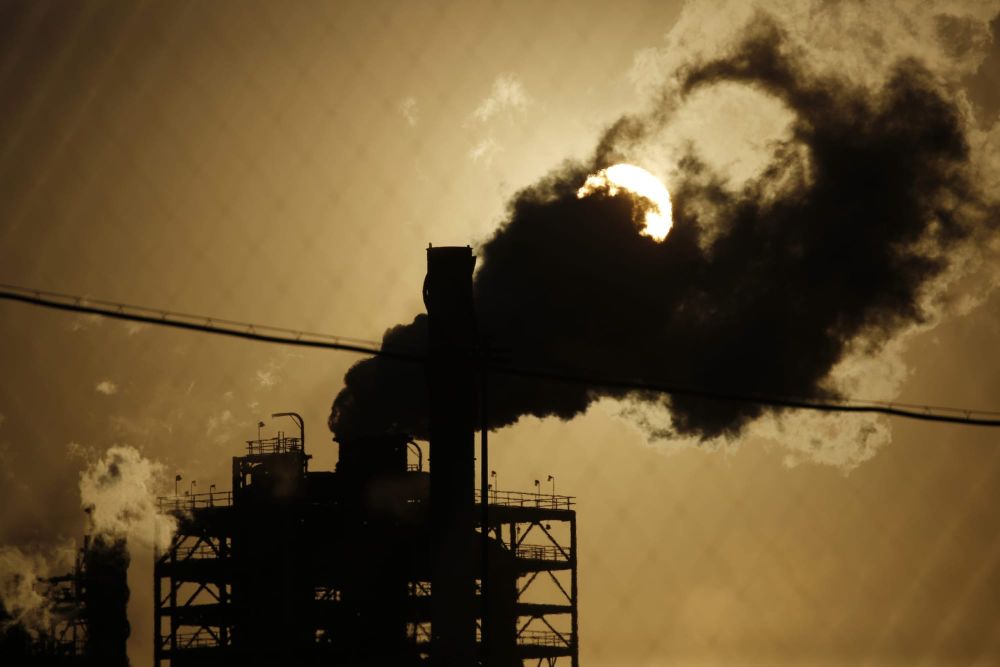
Climate predictions have grown increasingly dire in the wake of a global failure to keep temperatures below 1.5 degrees Celsius. But warnings of unabated sea-level rise, severe drought, and mass extinction connected with the production and burning of fossil fuels haven’t stopped an all-out race for extraction.
Even before the Trump administration took office for a second term earlier this year, federal agencies were either reticent to or prevented from evaluating cumulative environmental and climate justice considerations. But in North Carolina, the anti-climate deregulation agenda that Donald Trump promised is coming to a head through the Federal Energy Regulatory Commission (FERC).
FERC, the federal agency in charge of pipeline permitting and approvals, is now refusing to conduct a thorough analysis of potential environmental justice harms. In North Carolina, this means ignoring what advocates say is one of the largest methane gas buildouts the region has seen in decades.
“We believe [FERC] ignored thousands of public comments asking for an environmental impact statement,” said Caroline Hansley, a campaign strategist with the Sierra Club. But it’s not just the federal regulators—the company behind the pipeline is “trying to downplay how massive of a project this really is,” she said.
The pipeline, known as the Southeast Supply Enhancement Project (SSEP), would expand the existing Transcontinental pipeline that currently carries methane gas 10,000 miles from Texas to New York. The expansion pipeline is planned for a section that starts in North Carolina and terminates in the Northeast, slated to pump 1.6 billion cubic feet of methane gas per day. That amount is equal to nearly 31 million metric tons of emissions per year of carbon dioxide equivalent. Methane is far more potent than carbon dioxide, the other greenhouse gas responsible for global warming.
Often referred to by the oil and gas industry-created term “natural gas,” methane is a fossil fuel and accounts for one-third of the trapped greenhouse gases in the Earth’s atmosphere. Compressor stations also release carbon monoxide, sulfur dioxide, nitrogen oxides, particulate matter, and formaldehyde into the atmosphere, posing a danger to those who live nearby. Williams Companies, which owns the pipeline and a third of the country’s methane gas infrastructure, maintains that the infrastructure is needed to meet growing energy demand in the Southeast.
However, advocates for renewable energy and community safety say that the “energy demand” referred to by Williams is the recent explosion of data centers in a region where land, utilities, and water are typically cheaper than elsewhere in the country. These data centers, which require vast amounts of public resources, produce very little public benefits—even as the public funds the utility structures that underlie their operations. Equally alarming, according to those opposed to the pipeline buildout plans, is that developing methane gas infrastructure further entrenches a dependency on fossil fuels at a time that urgently requires our independence from them.
Some communities pay a bigger price for fossil fuel infrastructure buildout, advocates say. These “environmental justice communities,” where residents meet a number of demographic criteria like income and race that denote historical disinvestment, aren’t getting the consideration they deserve from federal agencies required to evaluate their impacts. Still, FERC appears intent on greenlighting the project and ignoring costs to the environment and communities, as evidenced by its refusal to conduct a full environmental impact statement and evaluate the cumulative impacts of greenhouse gas emissions of fossil fuel projects.
In January, FERC announced that it would forgo a more thorough environmental impact statement in favor of an environmental assessment. The two may sound the same, but the former ensures a longer public comment period and more opportunities for public hearings and project review. By opting to conduct an environmental assessment—based on the pipeline company’s assertions that the environmental impacts are minimal—the project is more likely to be rushed to completion. In the wake of the Trump administration’s misleading promise to cut bureaucratic red tape, the appointed board members of FERC are ensuring that there’s as little opportunity for public involvement as possible in order to get the pipeline up and running.
“Choosing to do an [environmental assessment] knowing that there are going to be environmental justice impacts, knowing that FERC isn’t actually going to have to do any analysis about alternatives or if renewable energy could meet those needs in a different way, it’s disappointing and pretty infuriating,” Hansley said.
Last month, FERC Commissioner Mark Christie—a Trump appointee—announced that the agency would no longer evaluate the full lifecycle of greenhouse gas emissions from a project. Instead, the agency plans to evaluate individual project emissions on a “case by case” basis at the board’s discretion. Even before this announcement, FERC approved nearly all applications for pipeline permits, Hansley said, and the recent change will most likely impact the speed with which new projects come to fruition.
“We cannot characterize any project’s [greenhouse gas] emissions as significant or insignificant because we are unable to identify any accepted tool or method, including use of the social cost of GHGs, that would allow us to determine what level of GHG emissions’ contribution to adverse climate change impacts is significant,” FERC said in a statement.
The Pipeline Safety Trust, an independent industry watchdog, provided public comments to FERC, urging the commission to further scrutinize glaring safety concerns of the planned pipeline, such as the potential impact radius of a blast, geographical hazards, aging materials of the pipeline, and proximity of the SSEP to existing pipelines.
Hailey Duncan, a policy adviser with the Pipeline Safety Trust, told Prism that a primary concern is that the pipeline would be bidirectional, meaning that methane gas can be pumped both ways. Transco is an older pipeline making it more likely to succumb to the wear, tear, and corrosion that often results from increased pressure and temperature.
If the SSEP is built, it would be co-located near an already-operational pipeline, Transco. This is standard industry practice, Duncan said. However, the calculation the commission uses to determine a safe distance from residences needs to be updated, given past fatalities related to pipeline explosions, even when victims were outside the designated impact radius.
Even if FERC refused to consider the project’s environmental justice and greenhouse gas emissions impacts, it doesn’t mean those concerns go away. Community members and landowners living along the planned route, along with advocates for safe and renewable energy, are all too familiar with the social and environmental harms of pipelines.
It’s no coincidence that pipelines and fossil fuel infrastructure are clustered in disadvantaged and politically disempowered communities. In his comment to FERC, Ryan Emanuel, an associate professor at Duke University’s Nicholas School of the Environment, wrote that much of the country’s pipeline infrastructure was built before the passage of the Civil Rights Act, in a period of legal segregation and discrimination. This includes the construction and siting of the existing Transco pipeline, which the SSEP will add onto.
“Whether or not routes were determined with conscious discrimination in mind, legalized discrimination at this time limited recognition and procedural justice for racially marginalized populations,” Emanuel wrote.
But now, without the thorough environmental justice review that a full environmental impact statement scoping process would require, FERC risks approving the expansion of a project that was first positioned during the period of American apartheid. This also means that the civil rights harms that federal environmental justice rule-making set to address will be further entrenched.
Even though pipelines are regularly constructed in places with high degrees of social vulnerability, there’s “never been an effort to examine [environmental justice] implications of the larger networks to which individual pipeline projects typically belong,” Emanuel wrote. The February ruling to evaluate greenhouse gas emissions on a case-by-case basis, or not at all, likely guarantees that the distribution of risk associated with pipelines will be unequal and levied against the same vulnerable communities.
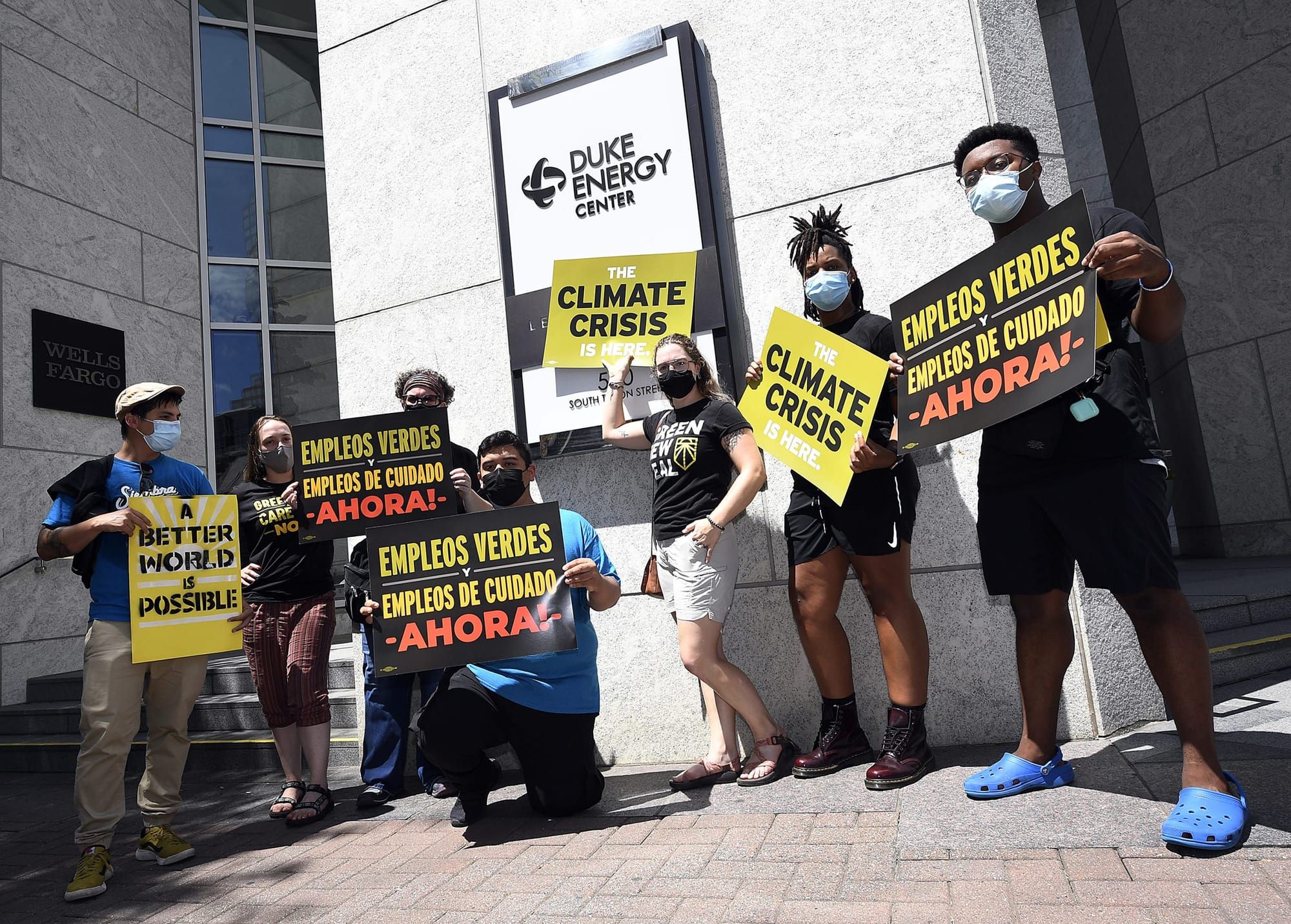
The expansion project also promises a payday to Duke Energy, the region’s utility provider. Duke Energy has agreed to purchase at least 60% of the gas pumped through SSEP, which will then be sold to customers in the area, including data centers. In order to process and supply the methane gas, Duke plans to put up the money to construct new facilities and equipment—and raise customer utility rates to fund it.
Duke Energy has an outsized say in the region’s utility operations, including what power sources they draw from, how the grid is maintained, and what renewable investments are made, said David Neal, an attorney for the Southern Environmental Law Center. Because of that level of influence, Neal said there is a level of responsibility for Duke Energy to put its weight behind renewable energy generation that is cheaper, more efficient, and more reliable for North Carolina residents and customers.
“These are going to bring more fracked gas into North Carolina at a time when we just don’t need to be investing anything more into infrastructure for fossil fuel-based energy production,” said Democratic state Rep. Pricey Harrison, a vocal opponent of the SSEP project.
She added that eventually, the grid will have to be decarbonized and fully electrified. Investing in power generation that relies on fossil fuels just makes it harder down the road to transition, she noted. Not to mention that ratepayers would be on the hook for utility infrastructure development long after the facilities are out of use. “We know that we face a zero carbon future,” Harrison said.
Editorial Team:
Tina Vasquez, Lead Editor
Carolyn Copeland, Top Editor
Rashmee Kumar, Copy Editor
Author

ray levy uyeda is a staff reporter at Prism, focusing on environmental and climate justice.
Sign up for Prism newsletters.
Stay up to date with curated collection of our top stories.