Immigration raids expected to escalate in North Carolina as locals organize to protect their neighbors
As the impacts of the raids quickly ripple outward from Charlotte, North Carolinians are mobilizing to stem enforcement operations in their communities


Real journalists wrote and edited this (not AI)—independent, community-driven journalism survives because you back it. Donate to sustain Prism’s mission and the humans behind it.
Manuel, an undocumented immigrant in North Carolina, is still reeling from two close calls with immigration enforcement as President Donald Trump’s police state unfolds nationwide.
The first close call, on Nov. 16, was at a police checkpoint in Raeford, North Carolina, a rural area in Hoke County where the population is less than 5,000. In a state where more than two dozen law enforcement agencies have signed on to collaborate with Immigration and Customs Enforcement (ICE) as part of the federal agency’s 287(g) program, a seemingly innocuous driver’s license checkpoint can serve as a funnel into detention and deportation.
“Thank God, we managed to get through it,” Manuel told Prism over WhatsApp, noting that he was in a car with two labor organizers. He asked to use a pseudonym for fear of deportation. “I was very scared.”
The second close call came on Nov. 17 when Manuel was on his way to work. The former North Carolina farmworker now works in construction near Newton Grove in Sampson County, another rural region of the state home to a sizable immigrant population. A co-worker sent Manuel a photo of a Customs and Border Protection (CBP) truck parked at a nearby restaurant. Manuel immediately headed home and alerted other workers to do the same.
Deciding to miss work isn’t an easy decision as the holidays approach, but Manuel said he didn’t feel as if he had a choice. Many in North Carolina’s immigrant communities are choosing to remove themselves from public life until “things return to normal,” Manuel said.
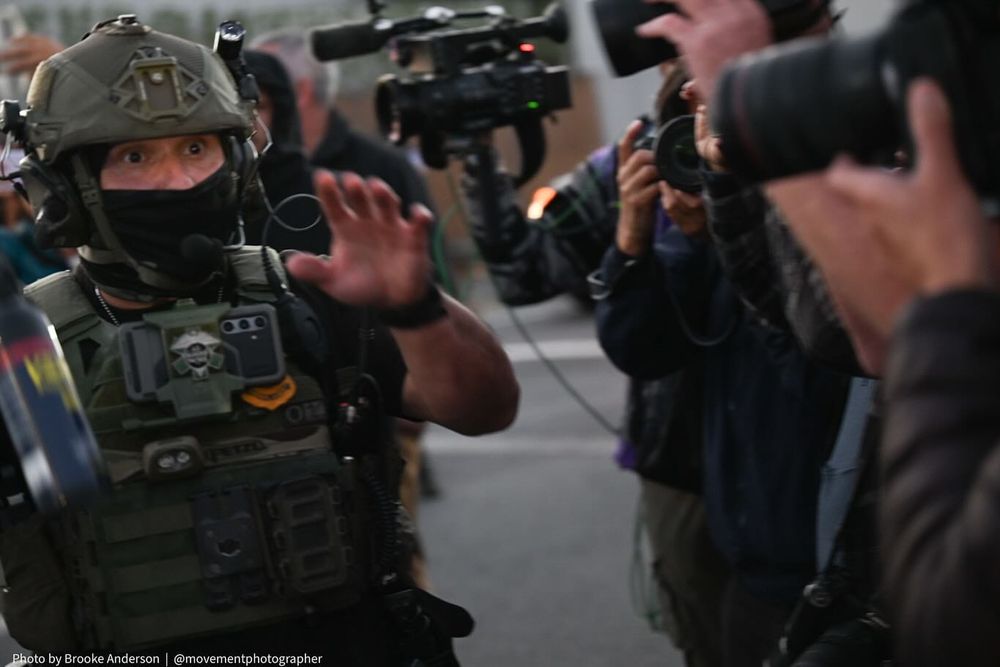
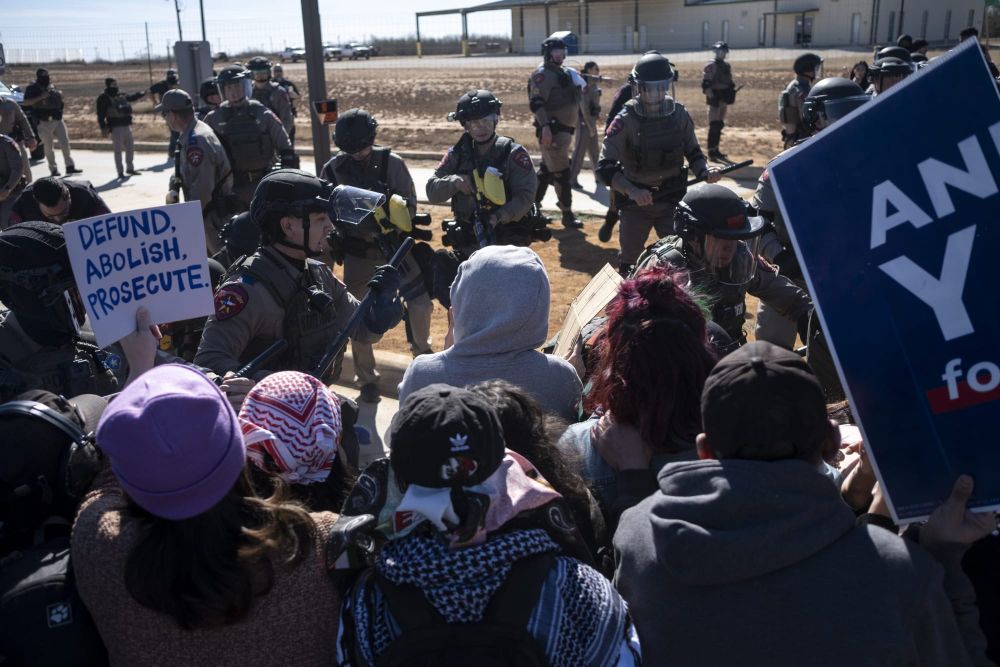
But it’s hard to know when that will be. Since June, the Trump administration has bombarded American cities with large-scale, indiscriminate, and often unlawful immigration raids targeting Latino communities. With little more than racial profiling and disdain for Democrat-run cities guiding the way, unvetted, untrained, and trigger-happy federal agents have been hard at work terrorizing local communities and apprehending immigrants and citizens alike at workplaces, businesses, and locations once considered off limits, such as churches and schools.
Trump’s mass deportations began in Los Angeles and have expanded to Chicago; Washington, D.C.; Portland, Oregon; and New York City. Beginning Nov. 15, Charlotte—North Carolina’s largest city that is home to the state’s most sizable immigrant population—became the first Southern locale targeted with widespread immigration raids.
But ICE and CBP agents have also been spotted in rural areas such as the one where Manuel lives and works. As the impacts of the widespread raids quickly ripple outward, North Carolinians are mobilizing to stem the flow of enforcement operations in their communities.
“Snatch people up and ask questions later”
In a statement Sunday night, the migrant justice organization Siembra NC reported that Nov. 16 was “the day the most immigrants were arrested in a single day in state history.” ICE and CBP have detained more than 130 people in Charlotte thus far, with enforcement in the city expected to continue.
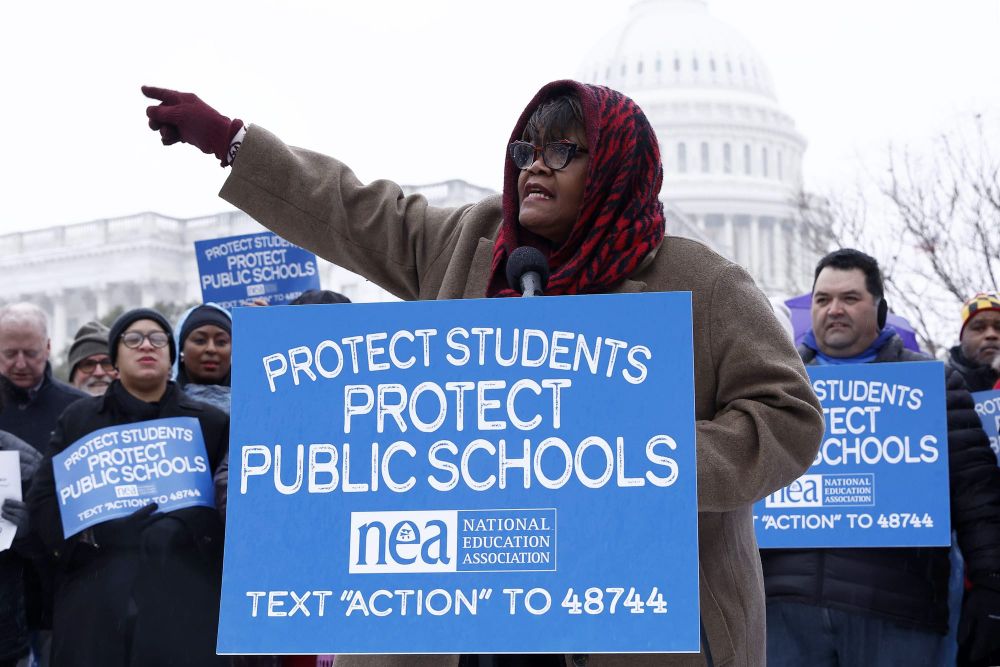
Charlotte-Mecklenburg Schools educator Mechelle Vaughn told Prism that this school week has been “extremely tough.” Vaughn, a member of Public School Strong, an organization that advocates for North Carolina public schools, told Prism that English-language learners make up a large percentage of her elementary school students. Almost 21,000 children in the district were absent from school this week, and those who came to class were clearly in emotional pain, the educator said.
“It is really, really difficult when students tell you how scared they are, and when one tells you that they know that their mommy’s not going to be home when they get there because ‘they are going to get her,’” Vaughn explained. “Today it was call after call after call to the office, with parents crying because they are scared. I was crying because I could hear the fear in their voices; some were afraid their children would be taken getting off the bus.”
Parents’ fears are not unfounded. During school hours on Tuesday, Vaughn received confirmation that ICE agents were at a nearby mobile home park where students lived. She contacted the Charlotte Mecklenburg Association of Educators and Public School Strong, which are helping support Siembra NC’s ICE watch and safety patrol rapid response. Educators and members of Siembra NC quickly arrived at the mobile home park to ensure that students getting off the school bus would be safe.
“The ICE agents had already left, but there was concern that they may be back, and we were also told that people were apprehended,” Vaughn explained. “We just kind of all knew we had to jump into action, and we came up with a plan for what we would do if ICE came back. We weren’t going to let our kids off the bus.”
The public school teacher told Prism that immigrant educators across the district are also afraid to report to work, including those who have permission to live and work in the U.S.
It’s a very scary time. They snatch people up and ask questions later.
Mechelle Vaughn, Charlotte-Mecklenburg Schools educator
“It’s a very scary time. They snatch people up and ask questions later,” Vaughn said.
Axios reported that New Orleans was likely the Trump administration’s next Southern target. However, the North Carolina publication The Assembly confirmed that federal agents planned to descend on the state capital this week—and descend they did.
For locals tracking enforcement operations on the ground in the Raleigh area, ICE and CBP sightings began rolling in early on Nov. 18. Masked agents were seen carrying out enforcement at an apartment complex on Navaho Drive in midtown. Later in the afternoon, in nearby Durham, Siembra NC confirmed multiple detainments downtown and further north on Avondale Drive, an area beloved for its immigrant-owned businesses.
Local and state officials have been quick to condemn this week’s raids. North Carolina Gov. Josh Stein said in a video statement Nov. 16 that the raids are “not making us safer” and that they are “stoking fear and dividing our community.”
“We’ve seen masked, heavily armed agents in paramilitary garb driving unmarked cars, targeting American citizens based on their skin color, racially profiling and picking up random people in parking lots and off of our sidewalks,” Stein said.
At a Durham City Council meeting this week, Mayor Leo Williams read a joint statement from his office, the Durham County Board of Commissioners, and the Durham Public Schools Board of Education decrying the raids.
“We denounce any effort that promotes exclusion, incites fear, undermines human rights, and compromises safety,” Williams said. “Our schools, neighborhoods, and places of employment are stronger because of the diversity of the cultures, languages, and experiences that define Durham.”
While Raleigh and Durham are often grouped as a single metro area, they have decidedly different cultures, with Durham housing a vast network of grassroots organizers focused on migrant justice. More broadly, the city serves as North Carolina’s progressive organizing hub—an effect of the region’s legacy of Black freedom struggles.
While locals such as Iván Almonte anticipated that wide-scale immigration enforcement was coming down the pike in Durham, the organizer with Respuesta Rápida de Durham told Prism that immigrant communities have been pummeled in recent years, making it difficult to build sustainable infrastructure for the effective rapid response network needed in moments like this.
“It’s one thing after another,” Almonte said in a phone interview. “The attacks against our communities are unfair.”
The organizer also told Prism that North Carolina’s current fight is “bigger than ICE”: Locals are also fighting a web of anti-immigrant laws, bills, and policies. Almonte’s organization now meets with local groups and leaders on a daily basis to coordinate how best to meet the needs of immigrant communities in the region, with legal aid emerging as a top priority.
Earlier this week, the community organizer conducted a Facebook Live event that was attended by hundreds of immigrant community members. Many of the attendees are longstanding Durham County residents, immigrant business owners, and homeowners who must now consider legal action to ensure their children in the U.S. will inherit their property if they are abruptly taken by ICE. Others who attended the Facebook Live wanted help navigating the power of attorney process so that they could decide who would care for their children if they were detained. Many were concerned that if they kept missing work to avoid immigration enforcement, they would also lose their housing, though there is no legal aid that can assist with this new reality.
“These are people established in the U.S. who are facing being torn apart from their families, and it’s devastating,” Almonte said. “Immigrants from Central America and other countries fled violence, and now they are being hunted by ICE and Border Patrol in their own communities. It’s traumatizing.”
This was echoed by Ilana Dubester, the founder and executive director of El Vínculo Hispano, a nonprofit organization in Siler City that serves Latino communities across Chatham, Alamance, Randolph, Lee, and Harnett counties.
“We know it’s just a matter of time until we’re hit with enforcement,” Dubester said. “We anticipate that they will target areas where Latinos work, where they shop, where they worship. I think the goal is to make it feel like nowhere is safe.”
Dubester is fielding reports of immigration enforcement in more rural areas of the state, including Mount Airy, near the Virginia border, where she heard confirmed reports on Nov. 18 that ICE was in the area.
Leticia Zavala, a former farmworker and current coordinator with the North Carolina farmworker organizing group El Futuro Es Nuestro, also has her eye on rural areas that are home to thousands of the state’s farmworkers. Advocates are on edge, given that a few months ago, immigration raids were carried out on California farms, leading to hundreds of detainments and one farmworker’s death during a particularly chaotic workplace raid.
Zavala told Prism that she hasn’t heard of any enforcement taking place on farms, but in recent weeks, she’s received an alarming number of reports from H-2A agricultural workers alleging harassment. These are primarily Mexican farmworkers who have temporary visas to perform agricultural work in North Carolina, and, according to Zavala, many are reporting that federal immigration agents are hassling them as they attempt to return to Mexico once their season is over.
“They are fingerprinting them, asking to see their documents, and taking pictures of them for no apparent reason,” Zavala said.
Dubester is also fielding calls from terrified and confused community members. As immigration enforcement plays out across North Carolina, the Brazilian immigrant’s overarching goal is to keep the community informed—even if that means having to confirm ICE sightings herself.
“Being a naturalized American citizen used to give me a huge amount of assurance of my rights in this country, but right now those rights don’t feel 100% guaranteed,” Dubester said, noting the dozens of American citizens who have been detained by ICE in recent weeks. This includes an incident in Charlotte in which federal agents stopped a U.S. citizen twice, shattering his car window and even briefly detaining him.
“There’s no longer a guarantee of safety, as a Latina doing this work,” Dubester said. “But it won’t stop me from doing what I need to do.”.
“We’re still showing up”
This isn’t the first time the Trump administration has carried out retaliatory immigration raids in North Carolina as apparent punishment for the state’s left-leaning policies.
During the first Trump administration, voters in the state elected a series of Black sheriffs who refused to cooperate with ICE, which led to a series of workplace raids and other enforcement actions mostly targeting undocumented workers. While local organizers and residents who spoke to Prism expressed feeling overwhelmed and saddened by the latest round of enforcement, they also said they remain committed to protecting their neighborhoods.
Across Durham and Mecklenburg counties, community patrols are forming—including some outside of formal organizing spaces. Locals are making plans to accompany immigrants to court hearings, and many are already shopping for immigrant families and picking up their children from school to reduce their risk of encountering federal immigration agents.
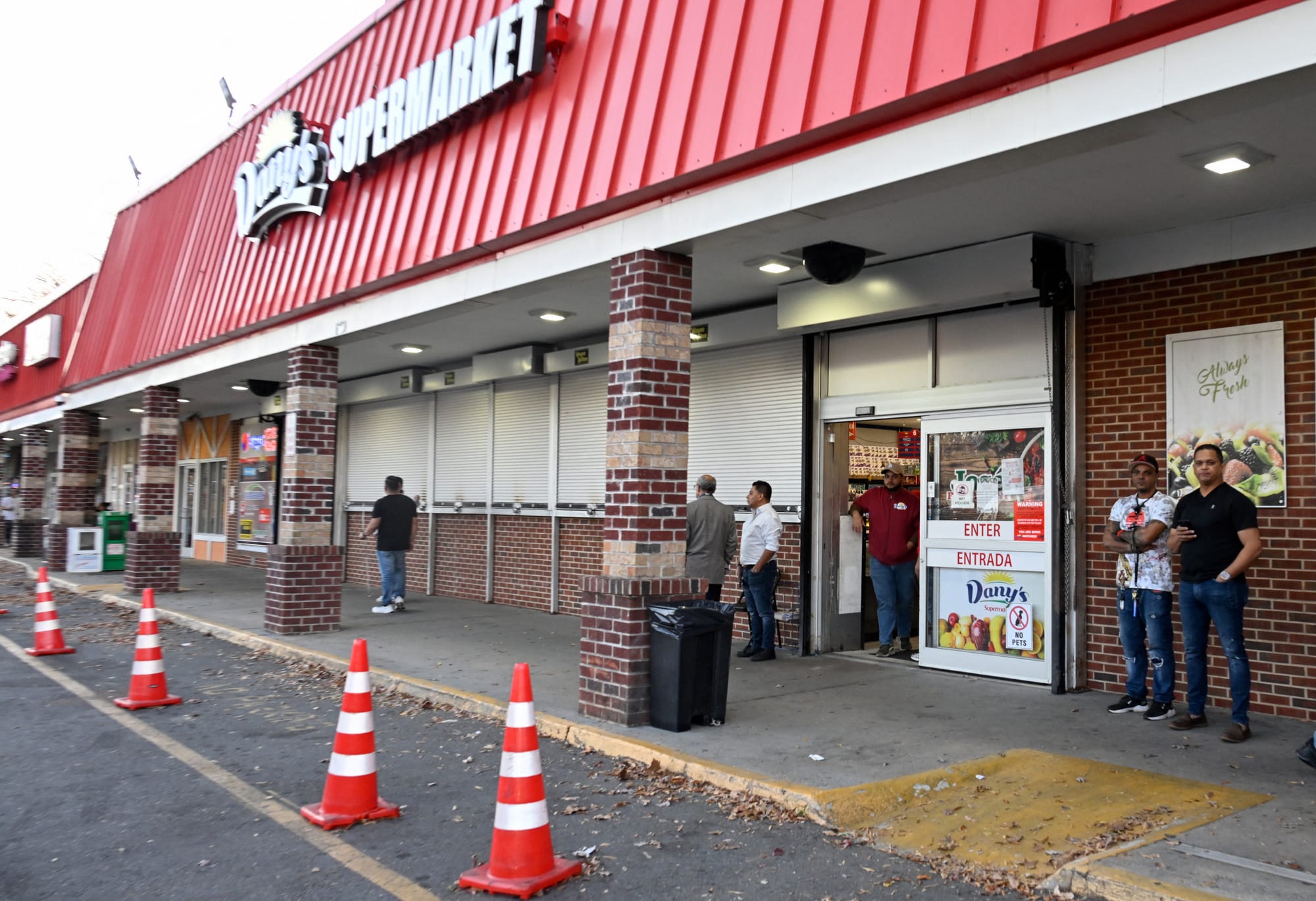
One local resident, an immigrant mother with children in Durham public schools who requested anonymity for safety reasons, told Prism that it’s important for North Carolinians to understand that they don’t have to wait for local organizations to take action. “If you see a need in your community, there’s nothing stopping you from meeting it,” she said.
The woman, who is now carrying her passport in case she’s stopped by federal agents, told Prism that attendance is down considerably this week across Durham public schools. She is hoping that community patrols will make parents feel safer sending their children to school with trusted community members.
Previously considered “sensitive locations,” schools, hospitals, and places of worship were once protected from immigration enforcement. But in January, Trump rescinded the policy that largely governed enforcement at these locations, replacing it with a directive “that gives ICE agents unbridled power to take enforcement actions in any of these spaces,” the National Immigration Law Center reported. Faith leaders across North Carolina are now on high alert, especially after reports from Siembra NC that immigrants were detained outside of two Charlotte churches. This includes a man who was volunteering to perform church cleanup.
Rev. Breana van Velzen is the executive director of Durham Congregations In Action (DCIA), a multifaith organizing network that includes hundreds of clergy members. Van Velzen told Prism that at the beginning of the year, DCIA was alerted that the Trump administration would likely prioritize Durham for immigration enforcement because of its status as a “sanctuary city.” Faith leaders immediately partnered with Siembra NC and the social justice organization Ready the Ground for Know Your Rights.
“We’ve been holding trainings for 10 months, including one on Saturday with almost 400 local residents,” van Velzen said. “Now these community members are putting what they learned into action, doing patrols and documenting ICE in the area. In some cases, we’ve been able to scare ICE agents away, and in others, we were able to film detentions so that we could at least alert families their loved one was taken. We’re as ready as we can be.”
In recent days, the reverend has told locals who are tracking immigration enforcement in the region that they can print out copies of the Department of Homeland Security’s Form G-28 in case they can get a person’s signature before immigration agents cart them away.
“The form can help people who are getting detained get a lawyer,” van Velzen explained. “If you can get the paper in front of them—even if they just sign an X for their name—you can send the form to a lawyer or organization so they have legal aid and someone who will advocate for them and make sure they don’t get disappeared.”
Churches, mosques, and synagogues across the state have a leg up when it comes to safety protocols and scenario planning because of the nature of the attacks they experience, according to the reverend, and because many of their members have also experienced persecution and state violence. But no amount of preparation will lessen the blow if ICE carries out enforcement inside places of worship, van Velzen said.
Under the first Trump administration, North Carolina led the country in the number of immigrants who lived in churches while fighting their deportations. The state was even home to a radical network of sanctuary leaders who organized against ICE together. Samuel Oliver-Bruno was one of those leaders, and his tragic fate remains a source of trauma for local organizers.
Oliver-Bruno was in sanctuary at CityWell United Methodist Church in Durham for 11 months when he left the church on Nov. 23, 2018, to attend what was supposed to be a routine biometrics appointment for deferred action. Instead, Oliver-Bruno was violently detained by plainclothes immigration agents. Members of the Durham community rallied around him and even attempted to stop ICE from taking Oliver-Bruno by surrounding agents’ cars. But it was to no avail. Oliver-Bruno was quickly deported to Mexico, where he died shortly after, separated from his wife and son. It was later found that federal immigration agencies monitored the sanctuary leader’s social media and colluded to detain him.
The anniversary of Oliver-Bruno’s detainment is approaching as federal immigration agents again descend on the state of North Carolina and threaten the lives of thousands of immigrant families.
“Many of us are really scared, but we’re still showing up,” van Velzen said. “I’m proud of our city, and I want people to know that clergy are ready to be called upon for whatever is needed. Tell us what you need and where to go, and we will show up.”
Editorial Team:
Lara Witt, Lead Editor
Carolyn Copeland, Top Editor
Rashmee Kumar, Copy Editor
Author
Sign up for Prism newsletters.
Stay up to date with curated collection of our top stories.