The smallest city in Massachusetts is taking on a big fight: protecting forests in a changing climate
Massachusetts loses nearly 5,000 acres of forest every year. A proposed 70-acre “climate-smart” demonstration forest is sparking debates in North Adams about climate resilience
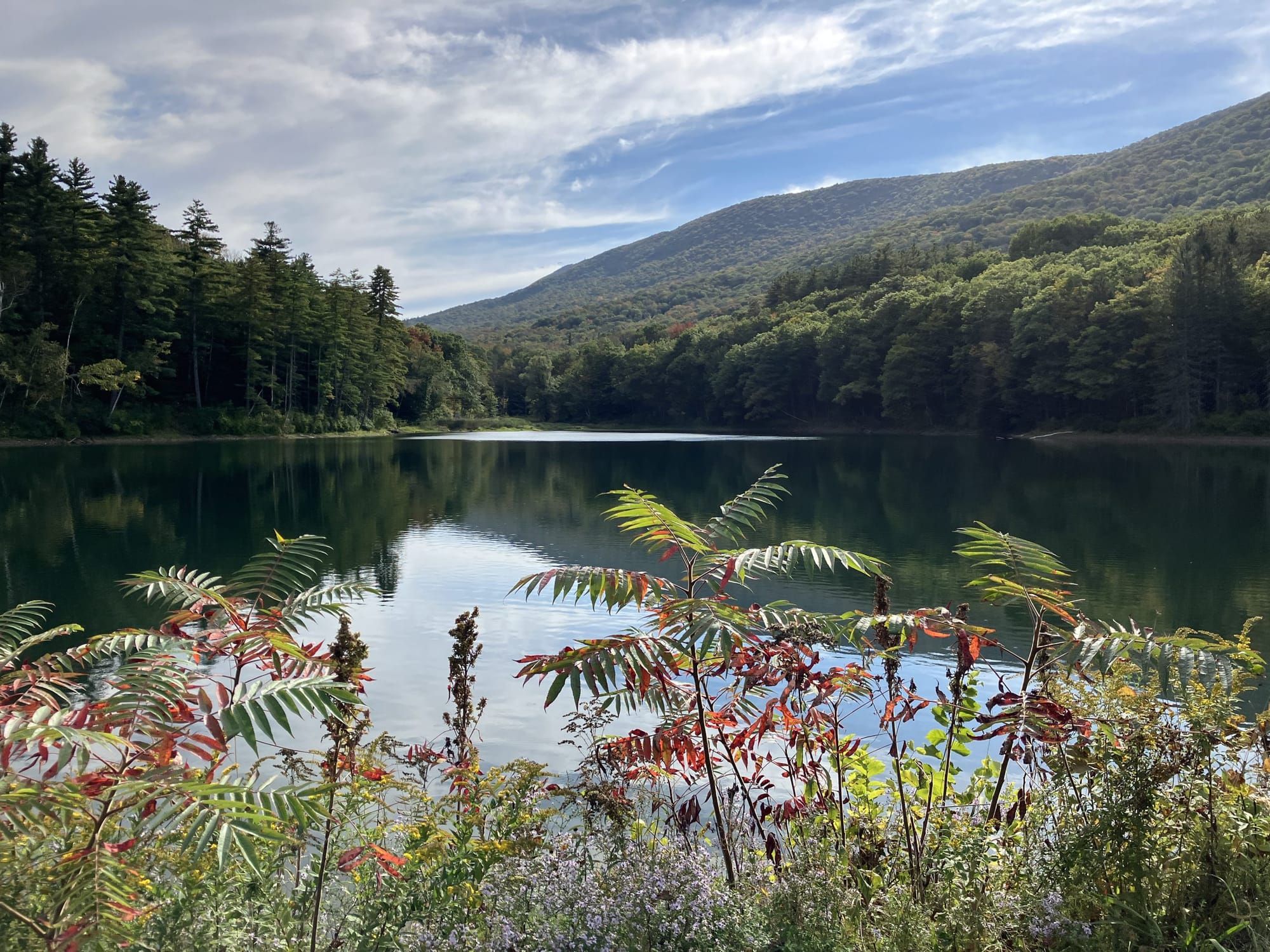
In North Adams, a recovering mill town in Massachusetts, a stream runs through white pines that are 90 years old. Michaela Lapointe enjoys listening to the sound of the water. Once, she saw the quick, sleek movement of an otter diving a few feet away.
For eight years, she has walked the Bellows Pipe Trail almost daily. She first came to the woods at a difficult time, when her father was dying of cancer. Now she comes to remember him.
Lapointe and her parents were born in North Adams, located in the Berkshires in the northwestern corner of Massachusetts. Over the last several months, North Adams, which calls itself the smallest city in the state, has become a focal point in a national debate about how forests—and people—can survive.
Predatory forces
At a time when Massachusetts is losing nearly 5,000 acres of forest every year to development, housing, industry, logging, and solar arrays, the North Adams community learned last summer of a proposal for a 70-acre “climate smart forest management plan” with the potential to impact and cut heavily across about 1,000 acres of city-owned land around the Notch Reservoir. The proposal has sparked debates about climate resilience and forest health.
From 2023 to 2024, New England Forestry Foundation (NEFF), Massachusetts Audubon Society, and the Massachusetts Executive Office of Energy and Environmental Affairs received more than $80 million combined in federal funding to promote “climate-smart forestry,” part of $1.5 billion in similar projects nationwide.
The “climate-smart” model claims to benefit both the changing climate and the forest. But ecologists, climate scientists, national environmental nonprofits, and community members have provided ample evidence that the North Adams plan would actively harm climate resilience, woodlands and wildlife, the city, and the local community.
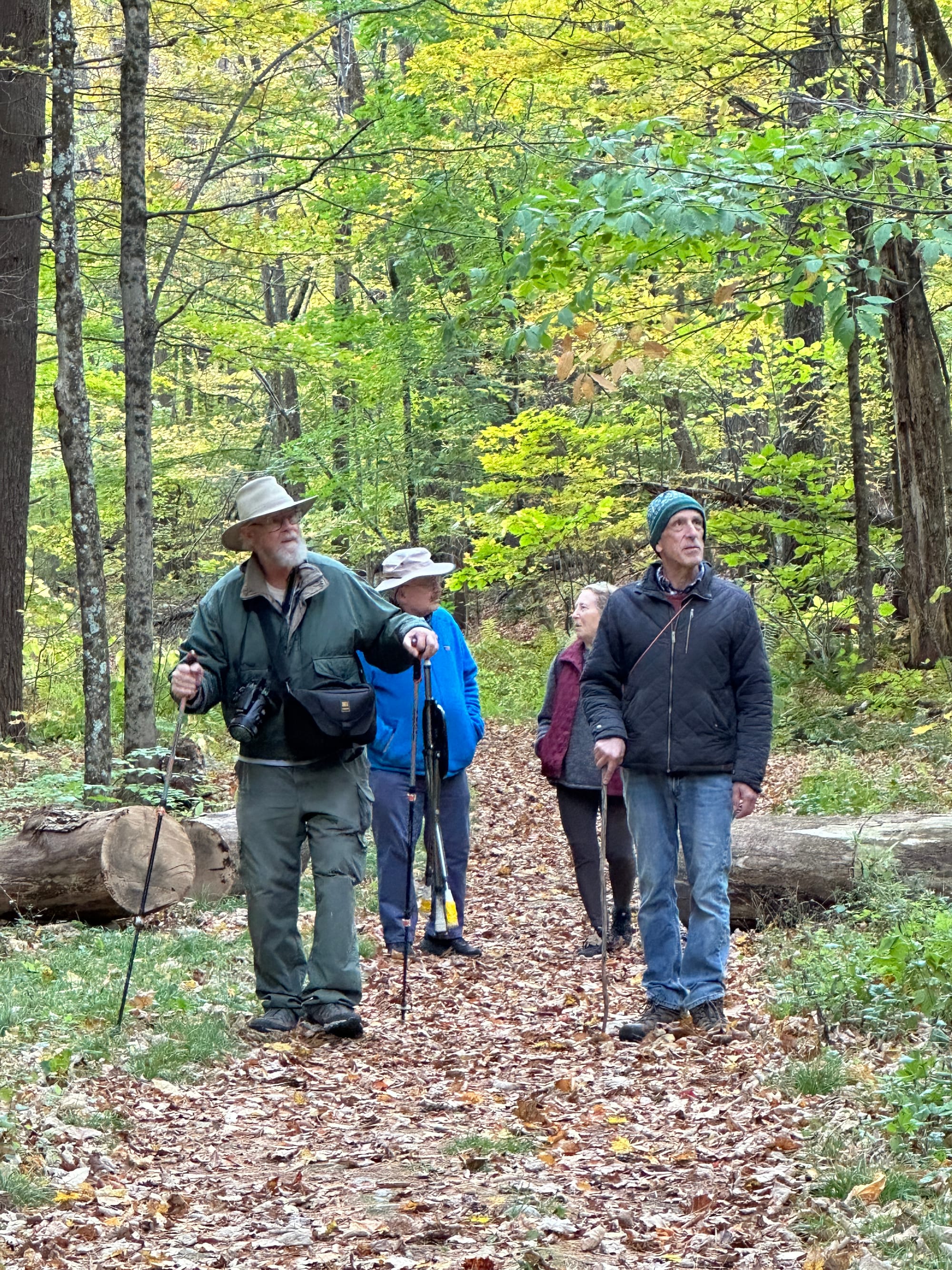
Woodlands provide central resources to North Adams, offering natural protection for the water supply and from the heat and stresses of the changing climate, as well as a source of health and sustenance for locals and visitors.
The city lost much of its manufacturing almost overnight in the 1980s and continues to struggle. Gradually the local community has begun to regenerate, as both the arts and the outdoors lure tourists to the region to walk the open ridges of Mount Greylock and hike the Appalachian Trail.
Today, the community faces another uphill climb: Massachusetts recognizes North Adams as an “environmental justice population,” and the Environmental Protection Agency (EPA) has awarded the city and surrounding area grants to restore former industrial sites and monitor air quality. Environmental justice communities have historically lacked fair access to a healthy, sustainable environment. The designation also signifies that local, state, and federal officials have a responsibility to involve locals in decisions and to protect them against predatory outside forces.
North Adams community leaders are concerned that the demonstration forest plan would extract resources to benefit outside interests and harm the larger community. They point to NEFF’s focus on harvesting trees and the organization’s powerful interests in the timber industry.
Rick Weyerhaeuser, the president of NEFF’s board of directors since 2022, is a former director of the Lyme Timber Company and a member of the family who founded Weyerhaeuser, one of the largest timbering companies in the world and among the largest private landowners in the U.S.
As part of NEFF and Mass Audubon’s initial operations plan, Gary Gouldrup, the consulting forester for New England Forestry Consultants, an offshoot of NEFF, called for an initial timber harvest of more than 40 acres of trees on 70 acres of steep wetland slopes. He presented the timber harvest as part of a much larger 10-year “stewardship” plan that Mass Audubon and the city indicated could include future harvests on up to 800 acres in the watershed, an area of land that channels rainfall, snowmelt, and runoff into a body of water.
Mass Audubon and NEFF approached North Adams with the Notch project, working with the Woodlands Partnership, a state initiative that purports to conserve forests and support the region’s rural economy. The groups claimed that the plan would promote climate resilience. In North Adams, they also aimed to set up a demonstration forest for a model they planned to use more broadly across the state.
However, ecologists, climate scientists, and environmental nonprofits like the Sierra Club argue that a model at this scale and speed would harm the climate, the forest’s resilience, and natural ecosystems. Foresters who spoke to Prism said that forestry can have a far clearer ecological focus—and a substantially lighter impact—than this plan has proposed.
Locals who live on the land also say the plan would damage mature forests and the climate for generations, or even irreversibly. And it could also have implications across the Northeast. If North Adams approved the proposal to remove trees from the reservoir, the city’s collaboration with NEFF would also broaden the scope of the timber industry in the state, including access to 1 million acres of forests on public-, city-, and state-owned land. Cutting on this scale also risks drinking water for at least 13,000 people.
The controversy
For North Adams, the controversy began on Aug. 5, 2024. Locals heard that the city’s Conservation Commission was considering a proposal to treat non-native plants with foliar spray within 400 feet of the water. At the meeting, a group of residents who lived close to the Notch also learned that the city commissioned a Forest Stewardship Plan in 2022 from New England Forestry Consultants.
At the time, the city had not yet given final approval, but it was poised to begin cutting a few months later in November. Catalyzed, Lapointe, Devin Raber, and other local residents formed two community groups to investigate the project: Friends of the Notch Forest and Save Notch Forest. On Sept. 12, 2024, the city, Gouldrup, and representatives of NEFF and Mass Audubon held a public presentation of the plan and allowed the community to ask questions. However, according to those in attendance, North Adams Mayor Jennifer Macksey did not allow Friends of the Notch to make their own presentations.
In the months since, local resistance has grown. Macksey initially paused the plan for an independent review before announcing late last year that the city would not move forward. Though she has continued to support the demonstration forest in public announcements and brief comments to local press, Macksey has not spoken publicly on the review process, and she declined to speak to Prism.
North Adams native Mary Wigmore is glad the project was put on pause. She knows these woods. She grew up walking in the hills and swimming in mountain lakes during high school summers.
“Growing up on Mount Greylock is why I became a forester,” she said.
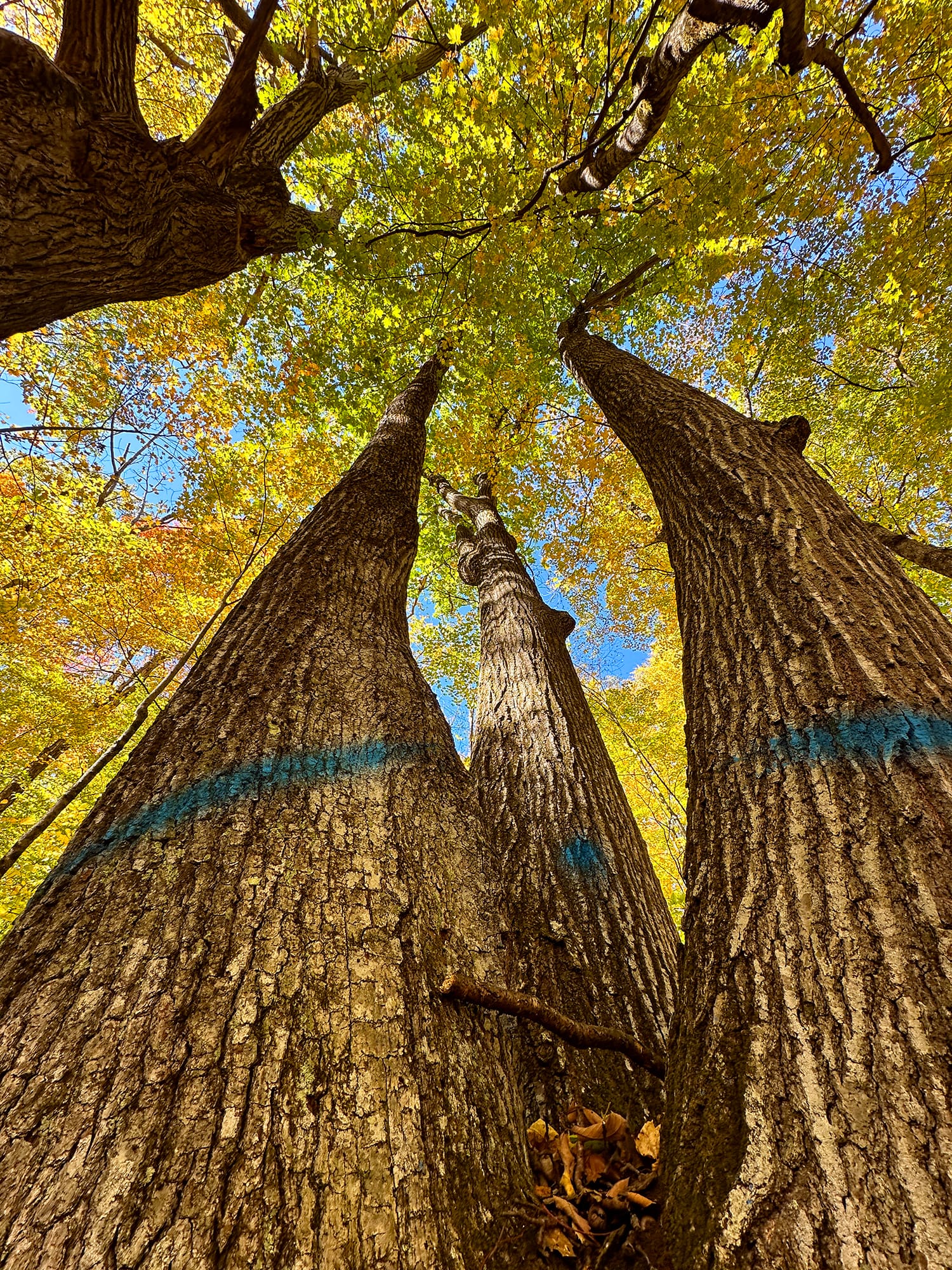
As the owner of Wigmore Forest Resource Management, she often talks with towns about their woodlands. According to Wigmore, Mass Audubon and the city could have offered the community more choices: resources for relaxation, pleasure, teaching, and learning, as well as monitoring and caring for forest ecosystems with a much lighter touch: for example, felling one or two trees, removing non-native plants by hand, or planting a small number of saplings with a clear plan for their care over time.
“This is an aggressive plan,” Wigmore said of the Forest Stewardship Plan. “I believe what they are proposing is not ecological forestry.”
She also noted the lack of communication between the foresters, the city, and the community—people who live in the area and were never heard.
“Their deep feeling and connection held no value in the room,” Wigmore told Prism.
On the surface, Mass Audubon’s plan sounds reasonable, said Doone MacKay, one of the co-founders of Save Notch Forest. But as she has delved into research on the arguments, she found clear evidence that many of the plan’s central claims are false.
When the plan argues that felling trees will help birds, animals, and native plants, she sees the life it would disrupt. When the plan says cutting will protect the watershed and the reservoir as well as help the forest store more carbon and adapt to hotter summers, warmer winters, and heavier rains, she sees that the plan would store less carbon, damage the reservoir, increase erosion, and harm the forest’s health.
“You have to walk the ground,” MacKay said.
She has climbed the slopes, matching maps to living woodland. She has heard barred owl nestlings and traced the tracks of a black bear in the snow.
As part of a process known as clear-cutting, the plan argues for the need to cut all of the trees across 9.5 acres, amounting to hundreds of trees, and plant oak saplings. But MacKay has stood among oak seedlings already growing where the trees and natural conditions prove they will thrive. And she’s seen the native plants and trees that clear-cutting would remove and the birds and pollinators and wildlife who rely on them.
MacKay knows these trails well; she has lived in North Adams for more than 20 years and grew up in the woods of upstate New York. She studied field botany at Williams College with Henry Art, professor emeritus and head of the environmental studies department for 30 years.
On a November day last year, MacKay pointed out striped maple growing vigorously in the understory of the red pines, as old as any she has seen in the mountains. The understory tree makes good late-winter food for moose and nesting habitat for small birds like warblers, she said.
The Bellows Pipe Trail is internationally known, she said. People come from around the world to hike up into the oldest protected forest in the Commonwealth and also connect with the Appalachian Trail.
The Notch is a young wood, according to MacKay. Like much of the forest in the Northeast, it was clear-cut by the early 1900s. North Adams bought the land to protect the water, and the forest has grown back for almost 100 years. MacKay agrees with the plan’s assertion that forests can give essential protection against climate change and that the changing climate will stress the woodlands.
She and many locals also believe the plan would put these forests at risk.
Many kinds of life in relationship
“Forests are vital organs of a living planet,” said environmental scientist William Moomaw. The professor emeritus of international environmental policy at Tufts University co-authored a Nobel Peace Prize-winning report on climate change in 2007, and he lives in the northern Berkshires. “That’s why they matter. Think how we would survive if someone started taking out kidneys here and lungs there.”
Forests can cool vast areas, he explained, their effect in the Berkshires influencing Boston 150 miles away. Forests also draw carbon out of the air; move and hold water; and protect against flooding, erosion, and fire.
Forests are vital organs of a living planet. Think how we would survive if someone started taking out kidneys here and lungs there.
William Moomaw, environmental scientist
“We have removed more than a third of the forests on the planet,” he said, “and we are rapidly degrading much of the rest.”
At the root, understanding a woodland’s health means knowing how a forest lives. A forest means more than a group of trees, Moomaw said. The woods hold many kinds of life in relationship.
“There’s a common phrase that forests hold 80% of the biodiversity in the world,” he said. “Biodiversity makes a forest.”
Trees grow together with plants, wildflowers, and wildlife: porcupines and frogs; pollinating insects and songbirds; lichens and mosses, fungi, and mycobacteria in the soil. And they all move together. Natural systems overlap. Leaves turn sunlight into wood. Lichens dissolve minerals from rocks into soils to become nutrients for the trees.
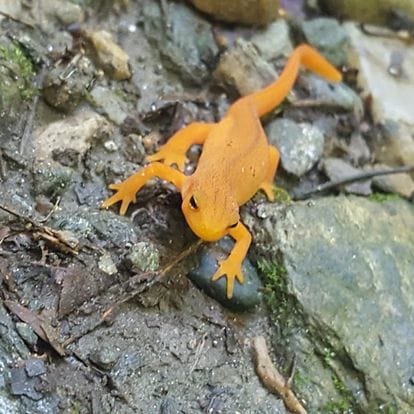
“If we’re worried about climate, or resiliency, or diversity,” Moomaw said, “then it’s better to let the forest grow.”
The plan also says that undisturbed, diverse forests like the Notch can withstand heat and severe weather. The Notch has that ability now, and MacKay said she is concerned the plan would change this.
The city’s plan calls for patch-cut clear-cuts on 9.5 acres, 65% canopy removal on one acre, and up to 33.3% canopy removal on 59 acres. It also calls for a haul road that is one mile long and 30 to 40 feet wide, four landing areas about two acres each for logging trucks to collect logs and turn around, and skidder tracks throughout the 70 acres that could harm streams and wetlands.
To assess the plan’s real effects, Moomaw and Robert Leverett, a nationally recognized expert in mature and old-growth forests, said it’s important to consider the deep impacts on the trees—and the trees’ impacts on earth, water, and air.
They would also look at the understory, the plants growing on the forest floor, the animals and birds that live in mature forest, and life in the soil.
But few supporters of the plan will give facts to defend it. Andrew Randazzo, forest ecologist for Mass Audubon, who spoke at the North Adams City Hall presentation in September 2024, and Joshua Rapp, senior forest ecologist at Mass Audubon, declined to speak to Prism. So did Mass Audubon West’s Regional Director Becky Cushing Gop and Regional Education Manager Dale Abrams.
The most complete cuts the plan calls for would focus on stands of red pine and white pine planted in the 1930s, Art said. As an environmental sciences professor and former president of the Woodlands Partnership, he spoke as a strong proponent of the plan, because he wants to see a market for local wood and a return of the timber industry in the region.
He agreed with the plan’s assessment that the red pines are coming to the end of their lifespans, and hardwoods are growing among them. A patch-cut clearcut means “you cut everything in it,” he said.
Walking through the red pine, MacKay, the Save Notch co-founder, touched seedlings of maple and red oak. On warm days, looking into the canopy, she has photographed deciduous leaves against the sky: maple, birch, beech, and more. Cutting at this scale, she said, would destroy not only the larger trees and smaller trees for “firewood and pulp,” but also hundreds of native plants and young trees: seedlings and saplings in their early years and adolescents 10 or 20 feet high.
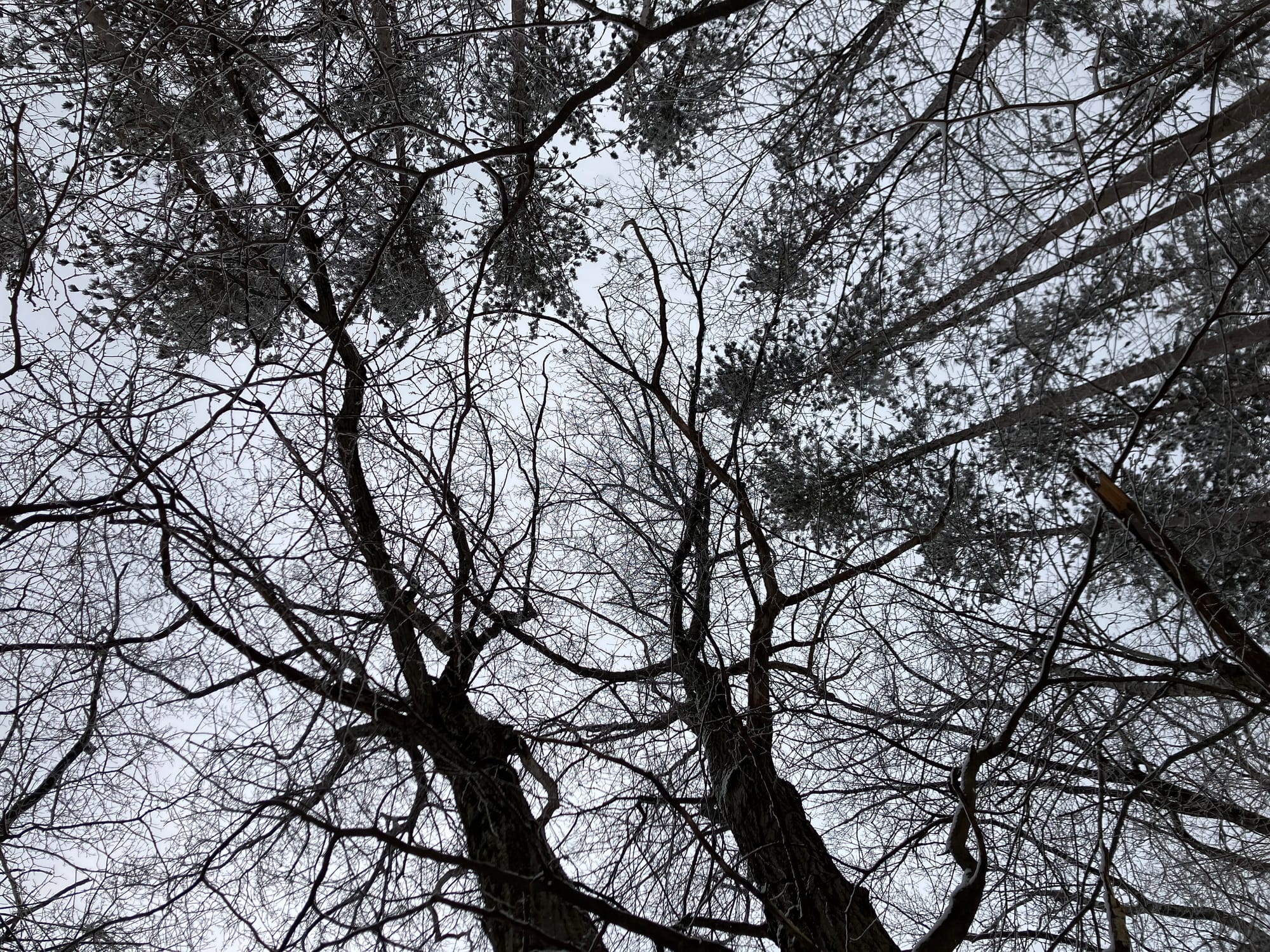
NEFF wants to fell trees before they die to generate revenue to recover value while the tree “has a viable product that can be sold,” said Gary Gouldrup of New England Forestry Consultants, principally responsible for the Notch plan.
In the patch-cuts, Gouldrup and Mass Audubon proposed planting 1,737 saplings of oak and hickory, all the same age, arguing that planting trees adapted to warmer climates may help a forest as temperatures rise. Wigmore is familiar with this approach, but she argues that light touches can also encourage climate adaptation, such as removing 10 trees in an acre, or five trees to create an opening and planting a few seedlings and protecting them.
Cutting trees can often bring in non-native species like honeysuckle, bittersweet, and multiflora rose, according to Randazzo. They grow only in a few isolated places in most of the Notch now. Non-native species often put down roots when trees are removed, he said.
A disturbed ecosystem will lose native plants, Moomaw explained, as non-native plants can outcompete them, and the planting of saplings will not replace them. “It is impossible for the original ecosystem to return,” he said.
The plan also argues that removing trees vulnerable to illness or insects would improve the health of the forest. Moomaw disagrees. “Nothing in science or ecology suggests it’s justified to take out a species because it might get sick,” he said.
The state Department of Conservation and Recreation (DCR), which holds final approval on the plan, declined to comment. DCR North Berkshire foresters Kevin Podkowka and Peter Grima also did not respond to requests for interviews.
Gouldrup argued that planting saplings would increase the forest’s carbon storage, because saplings draw carbon dioxide out of the air as they grow.
Leverett said mature trees can draw in vastly more. He said he respects foresters when they know the woods, the science, and natural ecosystems, and talk through decisions honestly. But the plan’s claims for carbon sequestration, he said, are scientifically wrong.
A tree will need to grow for 30 years before it will store enough carbon to be significant, he said. And trees in good health can continue to sequester more for 100 years.
In measuring white pines, Leverett has shown that at the stand level, the trees store their greatest amount of carbon above ground between 40 and 80 years. And from 80 to 120 years old, they gain more each year than they did before age 40.
“Now that’s an untold story,” Leverett said, “because then from 120 to 140 years, the gain in carbon will be a lot higher than it was from zero to 20 years.”
A tree draws carbon out of the air through photosynthesis, and a tree 80 to 100 feet tall may have leaves or needles covering 40 feet or more. Now, Leverett said to imagine how many leaves a 100-foot oak will hold on deep, wide branches, compared to two or three feet of leaves on a sapling three feet tall.
“You’re going to get by far more photosynthesis in the overstory,” Leverett said. “Some of the redwoods are 2,000 years old, and they can sequester as much as a metric ton of carbon in a year. A metric ton. Now how does that compare with some seedlings?”
Water carries concern
At the Notch, the forest is growing on steep wetlands. The Forest Stewardship Plan recognizes the land as “extremely important” for protecting the city’s water. Loam and fine sandy soils on a 15- to 60-degree slope are vulnerable to erosion, heavy rain, and extreme weather.
The community at the Notch is already seeing these forces in action. Devin Raber and her wife Deb moved to the area in 2021, and by spring, they experienced the consequences from logging at the top of the hill behind their house.
“The road was a river inches thick of silty water,” Raber said.
The Rabers have had neighbors with flooded basements and sandbags in their driveways, and the city crew has come by several times with payloaders to clean the road and sewers.
“I can attest to that,” North Adams Commissioner of Public Services Timothy Lescarbeau said at the September City Hall meeting.
Raber said she wants to know how the plan will affect the amount of water coming down Mount Greylock, where the runoff moves, and how fast and forcefully the water flows.
Scientists and professionals have amplified the concern. Walter Cudnohufsky, a landscape architect in Ashfield, Massachusetts, and former director of Conway School of Landscape Design, said clearing trees can more than double the volume of water coming off the slope.
“Forest runoff is approximately 30%,” he said, “and it can increase to 70% if that forest is turned into lawn or meadow.”
Trees and soil act as a sponge, said Glen Ayers, a soil scientist and water systems specialist in Ashfield. The tree canopy slows the rain, so water soaks into the earth, and moist earth absorbs more. A healthy forest holds and releases water over time, keeping the city’s water supply steady.
Trees also act as natural pumps, Moomaw said. They draw water up and evaporate it, so water moves through the air. Without them, more water flows on the surface.
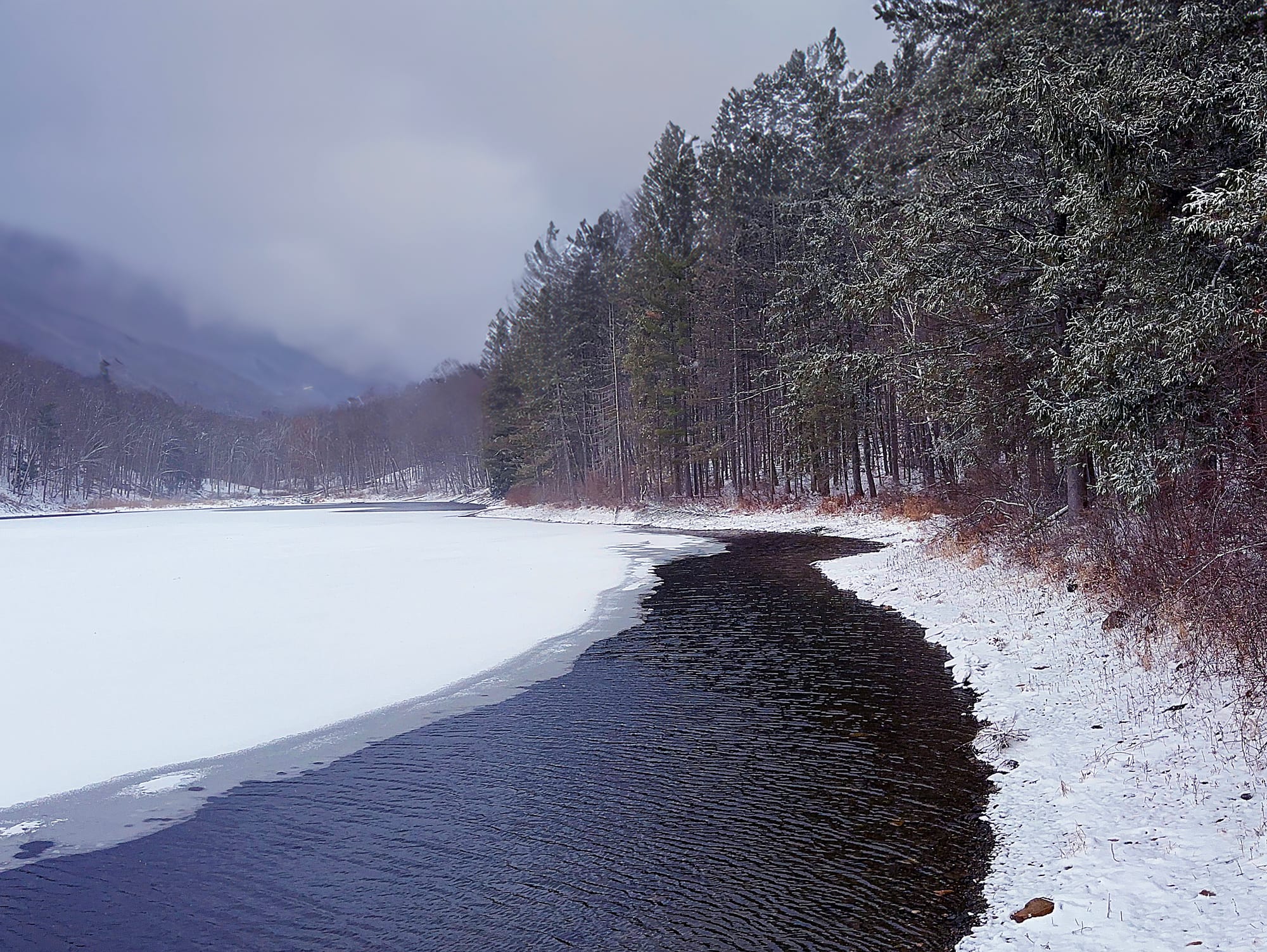
If more than twice as much water runs off the slope and flows faster, without trees and earth to slow it down, locals told Prism that they want to know how the mud, silt, and chemicals the water can carry will affect the reservoir and the dam, which is also due for repairs.
They also want to know how the water will affect the roads and the city’s water and sewer system, as well as how the volume of water can affect the Hoosic River and the city’s 70-year-old flood protection systems. The U.S. Army Corps of Engineers is currently studying weaknesses in the cement flood chutes.
According to Randazzo, no hydrological study has been done, and the mayor and the conservation commission confirmed that NEFF, Mass Audubon, and the city have not conducted any evaluation or analysis of the water system. Lescarbeau and Mass Audubon have not spoken with the community since the Sept. 12 presentation. Lescarbeau declined to speak with Prism and directed all questions to the mayor.
Water carries another concern central to many in the community: toxic chemicals. In order to remove non-native species, in August, New England Forestry proposed spraying chemicals, among them glyphosate, the active ingredient in the herbicide Roundup.
“This is my health, my children’s health, all of my family who live here,” Lapointe said in response to the plan. “My father died of cancer. And in the original plan, they were talking about spraying carcinogenic chemicals. … Who will get held accountable when the water is contaminated?”
Macksey, the mayor, and Lescarbeau had agreed to mechanical treatments in the first year. When asked by a North Adams resident at the September meeting whether the city might spray later, Randazzo said, “I don’t know.”
Tracing priorities
Leverett and Moomaw spoke with respect for Mass Audubon of the past—and with concern for the organization’s strategy in the present. They see a divide between people who view forests as living places and people who see them as a mechanism for economic extraction.
The mayor has previously said that North Adams’ motivations are not economic. The plan allotted the city $40,000 in revenue from the timbering—and the operations plan shows initial costs of $59,000.
The Woodland Partnership supports North Adams entrepreneurs in their mission. As voices for the Woodlands Partnership, Art, as former board chair, and Lisa Hayden, Woodlands administrative agent and NEFF’s director of outreach and engagement, advocate for timbering and the market it would feed for wood, foresters, loggers, and sawmills.
For the Notch, Hayden said, the mill would not be local, and wood products would not stay local.
Dicken Crane, the Woodlands Partnership board chair, did not respond to requests for an interview. Asked how much revenue the project would generate as a whole, including revenue for the timbering company and the mill, Gouldrup declined to answer. He also declined to specify which timbering organizations NEFF and New England Forestry Consultants often work with, but he said that local foresters would be too small and too slow to compete in the bid.
NEFF has relationships with the timbering industry across a wide region, and NEFF profits from timbering. The organization oversees forestry, including active management for timber, on more than 1 million acres in the Northeast, Hayden said.
As a nonprofit land trust, NEFF presents its mission as protecting forested land from development and being “forestry-centered,” with a clear focus on cutting trees. In Maine, where NEFF holds more than 700,000 acres, the state’s forests are “getting over-harvested and having problems with carbon stocks,” said Jen Albertine to North Adams community members in September. Albertine is the climate change and land justice director for the Mount Grace Conservation Trust in the Quabbin Reservoir region.
“We ‘actively manage’ the community forests we own,” Hayden said, “with management plans to actively harvest for timber.”
Tracing a pattern in priorities, many members of the Friends of the Notch Forest and Save Notch Forest say the plan proponents’ values are clear: creating a market for wood, selling trees for their value or for pulp and firewood, and cutting at high volume. Locals see the Notch plan as supporting economic goals above ecological ones—and as supporting outside timbering interests over the city’s needs.
As North Adams raises its voice, conversations in the Northeast are reaching a turning point. Massachusetts is considering new legislation that could strengthen protection for 3 million acres of forest in the state and limit the timbering industry’s access to 1 million acres of state- and city-owned woodlands.
On spring evenings, the Notch forest advocates continue their conversations to save their community, and they listen for owls calling on the ridge.
Correction, Monday, May 27: Due to an editing error, this story previously stated that the EPA awarded North Adams and the surrounding area a grant to monitor “area quality.” The grant was to monitor air quality.
Editorial Team:
Tina Vasquez, Lead Editor
Carolyn Copeland, Top Editor
Rashmee Kumar, Copy Editor
Author
Kate Abbott explores Western Massachusetts and beyond as a freelance writer and journalist, editor, and oral historian. A longtime former editor of Berkshires Week & Shires of Vermont, she writes
Sign up for Prism newsletters.
Stay up to date with curated collection of our top stories.