Policing, protest, and the future of Atlanta: Inside the movement against ‘Cop City’
In a roundtable conversation with Prism, the co-editors of the new anthology “No Cop City, No Cop World” discuss the unique conditions that led to Atlanta’s Cop City and the strategies for fighting more than 80 similar projects nationwide
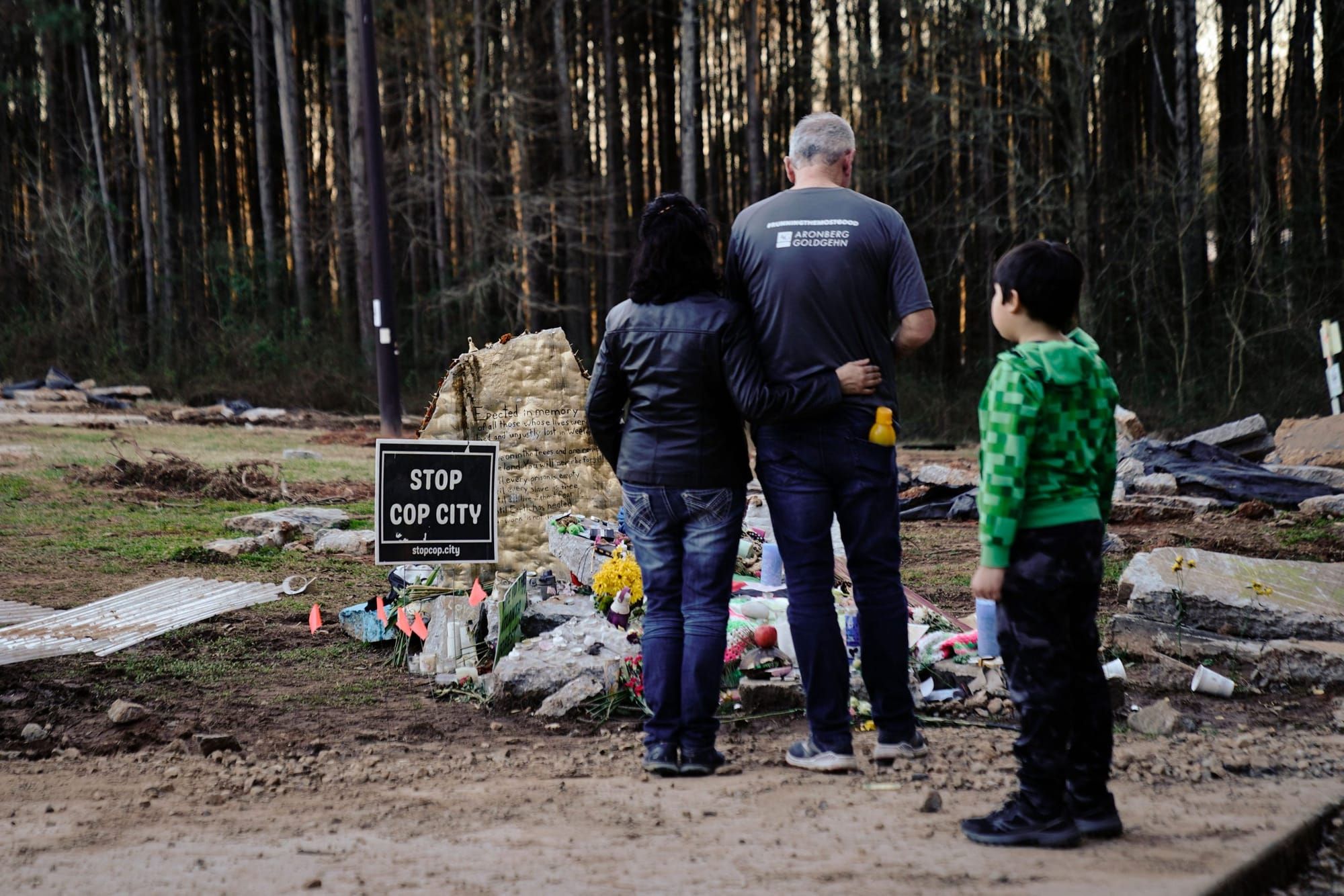
Years of organizing in Atlanta led community organizers Kamau Franklin, Micah Herskind, and Mariah Parker to the fight against “Cop City,” the Atlanta Public Safety Training Center that opened earlier this month on over 85 acres of Weelaunee Forest. The police training facility cost taxpayers $67 million.
Though the training center is now open, activists remain committed to fighting against the facility and the use of public funds for increased policing. And rather than accept policing and ecological destruction as inevitable, Franklin, Herskind, and Parker’s new anthology “No Cop City, No Cop World: Lessons From the Movement” offers readers a strategic vision that connects state violence with environmental collapse and reimagines a future beyond militarized policing. The anthology doesn’t present a blueprint, but rather a source of inspiration for movements resisting the expansion of police power in communities across the country. Anthology contributors include forest defenders, environmental justice advocates, political prisoners, Indigenous activists, abolitionists, educators, legal scholars, and academics.
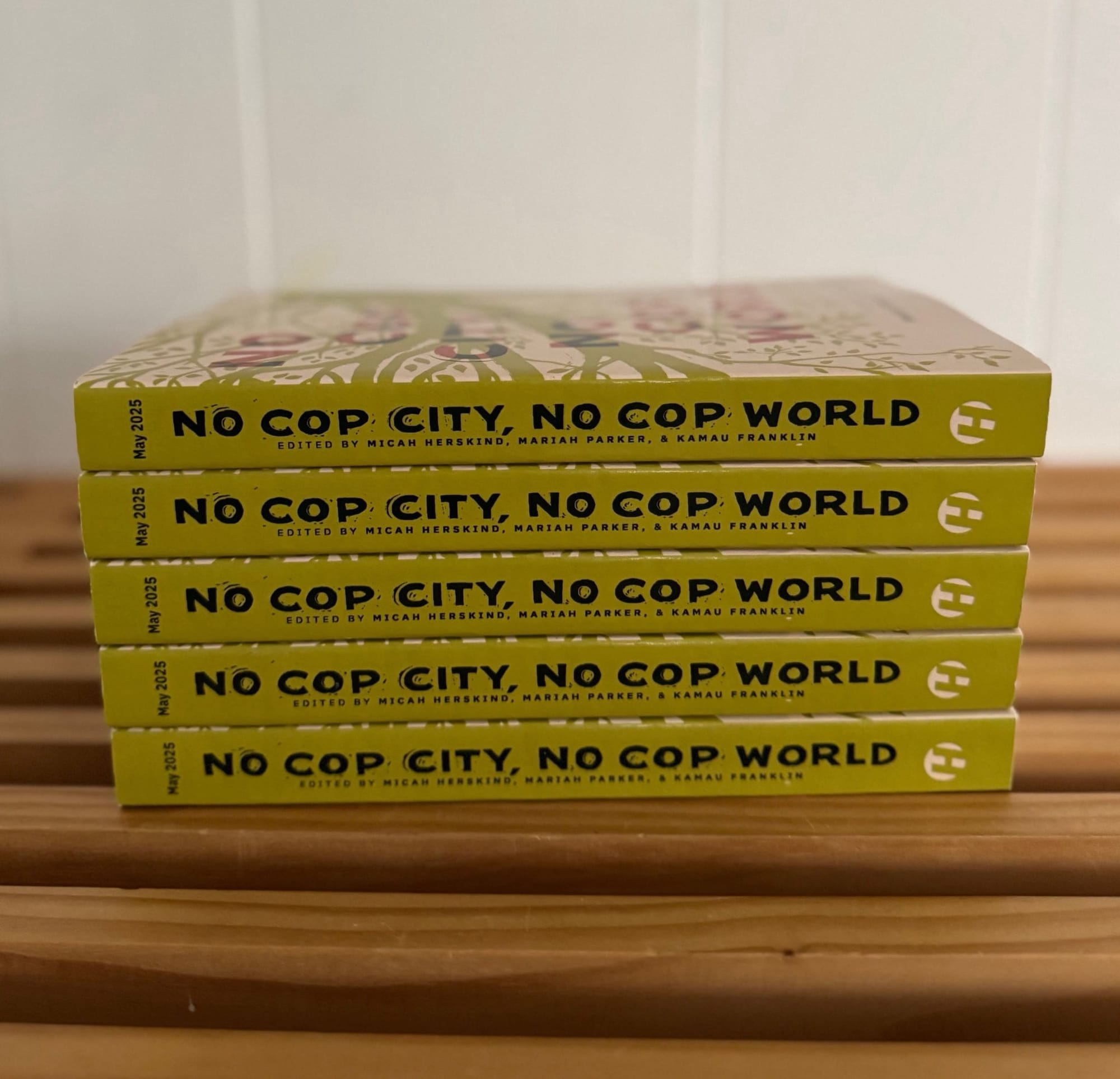
“No Cop City, No Cop World” was released today by Haymarket Books. Franklin, Herskind, and Parker are having a launch party on May 21 at the bookstore Red Emma’s in Baltimore. Prism recently sat down with the anthology’s co-editors for a conversation that connects local oppression and resistance to international struggles, as the movement to Stop Cop City expands into a broader fight against a Cop World. This conversation has been edited for length and clarity.
Adryan Corcione: Chapter 1 describes “the Atlanta Way” as a form of organized abandonment, a term coined by abolitionist Ruth Wilson Gilmore. For Black Atlantans, this means “the state’s retreat from the provision of social welfare and interrelated buildup of policing and imprisonment to manage inequality’s outcome.” How do you see Atlanta’s historical context shaping this movement? Could a movement like the one against Cop City emerge elsewhere?
Micah Herskind: Atlanta’s history of disinvestment, gentrification, and buildup of policing has absolutely shaped this movement. In the leadup to the 1996 Olympics in Atlanta, the city tore down public housing, poured massive amounts of public money into redevelopment projects, and built a new jail to round up mainly Black homeless men. In years since, the city has obsessively emphasized development, working to draw big tech and other industries, all at the expense of working-class Black people who have been pushed out of the city.
Meanwhile, city leadership has continually increased the police department’s budget, with deadly effects. Atlanta police’s murder of Rayshard Brooks in 2020 was one of the sparks of the nationwide uprisings, leading people to take to the streets and engage in different kinds of militant protest and rebellion. Our contributors detail how Atlanta’s organizing history shaped what would become the movement as well, from the Occupy days, through the building of alternatives to policing, the 2020 uprisings, and so much more.
With that said, the emergence of Cop Cities certainly isn’t unique to Atlanta, both in the general sense that municipalities across the country have poured resources into policing at the cost of social well-being, but also in the specific sense that there are Cop City proposals popping up across the country, just as Atlanta’s Cop City followed Chicago’s Cop Academy.
Mariah Parker: Look at the corporations that were founded here because of Georgia being the best place for business, which means the most terrible place for workers, [given] the late wage exploitation that has then gone into corporations like Coca-Cola, Norfolk Southern, [and] Delta that are funders of [Cop City], that sit on the board of the Atlanta Police Foundation. They give lavishly to the Atlanta Police Foundation, money that’s stolen from Southern workers in a uniquely Southern way to fund this project. It’s something that is somewhat replicable elsewhere, given we all live under capitalism, but there are some shades to it in Atlanta that could have only happened here.
Corcione: Mariah, in Chapter 13, you and Kamau interviewed student organizers in the Stop Cop City movement who faced significant repression for their activism. We’re now seeing similar and intensified action against pro-Palestine student organizers. What do these parallels say about student activism and state repression today?
Parker: Both [student movements] speak to how much the state fears the power of students as a very radical bloc of people, as very imaginative and liberatory-minded. Many students involved in the encampments that emerged at places like Emory University were vital to bringing the demand to stop Cop City into conversations around Palestine, like elevating that the Georgia International Law Enforcement Exchange program learns tactics from the Israeli occupation forces to use on the people of Atlanta.
Corcione: Kamau, in Chapter 10, you wrote about how the group you founded, the Community Movement Builders, challenged the narrative that more policing means more safety. How did you see the co-optation of identity politics, such as by Black Atlanta Mayor Andre Dickens, used to legitimize Cop City?
Our role was to highlight Black opposition to this project based on the shared history of false arrest, brutality, murder, longer sentences, and a contain-and-control policy toward the Black community.
Kamau Franklin, co-editor of “No Cop City, No Cop World”
Kamau Franklin: Mayor Dickens is a part of a corporate-run structure whose job it is to sell the police to our community as an entity that protects us, as opposed to one that targets us. During the height of the struggle to stop Cop City, he used his identity to give cover to the project. In fact, he called a major press conference with other Black leaders and told the larger Black population that Cop City was in the best interest of Black people because he knew he was losing the propaganda war.
Our role was to highlight Black opposition to this project based on the shared history of false arrest, brutality, murder, longer sentences, and a contain-and-control policy toward the Black community. Poll after poll showed that Black people were far more skeptical about Cop City as an entity. We did this work by going into the community and highlighting what Cop City was. We saw that this organizing was effective.
Corcione: One of the defining features of this movement is its decentralization: There’s no singular ideology, strategy, or leadership structure. What do you think this kind of organizing offers?
Parker: The power of decentralization invites people to use their own creativity and fight back. A diversity of tactics is something that has made the movement vibrant and successful in slowing down the facility.
Herskind: I invite readers to evaluate decentralization and multi-tactical movements. As participants, we got to see firsthand how exciting it was for various tactics to emerge. Also, the facility has been built. I want people to also think in their fights about what pieces of what we have done worked best and would work best in their context, and what lessons can be learned from where the movement fell short in some places.
Corcione: What do you hope for readers outside of Atlanta to gain from the lessons of the No Cop City movement, given that there are over 80 ongoing Cop City projects nationwide?
Parker: Inspiration to fight is the key thing. I hope that the ingenuity of everyday people, of workers of all kinds, to devise these ways to struggle inspires everyone to believe in their own genius and dream up really bold new ways to fight. What can we do wherever the next fight emerges?
Herskind: This movement has brought together people with very, very different perspectives on militant direct action, property damage, ballot initiatives, and above-ground tactics. People have committed to solidarity with each other. The folks who are engaged in the more traditional tactics have refused to denounce acts of sabotage, property damage, and more militant direct action. We’re witnessing this repression of the movement with 61 people facing RICO and other charges like arson, for which the state has no real evidence. It’s important to see a united front committed to the idea that no one should be facing repression for trying to stop the destruction of a forest for the creation of a massive, violent police playground.
Editorial Team:
Tina Vasquez, Lead Editor
Carolyn Copeland, Top Editor
Rashmee Kumar, Copy Editor
Author
Adryan Corcione is a white queer essayist and journalist living on occupied Lenape land. Their writing has appeared in Teen Vogue, Truthout, Filter Mag, and more, covering topics like harm reduction,
Sign up for Prism newsletters.
Stay up to date with curated collection of our top stories.