New York City renters turn to lawmakers to tackle affordability crisis
From January to December 2023, rents in New York City increased by 3.4%
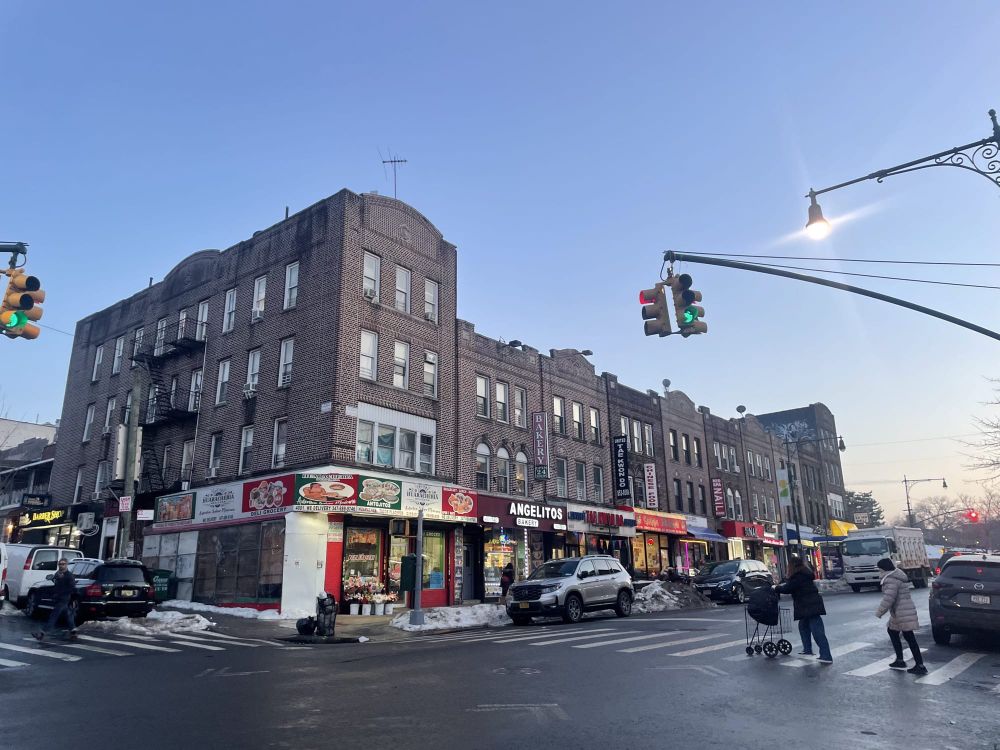
John Leyva has lived in his two-bedroom apartment at 63 Tiffany Place in the Carroll Gardens neighborhood of Brooklyn for almost 30 years. He moved into the building in 1994 under a tax agreement between the city and the landlord to maintain the apartment’s affordability for the next 30 years. But Leyva now says his home may soon become too expensive for him and many of the other tenants in the 70-unit structure.
Rents in Leyva’s apartment building are partially subsidized by a low-income housing tax credit (LIHTC) agreement that is meant to incentivize the development of affordable housing. The LIHTC agreement at 63 Tiffany Place is set to expire in 2025, and without that agreement tenants will be left to face the whims of a rental market that has set sky-high rates into overdrive in the last four years.
From January to December 2023, rents in New York City increased by 3.4%. In Carroll Gardens, as of Jan. 18, the median market rent is $5,350, up 19% from last year. If forced to move, Leyva, who currently pays $1,119 a month for rent and is on disability, would have to pay close to $4,200 more for a two-bedroom apartment in the community where he and his 15-year-old son have lived for the majority of their lives.
The feelings of uncertainty about the future have pushed Leyva and other tenants to come together and advocate for the building’s owners to extend the LIHTC agreement, allowing tenants to remain in their homes at a rate they can afford. But Leyva said CHT Place LLC, the company that owns the building, did not address tenants’ concerns about the LIHTC agreement’s expiration for most of last year.
Leyva said tenants still don’t know what CHT Place LLC has in store for the future of the building but that conversations between CHT’s attorneys and lawyers representing the tenants have begun in order to figure it out.
“Ownership stands ready to work with the tenants and their representatives on exploring options to ensure a secure future for the building once the regulatory agreement expires in 2025,” a representative of CHT Place LLC told Prism. “We are glad to be working together on the future of the building before the expiration occurs and are optimistic we can come up with a win-win solution by working together.”
“When you ask me, ‘What’s the plan,’ I feel stupid. I don’t know,” Leyva said. “I should have a plan. I don’t know what to do. I am just fighting for my life, and I am fighting for my son.”
Levya told Prism that had he known he would feel trapped today, he would not have moved to his current apartment. He equated making an apartment affordable only for a certain number of years to “a cruel joke.”
“Nobody thinks, ‘Well, I’ll figure it out in 15 years.’ You don’t,” he said. “Years fly by, before you know, and then what? Where are you going? Because now you’re priced out. I’m priced out of New York. I’m fighting it for my life.”
Stories like Leyva’s and the tenants at Tiffany Place are commonplace in New York City. As of last year, rents in places like Manhattan have risen 30% from their pre-pandemic levels, hitting a record average rent last July when a report from CNBC clocked the median rent in the borough at $4,400 per month. In other boroughs, like Brooklyn and Queens, median rents have also been at near all-time highs in the last year: $3,700 and $3,528, respectively.
The record-breaking housing prices have contributed to rents becoming a severe burden on residents. Last April, The New York Times reported that more than one-third of the city’s renting population spends more than half of their income on rent. Ultimately, the exorbitant cost of housing has been a key factor in driving New Yorkers away, as Business Insider reported that the median wage of those leaving the city in 2022 was $49,000 per year, making their yearly salary incompatible with sky-high rents.
Housing advocates say that, through inaction, state and city lawmakers have allowed tenants to feel uncertainty and instability in their living situation due to high rents and the legal power asymmetries between tenants and landlords.
“That makes it really difficult to do things like plan a family or get a job that you feel good about,” said Cea Weaver, the campaign coordinator for Housing Justice For All.
Issues with affordability and displacement could feed into the city’s lack of capacity to accommodate homeless New Yorkers at shelters. Data compiled by City Limits shows that more than 146,000 people slept in city shelters last October, which represented an increase of about 144% from the start of 2022.
Good-cause eviction law
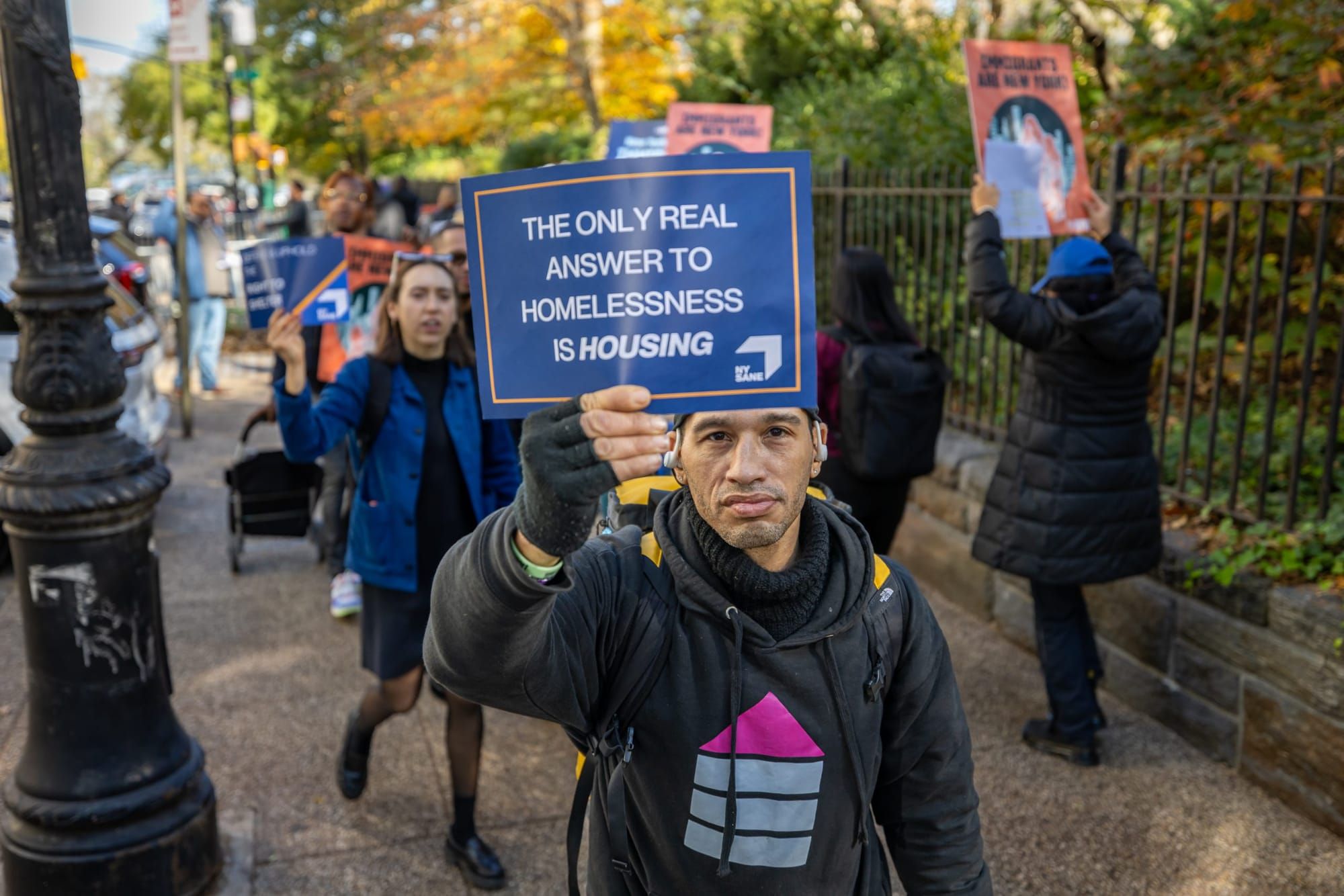
To start remediating the issues of the present and planting the seeds for a more effective way of housing New Yorkers in the future, advocates and tenants say they are betting on a policy agenda that could establish baseline housing stability protections, as well as gradually offer tenants steady housing affordability and democratic control over their home.
One piece of legislation Weaver and Leyva said could help tenants is the “good-cause eviction” bill, which would allow renters in New York City to challenge unreasonable rent hikes and unjust evictions.
The bill is currently making its way through the state senate’s judiciary committee. Similar laws exist in nearby states like New Jersey, establishing precedent for the New York law, which would give tenants the opportunity to legally contest situations in which landlords move to evict or decide to not renew a lease without a “good cause.” The bill defines “good cause” as engaging in criminal activity, not paying rent, or subletting an apartment without permission.
A tenant could also legally challenge rent hikes greater than 3% of the previous rent amount or 1.5 times the rate of inflation. Challenges would be based on whichever number is higher. A judge would get to decide whether the increase is necessary or reasonable.
The bill could potentially help curb a steady climb in eviction filings that has only grown since COVID-19 displacement protections were discontinued in early 2022. This past year, courts across the five counties that make up New York City recorded 132,536 eviction filings, landlord-tenant court records compiled by the State Unified Court System show. That figure signifies an increase of about 15.5% when compared to eviction filings in 2022.
The Community Service Society of New York measured the potential impact of the bill last year, concluding that about 784,000 renter households in the city would be covered by “good cause” if enacted by the state.
“New Yorkers are facing discriminatory evictions, or as neighborhoods gentrify their landlords are jacking up their rent,” Weaver said.
The bill could also eliminate landlords’ abilities to indirectly displace a tenant by choosing not to renew their lease for frivolous reasons.
“They don’t have to explain it to you … but at the end of the lease you gotta go,” Leyva said. “[The bill] is very common sense.”
But the bill has met some obstacles along the way in the four years since it was originally proposed in the state legislature. The bill was recently axed from a potential housing policy package that lawmakers hoped to include in the state’s 2024 budget.
As advocates prepare to push for “good cause” to be voted on the floor of the state Senate and Assembly or be considered as a policy inclusion in the state’s budget for next year, some potential political compromises have arisen.
A recent report from Gothamist suggested state leaders could reach a deal on a housing policy package that could include “good cause,” but only in New York City. Mayor Eric Adams said in a recent interview he would be open to that discussion.
Weaver said she objects to that proposal, noting that “good cause” should be a floor for tenant protections that cover the entire state and not just the city.
“If you’re exempting renters in most of the state from the basic protections, I think that’s really arbitrary and pretty ridiculous, actually,” she said.
Social housing and decommodification of housing in New York
Another step advocates hope to take this year toward addressing New York’s housing crisis is the creation of a social housing development authority (SHDA) in the state. Social housing typically refers to housing models that prioritize permanent affordability and democratic resident control.
The proposed SHDA would receive $5 billion in state funds and would be in charge of constructing new perpetually affordable, mixed-income housing and rehabilitating existing housing. The state would have an ownership stake in the homes, as social housing would be publicly stewarded.
“There’s no profit motive, so any equity or money that the buildings make gets reinvested into the SHDA to make sure that the housing is high quality or that the model can be expanded,” Weaver said. “It is democratically controlled by the people who live in it, so residents have a real say in what governance over their homes looks like, which is so important.”
One of its key distinctions from other housing models, Weaver said, is that social housing’s commitment to permanent affordability buildings would not have to rely on current solutions like LIHTC agreements.
“It’s not going to just be something that the developer does temporarily,” she added.
For Brahvan Ranga, the political director of the advocacy organization For The Many, social housing is also a shift in how housing is perceived and who gets to control it.
“It is really hard to reconcile the idea of making profit off of the place that someone wants to call home and the need that people have for housing,” Ranga said. “Social housing is the answer to decoupling those two things and taking us on the path where housing is guaranteed as a right.”
Author

Eddie Velazquez is a journalist in upstate New York focused on covering organized labor, and the state’s housing and childhood lead poisoning crises. You can follow his work on Twitter @ezvelazquez.
Sign up for Prism newsletters.
Stay up to date with curated collection of our top stories.