Federal judge blocks New Hampshire anti-DEI law amid disability rights concerns
Legal fight intensifies as educators and advocates warn that the vague law threatens support for disabled students and could lead to loss of essential funding

A federal judge has extended an order temporarily blocking New Hampshire’s controversial anti-DEI law, halting its enforcement amid mounting legal challenges from educators and disability advocates who argue that the law’s vague provisions threaten support for disabled students. The extension will last until Oct. 2.
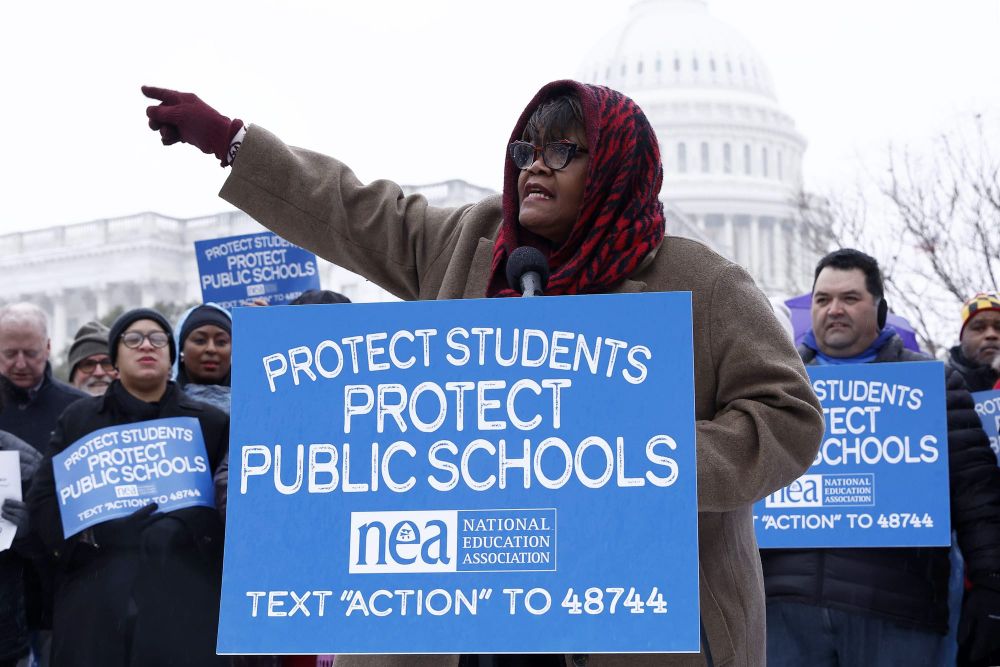
The initial temporary restraining order went into effect Sept. 4, after a group of educators and advocates in New Hampshire legally challenged the law, arguing that it would negatively impact disabled students in schools and colleges. On Aug. 7, the National Education Association-New Hampshire (NEA-NH), along with school districts and educators, filed a lawsuit claiming that the law, which took effect on July 1, could disrupt legally required individualized education programs (IEPs) for students with disabilities because of its vague language and bans on diversity, equity, and inclusion initiatives.
The HB 2 provision bars public schools and entities from implementing or supporting any DEI initiatives, programs, training, or policies. It also states that state funding can be withheld if schools violate the law, even if unintentionally. U.S. District Judge Landya McCafferty echoed plaintiffs’ concerns during oral arguments that the law’s language is vague and that it conflicts with educators’ free speech rights and federal disability protections, such as the Americans with Disabilities Act, Section 504 of the Rehabilitation Act, and the Individuals with Disabilities Education Act.
In early September, McCafferty temporarily blocked enforcement of the anti-DEI law, issuing a temporary restraining order that pauses the state’s efforts to penalize schools through funding cuts while the lawsuit is being considered.
“We know diversity, equity, and inclusion programs and initiatives are not only legally required in certain contexts but also create a sense of belonging where all students can feel comfortable sharing their ideas and stories,” NEA-New Hampshire President Megan Tuttle said in an Aug. 7 statement. “Vague and confusing laws that have the effect of censoring or limiting educators’ abilities to teach and accommodate students who may have special education needs can undermine the high-quality education that students deserve.”
Educators and advocates say they worry that the ambiguity of the law and its potential conflict with federal disability laws could negatively affect disabled students and disability inclusion, both in K-12 schools and universities.
Olie Castallo, a disabled student at the University of New Hampshire, said that the anti-DEI bill is harmful, noting that DEI practices don’t single out people for special privileges but rather give equal opportunity to those who are already disadvantaged. The law could threaten funding reserved for students with disabilities, such as scholarships, that mitigate barriers to higher education.
One service that Castallo worries would be impacted by this law is the TRIO Scholars Program, which is dedicated to providing support to first-generation college students, low-income students, and disabled students to set them up for success.
“For the longest time, higher education has been seen as a privilege only for those who can afford it mentally, physically, and economically,” she said, “but opening that up to more people has been extremely important to be able to let everyone fully participate in society.”
Maggie Forrestall, an elementary school teacher in the Monadnock Region of southwestern New Hampshire, said that she hasn’t felt the impacts of the anti-DEI law, noting that it takes a while for policies to trickle down to small schools like hers. But she can imagine that schools in larger cities such as Concord or Manchester could face more of the brunt.
“I can’t even think of anything at our school that I would think would qualify as being under threat from the rule,” she said. “But then again, the law is so vague that it could be technically applied to anything, and I think that’s by design.”
Forrestall said that she feels well supported by her school district’s leadership and believes that they “would do everything in their power to prevent that trickle-down impact from hitting students in our school.” She hopes that the lawsuit filed by educators and advocates leads to a change in the law as well as revamp state funding for education, noting that New Hampshire has not been consistent or equitable about funding disabled students.
“Educators do have a responsibility to support the success of every student, and we take that seriously; that’s a professional expectation and standard,” she said. “I am grateful that the lawsuit has been brought by the union—even though I’m not a part of it—and I hope that the outcome is that this is unconstitutional and needs to be scrapped, and then also that this can kind of promote additional conversations about equity and funding at the state level, which is going to be an ongoing issue.”
Editorial Team:
Carolyn Copeland, Lead Editor
Lara Witt, Top Editor
Rashmee Kumar, Copy Editor
Author

Shruti Rajkumar is a freelance journalist with a focus on disability reporting. Previously, they were a breaking news reporter at HuffPost. Rajkumar earned a Bachelor's degree from Emerson College and
Sign up for Prism newsletters.
Stay up to date with curated collection of our top stories.