New Chicago art exhibit celebrates city’s history of queer activism
The “City in a Garden” collection highlights LGBTQIA+ communities’ ties to Chicago’s favorite landmarks
Among the many highlights of a new exhibit on queer activism at the Museum of Contemporary Art (MCA) Chicago are Faysal Altunbozar’s exceptionally phallic ceramic bird feeders with nylon straps. The feeders, created in 2020, are a winking tribute to Monroe Park Bird Sanctuary, a place adopted by birders for bird watching and simultaneously by the gay community for cruising. The cruisers dressed (or undressed) carefully to be seen; the birders were just as careful to wear vests with pockets and attire that signaled they were there for the birds. Altunbozar was part of both communities, and his feeders are a provocative reminder of shared space, and of the way that queer history, and queer art, exists hidden in plain sight, just like those birds you have to be looking for to see.
Exhibition curator Jack Schneider explained in a gallery walk that the exhibit, titled “City in a Garden: Queer Art and Activism in Chicago,” was inspired by his realization that Chicago was a “gap in the scholarship.” Studies of queer art from the 1980s to the present tend to focus mainly on New York and Los Angeles. The show fills in the academic erasures and functions as a record of lost spaces and half-remembered places in Chicago history. The queer past often doesn’t make it into official records, narratives, or archives. Uncovering it, therefore, can be revelatory.
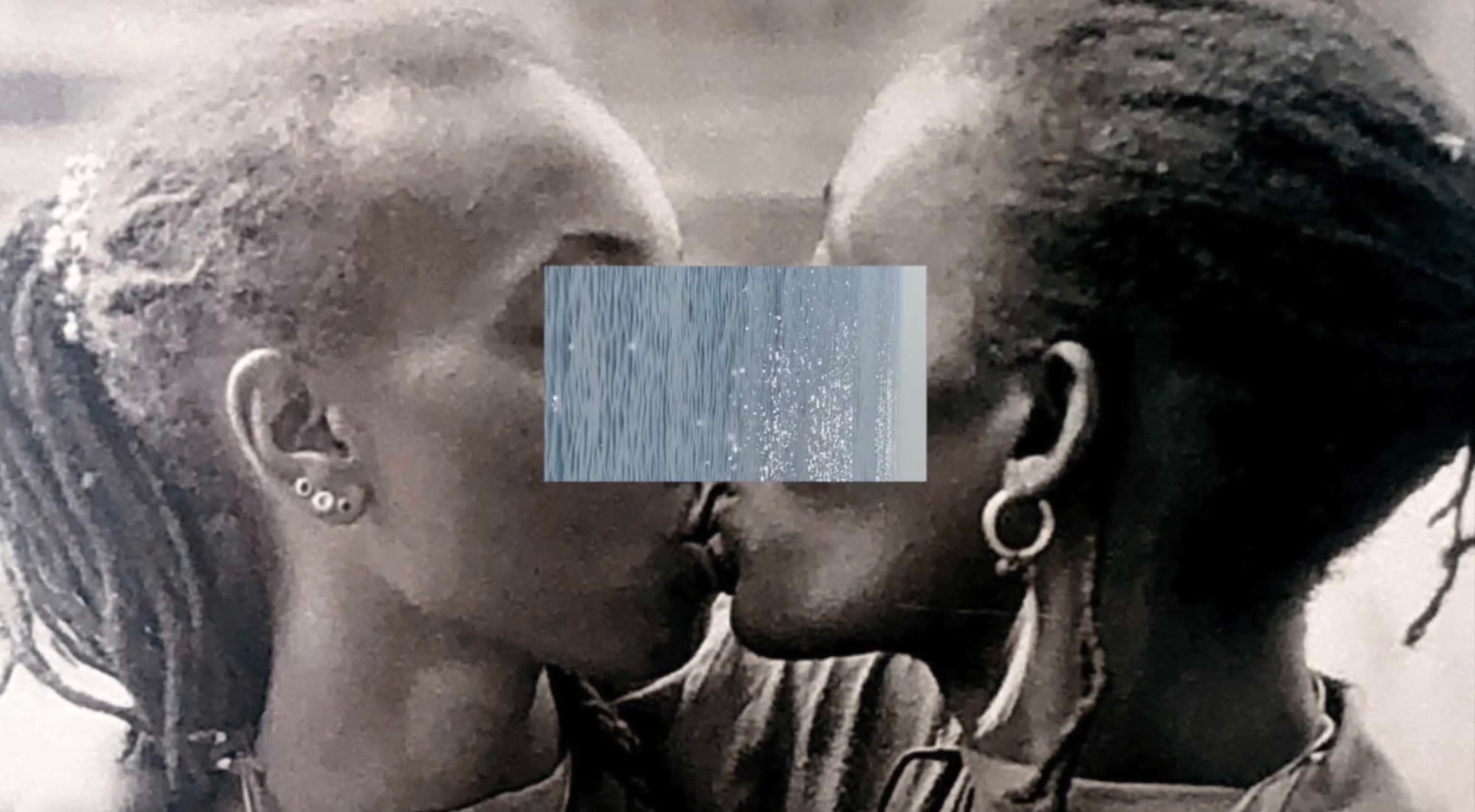
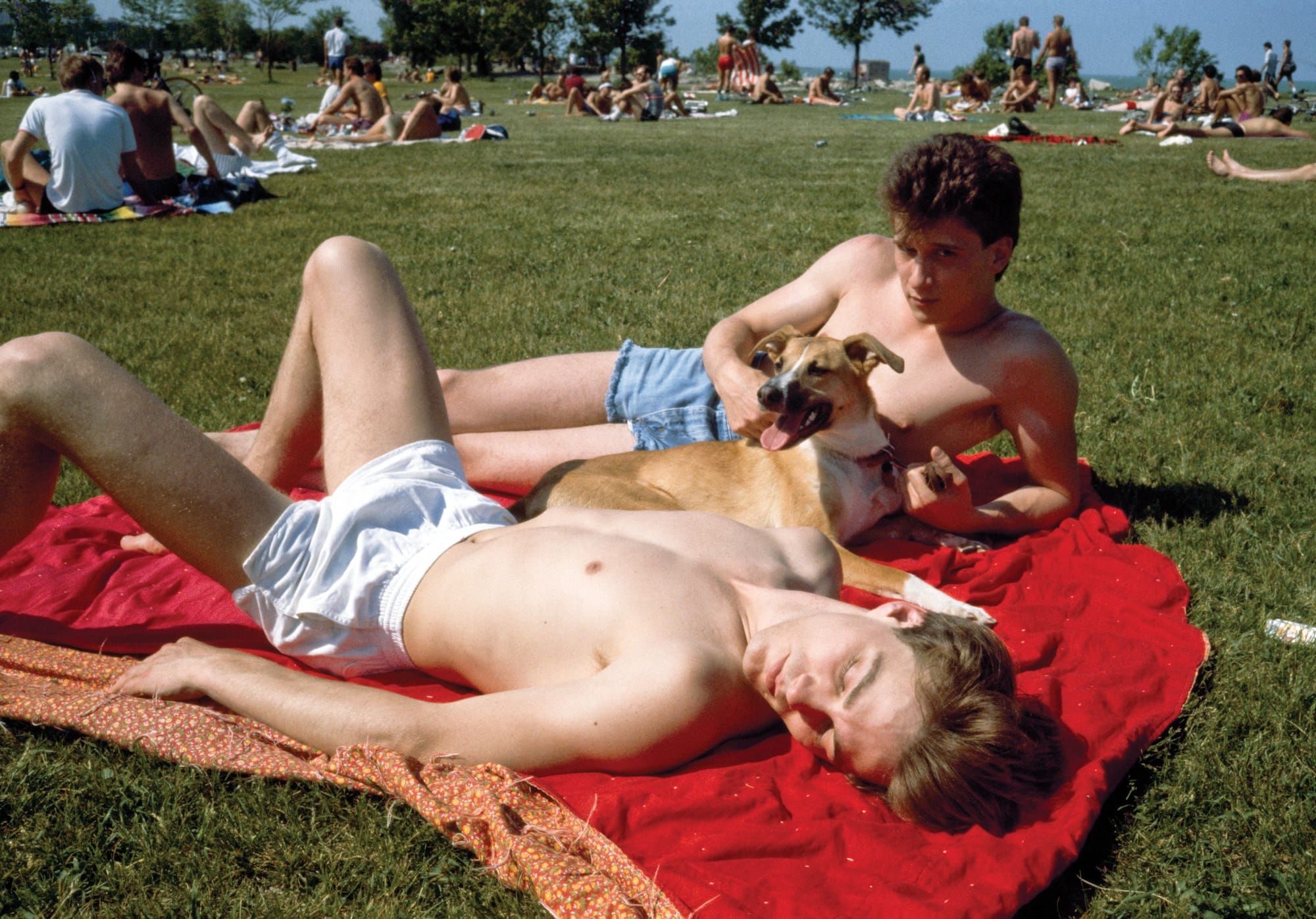
Like Altunbozar’s work, many of the pieces in the exhibition remember or document places where queer people gathered or met. Doug Ischar’s photography series “Marginal Waters” captures gay men and couples lounging on limestone buttresses at the Belmont lakeshore in the 1980s. The sunlit images of the unofficial gay beach are shadowed by the AIDS crisis, which devastated the community. Patric McCoy’s lovingly composed black and white pictures from around the same time focus on the Rialto Tap, a South Loop bar for Black men who wanted to meet other men—though most of them didn’t necessarily identify as gay.
Edie Fake took a somewhat different approach to remembering the past in his “Memory Palaces” series from 2012. The pen and ink drawings commemorate queer landmarks and institutions by transforming them into colorful, patterned illustrations, which incorporate some elements of Chicago architecture without attempting to specifically reproduce the venues referenced. One of Fake’s buildings, for example, is named “Killer Dyke,” in honor of a lesbian feminist newspaper at Northeastern Illinois University in the early ’70s, according to Schneider. The scrawled text is based on the paper’s logo, but the intricate tilework and the bright yellow door are from Fake’s imagination.
“If I was drawing something in the body,” Fake told Prism, “I’d want it to be a drawing about how it feels rather than technical anatomy. So I was thinking about how to do that with a building—like Chicago’s buildings, the kind of vernacular architecture that exists there, and using that to tell the story about what’s exciting about a space.” Being tied to actual physical structures, he said, wouldn’t allow the “ecstatic leap to queerness,” which he wanted to convey.
“City in a Garden” also features posters, flyers, stickers, buttons, and other work produced by ACT UP and other activist groups fighting AIDS and government neglect of AIDS in the ’80s and later. One of the most eye-catching is a 1990 shirt designed by Marry Patten and Jeanne Kracher of the ACT UP/Chicago Women’s Caucus, featuring a photo of a woman performing enthusiastic cunnilingus. The shirt slogan reads, “Power Breakfast.” Schneider, in the gallery talk, explained that the shirt was something of an in-joke, mocking the power lunches which more respectable members of the gay community had with city officials.
In some ways, LGBTQIA+ rights have come a long way since the neglect and horror of the ’80s. In other ways, though, bigotry has made a terrifying comeback. Schneider originally began to work on “City in a Garden” in 2022. At that time, he told Prism, he could already see queer rights eroding under right-wing attacks. But, he said, “I don’t think I had any idea how much worse it would get just in the span of time I was working on the show.”

Even with the Trump administration’s attacks on funding for LGBTQIA+ art, Schneider said he has had no difficulty moving forward with the show. Chicago, he said, “is a blue bubble.” That makes it even more important to put on a show like “City in a Garden,” he added, since “there are other institutions across the country that are not able to do something like this right now.”
In addition to the support of the MCA and donors, Schneider highlighted the intellectual and material contribution of collector Daniel S. Berger, who donated numerous objects to the exhibit (including works by Fake and Ischar). Berger isn’t just an art aficionado; he’s a leading AIDS researcher whose work was crucial in the development of the first AIDS cocktail treatment in the 1990s.
Berger has “built this really amazing art collection focusing on queer artists and Black artists, because those were the two demographics that he was seeing come through his clinic, essentially, who were affected by the HIV/AIDS epidemic,” Schneider said. Berger also ran a gallery in his coach house in Rogers Park in the 2010s. Schneider saw work shown there when he moved to the city, and that became part of the inspiration for the show.
In that context, “City in a Garden” isn’t just an exhibit of queer art about queer history and queer activism. It’s also part of that history and of that activism.
“Art can serve a documentary function,” Schneider said. Especially at a time when people in power are trying to frame LGBTQIA+ people as deviant, anomalous, novel, and disposable, documenting the communities’ history becomes a political act in itself. One of the wonders of the exhibit is that when you walk out of the MCA, you look around and realize that Chicago’s buildings, its lakefronts, and even its bird feeders have always been queer.
Editorial Team:
Sahar Fatima, Lead Editor
Carolyn Copeland, Top Editor
Stephanie Harris, Copy Editor
Author

Noah Berlatsky is a freelance writer in Chicago. You can follow his writing at Everything Is Horrible (noahberlatsky.substack.com).
Sign up for Prism newsletters.
Stay up to date with curated collection of our top stories.