Movements we’re bringing into 2026
After a year marked by trans erasure, imperial aggression, and a growing surveillance state, these are the movements helping to build collective liberation as we head into the new year

Real journalists wrote and edited this (not AI)—independent, community-driven journalism survives because you back it. Donate to sustain Prism’s mission and the humans behind it.
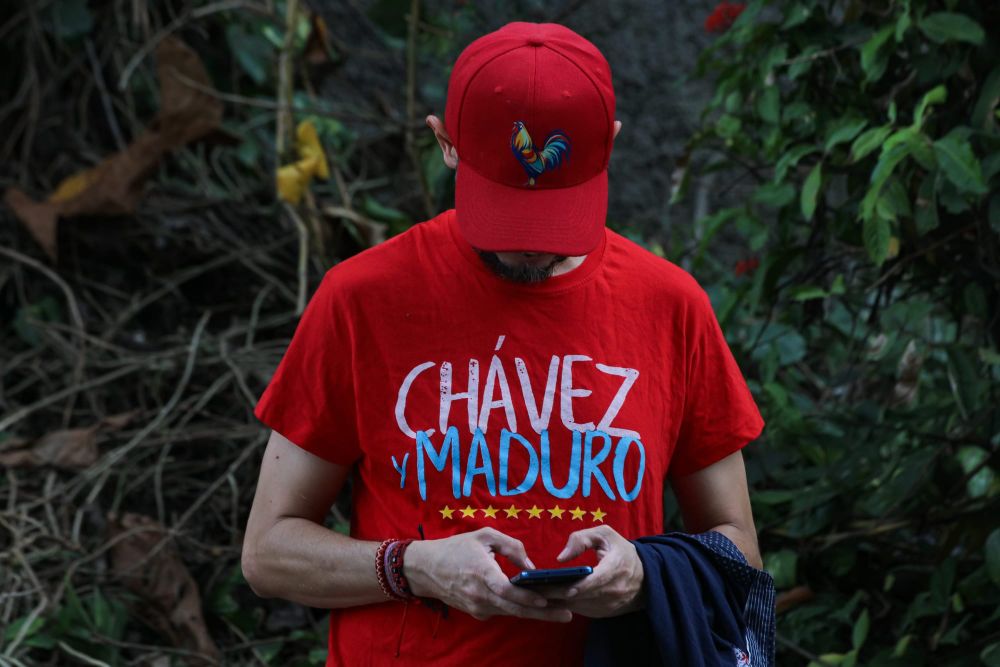
Every empire falls. The United States empire can’t escape its inevitable end—the material conditions that imprison the poor, extort the middle class, and prop up aspiring capitalists and billionaires are collapsing. What we’re living with and under, however, is a belligerent imperial power thrashing and grasping for whatever foothold it can find. On Christmas Day, the U.S. bombed Nigeria, citing a warped and misleading narrative of the persecution of Christians. Less than a week into 2026, President Donald Trump’s regime carried out illegal bombings on Caracas and kidnapped Venezuelan President Nicolás Maduro and his wife, violating international law. Trump, then, signaled to the world that the U.S. is prepared to violate the sovereignty of Mexico, Colombia, and Cuba under the Trump Corollary to the Monroe Doctrine. As reported by Al Jazeera, the U.S. bombed seven countries in 2025 alone.
Meanwhile, Israeli Prime Minister Benjamin Netanyahu, chief génocidaire and architect of settler colonial expansion in Palestine, spent New Year’s Eve at Mar-a-Lago.
Despite it all, we pursue revolutionary love.
In 2026, we’re facing the enormity of our condition after a ruthless 2025, which can aptly be described as the year that tried to break our brains, bodies, and spirits. But we remain steadfast in our commitment to each other, you, and in strengthening solidarity with all oppressed people of the world. After reflecting and reviewing which stories our readers found most impactful, we’re sharing the movements that we’re recommitting to in 2026 and beyond.
Fighting white nationalism and deportation machinery, working in service of migrant justice and protecting our neighbors
Shortly after Trump’s second inauguration, amid devastating fires in Los Angeles, Immigration and Customs Enforcement (ICE) descended on the California city like an occupying military. Prism’s esteemed immigration, workers’ rights, and reproductive justice reporter and Features Editor Tina Vásquez is proudly born and bred in LA. In reflecting on the fearless resistance her city modeled for the rest of the country, she wrote:
Every immigration raid is a tragedy in slow motion, unfolding over time and across generations. When the agents arrive in plainclothes or with their faces hidden to pull day laborers out of parking lots, workers out of factories, children out of elementary schools, families from their court hearings—to rip out the bedrock of a place and plunder the community of its beloveds—it has nothing to do with the law or following orders or criminal histories or even the White House. It’s personal, like a hate crime. Unforgivable, like a genocide.
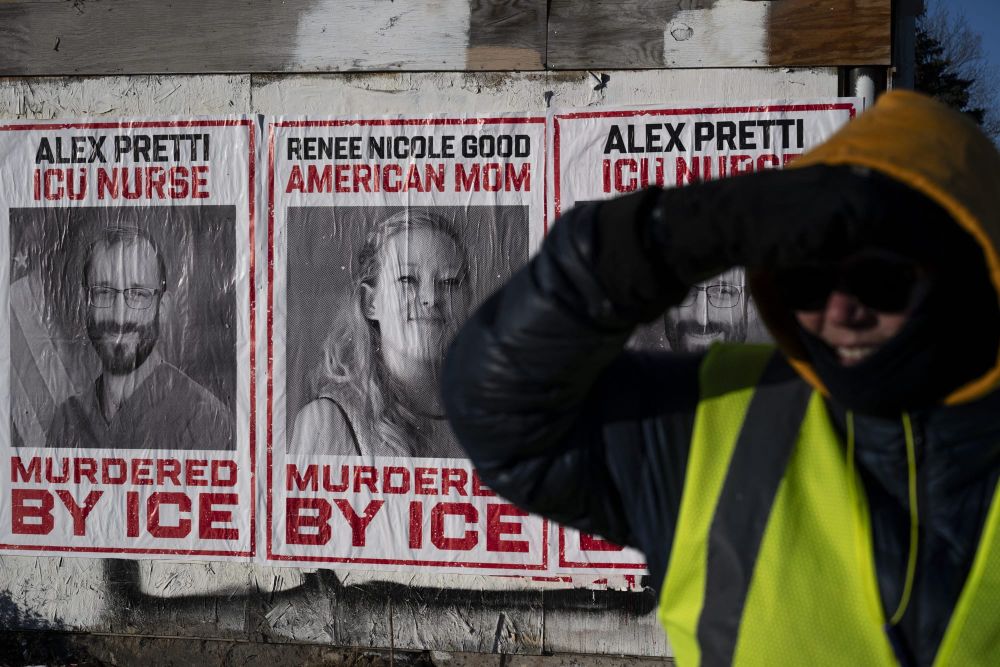
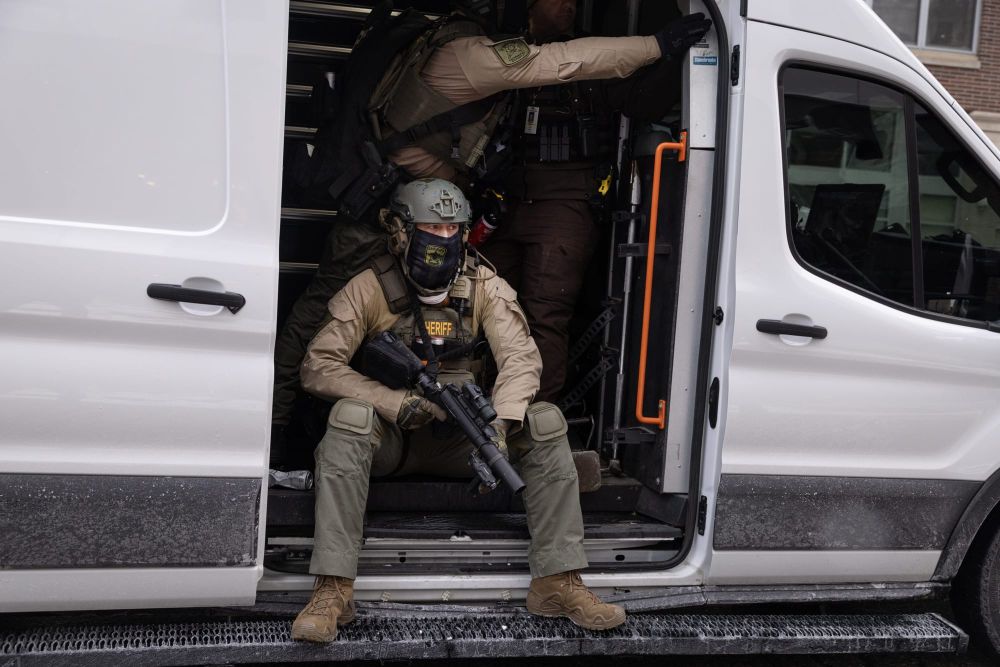
The extreme rightward shift on immigration policy in the U.S. is a result of a decadeslong bipartisan campaign to maintain the status quo. White nationalist, anti-immigrant fearmongering has gained traction among Americans as Democrats throw immigrants under the bus in order to cater to an imagined centrist voter. After campaigning on a ticket promising the ethnic cleansing of undocumented migrants, the Trump administration delivered on its vengeful promises by deploying ICE and the National Guard to Democrat-led cities like Los Angeles, Chicago, Portland, New York, and even red states like North Carolina. ICE and the Department of Homeland Security (DHS) deported veterans, targeted green card holders, revoked Temporary Protected Status for Venezuelan and Haitian refugees, pushed the death penalty for undocumented migrants involved in capital cases, and stalked courthouses to round up those attending immigration appointments and send them to detention centers operating as black sites.
Coined “Alligator Alcatraz” by the Trump administration, the most infamous detention center and black site located in the Florida Everglades remains open despite a ruling from a federal judge ordering its closure and a corrupting conflict of interest in the 11th Circuit Court of Appeals. The most fearless and effective resistance has been led by the Miccosukee Tribe, who are dedicated land protectors. The Miccosukee, whose territory is adjacent to the detention center, are organizing tirelessly at the intersection of Indigenous rights and the LANDBACK movement, migrant justice, and climate justice. Working in parallel to climate justice organizers and the Miccosukee, the faculty union at Florida International University has been critical of its employer’s collaboration with ICE and DHS.
This Florida coalition of Indigenous people fighting for sovereignty—because no one is illegal on stolen land—climate justice organizers, immigration rights advocates, and educators can be a model for resisting this fascist, anti-immigrant regime around the country. As everyday people put their bodies on the frontlines to protect their neighbors, we are reminded of our collective strength and fortitude.
Dismantling the imperial playbook: Palestine and Sudan as a litmus test for the world’s morality
The U.S. has long pushed the lie that it is the world’s moral arbiter, liberator, and policeman tasked with the undue burden of doing the dirty work of maintaining the global order. The lie is brazen and self-aggrandizing, like the American story. People of the Global South and oppressed people living inside U.S. borders—the poor, Black and Indigenous people, trans and queer folks, immigrants, and workers—have all, in one way or another, experienced the dark underbelly of the imperial core. When we experience the American empire collapsing, we are also called to revolutionize and transform our collective moral compass.
Imperialism follows a strict (see: fascist) playbook. It prioritizes profit over life, and even more sinisterly, uses death-making as its vehicle for accumulating wealth and land. Israel lays bare the imperial playbook as it attempts to eradicate the Palestinian people. But make no mistake, Israel is taking cues—and weapons and funding—from the U.S. In March 2024, a speaker at an event hosted by the far-right Zionist group the Israel Heritage Foundation (IHF) issued a disturbing and alarming call: “Maybe we need to kill more civilians.” The IHF has kept close relationships with the Trump administration and the New York Police Department, signaling the genocidal collaboration between imperial powers.
Through relentless dehumanization and heinous acts of corporeal and sexual violence against Palestinians, the Israeli regime is leveraging a template that can be replicated throughout the world: Sudan, Congo, Venezuela, Puerto Rico, Kashmir, and wherever else the lustful eye of imperialism is trained. The poet June Jordan once wrote, “There are two issues of our time, really, that I think amount to a litmus test for morality as far as I’m concerned. One is what you’re prepared to do on behalf of the Palestinian people. And the other is what are you prepared to do on behalf of gay and lesbian peoples.”
Our moral compass is not determined by authoritarians and billionaires. To the contrary, it is drawn from shared struggle and witness. Last year, Prism broadened our lens to start publishing dispatches from Palestine and sharing writing from those living under occupation. It is in the words of Palestinians that we learned of the fate of Gaza’s cats and the tenderness with which animals are revered during a genocide. We learned of the devastating pain of what it means to be blockaded from Gaza’s sea. We read stories about children risking sickness to eat antibiotics as a treat, savoring the little sweetness left. Our hearts opened to the truth that in Gaza, writers like Mariam Mushtaha feel the pain of the Sudanese people intimately.
It is these anti-imperial struggles and stories of life under occupation that fortify our resolve to move with integrity and purpose toward collective liberation. In his column, “Another Way Out,” William C. Anderson gave us an incisive framework for triaging our resistance efforts when it feels like everything around us is falling apart: “Who is fed, housed, given health care, safety, and security by what we’re fighting about? Does the fight we’re in lead to a change that can alter people’s lives for the better or advance us toward a revolutionary shift?”
Combatting trans erasure as political violence
Taking up the work of Jordan’s second litmus test, which asks what we are willing to do on behalf of queer people, our work in movement journalism is to report accurately on the disproportionate harm that trans people face. Trans people’s very existence is a threat to fascism, which is why the first step the Trump administration took was an aggressive attempt to erase transness from public (and private) life. In doing so, trans lives are put at risk. Within the flurry of executive orders that federally banned words like “gender” and “gender identity,” the emboldened GOP has pushed forward policy proposals and legislation that would end gender-affirming care, ban trans girls and women from women’s sports, and pull federal funding from schools that defy this regime.
Motivated by deep-seated transphobia, Trump’s Department of Justice (DOJ) removed gender dysphoria as a constitutionally protected disability. Advocates warn that this ruling opens the floodgates to present and future attacks on marginalized people. Trump’s DOJ has gone as far as ending prison rape protections for trans and intersex people, marking an extreme shift in legislating trans erasure. However, some states like Illinois—which has been actively pursuing trans rights—have prepared themselves for the Trump years.
Activists argue that these policy decisions are an act of political violence and encourage violence against trans people at the federal, state, and individual levels. Since 2021, Texas has passed a number of laws, called bounty bills, that allow private citizens to sue over issues that target marginalized groups, including trans people and abortion-seekers. Sam Nordquist, a 24-year-old Black transgender man who was brutally murdered in upstate New York in February, calls attention to the fearful reality that many trans people face for living openly.
On the murder of Nordquist, Clark Wolff Hamel, PFLAG-NYC’s acting executive director, said, “Trans love is something that can never be lost. It is too big. It radiates, and it stretches, and it grows stronger every single day. It is complicated to feel both that deep loss and also that ongoing sense of love. But that is grief, that is loss.”
Our shared struggles require feeling our shared grief and love—and it is that revolutionary love that fuels our movements for collective liberation.
Counteracting mainstream media’s role as a tool of empire by building momentum for independent movement media
How do we read the news under fascism? Trust in the media is at an all-time low. Mainstream institutional media has a long history of manufacturing consent for war crimes, genocide, and imperialism. While distrust in mainstream media is valid, the decline in media literacy paired with uncritical suspicion of journalism as a whole does not make our communities safer.
One-fifth of people in the U.S. live in “news deserts”: places without access to news that accurately reflects their communities. People without this kind of journalism are less likely to vote, run for office, volunteer, or even trust their neighbors. They are also more vulnerable to misinformation, right-wing radicalization, and even infectious diseases. Mainstream news coverage also perpetuates toxic, harmful narratives and excludes communities who are historically oppressed—further exacerbating injustice.
Moreover, fascist regimes target journalists first as part of their efforts to clamp down control on dominant narratives. As of December, Israel has killed over 300 journalists and media workers. Without journalists’ fearless testimony and commitment to report the truth, Israeli propaganda would dominate global news cycles. Western mainstream media has made concerted attempts to aid and abet Israel’s genocide, contributing to reader distrust, but it’s the bravery of Palestinian journalists that keeps readers around the world informed and resisting.
To counteract this breakdown, those of us working in movement media have taken up the work of repairing relationships with readers so that they can make informed decisions about themselves and their communities. Palestinian journalist, media critic, and Prism compatriot Laura Albast endeavored on a monthslong investigation in partnership with Visualizing Palestine to uncover how anti-Palestinian bias shows up in U.S. newsrooms from pitch to publication. Lara Witt, Prism’s editor-in-chief, developed a media literacy toolkit with the intention of helping readers build historical, political, and social context into their news consumption practices.
“Movement media acts as the antidote to news that drives us to despair and even burnout. It should fuel our compassion and community-building, and connect us to create poor, working-class, gender-expansive, multiracial power,” Witt wrote. “Journalism should grow your care and compassion for the world and the communities around you.”
Fighting the weaponization of famine and food apartheid and moving toward food and health sovereignty
Authoritarian leadership makes false promises of an “improved economy,” all while enacting policies that destabilize our communities’ food systems, health, and environment. Gutting programs like Medicaid, food assistance (like November’s SNAP shutdown), and other critical social services carries out the largest wealth transfer from the working class to billionaires in modern history.
Grocery prices are at an all-time high, with nearly 19 million people in the U.S. living in areas affected by food apartheid. Immigrant farmworkers who build, feed, and sustain the country are exploited for their labor and targeted by increased ICE raids. For-profit deals between prisons and private fast food companies force incarcerated people to pay for their own poor health. At the same time, Palestinians are being starved as we surpass two years of U.S.-backed Israeli genocide in Gaza. At Health and Human Services Secretary Robert F. Kennedy Jr.’s direction, America’s legacy of eugenics is resurgent, with ableist rhetoric and vaccine denial leading us down a deadly yet familiar path.
In a period of rapid decline of food access, health care systems, and climate upheaval across the U.S. and beyond, our work as movement journalists demands an unwavering commitment to amplifying the resistance efforts, organizing tools, and resources communities around the country are using to defend their health and food sovereignty. In Alaska, the Gwich’in people fight for their inalienable right to salmon fishing in the Yukon River. Organizations like Sistah Seeds in Pennsylvania are stewarding the work of seed keeping, maintaining foodways, and building cultural reverence through community networks.
Sounding the alarm on the threat of the technofascist surveillance state, AI, and climate disaster
The growing surveillance state in the U.S. is far worse than you imagined. Maurizio Guerrero’s investigation into ICE’s sprawling surveillance apparatus designed to track and monitor noncitizens details the relationship between ICE and AI and tech companies like Clearview AI, a lesser-known company aligned with the harrowing goals of Palantir, founded by far-right billionaire Peter Thiel. With the help of these digital tools, Guerrero wrote, “ICE agents and contractors can constantly monitor an individual’s precise location.”
Companies like Google have formed cybersecurity partnerships with Israel, thereby aiding Israel’s digital siege of Gaza, which is yet another effort to ethnically cleanse Palestinian life and existence. Google has also announced additional partnerships with the United Arab Emirates, which has been accused of arming the paramilitary group denounced for committing genocide in Darfur.
Not only do tech companies actively support genocide and partner with the architects, but they’re also accelerating the destruction of the environment. Elon Musk’s Colossus supercomputer in Memphis is draining the majority Black city of its resources, and local organizers say they have less of a chance at making climate reforms than Musk does at imposing environmental harms. Technofascism has transformed and enlarged the scope of surveillance while siphoning resources like water and land and trading the basic needs for life for pollution, climate violence, and policing. Artificial intelligence is just that: artificial, inauthentic, and openly mimicking humanity while stealing from real people.
Just like movement journalists, artists have a central role in disrupting fascism. Interdisciplinary artist and writer Jesús Iñiguez wrote, “Artists are often the last people to bend the knee, if ever at all—and they remind others that they, too, can fight back.”
We’ve got our work cut out for us. But when we organize together with clarity and conviction, integrity and compassion, the present and future of our liberation movements build on the revolutionary histories of oppressed peoples of the world. As we get back to work, we’ll leave you with this quote from Palestinian writer Ghassan Kanafani:
Everything in this world can be robbed and stolen, except one thing; this one thing is the love that emanates from a human being towards a solid commitment to a conviction or cause.
Editorial Team:
Carolyn Copland, Lead Editor
Lara Witt, Top Editor
Stephanie Harris, Copy Editor
Author
Sign up for Prism newsletters.
Stay up to date with curated collection of our top stories.